A Critic Takes the White House Tour
Written by Brian T. Allen
It’s the time when the White House is the People’s House and history is most palpable, thanks to Mrs. Kennedy. But, alas, the tours are now canceled to build the ballroom.
Share this story
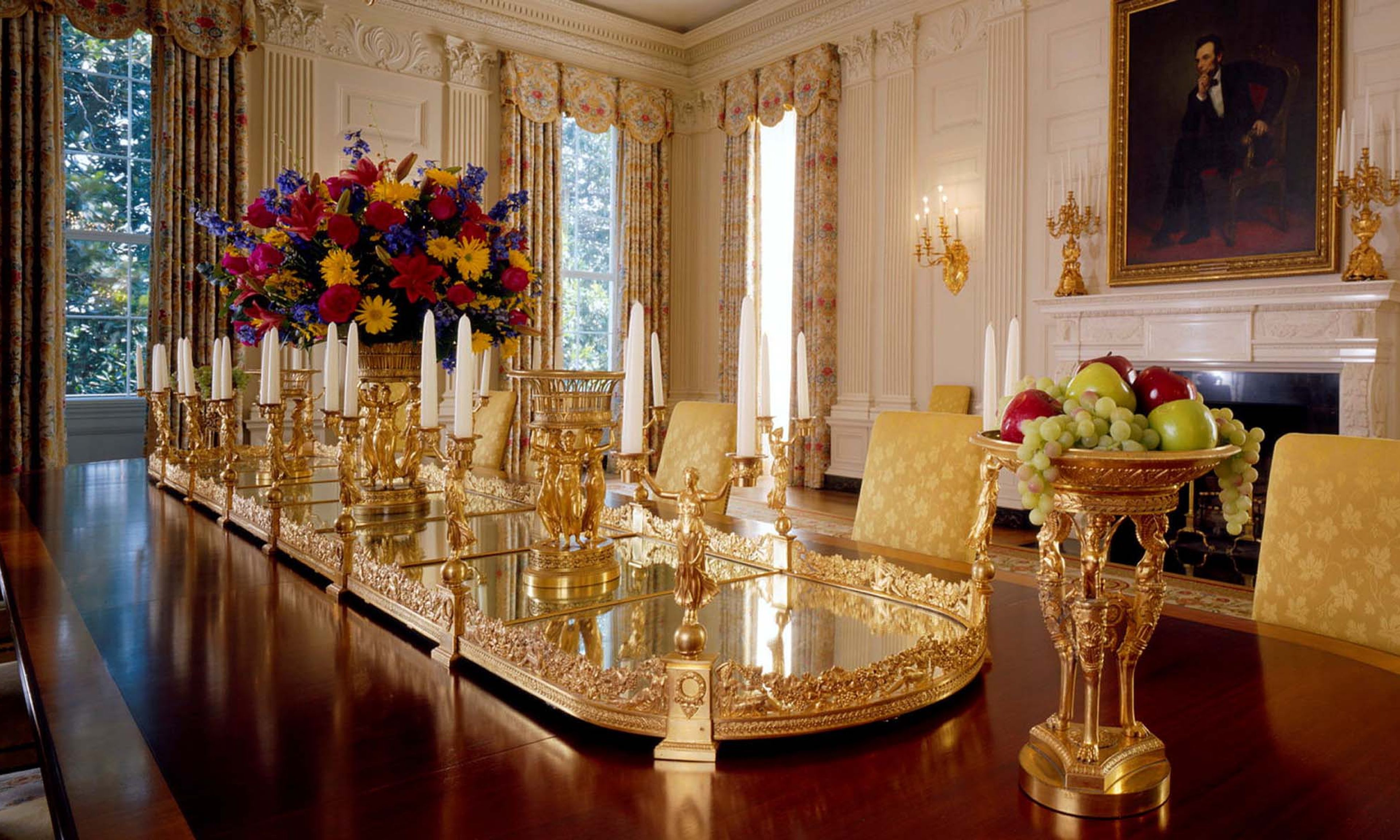
The State Dining Room, set with the 14-foot-long French gilded-bronze centerpiece purchased by President Monroe in 1817. Few Americans had ever seen anything like it.
While in the Swamp visiting the Smithsonian, to see how pickled it still is in fad woke pieties -- very much so -- I decided on a lark to take a public tour of the White House. Ragtag and bobtail like me need to start with our representatives or a senator, name a date, and wait for word from on high.
My appointed time, the last Saturday in August at 8 in the morning, when the doors opened, was among the last tours for a while. Starting September 1, they’re paused for reconfiguration given the start of construction on the new State Ballroom. Entrance and exit points are issues. I have nothing against a new ballroom. Yes, I know, John Travolta and Princess Diana danced to a medley of tunes from Grease and Saturday Night Fever in 1985, but that was in the White House Entrance Hall. Reconfiguration of the tours -- as many as 10,000 every week -- should have been in place before construction began. The public comes first, and certainly first before a party space for the privileged.
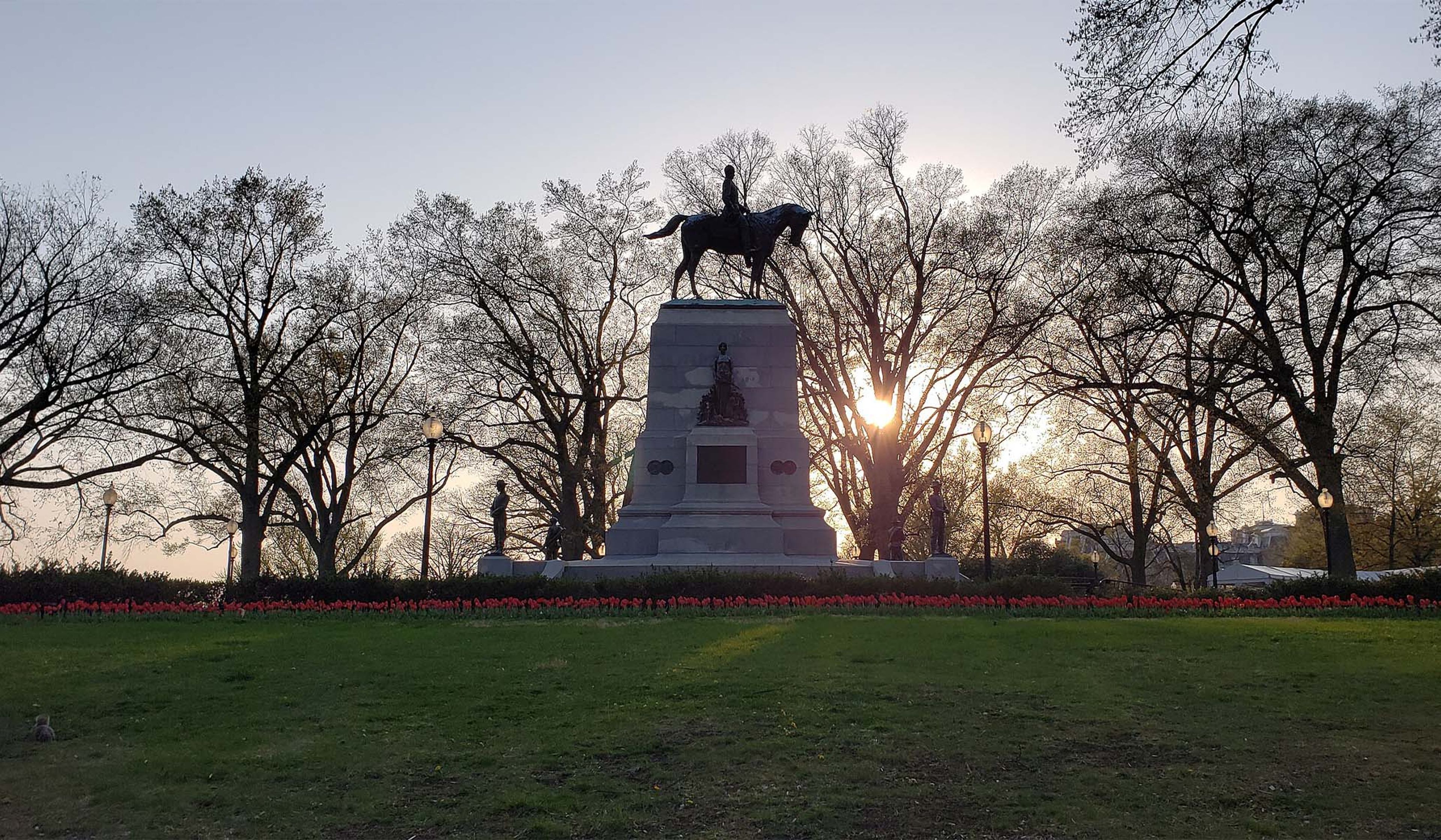
The tours are first-come, first-served, but the line wasn’t long. At 8 we processed from 15th Street, entering the White House grounds, passing stately trees and a surprisingly grand bronze equestrian monument to General Sherman from 1898. Sherman and the Army of the Tennessee paraded by this spot on May 24, 1865, triumphantly celebrating the end of the Civil War. There are bas relief panels on the March Through Georgia, the Burning of Atlanta, Sherman by the campfire, and the Battle of Missionary Ridge. My great-grandfather fought in Sherman’s army, though among the multitude of tiny bronze heads, I didn’t spot his. One panel shows Sherman saying “War Is Hell,” and a stately mosaic base lists his acclaimed Civil War battles -- Bull Run, Shiloh, Vicksburg, Chattanooga, Atlanta, and the siege of Savannah -- and lesser-known ones as well, 35 in all.
The monument, designed by the Danish-American sculptor Carl Rohl-Smith, is lofty and elegant. Trained at the Prussian Academy of Arts, Rohl-Smith brought Teutonic flourish to American sculpture. I spent lots of time looking at it. Washington is packed with Civil War monuments. It amazes me that so many movers and shakers who live and work there seem so dismissive, so heedless of the cosmic cost the Union paid to end slavery and keep the Constitution in place.
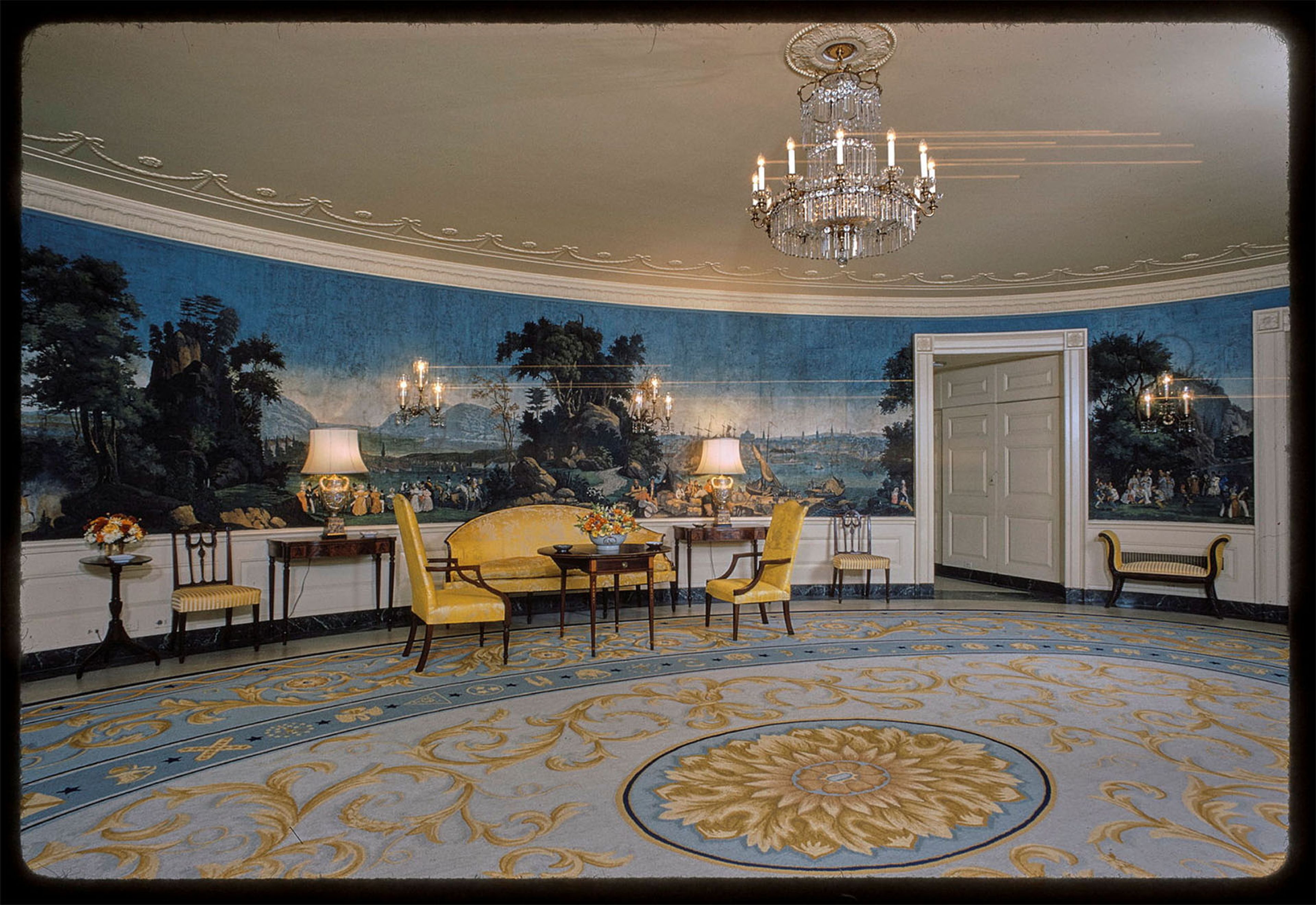
But I was there to see china, furniture, textiles, and paintings as well as presidential history unfolding. At least three security checkpoints were each agreeably managed by park rangers. Mrs. Biden just overhauled the tour, which hadn’t changed for years. What I saw premiered last November. As a curatorial enterprise, and that includes interpretation, quality of objects, and visitor experience, the tour is well done, not extraordinarily well done, but I left sated. It’s self-guided but each of the heavy-hitter rooms -- among them the Blue, Red, and Green Rooms and the East Room -- are staffed with Park Service personnel, who are always well informed.
The White House’s bare-bones history is worth a reprise. A Palladian Revival pile, it was designed by Dublin-born James Hoban and built between 1792 and 1800 and notoriously burnt by the British in 1814 when they sacked Washington. The exterior shell survived, and rebuilding started with dispatch. In the early 1790s, Pierre L’Enfant had initially conceived of a presidential palace five times the size of what President and Mrs. Adams eventually came to occupy. What the Adamses found when they moved in, in 1800, was much smaller, an 8,000-square-foot home, and, yes, Abigail did indeed hang laundry in the East Room. The exterior is Virginia sandstone whitewashed to look like marble.
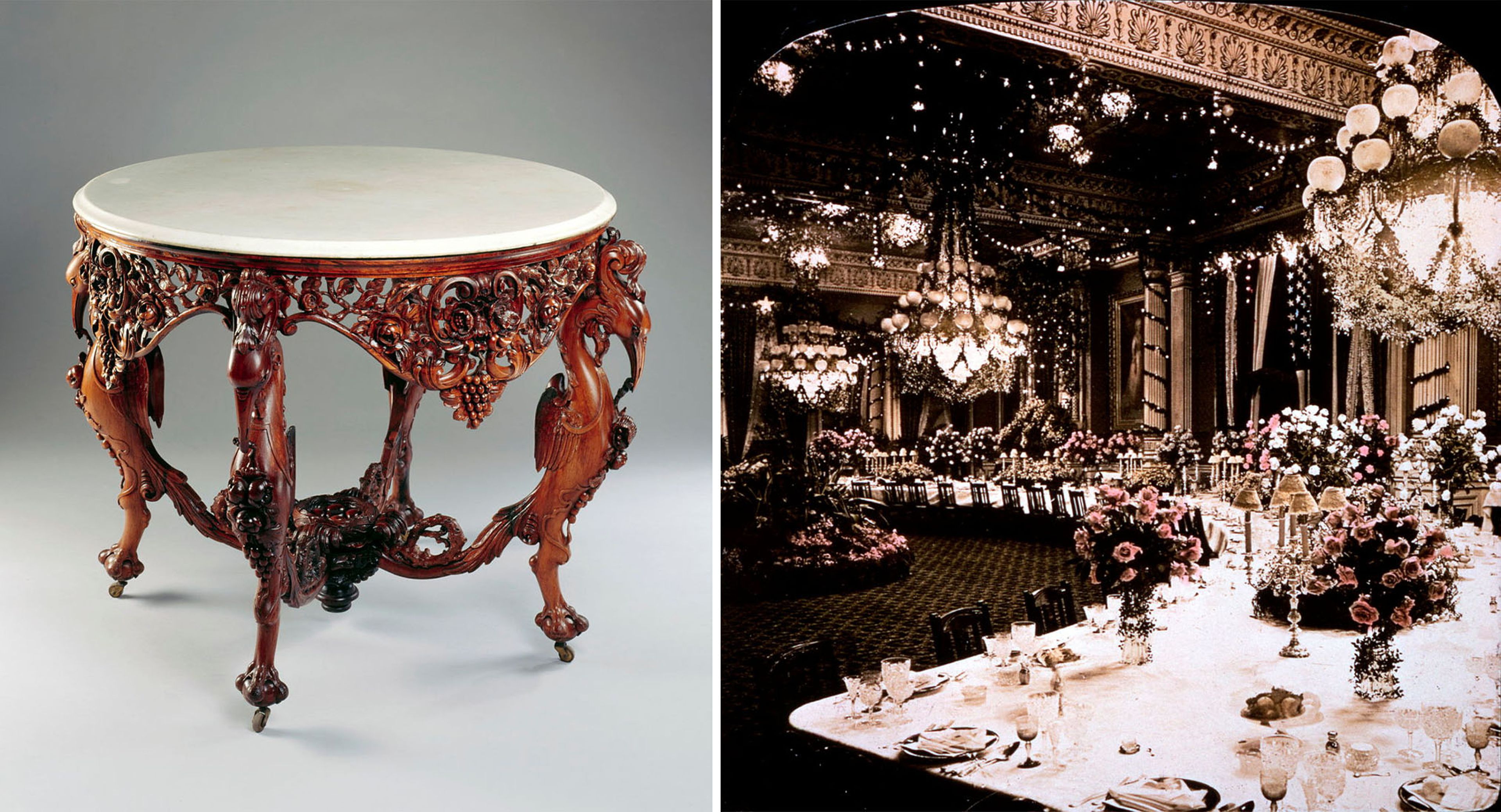
Since then, the White House has grown to 55,000 square feet with more than a dozen interventions and additions, among them top-to-bottom renovations, big additions such as the East Wing, the West Wing, and, during the Coolidge years, the third floor, and smaller ones ranging from the Ford swimming pool to the new Trump ballroom, soon to be underway. The place has been endlessly redecorated. Among the most faddish moments are President Monroe’s Empire Style -- think gilded wood, plush silk upholstery, and symmetrical ornament -- and President Arthur’s Gilded Age redo, so bedecked with ferns that the East Room looked out of the Everglades. The aesthetic we see today is thanks to Mrs. Kennedy. Her transformative overhaul, premiering in 1962, introduced art history, historic preservation, and museum-quality antiques to the White House’s look and decorative philosophy.
Displayed in a downstairs hall were portraits of the satanic Woodrow Wilson, in my opinion among our most destructive presidents, and, opposite, Mrs. Reagan in profile wearing a slinky red gown and looking as if Sargent had designed the portrait from wherever it is that great artists spend eternity aloft. Down the colonnade is a living timeline, part of the new tour, with kiosks of screens, one for many of our presidents, with photographs of White House life during their terms and key changes in the White House.
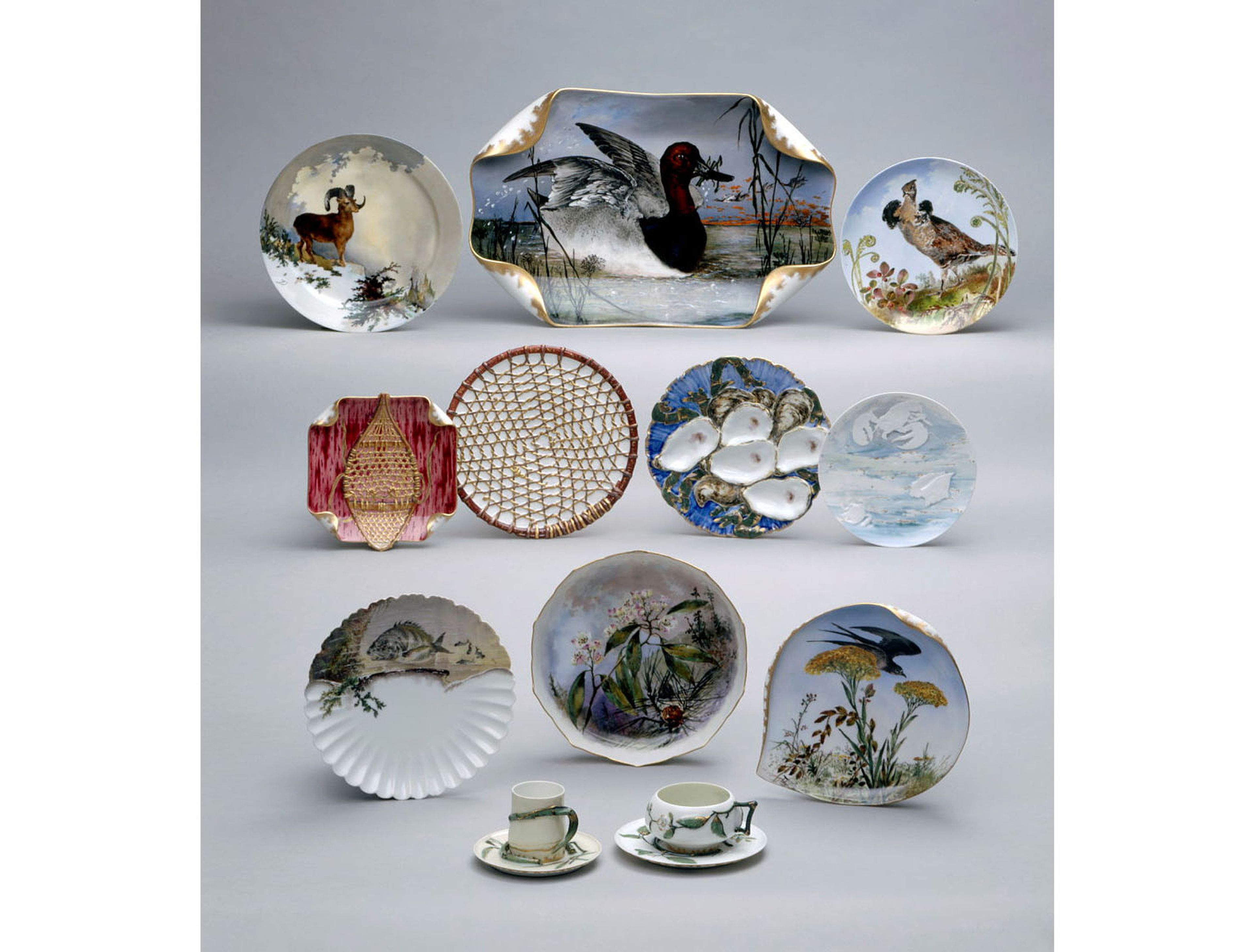
We passed by the White House family movie theater, a very red room with an Art Deco vibe and first installed by FDR. The president who watched the most movies there wasn’t Reagan but Carter, who saw 480 flicks during his four years. It looks comfy indeed and is still used. Steps away are small rooms, one for the White House’s considerable and important collection of vermeil, or gilded silver, and another for highlights of the White House’s unique china.
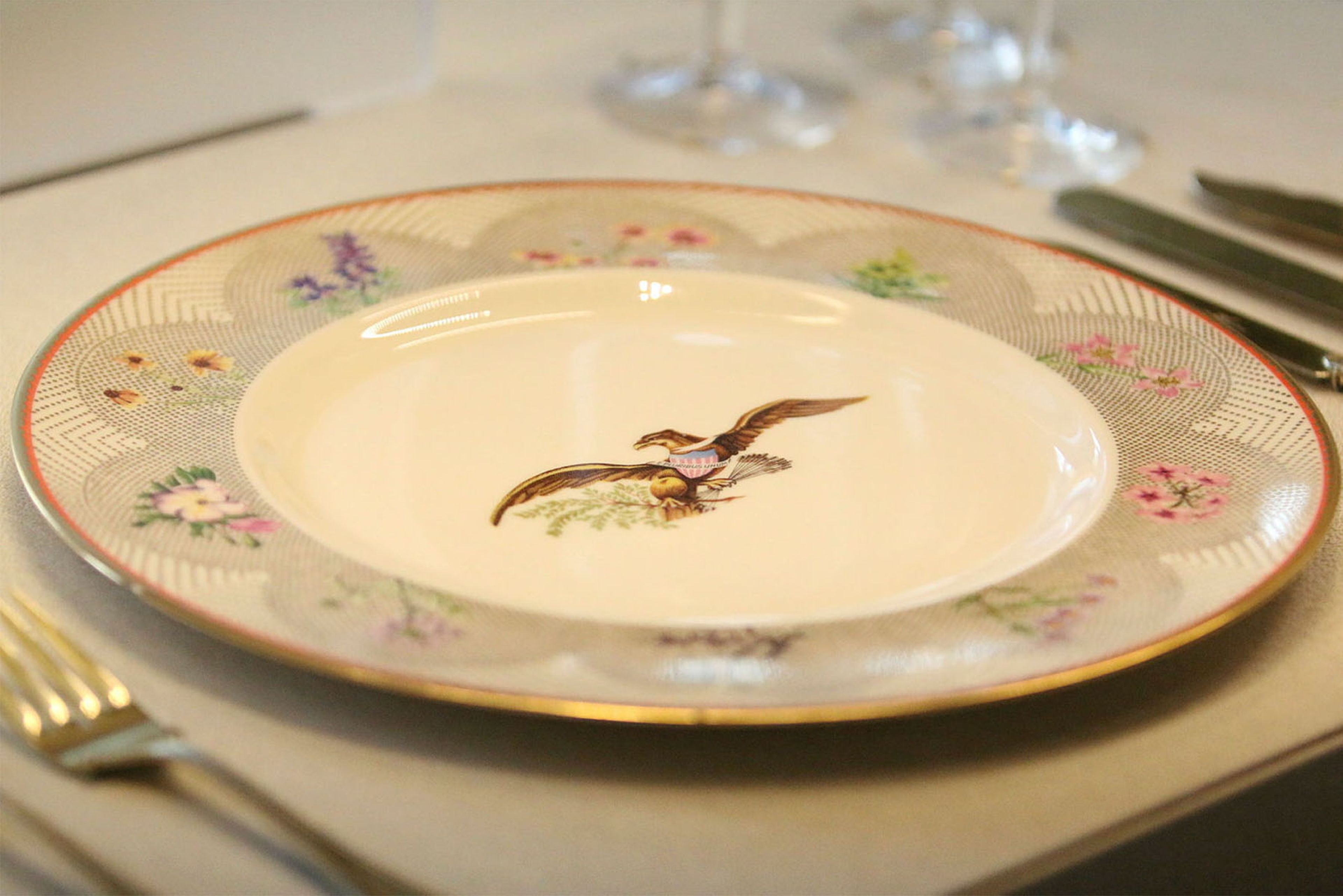
In 1956, Margaret Thompson Biddle, a Philadelphia heiress and Mrs. Eisenhower’s socialite tea-party pal, left her collection of about 1,500 pieces of gilded silver to the White House. It’s a first-rate collection. Many presidents have commissioned their own sets of White House china, but it wasn’t until Mrs. Theodore Roosevelt’s era that past patterns were taken seriously. In both rooms, the objects are in cases. We can poke our noses in, but both rooms, deemed too small, are closed to actual lookers.
The result is that no one sees much of anything, a grave curatorial sin. I’d ditch cases elsewhere filled with presidential gifts from despots and profiles of lesser presidents in favor of china through the ages. Much of it is very snazzy. Jackson’s big marbleized blue borders and eagle medallions, Hayes’s bold flora and fauna motifs, Nancy Reagan’s red Lenox pieces, and Lady Bird’s wildflower-infused china are among my favorites. McKinley’s blue-green brocade patterns with gilt scrolls rock. The china sets for Obama, Bush, and Nixon are a snooze.
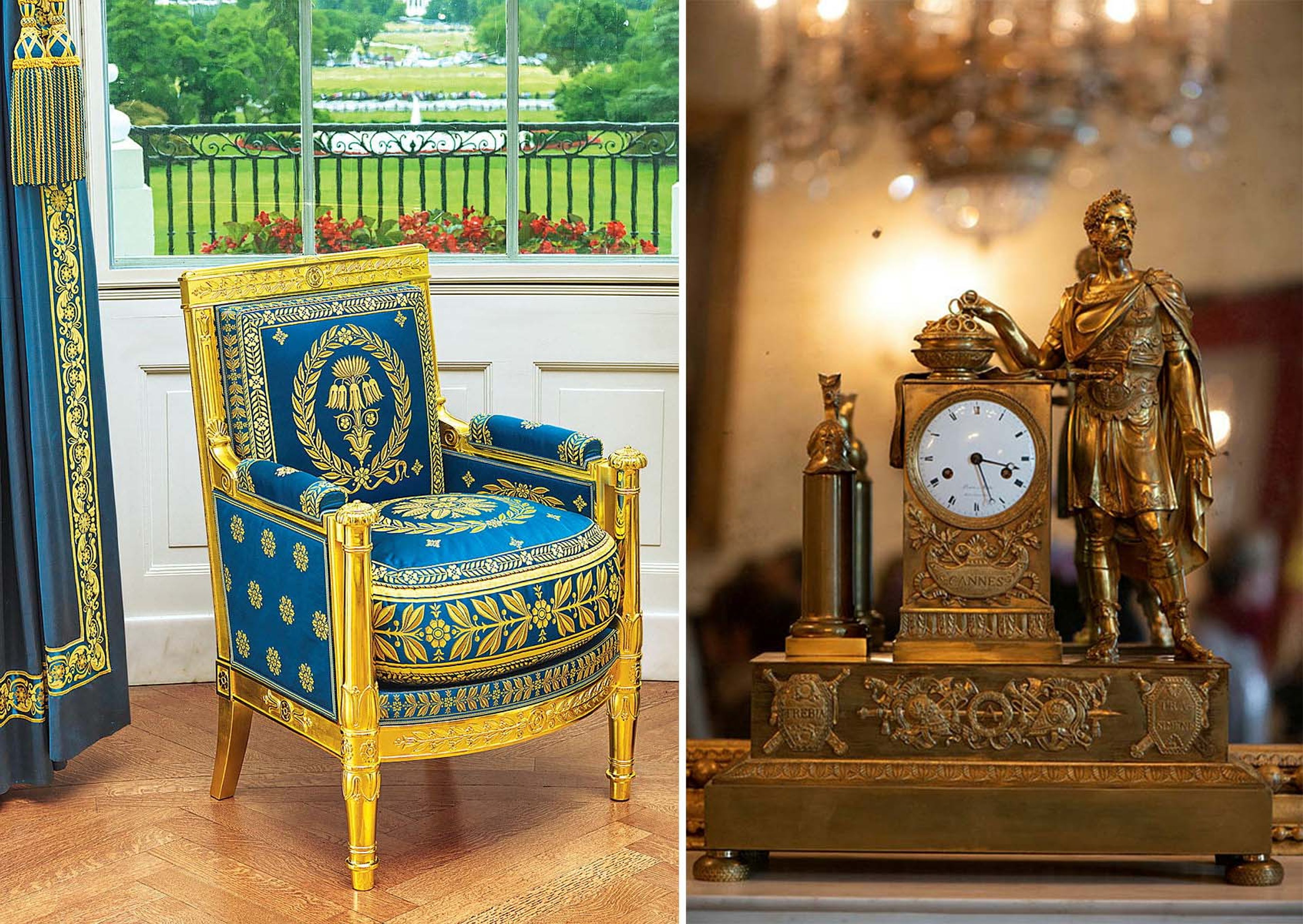
Then to the marquee rooms. The White House’s furnishings came and went, in large part, with each president. Congress appropriated $20,000 to refurnish the White House after the British burned it, but each incumbent had his -- usually his wife’s -- own decoration plan. Monroe’s, seen at its finest in the Blue Room, is the most intact and also among the most unified. In 1817, the start of his presidency and the Era of Good Feelings, Monroe commissioned Americans in France to buy French furniture and silver in the latest style for what became the Blue Room and the State Dining Room. The 53-piece suite was designed and produced by Pierre-Antoine Bellangé, the Paris maker who also worked for Napoleon, the Empress Josephine, and King Louis XVIII. The things are solid, heavy, gilded, and carved with olive branches.
Some of it stayed, most of it went out the door when the Monroes left, and some of it came back starting in the 1960s. The room has been partly blue since 1837, and mostly so since the redo in 1882 by Louis Comfort Tiffany. In 1886, President Cleveland married Frances Folsom, his 22-year-old ward, in the Blue Room. He’s the only president to be married in the White House. French candelabra and a mantel clock with a figure of Hannibal, not the cannibal but the general from Carthage, also star. Among the most amazing discoveries, and the one nearest to home, was Bellangé’s gorgeous pier table. Long thought gone, it had actually landed in the White House carpenter’s workshop.
The Red, Green, and East Rooms have similar stories, but the best place to absorb the White House decorative program isn’t a book about presidential history but a 1962 television show about the reconceptualization of the White House led by Mrs. Kennedy. Starting weeks after JFK’s inauguration in 1961, the 31-year-old first lady, Newport-acculturated but having naturally stellar taste, redid the rooms in styles appropriate to the first decades of the Republic. She established a permanent White House collection of furniture, paintings, silver, and porcelain, ending decorative overhauls and the in-the-door, out-the-door transit of objects. Also established during her years was the White House curatorial office and the nonprofit White House Historical Association. Since the 1960s, the White House has had trained curators to run the place like a museum with high standards, though one that’s used and where people live and move.
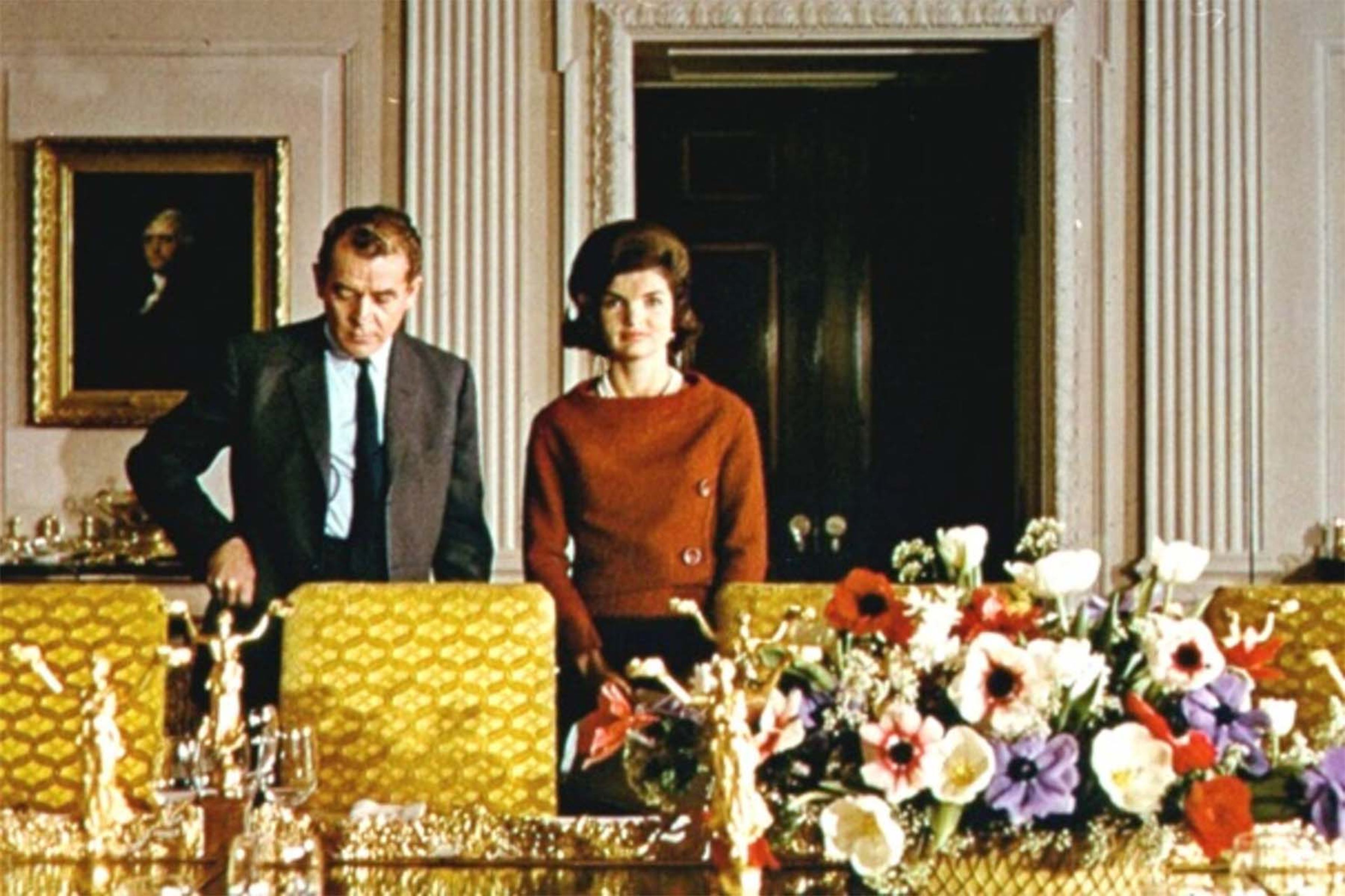
Mrs. Kennedy’s hour-long tour of the White House aired on CBS on Valentine’s Day 1962. She’d first visited the place on a public tour in 1940, and even though barely a teen, she thought it was a dump, and a tired old dump at that. There were antiques here and there, but, mostly, the White House had a department-store look. She learned in her first days there in 1961 that Mrs. Coolidge and Mrs. Hoover had tried to rehab the house with a classic Americana look, but they and it came and went.
The new first lady enlisted Henry du Pont, the great collector of American decorative arts and father of the Winterthur estate that later became a museum; Jayne Wrightsman, the very rich New York collector and socialite; the decorator Sister Parish; and a cast of others to solicit owners of objects that were once in the White House before, say, the Gilded Age redecorations. Bring the early treasures home, Mrs. Kennedy implored -- the things Monroe bought, the things Dolley Madison hauled off in wagons as the British approached with torches. Using Stéphane Boudin, the French decorator, the first lady gave it a very French spin. Du Pont resisted here and there but, as she told the multimillionaire, years her senior, “It doesn’t matter if it’s American or French as long as it has an eagle.” And, as she also said, “as long as it’s the best.”
Mrs. Kennedy worked fast but benefitted from the Truman renovation of the early ’50s. Truman was in an office above the Blue Room in 1948 when he heard the room shake. The entire structure, doomed by neglect and maladroit engineering of the third-floor Coolidge-era addition, was near collapse. For two years after that, everything behind the walls was replaced. So Mrs. Kennedy’s concerns with hard infrastructure were minimal.
Fifty million TV sets tuned in for her tour. It must have been a bewitching hour for Americans who’d never been in the White House and knew little about American art. Her voice, breathless, baby-girl innocent but weighty, is timeless. She looks good but also looks like she knows her stuff and knows it’s worth her passion. Her TV show probably did more than the tragic Penn Station demolition to galvanize interest in historic preservation in our tear-down culture. For most Americans, Penn Station was an abstraction. The White House and the presidents were real.
The paintings collection has expanded beyond portraits, many very good, and Hudson River School scenes. The art on the walls includes more modern things, such as a Childe Hassam flag painting, a Sargent genre scene, and work by John Marin and Jacob Lawrence. The Marin and Lawrence pictures and even the edgy Sargent are fine, but no president would have wanted to live with them.
In writing this story and plumbing the White House Historical Association, I’m underwhelmed. The staff is huge, but there’s a disconnect with the White House as well as a lack of depth and contemporaneity. I couldn’t get current photography, say, photography of the anchor White House public rooms, more current than the 1980s. It seems to be a PR operation with more schmoozing than substance. It seems siloed, too, with a buck-passing culture well suited to Swamp life. Website pages on the historic rooms are done on a high school level.
The Trump presence? A painting based on the “Fight, Fight, Fight” moment in Butler in Pennsylvania is on view in the vestibule by the North Portico, the main entrance to the White House for dignitaries arriving by car or on foot. I’d use a blow-up of the photograph. The image loses oomph in its transition to paint.
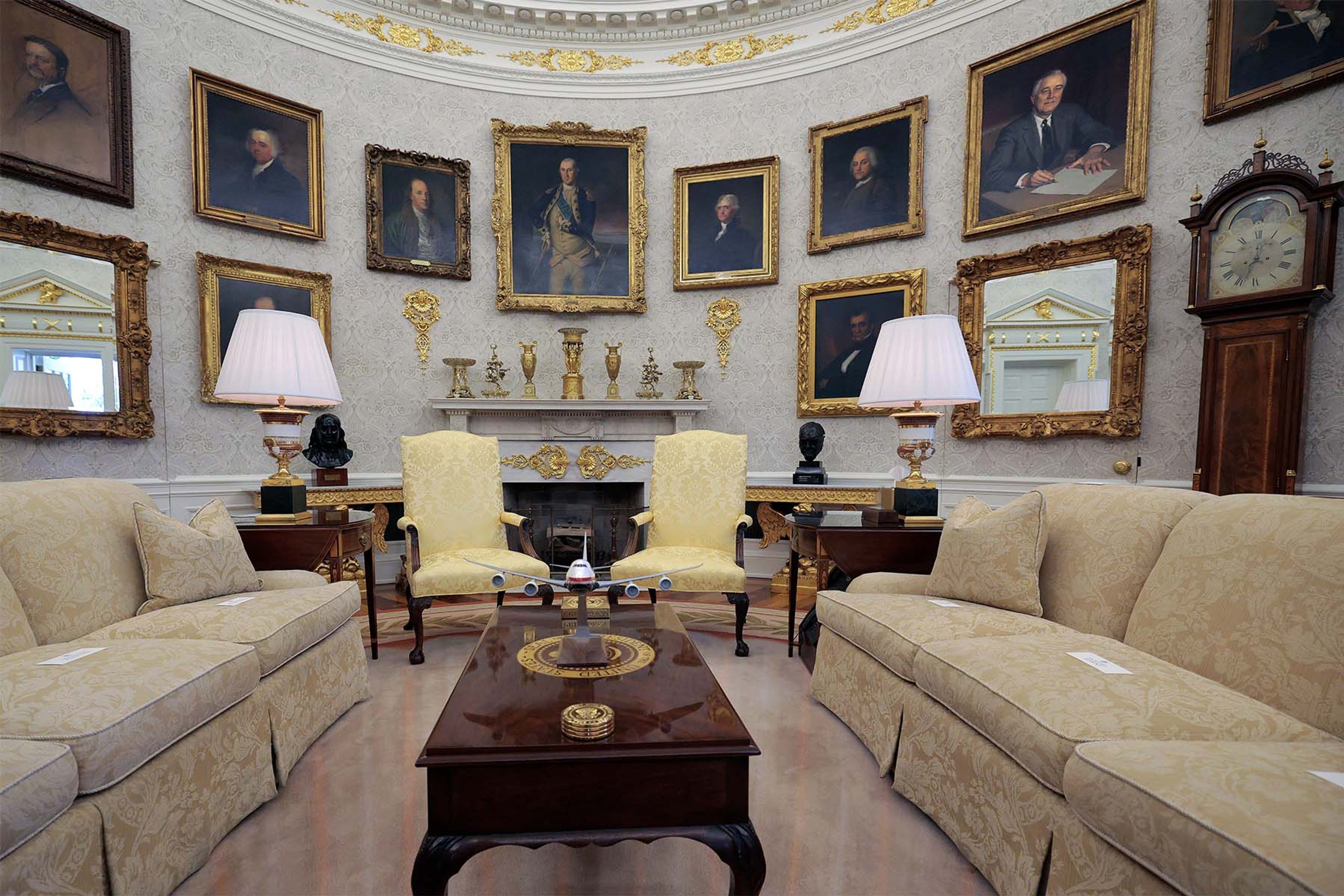
Of course, I didn’t see the Oval Office but have read a lot about the proliferation of gold. There’s a lot of gold in the Oval, to be sure, with gilded frames, cherubs, decorative motifs, and objects from the vermeil collection. It’s not a Mar-a-Lago style. Gilding -- at its best, layering a thin gold sheet on wood or metal -- is nearly as old as high-end decor itself. In ancient Egypt, Greece, and Mesopotamia, there was gilding galore. It’s power ornamentation whose zenith might have been Louis XIV’s Palace of Versailles, plus, considerable Neoclassical moments such as the Hôtel de la Marine in Paris, Monroe’s Bellangé furniture and his Minerva clock, and the Gilded Age homes in Newport. The White House’s Gilded Age armchair from the Herter Brothers graced the Red Room in the 1870s, thanks to Mrs. Grant.
President Roosevelt’s 1902 redecoration tamed but hardly annihilated the reign of gilding. The White House’s Steinway from 1903, the company’s 100,000th piano, is covered with gold leaf and decorated with acanthus ornaments and variations of the seals of each of the 13 original states. Monroe’s 14-foot-long gilded bronze plateau, likely designed by Napoleon’s architect, as over-the-top as can be, has appeared at dinners off and on in the State Dining Room for decades.
This isn’t Ikea taste, and the Arts and Crafts designer Gustav Stickley would have been blinded by sparkle, but what’s in the Oval Office is nothing new. The wall color is too white and bright. I’d gray it down a bit, but don’t we want our presidents to project power? Pastels are for baby blankets.

About the Author
Brian T. Allen is National Review’s art critic.
Featured Tags
Advertisement
Advertisement
Comments