A Day in New Haven
Written by Brian T. Allen
The Buckley Institute’s annual conference and a visit to two of Yale’s superb museums
Share this story
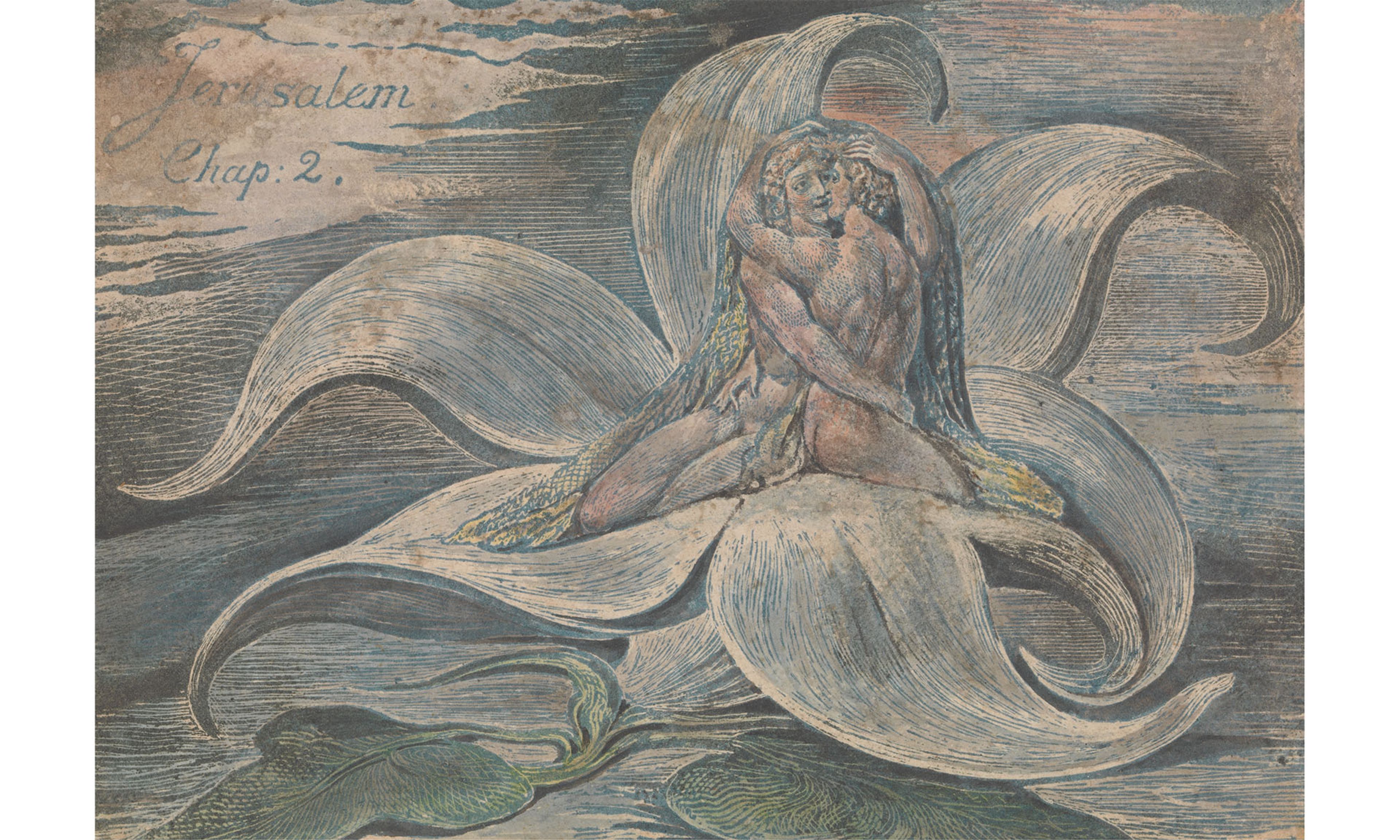
Blake’s the best and in fine form at Yale’s Center for British Art. William Blake, <i>Jerusalem, Chapter 2. Every ornament of perfection . . . (Plate 28)</i>, c. 1820, relief etching with watercolor and pen and ink.
Greetings from New Haven, the city of my birth, Yale’s home, and, more to the point, home of the Buckley Institute. Named after Bill Buckley, it promotes intellectual diversity and free speech at Yale.
The Institute held its annual conference last week, and I was on one of the six panels. What a wonderful experience -- I was astonished to know there are so many conservative students at Yale. Granted, Yalies aren’t stupid. I taught there when I was a graduate student in the early ’90s, and even the football players were writing biographies, making documentaries, performing in operas, and discovering unknown celestial bodies. The Institute has close to 850 Yale Fellows, or student members, who, inspired by Bill Buckley’s work and personality, learn about conservatism and restrain Yale leftists’ lust for conformity to false values.
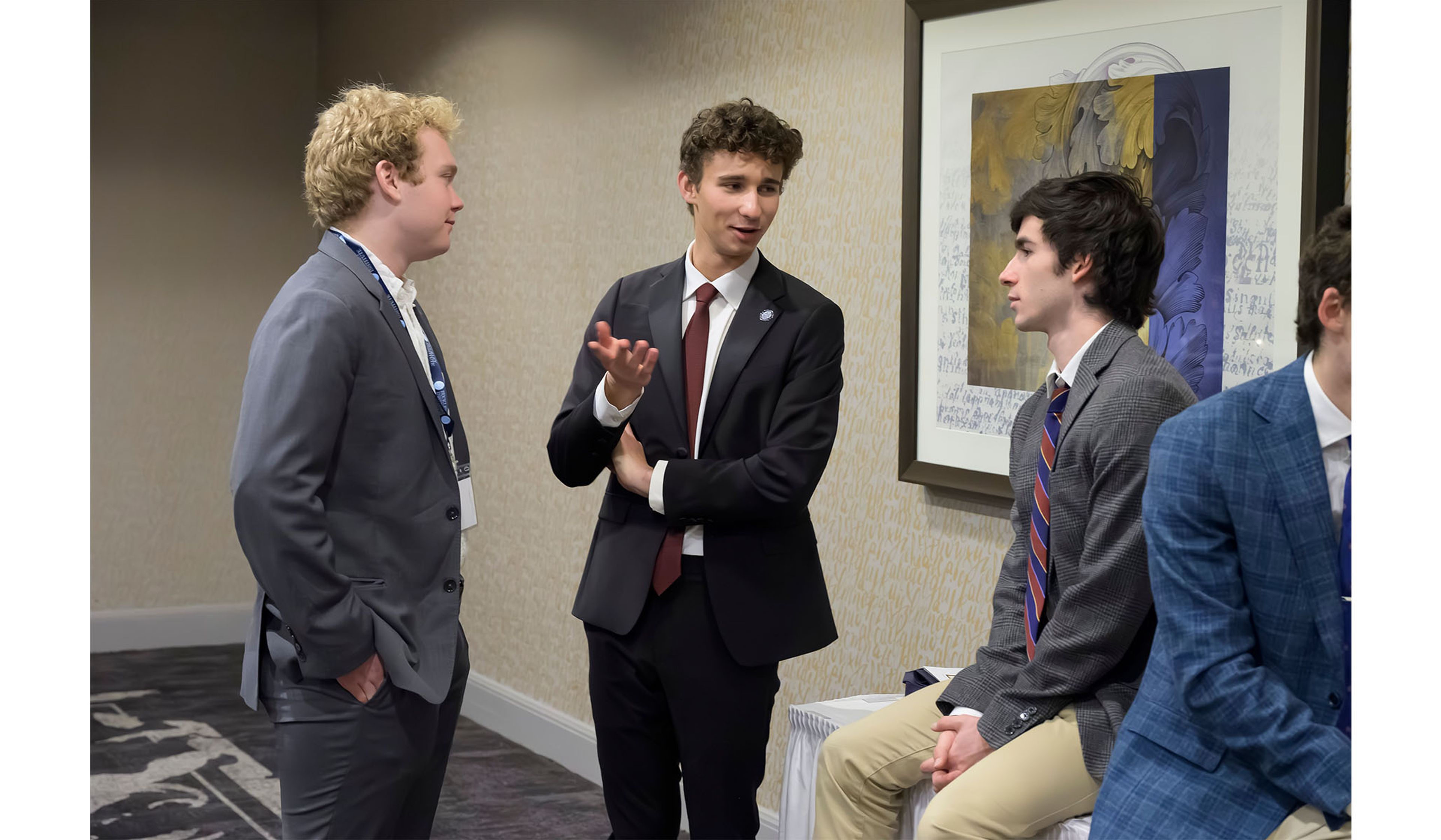
The Buckley Institute isn’t part of Yale, but it’s a positive presence on campus. Yes, the woke psychosis, along with a big dollop of antisemitism, infects Yale, but, unlike Harvard, Yale isn’t wild about either. It can tolerate and accept leaveners. Governor DeSantis was the keynote speaker at the conference. In his speech and question-and-answer time, he reprised his many wins in advancing commonsense governance in Florida. On my panel, I spoke about the state of art history pedagogy -- mostly vapid, imperious, feminized, and formulaic -- and how this affects museums.
A good time was had by all.
I also visited the Yale Center for British Art and the Yale University Art Gallery, two old haunts of mine. Growing up in ye olde North Haven, just north of New Haven, I saw Yale’s art gallery as my local museum. It’s both a teaching museum and the civic museum for New Haven and the towns around it. It has something for everyone. And, since it opened in 1977, I’ve been a faithful visitor to the BAC, as locals call the Center for British Art. In all, I saw two extraordinary exhibitions during my day in New Haven and one wretch, but, as Meatloaf sang, “Two out of three ain’t bad.”
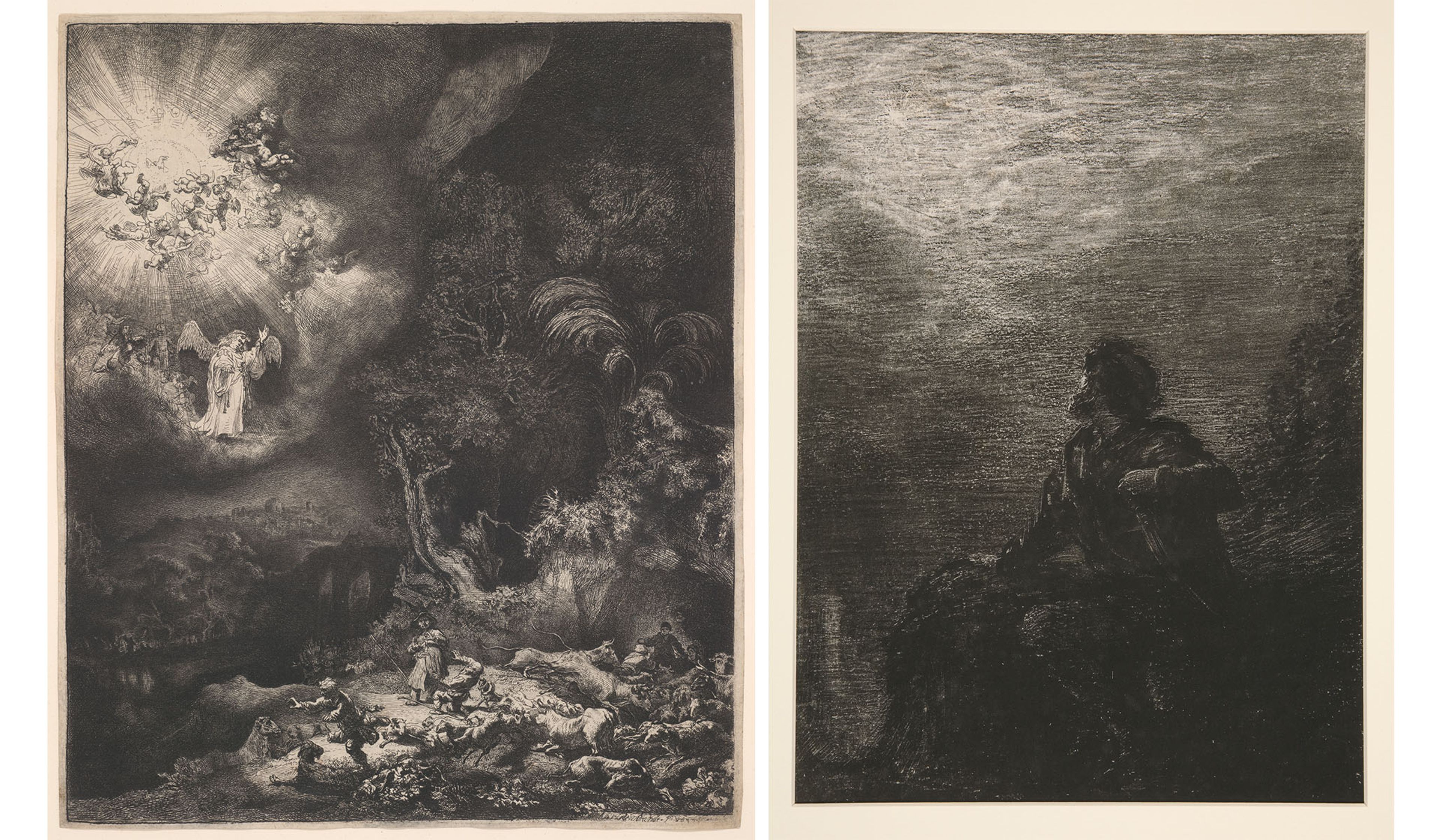
The Art Gallery’s Printing Darkness closes on December 7, and since I worked in Yale’s print room as a student and love nocturnes, I spent my gallery time there. Yale has always done nuanced, revelatory print shows, drawn mostly from its permanent collection, and this was up to its high standards. The exhibition is about 40 objects from the 16th century to our time, starting with Jan Harmensz. Muller’s Belshazzar’s Feast, from 1598, and Rembrandt’s Angel Appearing to the Shepherds, from 1634. Printmaking’s basic quality is the contrast between dark ink against light-colored paper, but the artists in the show pushed their blacks to the limit. Biblical stories dominate early printmaking, and many occur at night. Darks go from modulated to deep black, giving lights explosive power and darks the power of mystery. Elements both hide and creep from darkness. Light means revelation, literal and spiritual.
Some of the scenes are menacing and unsettlingly cryptic, though some are tranquil. All are invested with mystery. Odilon Redon, the French Symbolist, used darks in his Temptation of Saint Anthony series from the late 1880s to express a fevered dream of wild bears, a skull, and secret worlds alive deep in the ocean. Henri Fantin-Latour’s two takes on The Evening Star are from 1877. Paris got artificial gas lighting by the mid-1800s, illuminating streets and homes with a soft orange light. Electric streetlights arrived in the late 1870s, and in 1881 electricity was so prominent a feature of city life that Paris hosted the International Exposition of Electricity and was well on its way to earning its “City of Lights” sobriquet. Artists were fascinated with contrasts of dark and light, though Redon and Fantin-Latour seem to suggest that the new lights would never best the timeless lights of stars, the moon, and even a profoundly filtered sun. You don’t get timelessness from light bulbs, with apologies to Edison.
There’s Goya, a master of menace; Félix Vallotton’s grim Execution, from 1894; mournful work by the German Käthe Kollwitz, and, more recently, Vija Celmins’s starscapes. Fred Wilson’s We’re All in the Gutter, but Some of Us Are Looking at the Stars, from 2004, seems derivative and banal, but he’s a race pimp, so, I guess, he had to be included. Etchings, velvety drypoints, lithographs, mezzotints, aquatint, woodcuts, and monotypes get us to evocative blacks in different ways. The exhibition’s a treat for dreamers, mystery junkies, art historians, and art students, too.
Across Chapel Street, the BAC exhibits British art, but sometimes it shows imperial-era art from the hinterlands, and there’s a very good Whistler there, Nocturne in Blue and Silver, from the 1870s. Whistler considered himself an American, though he spent most of his life in London. His famous mother was a Confederate sympathizer. Her uncle was a slave trader and plantation owner, and her son, Whistler’s brother, was a surgeon in the Confederate army. Possibly some midwit graduate student has suggested that Yale take down the nocturne -- guilt by association -- but it’s still there.
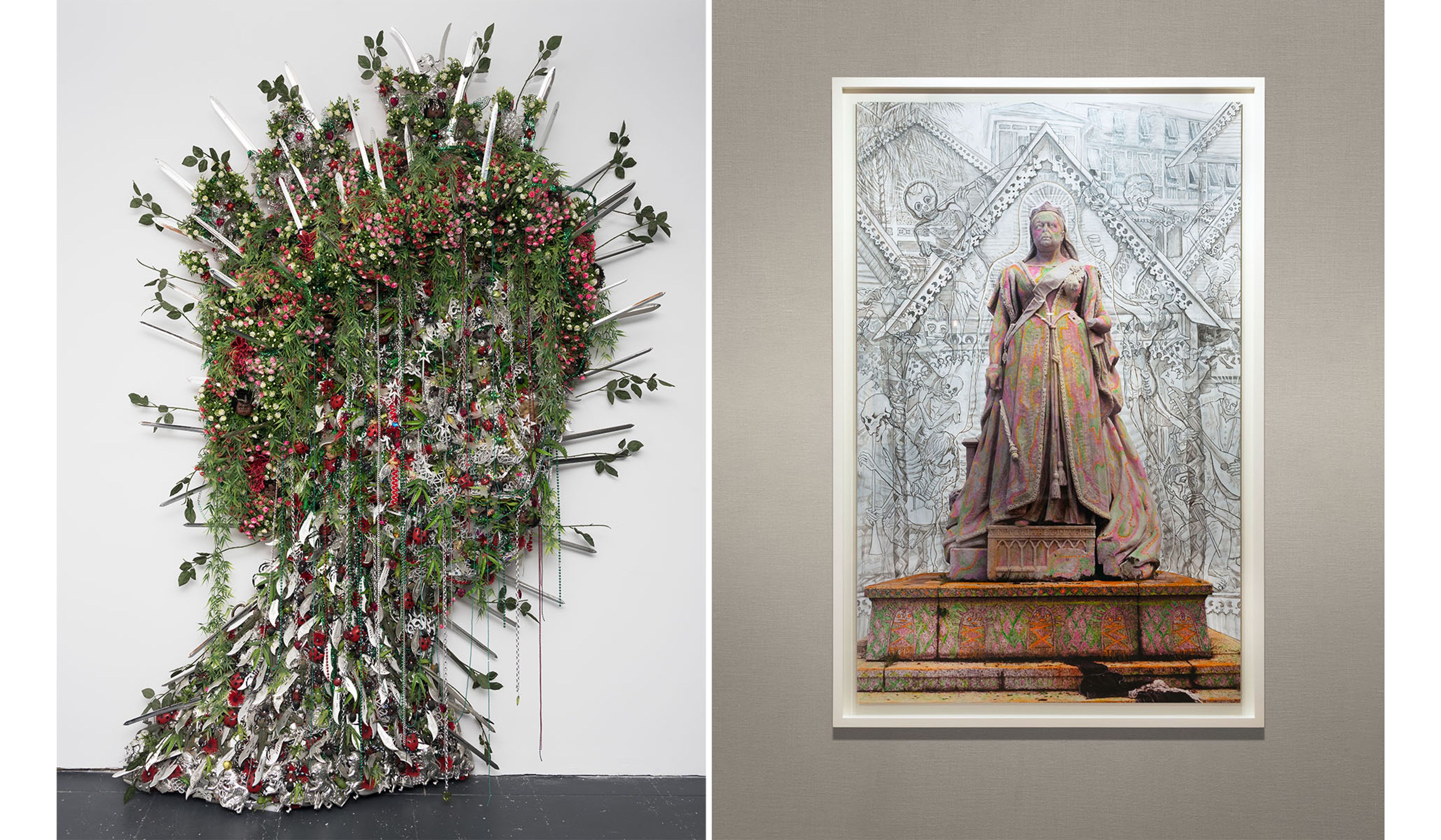
I’ll spill the bad news first, about the wretch. Hew Locke: Passages isn’t a terrible show. It looks good, as do all BAC exhibitions, and Locke (b. 1959) isn’t a bad artist. He’s a good craftsman, which a sculptor has to be. He uses “strategies of appropriation to reveal and upend the visual codes of imperialism.” Yawn. Locke is British and Guyanese, lives in London, and is among the go-to artists for high-end museums wanting to look involved in the atonement, reckoning, grievance, and grudge movements. He’s the Ta-Nehisi Coates and Ibram X. Kendi of the museum world. I’m all for a guy or gal making a buck, and I think the BAC should own one of his sculptures and display it occasionally, but an exhibition of a slew of them and a ten-pounder of a catalogue together extol a limited and, over time, inconsequential artist.
The exhibition begins in the BAC’s commodious atrium by the front door. The building is Louis Kahn’s last museum project -- the Yale Art Gallery was his first, 25 years before. Big sculptures of ships hang from the ceiling, meant to make us think of the Middle Passage voyage of slaves to the New World, but hasn’t this been done over and over and over? In the exhibition proper on the BAC’s second floor, Locke’s very good riffs on Velázquez’s royal portraits, done in pastel and charcoal, start things. They’re fancy indeed and endow Velázquez’s royals with the faces of cats. They’re attractive, and surely my cats think of themselves as royalty and long for world conquest as much as the Habsburgs did, but Locke’s work is a dash of Surrealism and not much more.
Koh-i-noor, from 2005, is a large wall sculpture, 116 by 86 inches, a mixed-media work referring to the 105-carat diamond in a British royal crown now claimed by India, Iran, Afghanistan, and Pakistan. Locke’s iteration is made mostly of plastic bits. The Brooklyn Museum, which owns the work, tells us that it’s meant to evoke “the greed, vanity, and artifice” at the root of British imperialism. The sculpture, beneath the clutter, is based on a photograph of Queen Elizabeth II. It’s near another wall sculpture, Veni, Vidi, Vici (the Queen’s Coat of Arms), from 2004, made from textile, plastic, and artificial hair. It’s “both a symbol of power and a symbol of desire,” the label reads. It’s based on the coat of arms on British passports, but it looks like an emaciated head. It’s compelling as an object but boring and trite at the same time. Then, of course, there’s a large photograph of a sculpture of George Washington, jazzed up by Locke with painted skeletons. The fairy tale climate emergency rears its ugly head and tosses its curls, too.
There’s a section on Locke’s rejected art projects. Existing landmark sculptures of British heroes such as Churchill, Captain Cook, Cromwell, Queen Victoria, Wellington, and Richard the Lionheart would be, in Locke’s proposals, painted and fashioned to look like fools and fops. I understand the point but find this kind of art to be one-dimensional. The point, by the by, is to strip British young people of pride in their country. We Americans are in the line of fire, too.
The BAC’s new director, Martina Droth, is the curator of Passages. I like her, and nearly anyone would have been an improvement over her predecessor, Courtney Martin, a failure and, I suspect, an affirmative action hire who left at the end of her five-year contract at Yale to head the Robert Rauschenberg Foundation. I’ll end this part of my story by noting the obvious. What looked promising and relevant in 2020 at the height of the George Floyd mass hallucination seems a canard in 2025. Droth is at the beginning of her reign, and I hope it’s a long one. She needs to learn not to bore us.
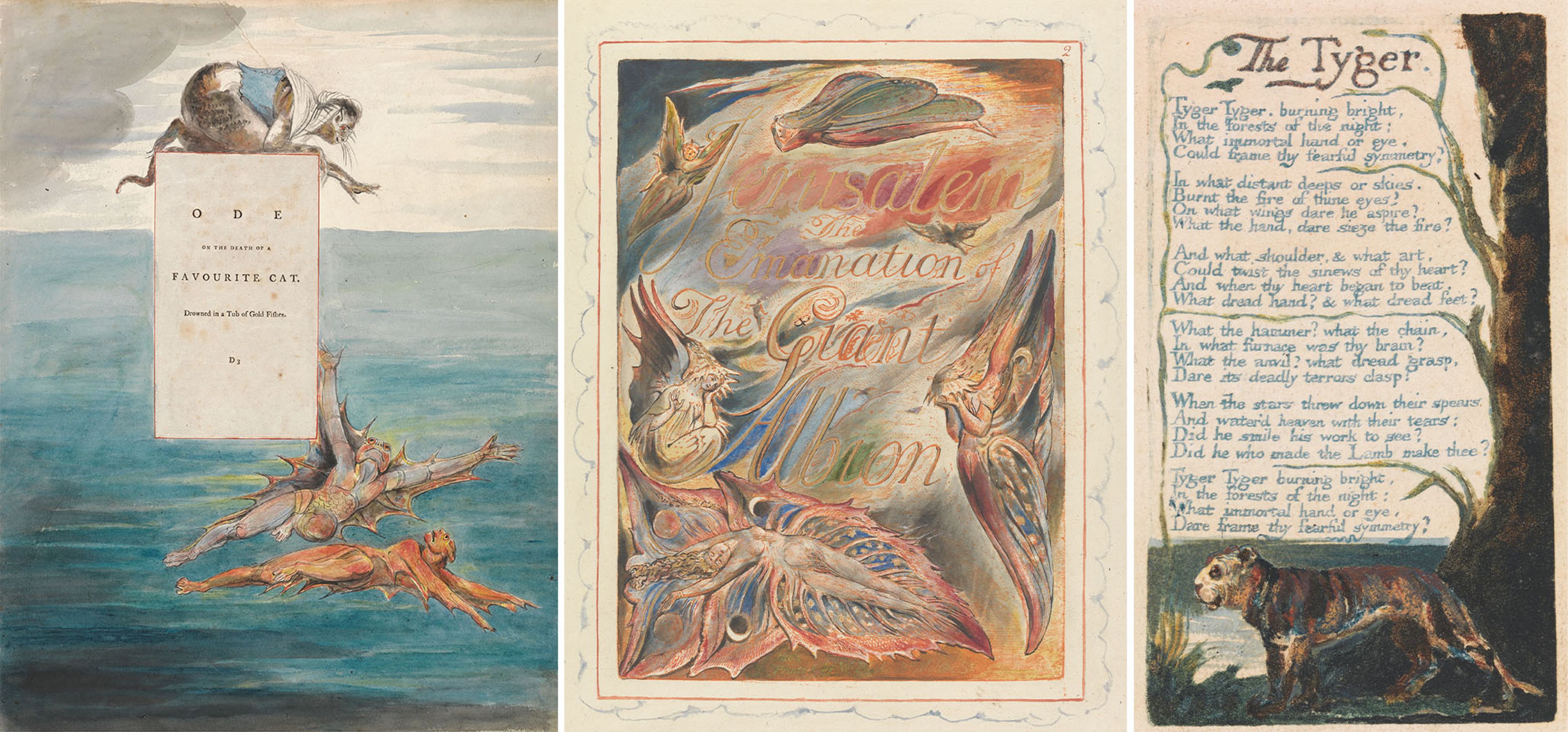
From the dregs to Parnassus. William Blake: Burning Bright gathers the BAC’s 900 or so works by Blake (1757–1827), the mesmerizer and visionary artist and ultimate in Romantic-era art. He’s a difficult artist since he was a dissident, a poet, an artistic innovator, and, in his lifetime, thought to be a nut. Burning Bright has pluses and minuses, as exhibitions go. The art’s fantastic but deep, with word and image so intertwined that it’s best to split things into bite-size pieces. Getting chunks, though, is better than nothing. Paul Mellon, the founder of the BAC and a collector extraordinaire, went heavy on Blake. It’s good to see some of the art on view.
As a child and adult, Blake was steeped in the Bible and claimed to have seen visions of angels and the prophet Ezekiel. He studied at the Royal Academy and was drawn less to conventional beauty and stateliness and more to wild characters like Henry Fuseli, Mary Wollstonecraft, and John Flaxman. They’re best described as enlightened, but they believed in ghosts, ghouls, miracles, and dreams. The tiny children’s book For Children: The Gates of Paradise starts the show. It’s in a case and opened to “I Want! I Want!” -- an engraving of a child climbing on a ladder without a support, aiming at the moon and the unattainable. Edward Gorey must have looked closely at Blake.
Blake’s art is unusual in any era. His figures are sculptural -- he loved Michelangelo -- but ethereal, often made of a few lines and a limited palette of watercolor, naïve, abstract but powerful. The contrast between childhood virtue and the loss of innocence in adulthood -- a fallen state -- was a theme. When he illustrated books of poetry, he sometimes broke the stanzas with watercolors of tree boughs. Blake was a Romantic poet. His Visions of the Daughters of Albion, from 1793, is in the show. It’s a book of Blake poems, illustrated by Blake with colored etchings of bizarre figures that evoke Greek myths and the Bible. It’s one of his prophetic books using themes from the French and American Revolutions to imagine a new world on the cusp of creation. Albion is a personification and an ancient name for England, part Greek, part Roman, part Celtic.
Blake’s an illustrator, too -- for example, of “Ode on the Death of a Favourite Cat Drowned in a Tub of Gold Fishes,” Thomas Gray’s half-serious, half-satiric 1751 poem about the death of Horace Walpole’s cat while trying to catch a goldfish in an amphora-like pot. It’s weird but riveting, a tiny tragedy as things go but, for the cat, an epic drama. On the way to death-by-drowning, the cat displays hubris, narcissism, and hallucinations, changing forms as she fights her last battle. Amazon warriors and fairies figure. The work gives me a new insight on what goes through my cats’ heads.
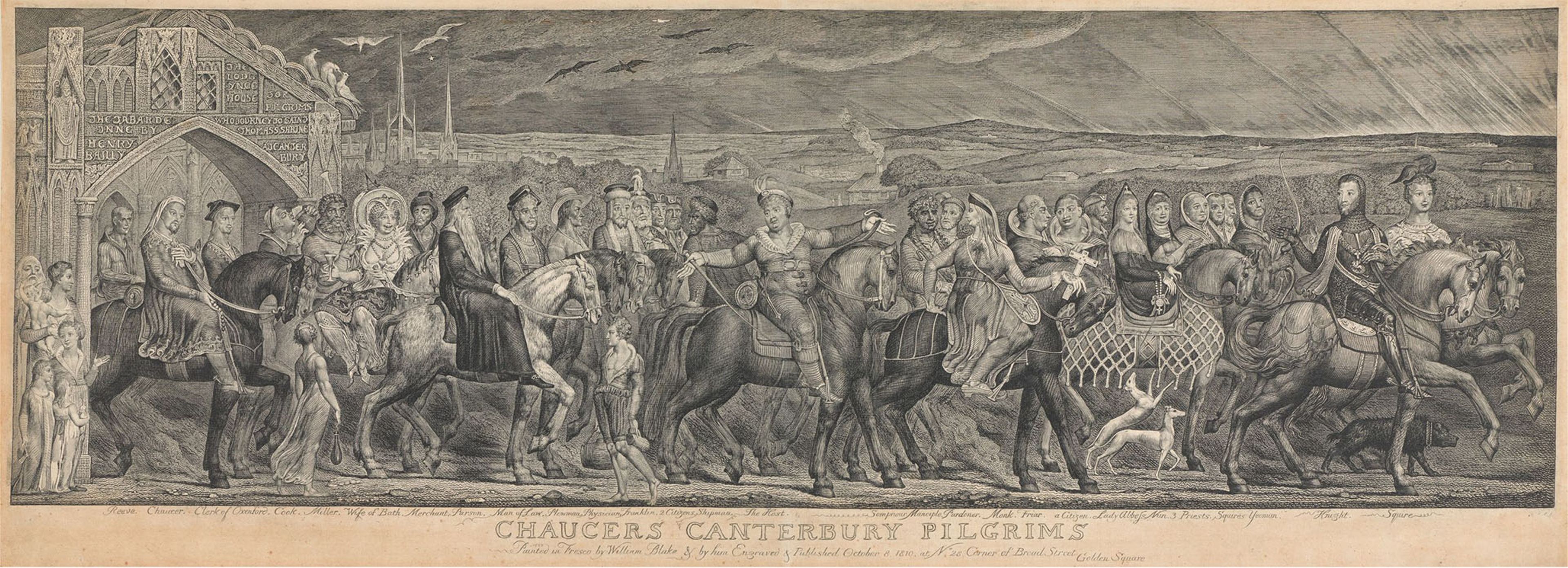
Chaucer’s Canterbury Pilgrims, from 1810–1820, is in the show. It’s Blake’s 36-inch-wide engraving depicting Chaucer and all 29 pilgrims in his epic story about this broad cross section of humanity as they travel from London to Canterbury in the mid-14th century. Blake’s depiction is an engraving done in the hard, crisp style of Dürer, so it looks archaic, but Blake is less a dogmatist and nitpicker and more a universalist. He wants to convey the breadth of humanity in one frieze-like image. He’s a very early Gothic Revivalist, too.
“Jerusalem: The Emanation of the Giant Albion,” composed between 1804 and 1820, is Blake’s longest illustrated poem and rumination on the decline of Britain from the weight of organized religion and war. It’s dense stuff in part because the curators don’t analyze the poems. I suspect there are parallels between Blake’s take, crazy as he was, and our own times. He died in 1827, working on an illustrated book of Dante’s poems. No surprise. Dante is timeless and unique, and so much of our vision of the afterlife goes back to Dante. Blake wasn’t famous in his lifetime. His books of poetry were printed in tiny editions, but he inspired the Pre-Raphaelites, French Symbolists, and Surrealists. He’s the antidote for the galloping materialism of the English and their current bout with nihilism and despair.
It’s a great introduction to Blake. The BAC’s Blakes are the best. I would have ditched Locke, whose tiresome work occupies most of the BAC’s second floor. Only the committed Trots and the preener class, pushing their virtue, will savor Locke and take joy in remorse. He’s a phase. Better to do a Blake extravaganza, in focus, with deeper attention to his innovations in printmaking -- he invented relief etching -- and to his political and religious beliefs.
The BAC’s doing two exhibitions on Indian art next year. Good, it should do more. It’s also doing a show on British art from 1900 to 1960. What’s missing is a show for America’s 250th birthday. We Americans are the ultimate rebels against imperialism and colonialism, and the ultimate success story since we’re the freest and most prosperous country in the history of humanity. Many of us would like to use the BAC’s collection to learn more about Loyalists in Connecticut, the merits of George III, and who did and believed what. Many Brits, among them Blake, admired the Patriot cause. Yale’s collection of Revolutionary War art and artifacts is immense. I’ll do it if the curators are too embarrassed to celebrate America, but Yale has to pay me.

About the Author
Brian T. Allen is National Review’s art critic.
Featured Tags
Advertisement
Advertisement



Comments