A Heavenly New Art Museum for Notre Dame
Written by Brian T. Allen
It’s not a miracle — the university does things well, it has good donors, and the new Raclin Murphy museum has wonderful art.
Share this story
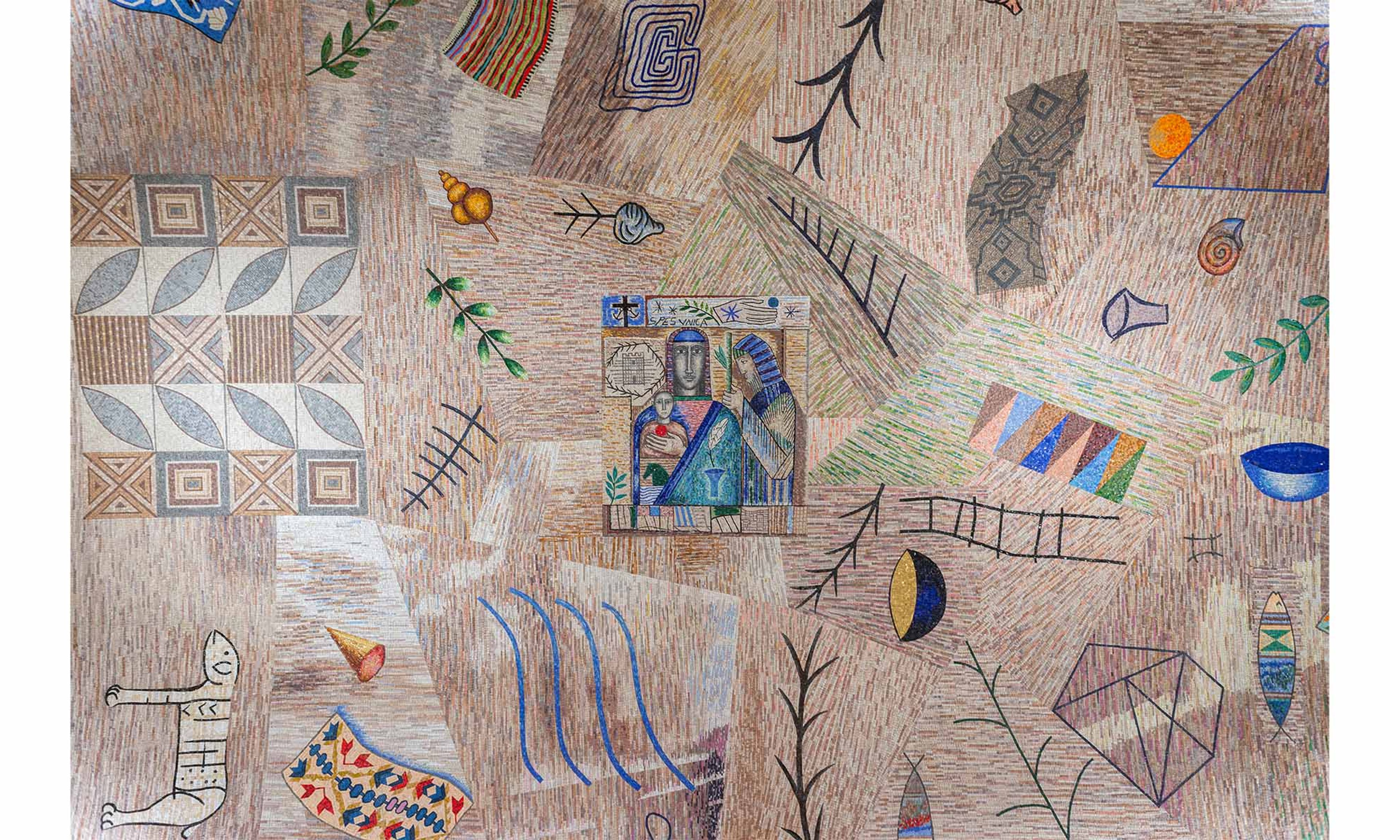
The University of Notre Dame’s new museum includes a chapel — unique among museums — that’s a work of art with a mosaic ceiling.
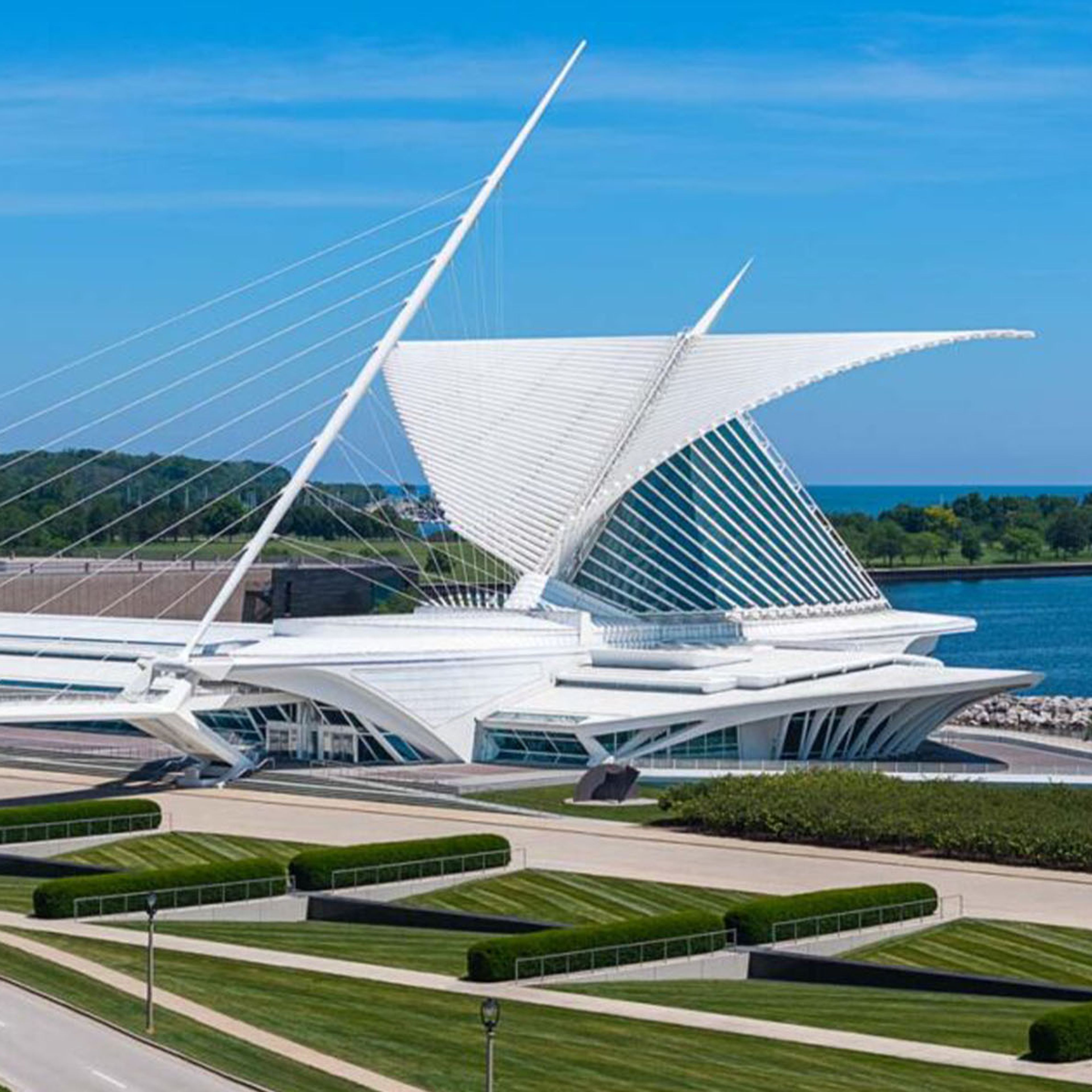
Greetings from South Bend and the campus of the University of Notre Dame, home of the new Raclin Murphy Museum of Art. It’s a jewel in Notre Dame’s crown and a central part of the university’s new arts initiative and impressive arts district. The museum, the last arts project for architect Robert A. M. Stern, opened in late 2023. I hadn’t visited South Bend for a few years and had only misty watercolor memories of the old, cramped Snite Museum. It was high time for the next level, and the prestigious university, among the country’s best, raised the bar to the top notch. What I saw is an attractive, commodious, well balanced, and perfectly varied new home for a fine collection, far better than I remembered. It’s the museum’s 150th anniversary, too.
The 70,000-square-foot Raclin Murphy is named for South Bender Ernestine Raclin, Notre Dame’s first woman trustee. Her father was an alumnus and trustee. Ernestine, her daughter Carmen Murphy; and her son-in-law Chris Murphy, a Notre Dame alumnus, made the lead gift. Coming from a South Bend family is a touch of kismet since the museum is both the university art museum serving Notre Dame students and faculty and the civic museum for South Bend and St. Joseph County, an area of about 300,000 people. Notre Dame is a good citizen. The art museum hosts thousands of local school children every year and is free and open to all comers. Costing $70 million for construction, it’s economically efficient as well as lovely.
Stern, who died in December, was a classicist as an architect, known for a cool, dignified style prizing internal harmony but also harmony with its surroundings and especially with Stern’s clients. Notre Dame’s house style for its expansive, stately campus is Collegiate Gothic so there’s plenty of arches, niches, quads, finials, mosaics, and turrets. This branch of the Gothic Revival was standard for schools and churches since it evokes serious moral purpose and, at Notre Dame, makes for a unified campus. The museum’s look is more classical, but its yellow brick, a Notre Dame staple, unites it with the performing arts building, the new music building, and the new Architecture Department building close by in what is a new arts district. This corner of the campus was once a field for football-game parking and tailgating, but now it’s an arts hub.
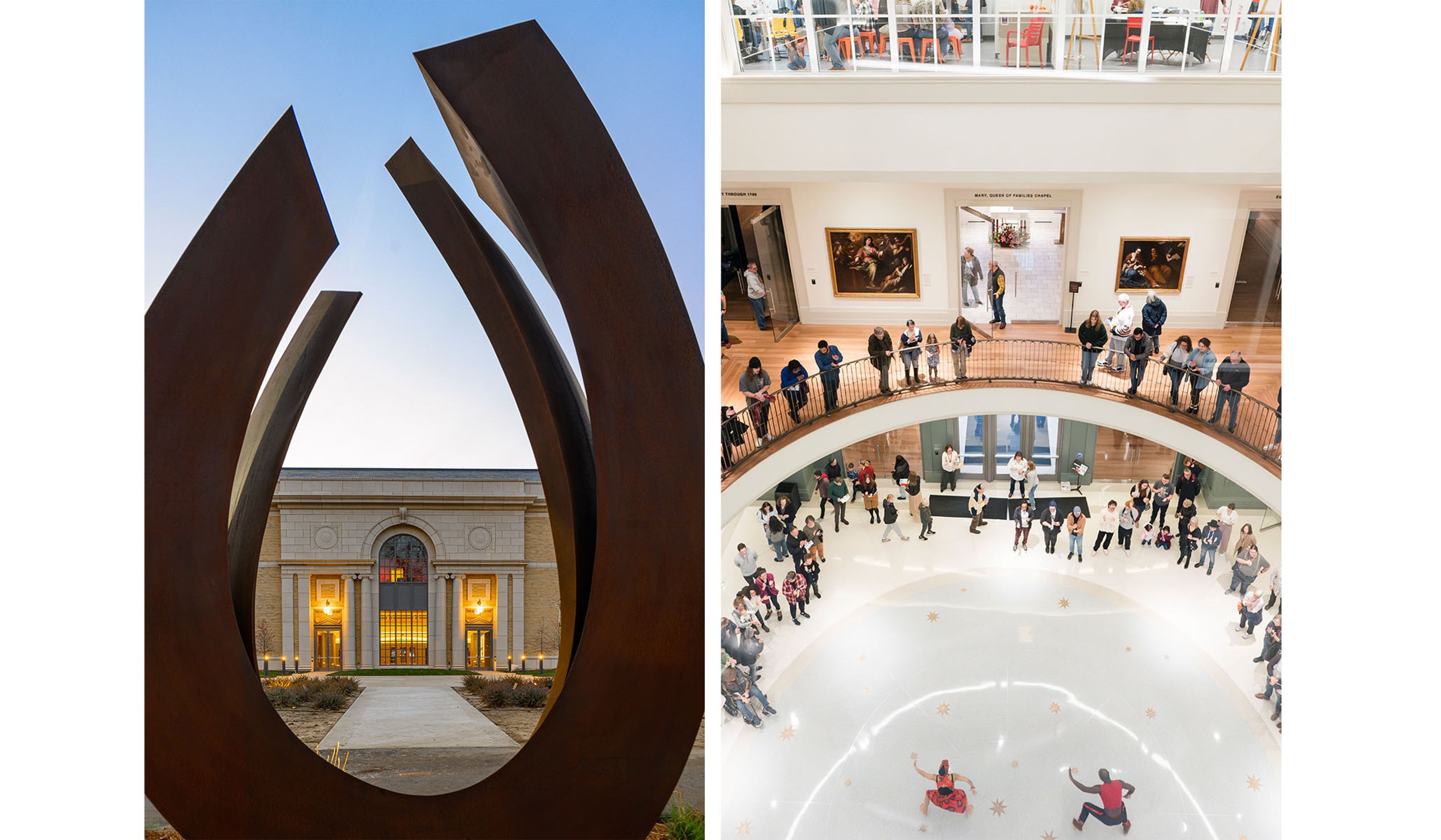
The first things we see inside are an eye-popping floor-to-roof rotunda and, bless Notre Dame and the museum, art. At many museums we have to endure the long march through the ticketing hall, the shop, space with a video about institutional history, the donor wall, and greeters along the way asking us “how’re we doin’” and “any questions, I’m here to help” before we collapse steps before the first gallery, gasping, “Oh where is the art for my parched soul?” as a fundraiser asks whether we want a single or family plan, not for grave sites but for museum membership.
No, at the Raclin Murphy, we see rotunda walls with commissioned art by Maya Lin, Jenny Holzer, Julie Mehretu, and a Kiki Smith–designed terrazzo floor with a star motif. There’s a sleek Modernist welcome desk with fresh flowers endowed by a donor.
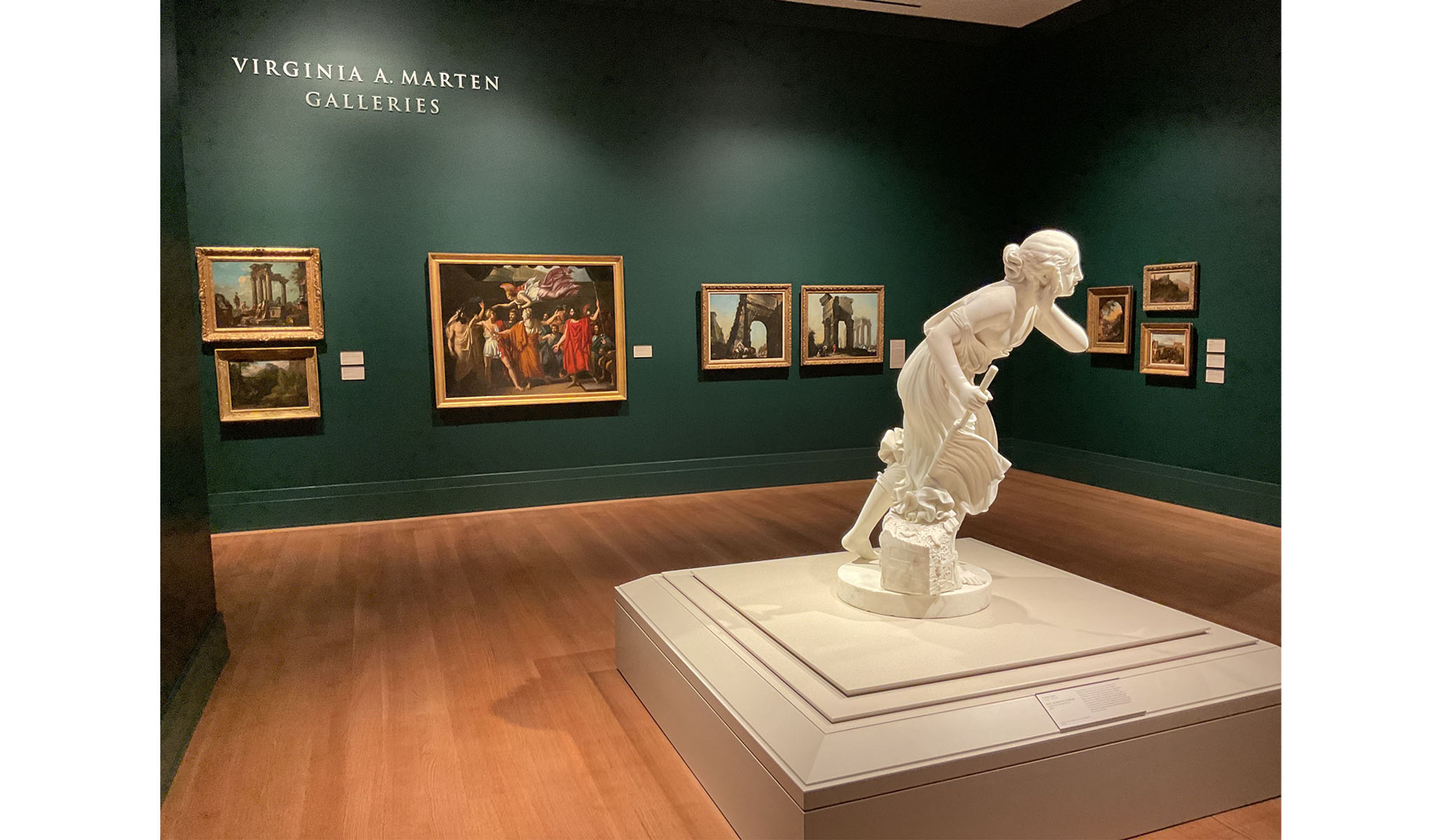
The collection is wonderful, with unexpected glories, as is the case in many school museums and small city museums where art comes via alumni and locals, many with idiosyncratic taste. It goes without saying that Notre Dame is a seriously Catholic university. Catholic faith plays an essential role in the school and probably in the lives of many students and most alumni. It’s not surprising, then, that the first gallery, right off the rotunda, is the European gallery, with a Grand Tour, all-roads-lead-to-Rome theme. The Vatican is in Rome and there’s religious art here and there in this space, but Rome was -- and is -- also a destination, a center for creativity from the ancients to the Baroque and beyond. Notre Dame is a university for very smart, inquiring people, so adventure and exploration are themes as well. This good museum is, in effect, a grand tour of its own.
The first gallery has 18th-century views of Rome painted for the high-end tourist market, Alexander Pujol’s Fury of Achilles, from 1810, and Randolph Rogers’s sculpture Nydia, the Blind Flower Girl of Pompeii, from the late 1850s. The wall color is a hunter green, which adds drama. There are lots of scenes from Greek and Roman mythology -- scenes of everyday life among the pagan gods -- and lots of French Rococo, Neoclassical, and Romantic pinup girls, but they’re exquisite and I don’t think ogling is a sin. Faith, unless you’re a Shaker, doesn’t ban the carnal side of life. I love the museum’s Boucher, The Bird Has Flown, from 1765; it shows a couple in the forest, suggesting that the road from flirtation to conquest is wide open, with no speed limit.
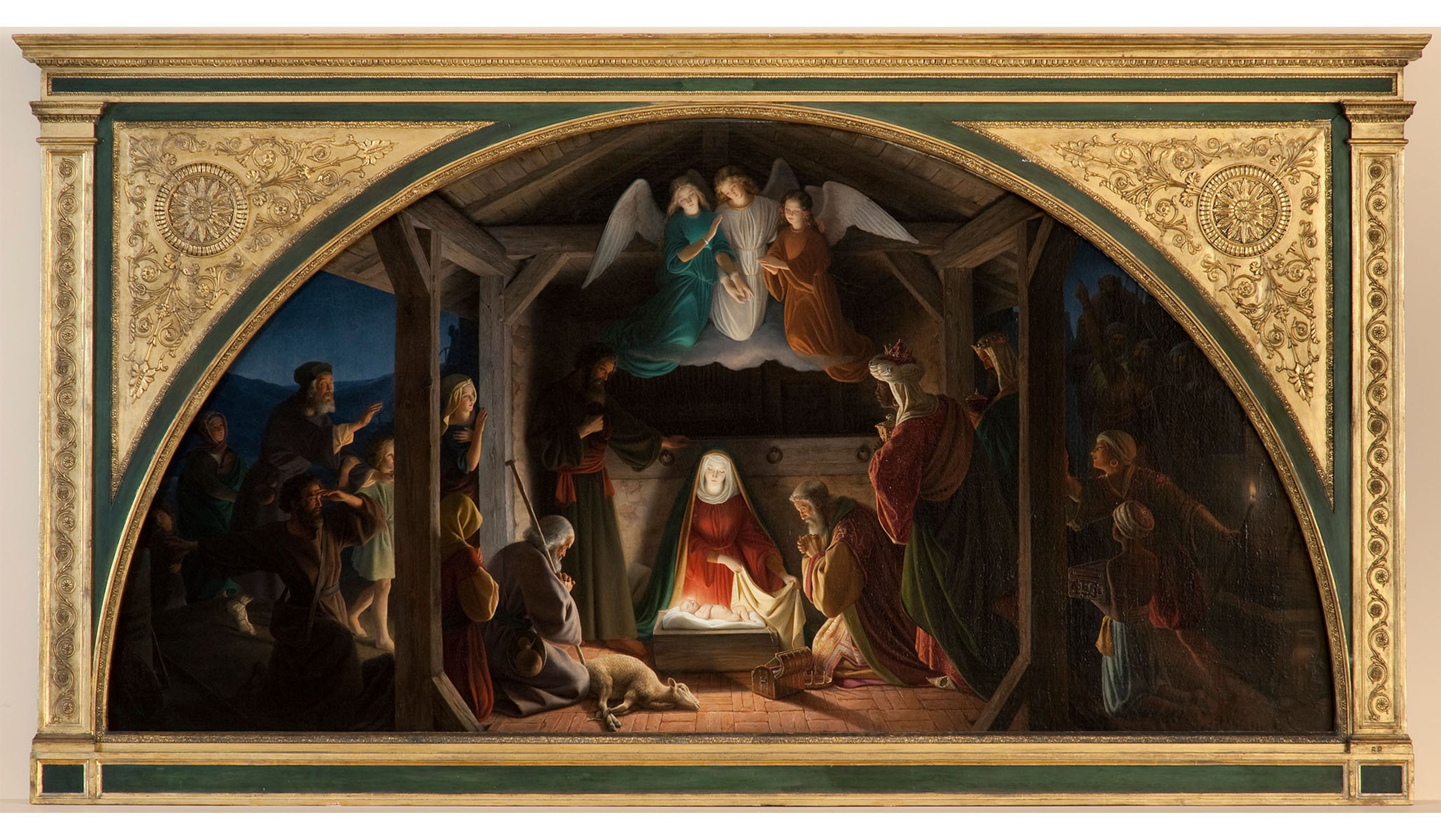
Two big showstoppers in the European galleries provoke and unsettle us in the face of their quality. Eduard Karl Steinbrück’s Adoration of the Magi, from 1838, is an eight-footer with its original frame and looks not only like an altar but an encapsulation of an entire religion. In a way, it is. It’s warm and glowing, time is standing still, and the figures look real but also porcelain and ethereal. Light is dark and mysterious but not spooky. It makes us look, probing what we can’t see easily, a good thing since the birth of Jesus is an all-changing but nebulous event. Ideally, He brings peace and revelation.
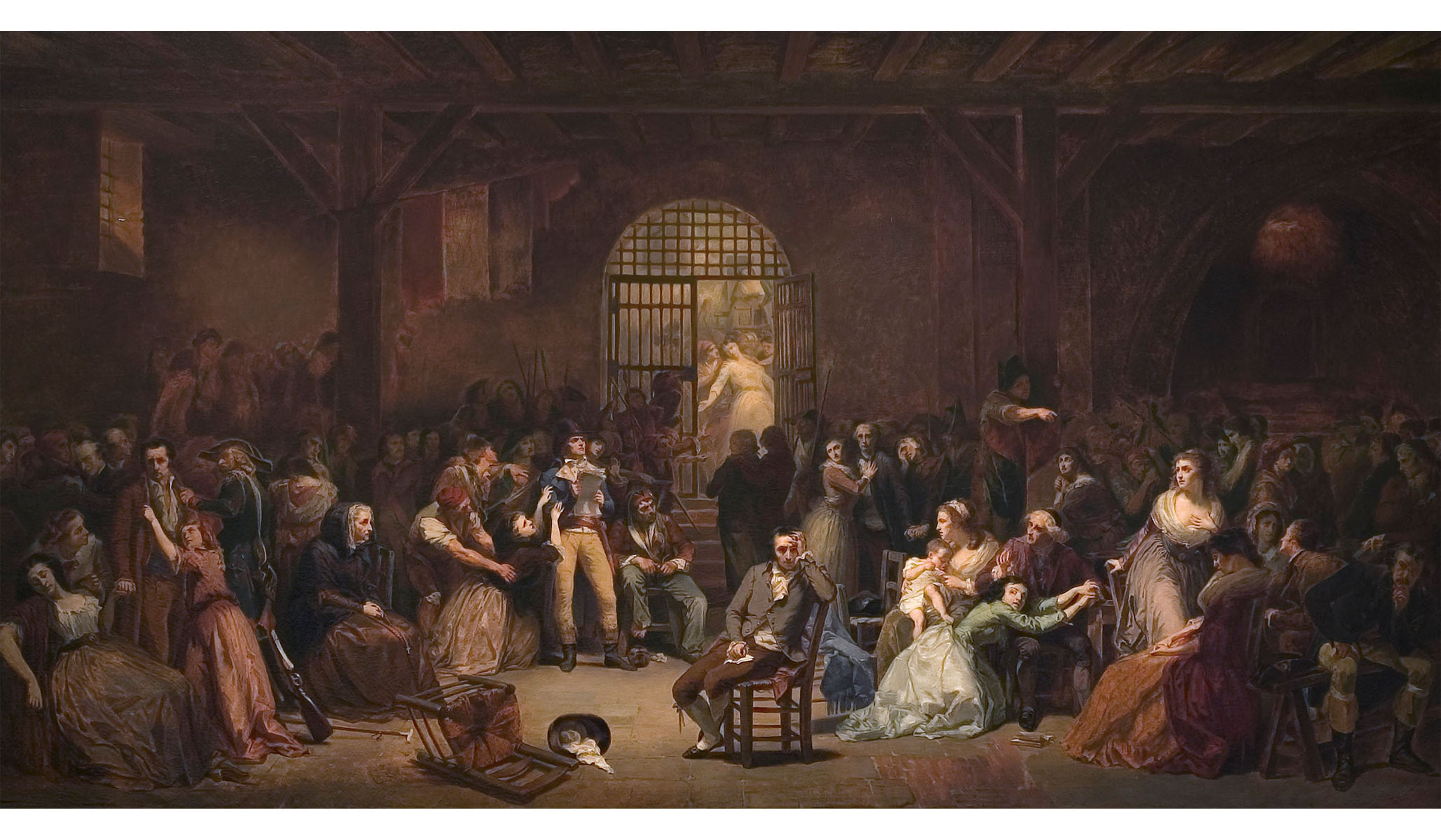
Another eight-footer, steps away but not directly juxtaposed against Steinbrück’s scene, is Charles Louis Lucien Muller’s Roll Call of the Last Victims of the Reign of Terror, from around 1860. I’d never heard of either Steinbrück -- he’s German, Catholic, and a Nazarene artist -- or Muller -- he’s a French history painter -- and both have produced blockbuster morality plays. Roll Call shows the last, most vicious moments of the Reign of Terror, at the Conciergerie prison, the last stop before the guillotine for the enemies of the new, atheist state -- a regime ruled by logic gone mad, a regime that embraced all that Jesus’s birth and life was meant to extinguish. A bailiff reads out the next to go. The poet André Chenier sits in the center, holding paper and pen. He was initially a radical but, once he, like others, was hauled before the Revolutionary Tribunal, the revolution was well into eating its own. He died at the guillotine two days before Robespierre and is buried in the Picpus mass grave. The French excel in mass woe, hence the 40-year Broadway run of Les Misérables.
Roll Call, I learned, is the work of art most written about by students. It’s a pathos picture, I know, but it’s also in these galleries that we get a gentle nudge about the power of faith, that “something to keep in mind,” a nudge not by the Holy Spirit but by a wall quote from Chateaubriand, not the necessarily mute tenderloin but the historian and writer. Between Roll Call and the Magi is a wall with two explicitly religious pictures. Above them Chateaubriand tells us, “There is no religion without mysteries. God Himself is the great secret of nature.”
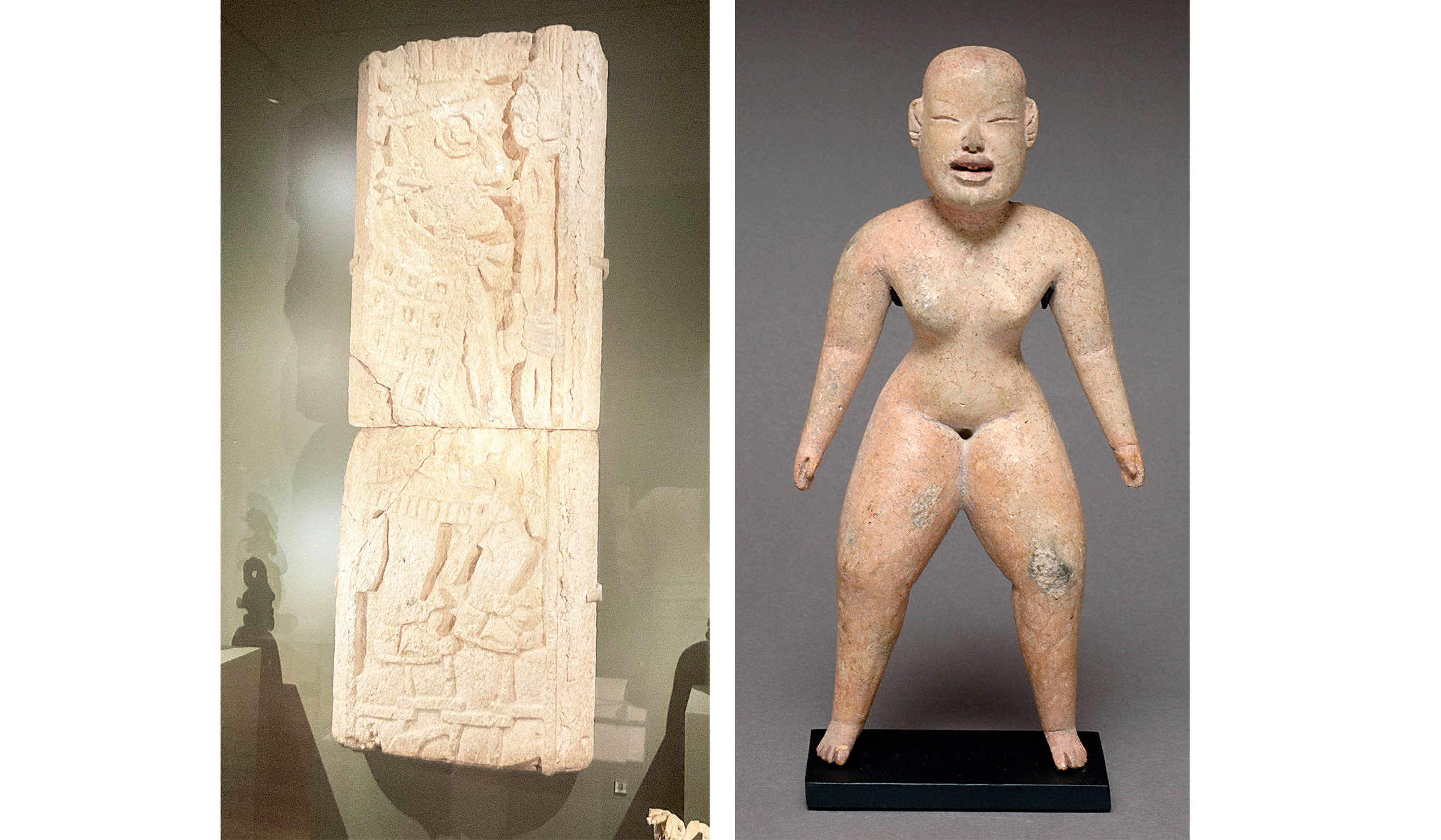
The Raclin Murphy’s pre-Columbian art is very, very good. In 1918, a Peruvian priest with a side gig as a dealer sold Notre Dame a group of Chimu blackware vessels, giving the art museum, then very small, a foundation that another priest, years later and the museum’s director, used to develop a bigger and better collection. Today, its Olmec figures are superb. My favorite is a great rarity, an Olmec standing female ritual ballplayer figure from around 1500 b.c. She’s more Tanya Harding than Twiggy and, representing the great goddess, means business. Ultraviolet light shows evidence of painted garments that have faded after centuries underground. A tall stone Maya relief panel from around 900 b.c. shows a god smoking a cigar. He’s a merchant god and stands on a backpack suggesting goods sold and in transit.
I noticed happily that one thing missing from the galleries is technology. There are no kiosks. During the museum’s design, students in focus groups said they wanted to be left alone with the art, unburdened by machines and bossy curatorial intervention. The labels are succinct, helpful, free of jargon and crybaby doom-and-gloom cant. The curators designed and arranged the galleries with an eye toward clarity, not clutter.
The porcelain cases have just the right number of objects spaced so each is an autonomous object. I hate packed, aggressively arranged porcelain cases. The wall colors throughout the museum are inspired. Hunter green, a classic burgundy, midnight blue, olive green, and a unifying ashen tan complement the art rather than compete with it or, worse, thwart it.
The Native American and pre-Columbian galleries are on the second floor along with a series of galleries with themes such as morality and faith. Notre Dame doesn’t forget its history and mission. The many depictions of Jesus, Mary, the often-overlooked Joseph, and the way of all flesh aren’t presented bashfully or, as in many museums, with curatorial ignorance or, worse, denial that these works were intended to put viewers in touch with God and to promote self-improvement among God’s children. This is refreshing, and it might be my imagination, but the art seems relieved to be freed to do its Christian humanist work as intended. So much of European art revolves around Catholicism and Christian values. The museum embraces these facts of sensate life.
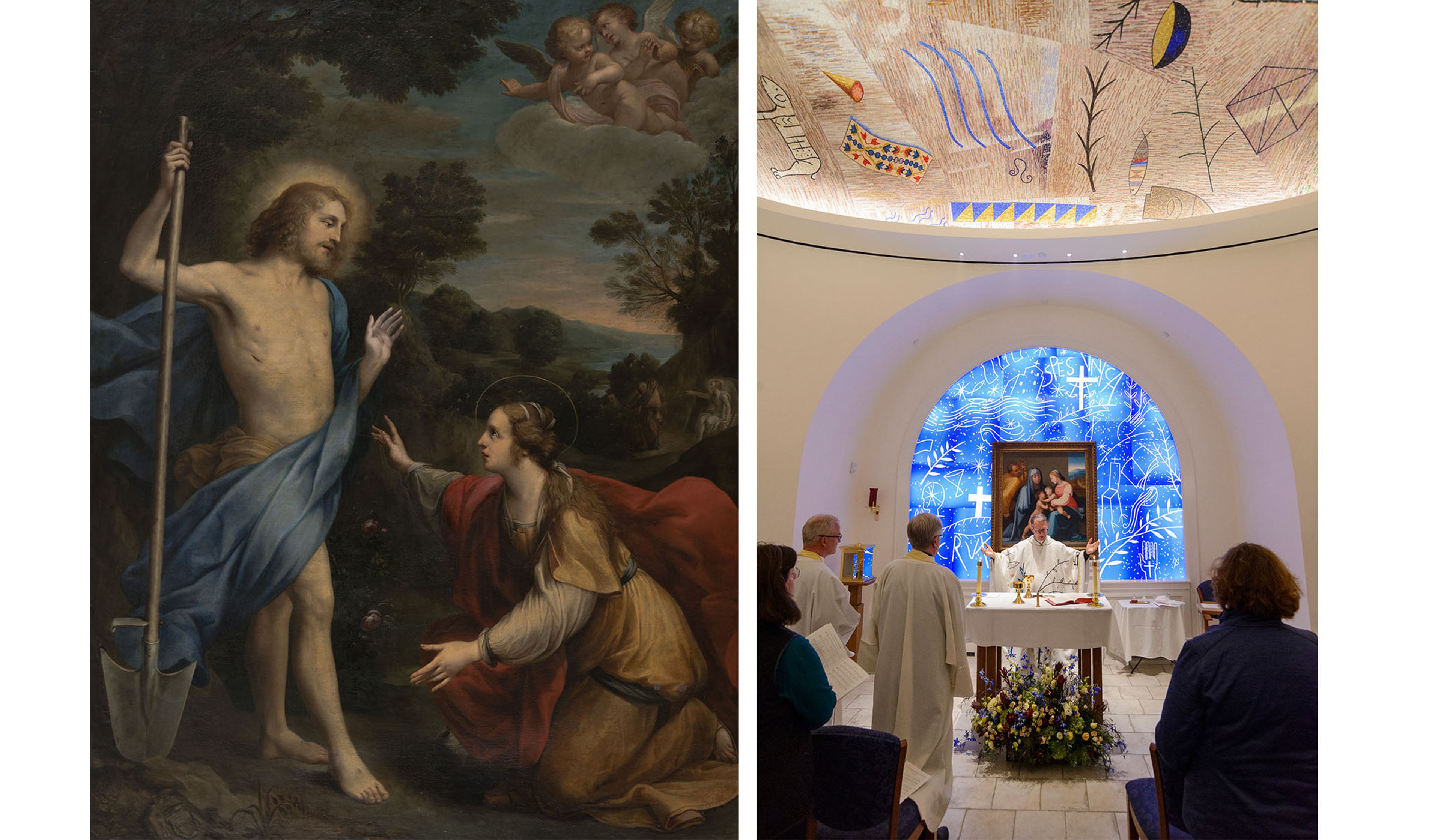
Possibly the art looks so good because so many of the things on view have been cleaned. I didn’t know Vincenzo Spisanelli, but his life-size Noli Me Tangere, from 1640, is luminous with fresh color unveiled during conservation. Centuries of gunk were removed. He’s a brilliant figure painter, too. Its substance, though, is its story -- Jesus treasured and respected women -- of Christ’s appearance to Mary Magdalene after His resurrection. The scene is depicted with a theatrical touch, yes, but conveyed as both real and enchanting.
I go to museums for a living but can’t remember seeing a chapel in one, or at least one that wasn’t originally a church. The Mary, Queen of Families Chapel at the Raclin is dedicated to the Virgin Mary as Notre Dame’s patron and intercessor. The space was designed by Mimmo Paladino (b. 1948), an Italian artist and designer I’d call a contemporary Symbolist. On the wall behind the altar, we see Holy Family with Saint Elizabeth and the Infant Baptist, by Fra Paolino from the second quarter or so of the 16th century. It’s a balance of Renaissance serene and, hung against a bright-blue stained glass window, Baroque pop.
There’s seating for about 40. Masses are said there, not every Sunday but often. Above it all reigns a mosaic ceiling made for the space and designed by Paladino. I love old mosaics, but I’m a cheerleader for contemporary mosaics. The mix of color and little tiles makes for a different look, both abstract and representational. In the center is a Byzantine-inspired group of the Holy Family surrounded by symbols of the university, the Native tribes once living in that part of Indiana, Midwestern flora, and the St. Joseph River. The thing is made of thousands of pieces of marble and gold-leafed glass. It’s a destination in itself.
The museum is mounting a “150 for 150” collection drive seeking 150 collectors to give art in honor of its 150th anniversary. I love what they’ve gotten, though I’m not surprised. Notre Dame alums are strivers and do well. The museum likes to collect Irish art, which is no surprise, so In St. Stephen’s Green, from about 1895, by Walter Osborne, an Irish Impressionist well known in Ireland, is already very much loved. Under the museum’s Christmas tree also were photographs by Eudora Welty -- I didn’t know she was a talented artist -- a splendid Emil Nolde woodcut, and Gainsborough and Reynolds portraits. A Rouault Crucifixion, from 1926, starts the show. I think people love the new museum, see how good the art looks, and want to give their own work, knowing that it will shine and be used well and cherished. The drive has exceeded the 150-collector mark, with many donors making multiple gifts, and it has brought in nearly 1,300 works of art in total.
Nothing succeeds like success. The museum is building strength in contemporary art and historical American art, but that will come with time. So much of American art before, say, 1900 looks and smells Protestant, but the Raclin Murphy Museum and Notre Dame are in for the long term, so lots of what they don’t have now they’ll get. They have a small but potent Eakins priest portrait, and now they have a grand Sargent. American photography is a strong suit.
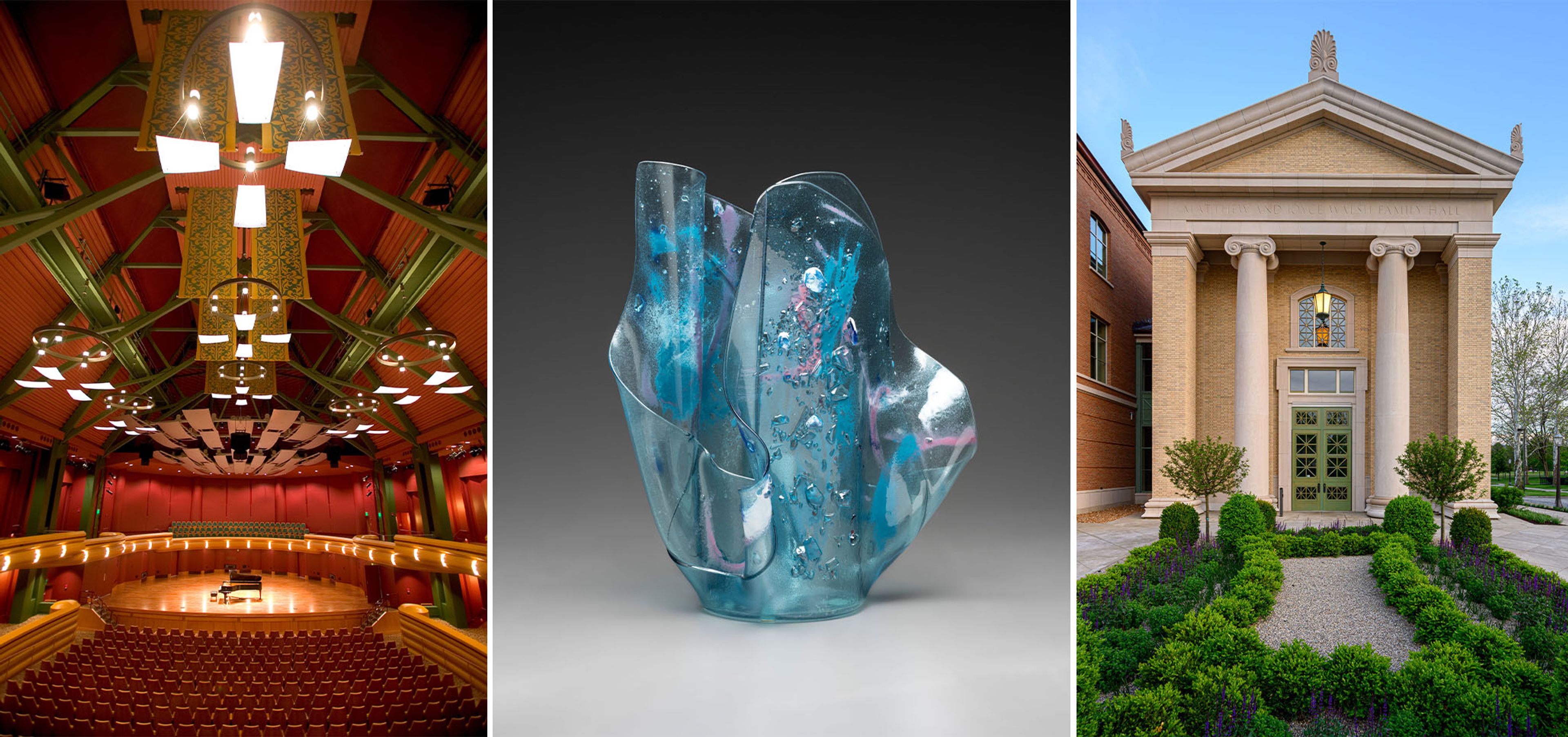
Notre Dame has a renowned design program known for practical thinking, excellence in visual communication, and user-centered design. Its industrial designers are the best in the world. Its sacred music program has become famous in the past few years. It has the first-rate infrastructure now but wants to be programmatically first rate in other arts fields.
What’s called the Arts Initiative is part of the university’s ten-year strategic plan approved in 2023. Collaboration among humanities departments figures but so do arts partnerships locally, all over the Midwest, and nationally. The arts and spirituality are a front-burner topic. An arts biennial is planned for 2027. Exhibitions, performances, workshops, courses, and symposia will aim at a festive semester but will also have a spotlight event with traditional and bleeding-edge components -- all the best of their kind. Visiting artists are coming to campus, too. Over the next few years, the Raclin Murphy will add to the mix with scholarship, exhibitions, and the unseen, immeasurable impact it has on everyone who visits.

About the Author
Brian T. Allen is National Review’s art critic.
Featured Tags
Advertisement
Advertisement

Comments