A Journey to the End of Popular Culture
Written by Jeffrey Blehar
Reliving our lost youth at the Rock & Roll Hall of Fame
Share this story
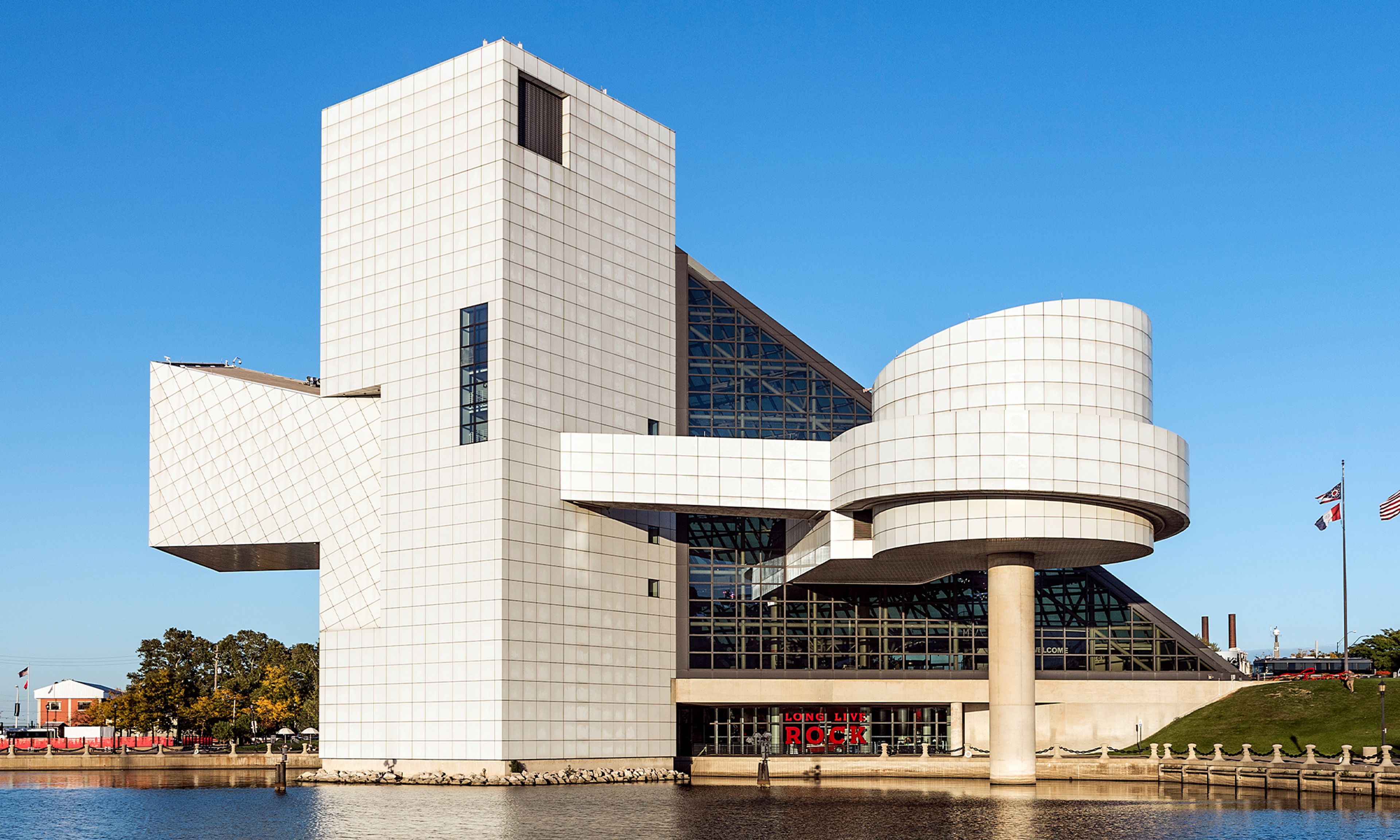
Rock & Roll Hall of Fame, Cleveland
Cleveland — “Outside of OD’ing, there ain’t a more rock and roll way to go,” I reasoned as our tiny Embraer jet juddered and shook amid a fierce windstorm that (I would later learn) sent multiple tornadoes spiraling across western Michigan. We slid sickeningly from side to side -- swooning with sharp drops and course-corrective ascents -- as we attempted landing at Cleveland Hopkins International Airport less than an hour later. I queasily gripped my armrests in silent prayer as wisdom from Baseball Hall of Famer Ichiro Suzuki floated through my head: “If I ever saw myself saying ‘I’m excited’ going to Cleveland, I’d punch myself in the face -- because I’m lying.”
Which brings us to the point: Why on earth would any sane man -- especially a Chicago man -- voluntarily fly to Cleveland, unless it was to pay off shady ransomers? What kind of Our Spacious Skies installment is this, dedicated as it is to postindustrial Ohio? Truth is, I did it because I had to. I felt a calling. Yes, much like my fellow Chicagoans Jake and Elwood Blues, I was on a mission from God: I solemnly informed my editors that the time had finally come for me to make my required pilgrimage to the Rock & Roll Hall of Fame -- ideally on their dime.
Why in 2026, of all years? For one thing, because I love rock and roll. I suppose that’s not much of a credential, given that most people my age have at least a casual connection to the popular music of their youth. But my interest goes well beyond mere amusement and into obsession: I have been podcasting about music (and only music) for nine full years at National Review Online, long before I ever thought to write here. My love of the vast sprawling variety of popular music from the past 75 or so years is so all-encompassing as to once have been the stuff of private self-definition.
I am also acutely aware that rock is dead -- not just dying but well and truly dead -- as a form of art and of mass musical expression, and nothing will ever fill the culturally resonant space it occupied when I was a young man. (If you disagree: What is the last universally hailed rock album you can remember? How many decades ago was that?) Chart music nowadays feels like little more than a roster of beats, beeps, bleeped words, and whatever Taylor Swift is currently selling; AI-created pop artists now top the Billboard Hot 100 without making so much as a dent in popular consciousness -- or what’s left of it. The death of rock also signals the death of unified American popular culture. Ours is an age of siloed micro-cultures. So I was flying out to do more than just visit the Rock & Roll Hall of Fame; I wanted to pay my respects and maybe lay some flowers on rock’s grave.
But before the tour, a confession: I was wrong about the City of Cleveland in a lot of ways, and that’s entirely down to my big-city prejudice. The people, the food, and the feel were refreshingly straightforward. (Grab a corned beef sandwich at Slyman’s!) I found myself constantly in pleasant chats with Clevelanders. An Uber driver -- who immediately marked me as a tourist by the way I gave directions -- put it well: “People don’t get a big head about stuff around here; at the end of the day, buddy, you live in Cleveland.”
While it may be true that “Cleveland Rocks,” I didn’t quite expect the concept to be illustrated with such concrete-slabbed drear: the first thing you notice about the façade of the Rock Hall is that it’s frankly shabby. The entire exterior of the museum was walled off with temporary construction barriers on which torn rock and roll posters had been posted, all grimly directing visitors toward an entrance hallway covered in graffiti and random splotches of paint. I suppose this was partly intentional imposture, partly an effort to make the best of a bad situation and give tourists an “authentic rock” feel -- you know, that rough-and-tumble CBGB New York club vibe -- but it simply felt cheap.
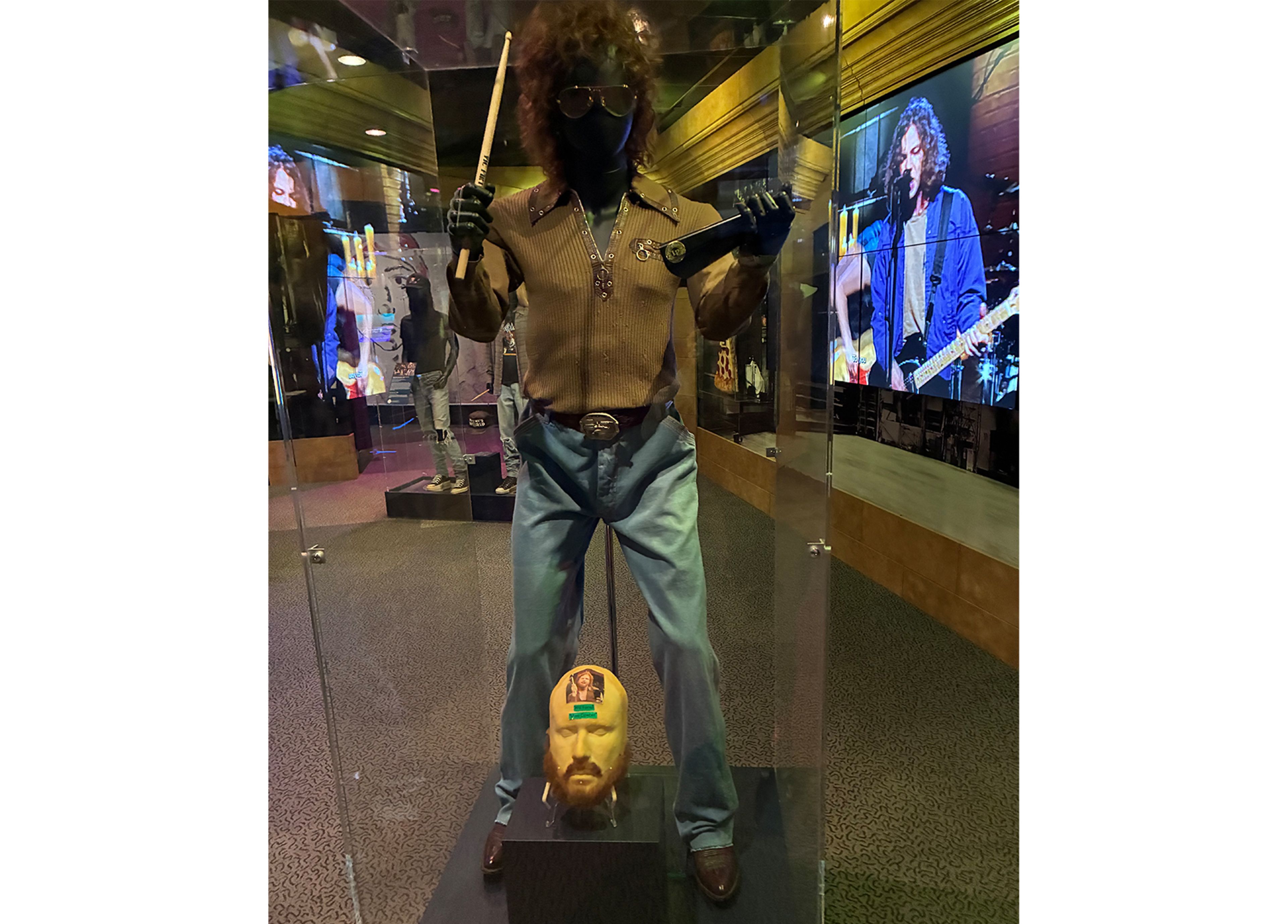
Matters didn’t improve when I showed my ticket, descended to the “0th Floor” (don’t ask, I didn’t label the place), and saw a CBGB-branded concession stand beside the entrance to the main gallery. “Truly now, we are journeying into the rebel heart of rock and roll,” I wistfully mused as I grabbed a room-temperature hot dog and strolled into the Ahmet Ertegun Exhibition Hall. I could not have felt more like a tourist about to fall flat-footedly into a trap. But then all those old ancestral emotions came back, and I didn’t even have time to worry that I was a sucker before I was hooked and reeling in the years. The Rock Hall’s “featured gallery” this season was the exhibition SNL: 50 Years of Music. As jaded as I am, I could not help but thrill to this blast of nostalgia, a revisiting of the greatest popular music moments of Saturday Night Live.
Each exhibit conjured one great TV musical and/or comedic memory after another, with their attendant chimes of emotion ringing in my head like notes long forgotten. Behold: the T-shirt worn by Eddie Vedder during an infamously surly Pearl Jam performance of “Not for You” in 1994! Genuflect before Devo’s authentic banana-yellow jumpsuits from a 1979 performance! Here lie the original Blues Brothers outfits, briefcase and all! Why, I got a fever and practically hit my knees in reverent awe when I found the display case containing the outfit of the nonexistent Blue Öyster Cult percussionist Gene Frenkle -- including the actual cowbell we all must have more of. A layering of great music and great laughs.
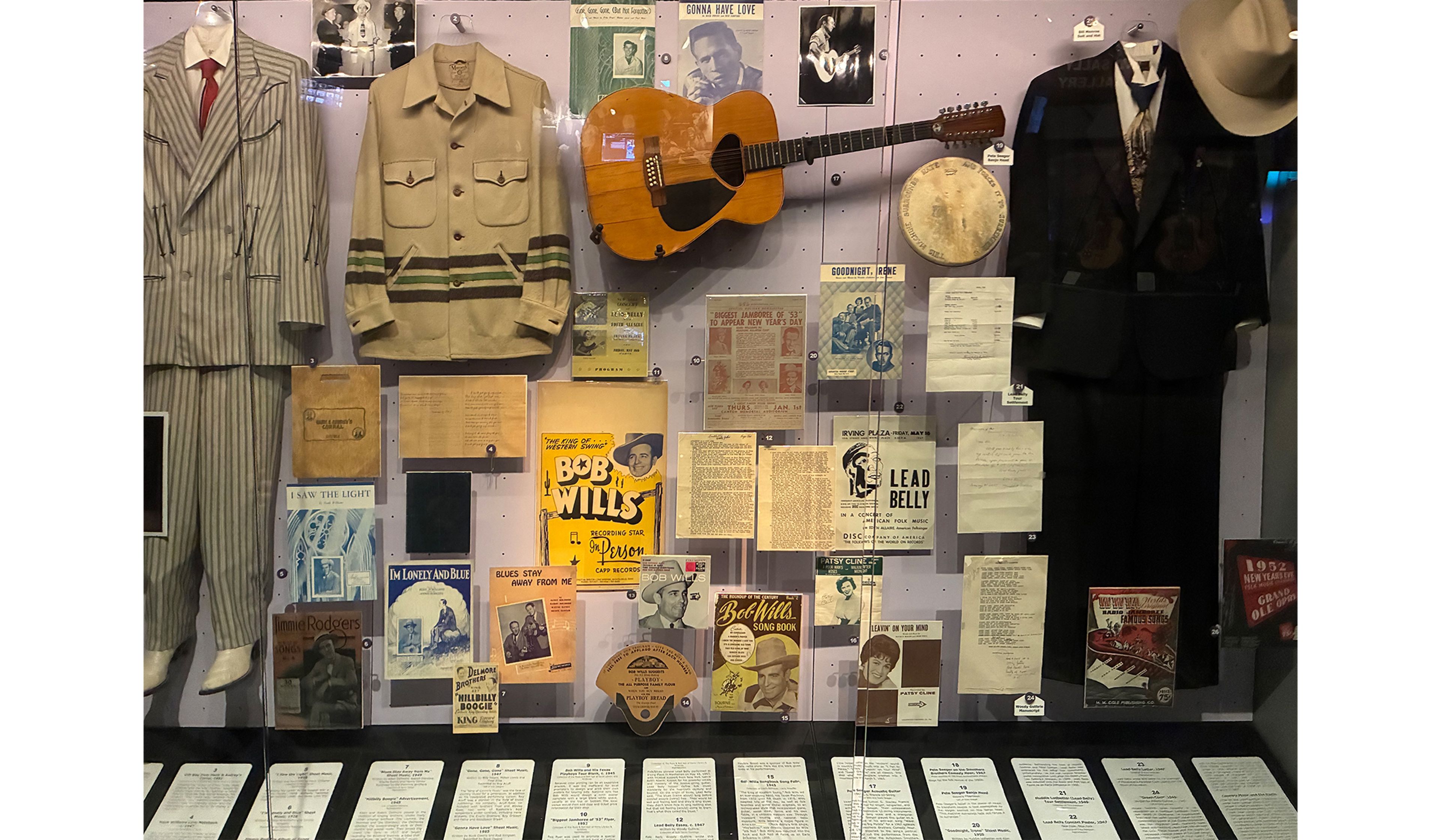
After the SNL gallery, the history lesson began, and here the feeling changed. The exhibits at the Rock Hall deal with the origins of American popular music studiously but awkwardly -- in sepia tone, so to speak. To the Rock Hall’s credit, it acknowledges blues and country music as equal progenitors. (The obvious temptation would have been to overplay rock’s blues origins without giving proper due to its folk Americana roots.) Then, in narrative fashion, we move on to displays about Sun Records, Elvis, Chuck Berry, and the ’50s origins of rock. All of this is handled dutifully -- and illustrated with a remarkable collection of memorabilia -- but with inevitable bloodlessness. One can watch only so many short video clips of Jerry Lee Lewis shakin’ on the piano or Elvis rockin’ in the jailhouse before that era’s madness is reduced to cliché. (That said, Elvis’s gold-lamé-covered copy of the Holy Bible was worth a snapshot.)
From that point on, the Rock Hall tells an inevitably subjective story. This version of rock’s history is no master narrative; its almost exclusively American focus reflects its curators and (one imagines) its American audience. The British Invasion is treated as an unavoidable blip. You can’t really write the Beatles and the Stones out of rock’s history, but, as it turns out, you can write out The Who. And the massive creative and commercial influence of U.K. pop and rock disappears from the Rock Hall’s story almost entirely after that. Anyone who is looking for a celebration of how glam, punk, and postpunk affected popular music from the ’70s onward must look elsewhere.
Instead, the Rock Hall devotes itself primarily to various American “scenes.” San Francisco psychedelia is contrasted with Los Angeles studio perfection. New York’s story is told through the Velvet Underground, the New York Dolls, and the new-wave movement of the late ’70s. The Seattle scene is depicted in an oversimplified way that will naturally cause grunge fans to groan. The Midwest is agglomerated: Chicago’s ’60s blues and ’90s alternative scenes are placed against Detroit Rock City, with the Twin Cities and Cleveland getting their own obligatory annexes.
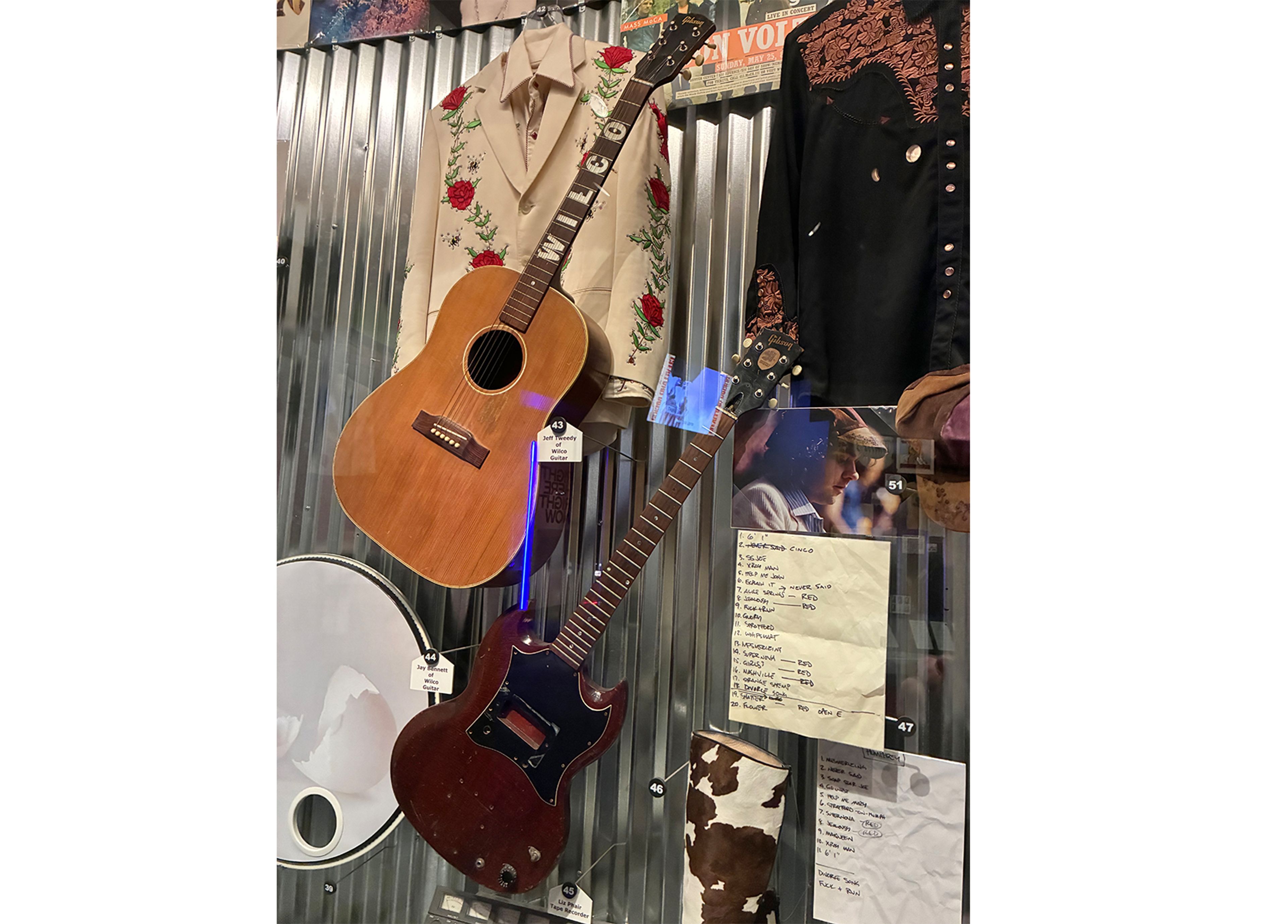
The compression of time and geography necessarily leads to narrative incoherence: The Chicago of Muddy Waters has little do with the Chicago of Wilco, but at the Rock Hall they are both included in the same area. That makes no sense to anyone familiar with the very different sorts of music each made. Nevertheless, it was nice to see Jay Bennett’s busted-up axe next to Jeff Tweedy’s, and not too far from Howlin’ Wolf’s.
Yet I found myself wondering: What is the point of this place? The excitement of rock music -- not just the immediacy of its beats and melodies but the emotions and memories we all add to the music of our lives -- is impossible to capture in a museum. You can’t reduce it to a 30-second video clip or a series of explanatory captions. As Frank Zappa (famously yet apocryphally) once said: “Writing about music is like dancing about architecture.” You just have to listen to it and experience it for yourself. So I found it sadly telling that a significant number of the Rock Hall’s exhibits were just “writing about music”: contemporary concert posters and reviews, copies of Rolling Stone -- markers and echoes of past cultural relevance. Combing through this material felt vaguely unnerving, as if I were walking through an old graveyard, or visiting the River Acheron with Odysseus to conjure the strengthless shades of long-departed heroes. The place felt like a tomb. Something great may have happened here, but it’s over now.
Near the end of the main gallery, I was led along the garden path toward a final, “seasonal” exhibition: 1984 -- Pop Music’s Greatest Year Ever. While I’d rate 1979 higher, I was hardly going to argue with the glories of 1984 and my childhood memories of MTV. It was a genuinely impressive collection. All the famous gear of the era: Prince’s purple jacket and high-heeled boots from the Purple Rain era, the dress Madonna wore on the cover of Like a Virgin, handwritten Bruce Springsteen lyrics from the Born in the U.S.A. sessions, Michael Jackson’s orange jacket from the “Thriller” video (recorded in 1982, I might point out, but who’s keeping track?). This was more than history for me: I had lived it.
In that brief moment, something unexpected happened: I felt young again. The year 2026, with all of its burdens, fell away. The past became the present, all the old ghosts came alive, dancing and singing once more, rushing back to fill a long-deserted space in my heart. I was once again a wide-eyed kid with a Walkman. Here was my pantheon of musical heroes, in all their strength and greatness, belting out timeless tunes. (To credit Saturday Night Live: “It was not unlike watching Atlantis rise again from the sea, the bones of its kings new-covered with flesh.”)
It’s easy enough to stack up the Rock Hall’s demerits. Its déclassé location. (Tellingly, induction ceremonies have been held usually in cities such as New York, Los Angeles, Chicago, and Nashville.) Its refusal to acknowledge its status as a museum. “Rock and roll will never die!” went the old cliché, but we now know better; only at the Rock Hall does anyone bother to maintain such a pretense. In the same way that the Art Institute of Chicago exhibits 19th-century Impressionists, or the Field Museum displays dinosaur bones, the Rock Hall pays tribute to a cultural phenomenon largely confined to the mid- to late 20th century.
But every now and then, when you’re least expecting it, those ancient bones start to move. The museum comes alive, your hardwired memories fusing with the physical reality of the displays. And in those moments, the Rock & Roll Hall of Fame justifies itself, as musical legends rise from the dead to sing their songs, and we are invited to pass on their greatness to a new generation, just as I will. This story shall the good man teach his son.

About the Author
Jeffrey Blehar is a National Review staff writer living in Chicago. He is also the co-host of National Review’s Political Beats podcast, which explores the great music of the modern era with guests from the political world happy to find something non-political to talk about.
Advertisement
Advertisement


Comments