All the President's Mergers
Written by John R. Puri
The administration uses corporate deals to gain leverage
Share this story
Eric Sailer
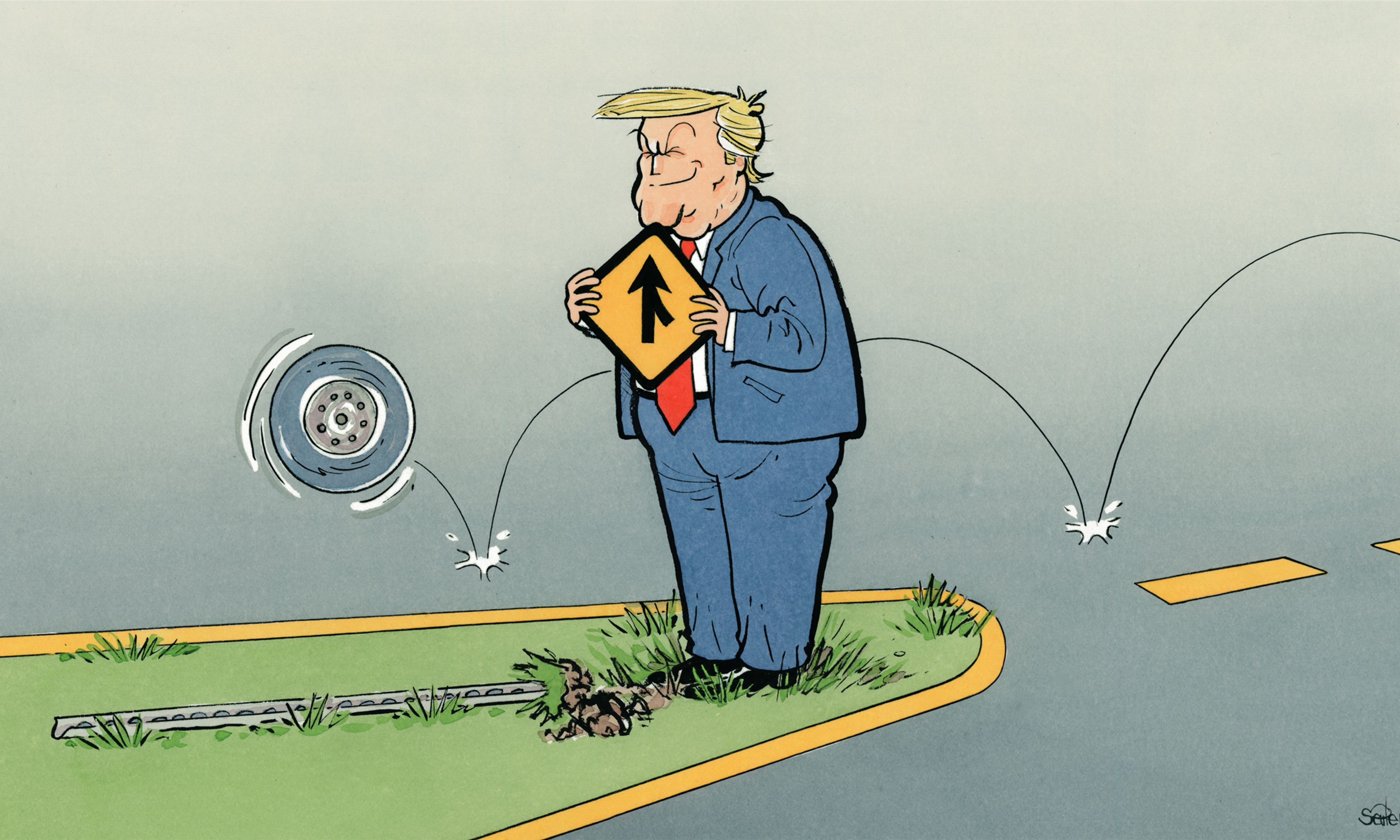
As the leader of a bureaucracy constructed by progressives, President Trump is like a toddler in a toy store. The levers and pulleys of regulatory power all around him present endless opportunities to exert his will. These instruments were designed for supposedly dispassionate experts who falsely believed that they could rationalize society and properly organize the economy. Trump yanks on them to do what he pleases.
Case in point is the power to review corporate mergers and acquisitions. Several federal agencies are authorized to challenge, approve, or deny corporate transactions for various reasons. The Clayton Antitrust Act of 1914, an anti-monopoly measure, introduced “pre-merger notification,” requiring companies to notify the newly created Federal Trade Commission and the Department of Justice of any planned mergers and acquisitions that exceeded certain thresholds. If those agencies believed that a transaction would dampen competition, they could challenge it in court.
As Congress expanded the regulatory state, merger-review power was seeded throughout the executive branch. The Federal Communications Commission, which regulates media, was authorized to ensure that every change in the ownership of broadcast licenses served “the public interest, convenience, and necessity.” An interagency group, the Committee on Foreign Investment in the United States, can recommend that the president block any foreign acquisition that “threatens to impair the national security of the United States.” Financial regulators review bank mergers, energy regulators decide whether utility transactions are in the “public interest,” and the Surface Transportation Board supervises rail consolidation.
Broad statutory mandates allowed agencies to get creative. One innovation initially appeared relatively harmless: Instead of blocking mergers outright, the government began to impose conditions, termed “remedies.” Traditionally, this approach gave antitrust cops a lighter touch. Companies could merge if they divested some assets to a third competitor, for example, or if they agreed to rules on the behavior of the newly created firm.
The Biden administration abandoned merger remedies in favor of a “big is bad” philosophy. The FTC, under progressive darling Lina Khan, sued to block any deal that piqued her. The Trump administration has brought negotiated settlements back, but sometimes with a twist. Past administrations used conditions as an alternative to blocking mergers. Trump, by contrast, has threatened to block mergers in order to extract concessions. Conditions have become the end of government interference — not merely the means to clear a deal.
Trump’s first exploitation of merger-review power came with his approval of U.S. Steel’s acquisition by a foreign competitor, Nippon Steel. The deal was reviewed by the Committee on Foreign Investment in the United States to determine whether it posed any threats to national security, and the president could block the merger on its advice. The case for intervention was exceptionally weak. Nippon Steel is based in Japan — a treaty ally of the United States — and pledged to maintain U.S. Steel’s facilities. If anything, the capital influx promised to boost domestic steel production. But the steelworkers’ union opposed the deal, and, in an act of thoughtless nationalism in his last month in office, President Biden blocked the takeover.
Once inaugurated, President Trump signaled that he might reverse Biden’s decision and green-light the U.S. Steel deal. He should have done so with no strings attached. Instead, Trump saw his predecessor’s denial as an opportunity to expand his influence over the economy. He announced last June that his administration had finally approved Nippon’s acquisition in return for a “golden share” in U.S. Steel, controlled by the White House.
It was an unprecedented act, effectively securing strategic oversight of a company in exchange for approving its acquisition. The White House established a list of actions that U.S. Steel could not take: closing plants, reducing or delaying promised investments, or transferring production outside the country. Trump also got to appoint an independent director to the company’s board and veto the selection of two others. In September, the administration wielded its “golden share” to prevent U.S. Steel from idling an Illinois facility. At least this scheme retained a patina of respectability as a so-called national security agreement. The president’s next abuse of merger-review power was purely for self-enrichment.
Right before the 2024 election, Trump sued the television network CBS over a 60 Minutes interview with Kamala Harris that he said was deceptively edited to conceal her vacuity. Making Harris sound coherent, Trump’s lawyers alleged, was a “brazen attempt to interfere in the 2024 U.S. Presidential Election.” Preposterously, they demanded that CBS pay $10 billion in damages. The network was defiant at first, affirming that the lawsuit “is completely without merit” and that it will “vigorously defend against it.” Its parent company, however, faced a dilemma. CBS was owned by Paramount, which was then attempting to merge with another media company, Skydance. Because the transaction would change the ownership of CBS broadcast licenses, it required FCC approval. After the election results came in, Paramount realized that the next FCC chairman would be appointed by Trump.
A quid pro quo was never made explicit. But, as FCC review of the deal dragged on for months, Paramount sought to speed up the process. The company’s controlling stakeholder, Shari Redstone, pushed CBS to settle Trump’s lawsuit, as executives believed it was holding up the sale to Skydance. Paramount decided on July 1 to give in, settling with the president for $16 million. The payment was nothing compared with the $8 billion merger at stake. If it were any higher, the New York Times reported, Paramount’s board feared that shareholders would accuse the company of bribery. Three weeks after Paramount settled, the FCC finally approved its long-delayed merger. Chairman Brendan Carr also secured editorial changes at CBS as part of the agreement, claiming that they were in the “public interest.” Presidential leverage had allowed for the freewheeling regulation of media content.
That wasn’t the last Paramount deal that Trump would influence. In late 2025, a bidding war broke out to acquire the media conglomerate Warner Bros. Discovery, with Paramount and Netflix emerging as the top suitors. As they traded bids for the historic film studio, Trump declared that he would “be involved” in deciding the winner. Of particular concern was Warner Bros. Discovery’s ownership of CNN, one of the media outlets that Trump most despises. When Warner Bros. seemed to favor Netflix’s offer, Paramount CEO David Ellison visited the White House to make his case. According to the Wall Street Journal, Ellison assured the president that he would make sweeping changes to CNN if his company acquired it. To his credit, the president remained publicly neutral and even reversed his earlier statement, saying that he “shouldn’t be involved” in the bidding war’s outcome. Ellison, however, argued to Warner Bros. shareholders that an acquisition by Paramount would face “a clear regulatory path,” whereas a Netflix deal would be subject to heightened scrutiny. His contention wasn’t unfounded: Netflix was already under a DOJ investigation for anticompetitive practices.
Netflix also appealed to Trump but lost his favor with a slip-up. In February, Netflix board member and former Obama official Susan Rice said on a podcast that corporations that had “taken a knee” to Trump should expect “accountability” once Democrats retake power. The president was infuriated, demanding on social media that Netflix fire Rice or “pay the consequences.” Less than a week later, Netflix startlingly abandoned its bid for Warner Bros. Perhaps the DOJ would not have moved to block Netflix’s acquisition of Warner Bros. The prospect that it could challenge the deal on Trump’s orders — thrusting both companies into a protracted legal battle — was likely enough of a deterrent.
In any case, the past year has demonstrated the danger of vesting merger-review power in one person. When the president exploits the law to bully the market, merger-review power becomes a tool of unilateral governance. An uninhibited executive can hold multibillion-dollar deals hostage until he receives a payoff or is handed effective control of a company. He can jawbone media companies into softening their coverage. He can pick the winners and losers of bidding wars.
If Congress cared to act, it could pursue some potential fixes. Merger-review authority often combines executive and judicial power. Most agencies decide directly whether a deal violates the law, acting as both prosecutor and judge. Only the FTC and the DOJ must take their claims to court, and even there, the FTC relies partly on constitutionally dubious in-house administrative hearings. Blocking a transaction should be considered a deprivation of liberty that requires judicial sign-off in all cases, taking a good deal of leverage out of executive hands. Some agencies should have their merger-review powers repealed entirely. There is no reason, for example, for the FCC to determine whether broadcast-license transfers meet the “public interest” in the digital age. Every other authorization to hold up mergers for the “public interest” ought to be narrowed substantially.
Until Congress or the courts start taking away the president’s toys, overweening officeholders will keep abusing them. Trump may enjoy deals, but those arranged by private companies should not be his to make or break.

About the Author
John R. Puri is the Thomas L. Rhodes Fellow at National Review.
Featured Tags
Advertisement
Advertisement

Comments