Share this story
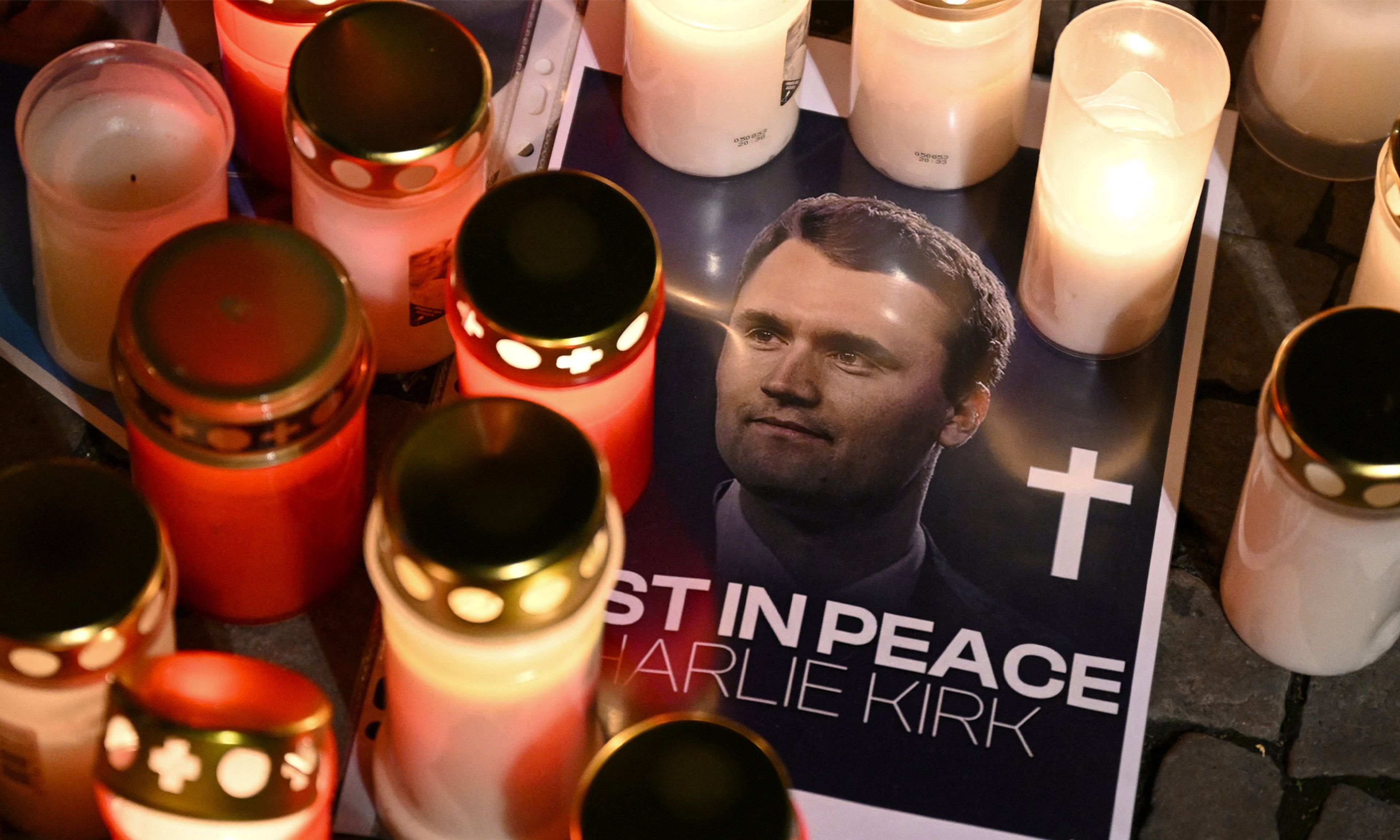
Candles surround a photo of Charlie Kirk during a vigil in Berlin, Germany, September 11, 2025.
When your favorite periodical switches from fortnightly to monthly, one consequence is that the time elapsed between pen-to-paper and print-on-page expands.
Once, an imprudent and selfish correspondent like yours truly could turn in copy as late as a Tuesday evening and hold a magazine on a Friday morning, so long as I didn’t mind the hateful stares and voodoo curses of our line editors and production team. Now, I have much more time to turn things in last minute -- not days but weeks to be late. That’s great when it comes to putting things off and shirking responsibility, but there’s a downside too: a higher chance that my timely takes will have been overtaken by events.
But I’m going to roll the dice and assume that if you’re reading this, things are still bad out there. As I write, in the week after the premeditated murder of Charlie Kirk, they certainly are.
It took just hours to register that the brutal and depraved act would be followed by a brutal and depraved reaction. I was shocked by the number of people in my extended orbit who were celebrating. People I went to high school with. A guy in my game-night group. Random follows on Instagram.
My wife’s car had been in the shop, and that day I was returning her loaner and found myself in a dingy strip mall waiting for an Uber. Out came a guy from the gym next door, perspiring in workout clothes, cellphone to ear and trying desperately to explain to the person on the other end of the line -- clearly a woman he was close to -- why she shouldn’t be expressing joy at Kirk’s murder even if she disagreed with his views.
In the days after that, it became clear that these anecdotes were everywhere, not just in my world but in the world, and many of them broadcast and screenshotted via our collective id on social media. That doesn’t mean it was the only, or even the most common, reaction among Kirk’s critics. But it was widespread enough to be depressing, and outrageous.
These moral mutants were straightforwardly arguing that Kirk’s speech and opinions made him fit for the bullet that widowed his wife and robbed his small children of their father. They didn’t even argue, as a revolutionary Marxist from a simpler era might have, that Kirk’s singularly effective and influential political machine made him a legitimate target of what used to be euphemized as “direct action.” That would have been just as diabolical but somehow more cognizable.
Instead, many were perfectly comfortable arguing, as one California professor did openly, that violence is a justifiable response to “violent speech,” however the latter gets defined by the man holding the gun.
The internet renders your darkest lizard-brained thoughts immediate -- that is, it removes the mediation between those thoughts and the public discourse. With a keystroke, your emotional incontinence becomes a part of your permanent record, and ours. At the same time, the internet mediates -- that is, it stands between -- us and our fellow human beings in a way that makes it easier to see them as abstractions reducible to bundles of opinions that you detest. In this way even video of your enemy’s grisly demise becomes just another dunk to post.
Of course, Kirk was not reducible to the half dozen edgiest sound bites from his podcast. And even if he were, it wouldn’t matter. If the belief becomes commonplace that speech is redressable with violence if you really, really hate it, then all bets are very much off.
But . . . this is, believe it or not, a Happy Warrior column, and there were some encouraging signs, too, amid a horrible week. Not least the spontaneous, peaceful vigils and memorials across the country and the world. These things all happened -- and I don’t think it’s a coincidence -- in the three-dimensional world of the analog and not the two-dimensional non-world of the digital.
Not long after the incident outside the gym, I was eating kebab at a Lebanese market, and the Arabic-speaking man behind me was watching a video of Kirk loud enough for me to hear. Kirk’s voice was talking about his habit of observing the Sabbath, saying that turning off his devices one day a week helped reset his mind, reconnect to God and family, and remind him of what was important.
Maybe we should try this at scale. Turn the internet off for a day, then turn it back on. If it works for a Wi-Fi router, perhaps it will work for our souls.

About the Author
Daniel Foster is a contributing editor for National Review.
Featured Tags
Advertisement
Advertisement



Comments