America's Bungle in the Jungle
Written by Shiv Parihar
Kennedy’s Coup: A White House Plot, a Saigon Murder, and America’s Descent into Vietnam, by Jack Cheevers (Simon & Schuster, 688 pp., $35)
Share this story
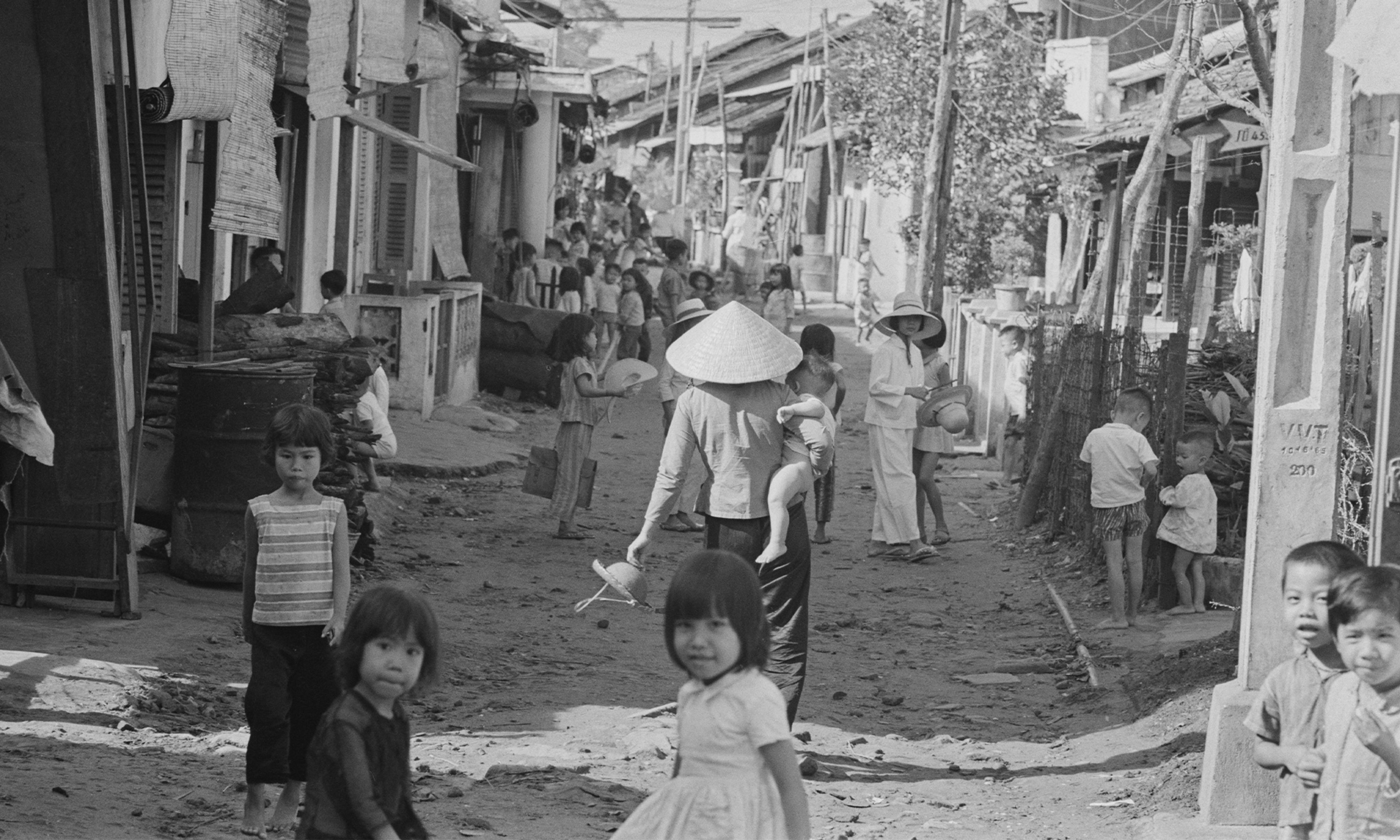
Saigon, 1965
Saigon knew it would mourn on November 2, 1963. The Catholic third of the city’s population, ascendant under President Ngo Dinh Diem, expected to commemorate their dead on All Souls’ Day. Instead, soldiers sauntered through the streets as President Diem and his brother Ngo Dinh Nhu hid in St. Francis Xavier Church. Either could have fled hours earlier, at the coup’s height, but Diem staunchly protested that “presidents don’t run away.” Soldiers finally arrested him and his brother and escorted them into the back of an armored car. When its doors opened again, the bodies of the men who had led South Vietnam since its independence in 1955 rolled out covered in blood. Three weeks later, the American president who had overseen Diem’s overthrow would be assassinated.
That the United States supported a military coup to remove its most loyal anticommunist ally in Southeast Asia has long puzzled and infuriated chroniclers of the Vietnam War. In Kennedy’s Coup, journalist Jack Cheevers traces the trail of blood to Vietnam’s independence before describing the web of political and personal grudges that animated John F. Kennedy’s circle of advisers. From its first words to its haunting conclusion, set in the twilight of the turbulent 1960s, Cheevers’s book captures the heat of the action.
The author dedicates several pages of psychoanalytic biography, based on a remarkable feat of research, to practically every character who makes an appearance in the book. Diem: part ruthless political operator and part devout Catholic. His brother Nhu: part regime enforcer, part political philosopher, and husband to the fiery Madame Nhu. To some, Madame Nhu was a pioneering Catholic feminist who successfully pushed forth laws to end concubinage, polygamy, and divorce. To others, she was a national nag who demanded the prohibition of everything from dancing to underwire bras. Madame Nhu’s influence and behavior became a constant public relations hurdle for the South Vietnamese regime. She joked about barbecued Buddhist monks and joined Republicans in the U.S. on the campaign trail against Kennedy mere weeks before he authorized the murder of her husband and brother-in-law.
Even if the Ngos were a “sclerotic family clique,” per Cheevers, they kept South Vietnam from melting into bloody carnage. The author argues that Diem’s removal guaranteed the need for direct U.S. intervention by throwing South Vietnamese leadership into chaos. One need not look further than Hanoi, where communist leadership reacted with bewilderment as the United States removed Ho Chi Minh’s most formidable opponent. Saigon was rocked by months of successive coups as generals settled rivalries.
To many, Diem’s name immediately conjures images of Buddhist monks meditating away the pain of self-immolation. Cheevers deconstructs this persistent myth of Buddhist persecution under Diem’s Catholic rule. United Nations reports confirmed that, even if Catholics were favored for patronage under Diem’s rule, there was no indication of any persecution of Buddhists. Self-immolation shocked Western audiences, but it had long been a standard protest tactic in Mahayana Buddhism. The burning monks were “Machiavelli with incense” to one reporter who learned that they had been heavily sedated at the time of their protests. One monk broke down and admitted that he held back from killing himself after learning that recent reports of atrocities against Buddhists had been fabricated. Buddhist leader Tri Quang promised “more martyrs” to American journalists. Nonetheless, during the coup, he was offered shelter at the U.S. Embassy in Saigon by Henry Cabot Lodge, who sought to bolster his credentials as a potential leader of the Republican Party’s liberal wing against Barry Goldwater’s conservatives.
As he refuses the mainstream vilification of Diem, Cheevers also resists hagiography. Diem was undeniably corrupt and autocratic. His micromanagement grew to the point that he personally reviewed every application for a passport or a divorce. His successful anticommunist campaign soon came up against a wall as the army’s actions in rural areas became increasingly feral. Meanwhile, American military advisers opted for better cannons over better public relations with South Vietnamese peasants, who were therefore alienated en masse. Diem’s turn toward autocracy set the stage for his demise. American journalists from the Associated Press and the New York Times inundated the media with negative reports about Diem on the basis of interviews with Paris-trained cliques of leftist South Vietnamese academics who despised the government’s adherence to Confucianism and Catholicism.
Cheevers highlights communist brutality in Vietnam as much as American incompetence. The book’s opening chapters include the story of the more than 900,000 North Vietnamese who fled to Diem’s republic in the months after independence, ten times the number who traveled in the opposite direction. Meanwhile, Diem’s early campaigns did “wipe out nearly the entire communist network” in the South by 1959. In one province, communist membership fell from a thousand individuals to merely six. The remaining cells, rechristened derogatorily by Diem as the Vietcong, turned to terrorism.
Meanwhile, influenced by the Christian democrats he had been exposed to in France, Diem came to advocate “personalism,” emphasizing both individual rights and the communitarian nature of society. Diem, and particularly his brother Nhu, were deeply familiar with thinkers ranging from Confucius to the leading lights of French political Catholicism. In Diem’s personalism, good government was not “a collection of laws and texts” but “a way of living in the active respect of the human person.” Nhu envisioned a system in which each family could obtain a small plot of land largely through the market, only to have this plan derailed by the Vietcong, who murdered landholders to seize and redistribute the land.
In Cheevers’s indispensable account, events alternate from the gripping to the darkly comedic. Amid the Buddhist uprising, special forces descended on a pond with machine guns and heavy artillery to kill a carp believed by locals to be a reincarnation of one of the Buddha’s disciples. Later, in response to rumors of a coup plot, Diem sought to stage a false coup to tempt disloyal officers out of the woodwork. For the task, the president selected General Ton That Dinh, who turned out to have been central to the real coup. Hours after ordering Diem’s murder, the leaders of the new junta hit the Saigon nightclub circuit to dance the twist. To mitigate post-coup unrest, U.S. Secretary of Defense Robert McNamara visited Vietnam. During a public appearance, he is said to have so butchered the phrase “Long live Vietnam” in Vietnamese that what he actually told the masses was to “go to sleep.” The absurdity was captured well by the punch line of a Peanuts cartoon posted on a wall at the U.S. Embassy in Saigon: “How can we lose when we’re so sincere?
About the Author
Shiv Parihar is a writer based in Claremont, Calif.
Featured Tags
Advertisement
Advertisement

Comments