America’s Earliest Outdoor Photographs Shown at Hartford’s Wadsworth Atheneum
Written by Brian T. Allen
Your critic wanted to see this lovely show so much that he put his contempt for the museum’s trustees in abeyance for a day.
Share this story
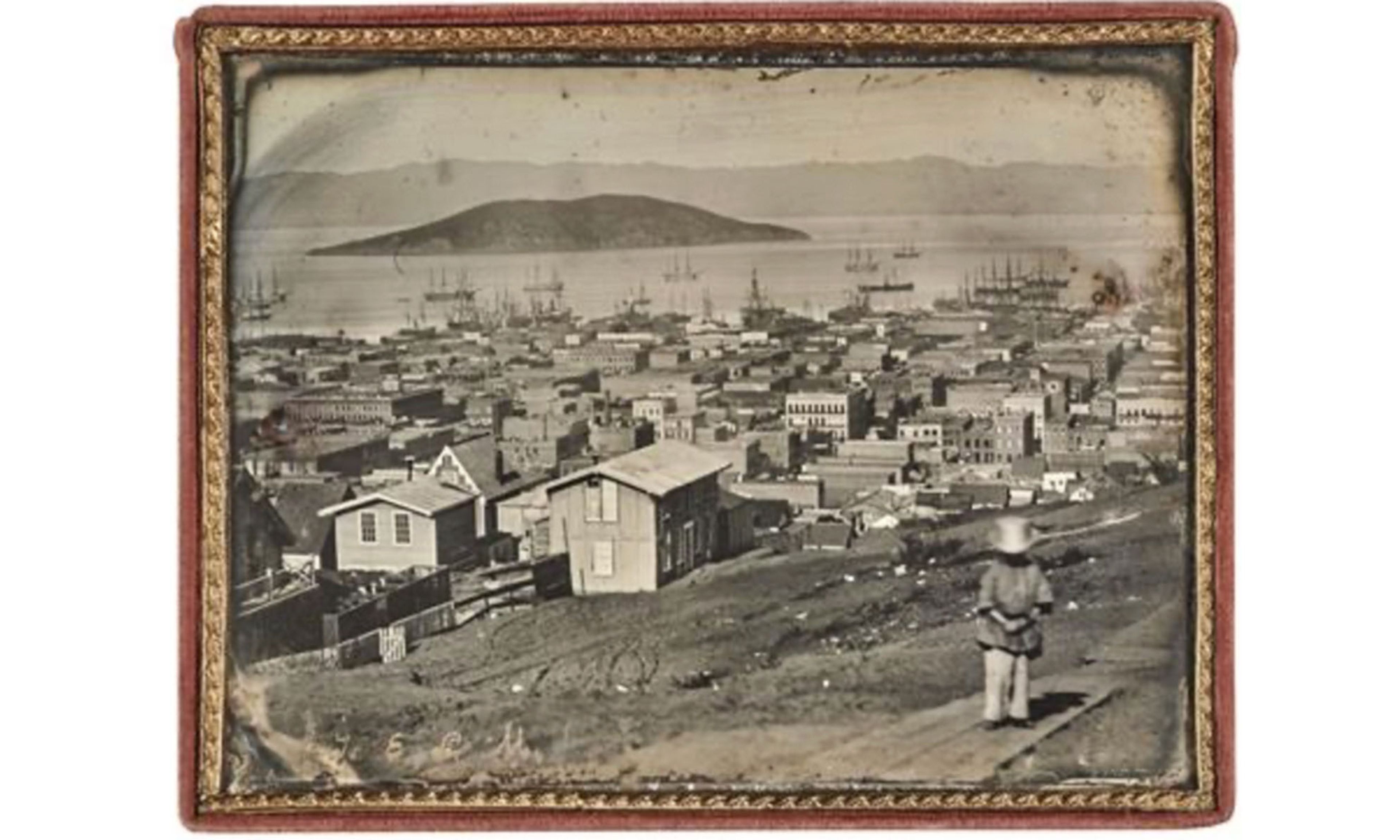
Unknown artist, <i>San Francisco, California</i>, c. 1850, daguerreotype.
I haven’t been to the Wadsworth Atheneum in Hartford since 2021. Why? It’s one of my favorite museums, with a superb collection of European, American, and Modernist art that rivals our biggest, richest cities. What happened? I wrote a series of pointed, direct stories about its board of trustees and their cultic worship of DEI -- the diversity, equity, and inclusion fable and deceit -- and their overall incompetence.
In 2021, William Peelle, the chairman of the board, told the Hartford Courant, the local newspaper, that the Atheneum “looks like an old museum that hasn’t changed in decades” and “isn’t an engaging and wonderful experience.” Ouch. With friends like that, who needs enemies? Trustees never, never knock their institutions in public. In private, sure, but if you go public, you need to quit first. Peelle wanted race to be the museum’s focus. So did the rest of the trustees. They forced the very good director out and replaced him with a fellow trustee -- no search -- who’d never worked in a museum and wasn’t an art historian. He came from a job at Newman’s Organics. He wasn’t even making the cookies and stirring the tomato sauce. He was a paper pusher.
The board, I wrote, is the worst in the country, and I knew where the bodies were buried. I’ve called them stingy, imperious, cliquish, mean, and grasping. Also lovers of gimmicks, country clubbers, social climbers, Scarsdale wannabes, hayseeds, dopes, sticky-sweet DEI blatherers, and peacocks preening over their fake suburban virtue.
In 2022, the trustees fired a longtime employee who, at a DEI task force meeting on which she served, had the brains and nerve to ask for a definition of “systemic racism” and also, “Why is equity essential for the growth of the Wadsworth?” The two verboten questions were, HR told her, “highly confrontational to the museum’s espoused core institutional values.” She sued and, in a settlement, took home a bundle. I loved reporting on this story. The board has always had delusions of grandeur. It has pushed Cadillac additions that flopped. It thinks it’s a Manhattan museum plopped in dying Hartford.
So I’m persona maxima non grata at the Wadsworth. Though I flunked Forgive and Forget 101 in Sunday School, I also don’t make it an ironclad rule to dwell on past wrongs. Anyway, the board of the Philadelphia Museum of Art might now have surpassed the Wadsworth’s to become the country’s worst. There, trustees ran a spy ring and character-assassination campaign against the new director they shouldn’t have hired and eventually fired, landing everyone in court.
Despite the risk that I’d be welcomed à la Khashoggi, I wanted to see the Wadsworth’s new show, The Scenic Daguerreotype in America, 1840–1860, an exhibition I knew would be exquisite. So off to Hartford I went.
It is indeed exquisite. Most of the daguerreotypes, about 80 of them, belong to Greg French, a collector and dealer from Boston. I admire him. He’s one of the photography old-timers, drawn to the medium in the early 1980s when connoisseurs were few and many curators didn’t think photography was art. Between 1840, only a couple of years after the invention of photography, and 1860, when new technology made the daguerreotype more or less obsolete, some 6 million were made in America. The vast majority were portraits, but about a million were outdoor scenes.
Daguerreotypes are fragile things. Most were trashed. Only about 100,000 scenic daguerreotypes are left, with some of the best on view at the Wadsworth. The daguerreotype was the earliest way to freeze time in a permanent, detailed image, so we’re seeing early days in a revolution in visual culture.
First, why the disparity between 6 million and a trifling million, both, by the by, numbers big enough to suggest a mania. On the one hand, family’s family. The novelty of having a loved one’s likeness was irresistible. And Americans were often on the move and not wedded to places. On the other hand, a central feature of the daguerreotype was a long exposure time, so portrait subjects had to be very still. What moves blurs. Unless they were spastic or members of the teeny weenie bladder club, adults could hold a pose. Children and pets were less able to do so unless calm by character or drugged. The outdoors offered its own volatility -- unexpected interventions by wagons or animals, and wind rustling the trees -- but sunny spots needed less exposure time. American elites loved landscape painting. Why not landscape photographs for the masses?
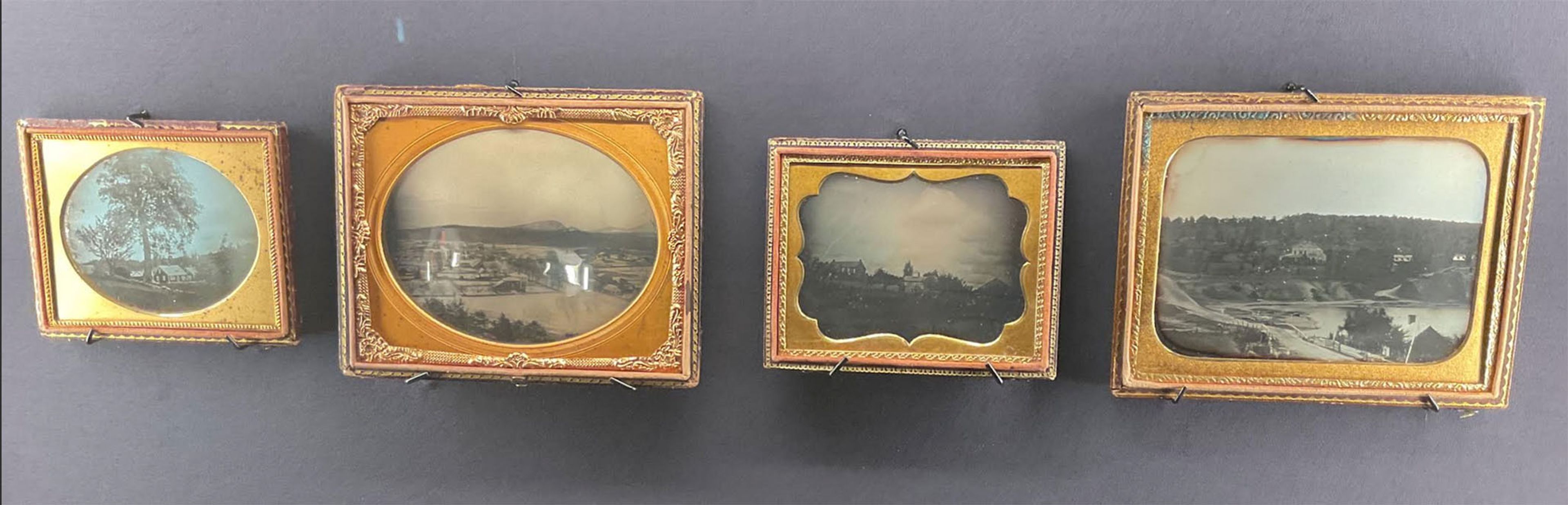
We see daguerreotypes that are early experiments in conveying the picturesque rural view. There’s an early bird’s-eye view in the show, a small town center with people posing in the distance, and a cloud study. Architecture means geometry. Daguerreotype views of small towns have clear, crisp, simple triangles, rectangles, and squares -- Yankee architecture. The look is very modern. Experiments with long diagonals, rows of windows at a mill reflecting light, twilight, and group scenes aim sometimes at art, sometimes at mere documentation, but the result can be pleasing and animated.
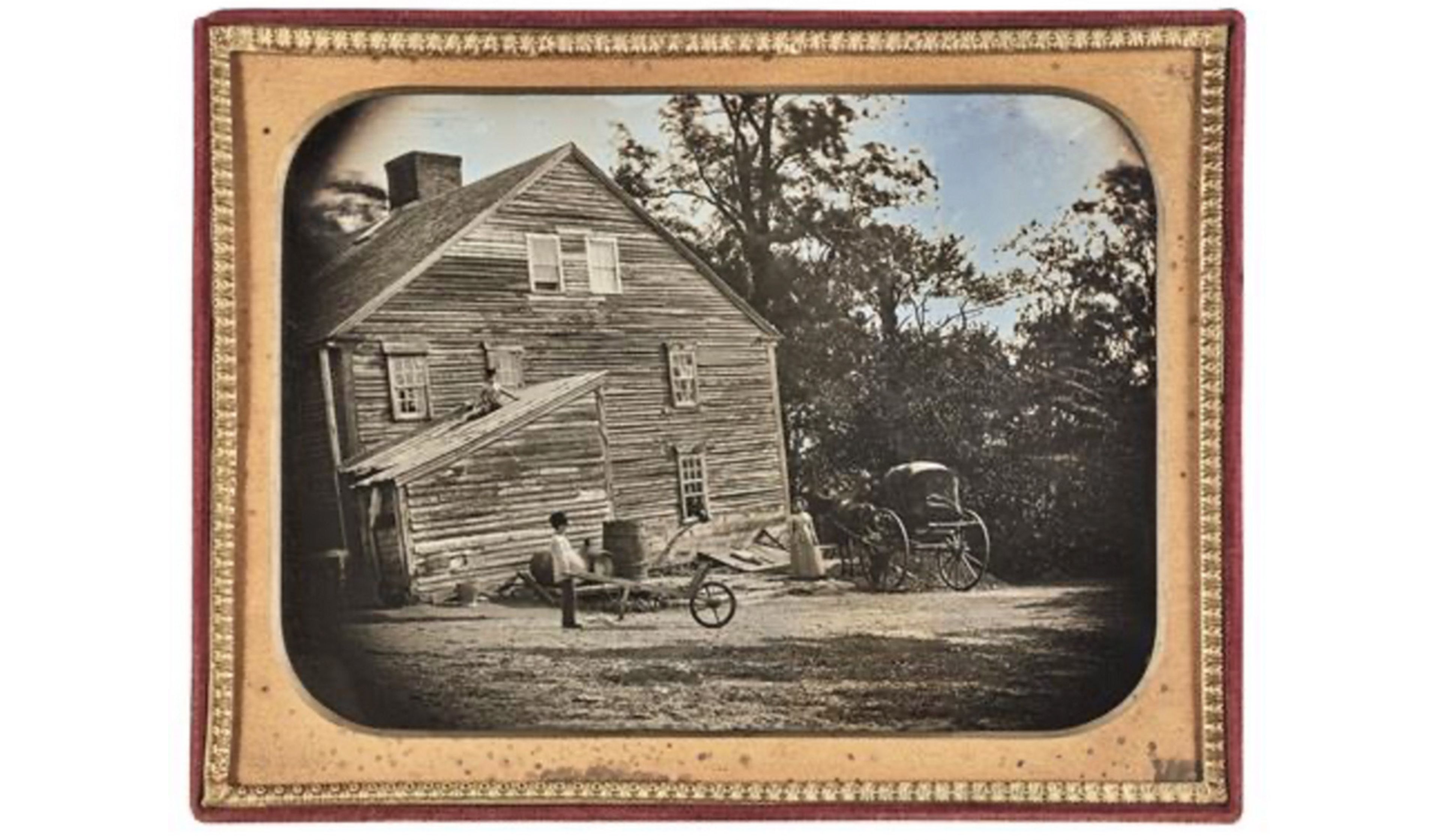
In Crooked House, an old weathered-clapboard house -- every detail so deeply focused it seems penetrated, as is the case with all daguerreotypes -- seems to tilt, and tilt badly, making the house’s geometry very weird. A woman in a window holds a pot, and a boy wheels a cart, both nonchalantly. We look closely and figure that the issue was a crooked tripod, accidentally creating an early bit of Surrealism.
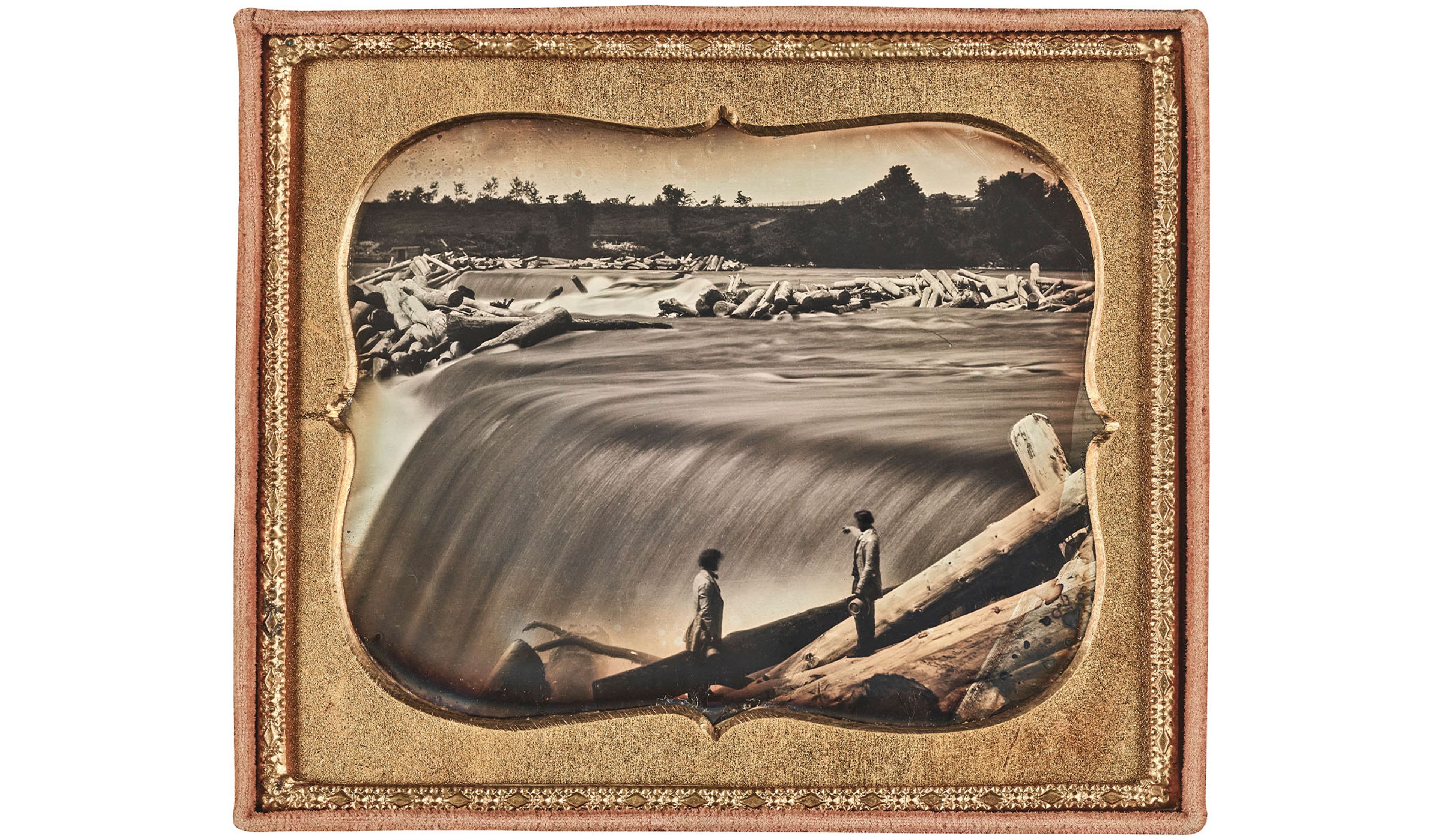
The star of The Scenic Daguerreotype has to be St. Anthony Falls, Minneapolis, Minnesota. We know it’s from the 1850s since logging was already in full swing, and logs float in the distance. These falls were the only natural waterfalls on the Mississippi River. Though outdoor daguerreotypes needed less exposure time than those taken indoors, a waterfall’s gotta move, though one daguerreotype in the show depicts a frozen, otherworldly Niagara Falls. In St. Anthony Falls, cascading water is ever so gauzy and looks like silken, flowing hair. It’s very beautiful.
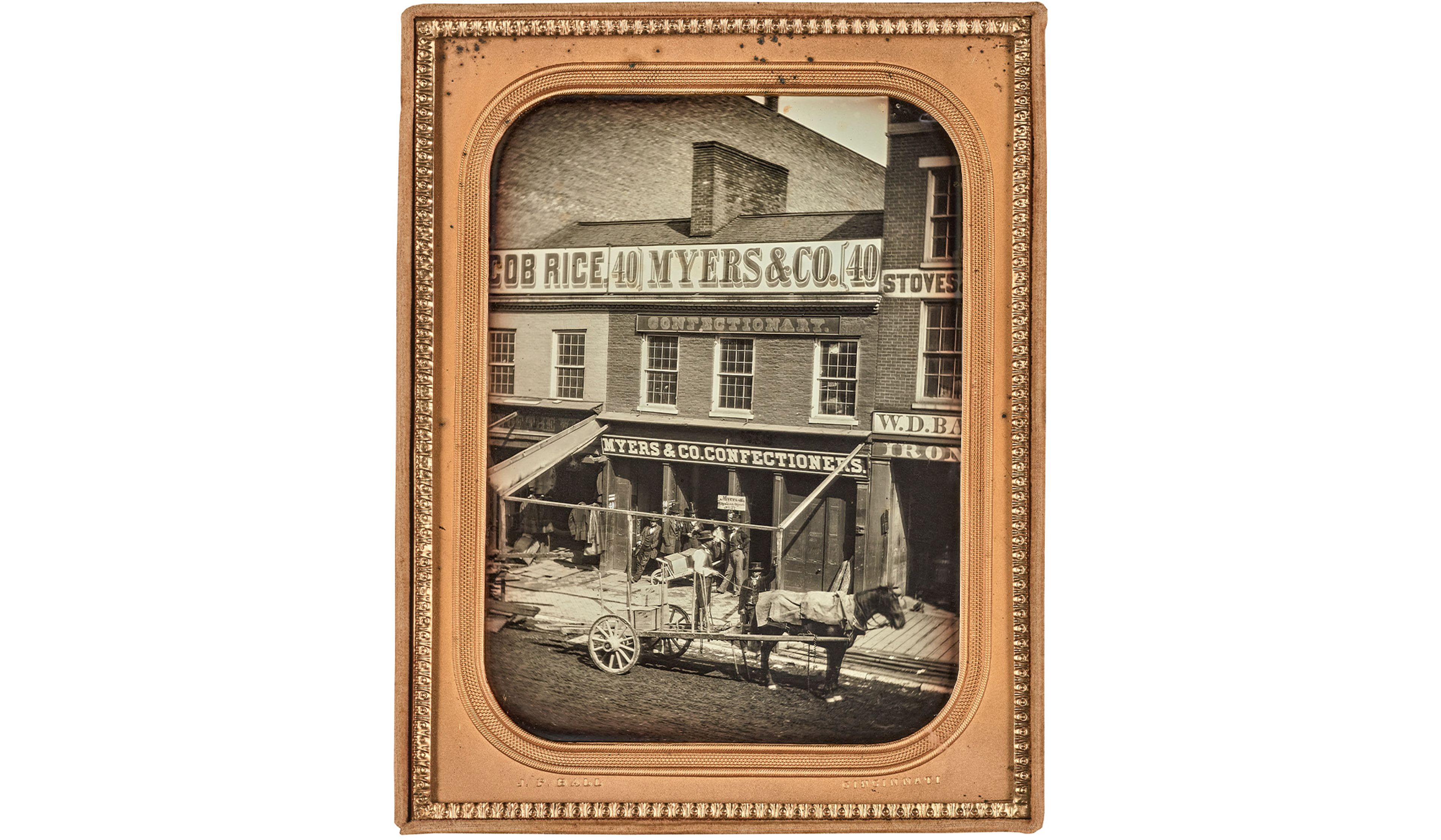
Knodles Band depicts a group of musicians in Fairplay, Md., in the 1850s, offering us fabulous details of instruments and figures such as a young boy playing the horn with determination and gusto. The heyday of the daguerreotype coincided with the Gold Rush. Compositional brio and documentation of a historic event in fine detail helped make the medium’s most famous works. In a panoramic view of San Francisco in its early days, a boy on a hill surveys the new metropolis. Prospectors and laborers, in another view, stand lined up in a V-shape, rugged and real. America’s future was in the making.
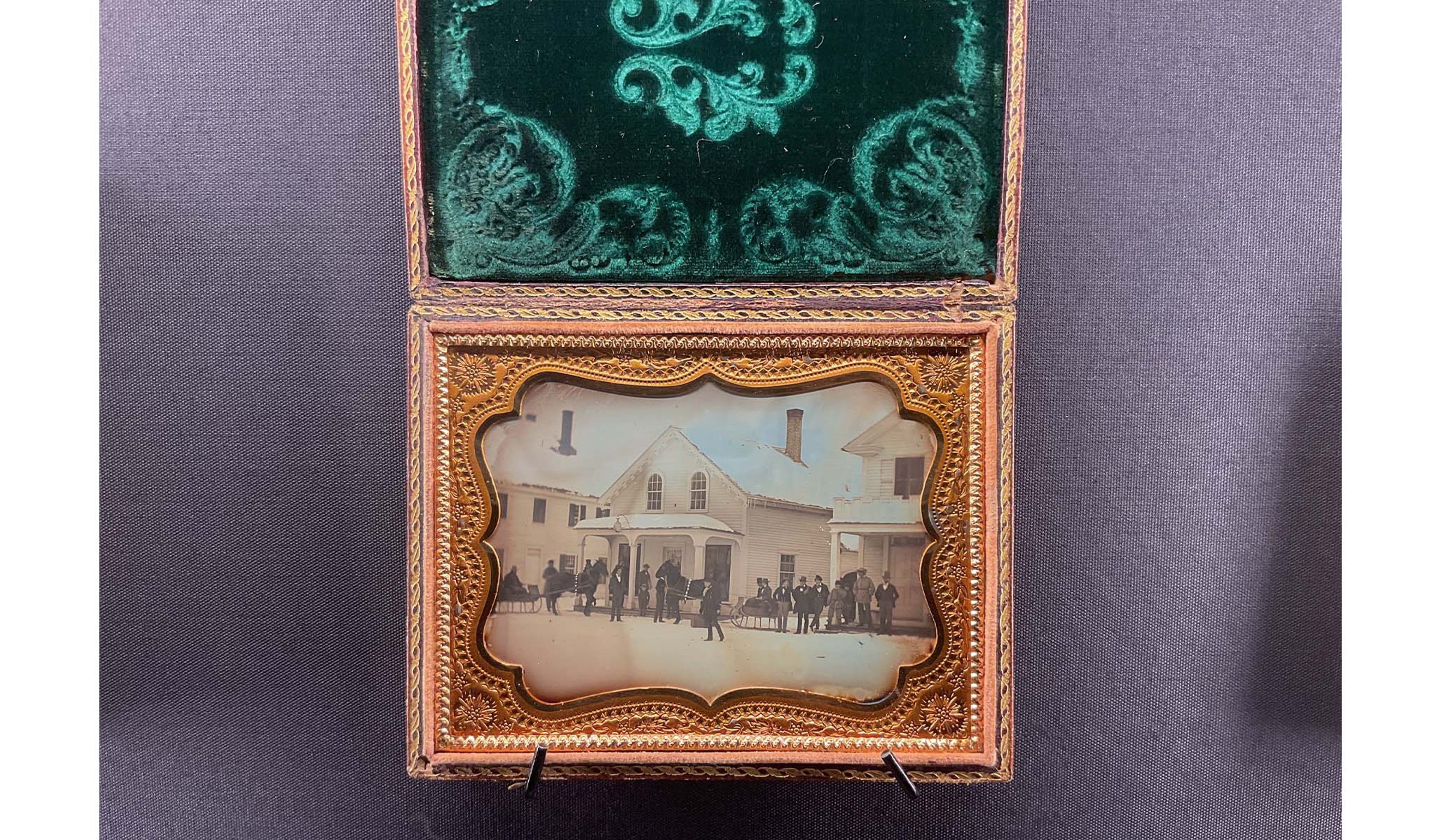
I’m not sure how much experience the early photographers had with medieval illuminated manuscripts -- probably none -- but images in old manuscripts and daguerreotypes are often framed in ovals or barbed quatrefoils or hexafoils, brass in the case of photographs. Many of the brasses are decorated in very low relief. Satin or velvet often lines the frame, cushioning the image as it rests in a brass or leather case. This makes for a jewel-in-a-box look, enhances preciousness, and makes opening the case and looking at the image a ceremonial event.
The exhibition displays three or four daguerreotypes together in specially made, lit, minimalist cases, with easily understood labels on the side of each case. The labels don’t have much complicated technique or art history jargon. That’s good. During the period covered by the show, making daguerreotypes was so easy that anyone with a brain, a little creative flair, and some respect for materiality and ephemerality could do it. It’s egalitarian art depicting everyday life. Perfect for America. Walls in the show are dark-colored, and gallery lighting is subdued. We feel we’re in a movie theater, a church, or a cave. In a way, we are. We’re looking at long-lost worlds. It’s a very, very fine show and seen only at the Wadsworth.
As a lovely touch, the museum also displays some of its portrait daguerreotypes from its permanent collection. There’s a gallery, too, of contemporary scenic daguerreotypes that has next to no interpretation and seems like an afterthought.
During my visit to the museum after nearly five years, did anything surprise me? The Wadsworth’s collection of contemporary American art has always been considered visionary. Most museums wouldn’t buy contemporary art. Still having pride of place are Warhol’s Jackie, Rauschenberg’s Retroactive I, big Frank Stellas, Albers, a Pollock, a Calder, and lots and lots of Abstract Expressionism. There’s a blobby Frankenthaler and a senile de Kooning. From the perspective of today, it all seems very faddish, art picked by curators and trustees overdosed on trends. It’s New York School collected by New York wannabes. Hartford, after all, was the “Insurance Capital of the World.” I left the contemporary galleries thinking that the art was big and showy and, mostly, corporate and tame, except for an Electric Chair picture by Warhol.
While Scenic Daguerreotypes was a gem-after-gem exhibition that never bored, two other temporary shows -- Peter Waite: Social Memory, Paintings, 1987–2025 and Gerald Incandela: Photographic Drawings -- bored fast. Both are big exhibitions of more big things, too many things when a handful would have done the trick. They suffer from sameness. The disease isn’t the Wadsworths’ alone. It’s industry-wide and a case of curators unable to edit themselves.
For all of the board’s passion for touting its moral superiority, I was surprised to see how diminished Black Lives Matter hysteria and hypnosis now seem. Did the board learn something from the truly awful defenestration of the employee who asked, “Why DEI?” -- and from the subsequent lawsuit she brought, which the museum lost? The American furniture galleries were silent on settler colonialism, Pequot “they stole our land” tears, oppressor-versus-victim crap, and 1619 Project lies. These people might be too smug and bubbled to learn anything, but hope springs eternal.
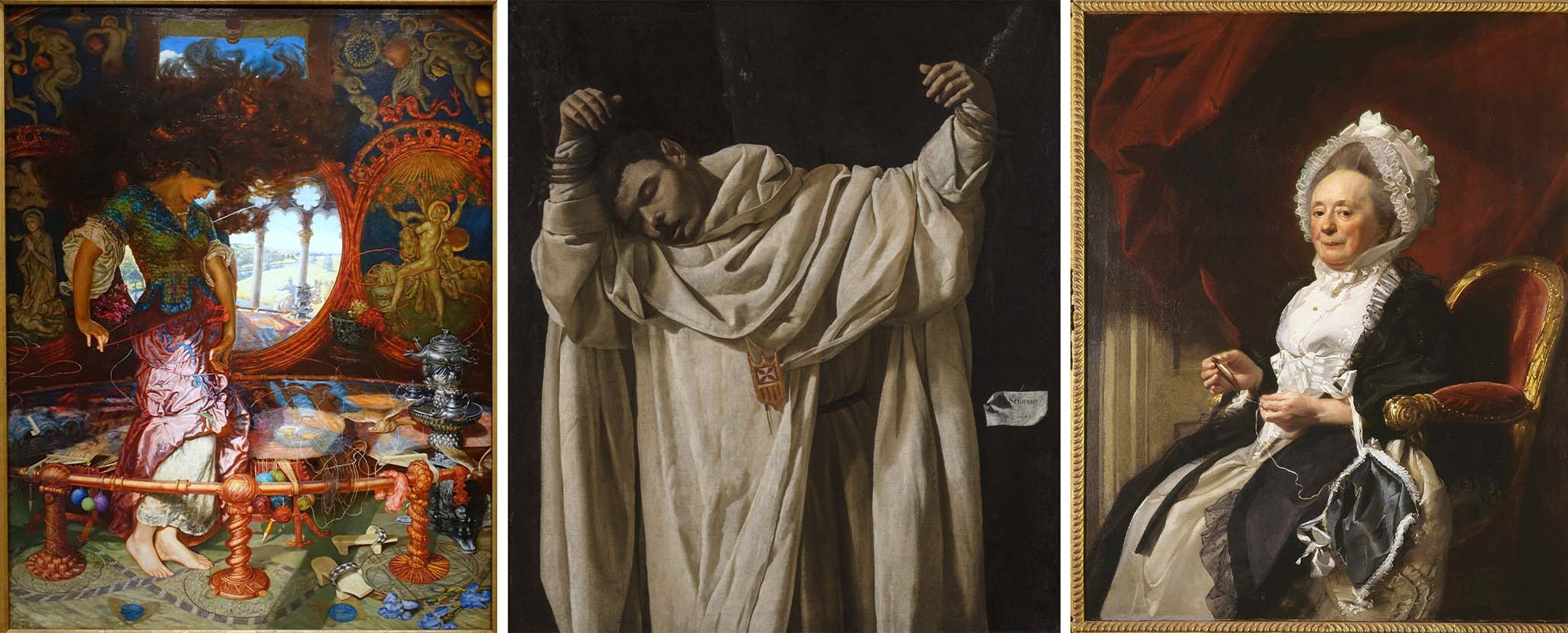
A walk through the galleries electrifies and staggers, no matter how often I visit. Among my favorites is William Holman Hunt’s Lady of Shalott, from the 1890s, based on the wild poem by Tennyson in which a curse confines the Lady to a tower from which she may view the world indirectly, only through a mirror; when she defies the ban and looks out her window to gaze at her handsome lover, Lancelot, riding by, the mirror shatters. Talk about imperfect information. The painting’s colors are psychedelic. Hunt’s Lady is about to go out of her mind in Technicolor. By contrast, Francisco de Zurbarán’s Saint Serapion, from 1628, is about to go to the block to face the axe and then to Heaven in film noir, very Spanish, in cream and black. In John Singleton Copley’s splendid portrait of Bridget Forrester Foot from 1778, the lady’s happy to stick to her knitting. What a trio, powerful and idiosyncratic. Then there’s Caravaggio, Murillo, Rubens, Ribera, and much more, not so-so things but icons.
The museum’s doing three shows for America’s 250th: Framing American Democracy: Contemporary Artists Reflect, which will come in two parts, and Framing American Democracy: Radical Roots. They’ll open in March and April, respectively. My expectations are shrouded less in dread than vexation at what predictable, left-wing bourgeois “blah, blah, blah” they might serve. I didn’t want to think about it while I was there. I was having too good a time.

About the Author
Brian T. Allen is National Review’s art critic.
Featured Tags
Advertisement
Advertisement
Comments