Anthony Hecht’s Civilized Poetry in a Barbaric Age
Written by James Matthew Wilson
Late Romance: Anthony Hecht — A Poet’s Life, by David Yezzi (St. Martin’s Press, 480 pp., $40), and Collected Poems, by Anthony Hecht, edited by Philip Hoy (Knopf, 640 pp., $50)
Share this story
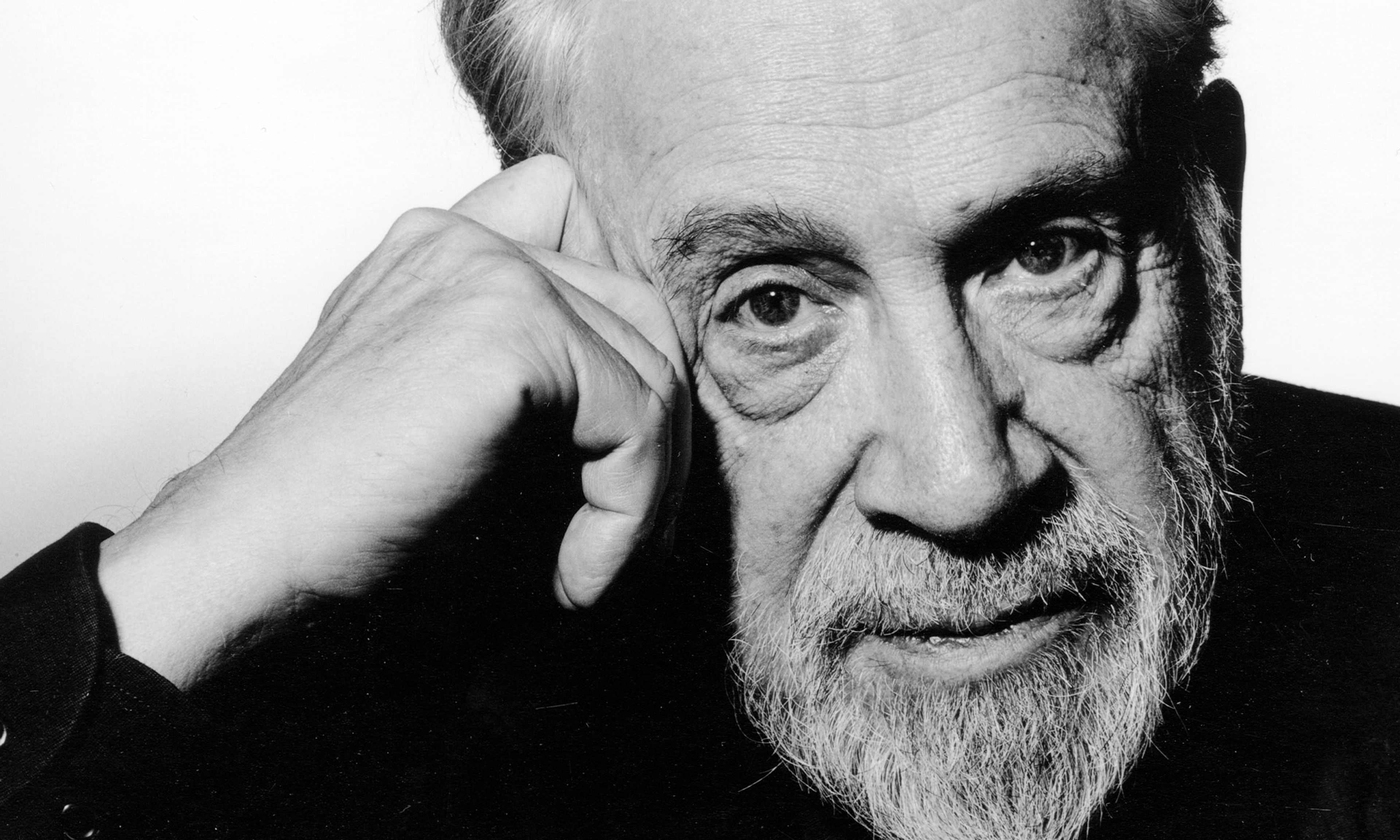
Anthony Hecht in 2000
When the American poet Anthony Hecht died in 2004, at the age of 81, his place in the ranks of the greatest American poets was already assured. Brooding and baroque, replete with arcane allusions, historical detail, and echoes of the anguish of King Lear, his poems fulfilled and surpassed the canons of the well-made work of art that had been established in his age, the only period in our country’s history when poetry was thought to be a concern of every educated person.
Hecht’s life was exemplary of his literary generation. As with so many of his contemporaries, he was formed by the rise of the New Criticism and the eruption of the Second World War. Born in New York City in 1923 (two years after the poet with whom he is most often paired, Richard Wilbur), Hecht received an education in literature that was shaped by the immense reputation of T. S. Eliot. The Waste Land had been published the year before Hecht’s birth and, over the next two decades, its influence remade poetry into an art form deemed intellectually serious and formally difficult. Through Eliot, modern literature, and poetry in particular, became an object of liberal learning that stood somewhere between aesthetics and ethics and came to occupy a place in American education akin to that which classics, philosophy, and theology had formerly held. Hecht’s teachers and mentors were the first generation of the poet-critic professors, such as John Crowe Ransom, Allen Tate, W. H. Auden, and Yvor Winters, each of whom in very different ways viewed the discipline of good writing as mysteriously connected with wisdom and self-mastery. What the monasteries had been to medieval Christendom, Winters once proclaimed, the literary academy was to the modern West.
In the nearly two decades since Hecht’s death, a selection of his letters and a thorough critical study of his poems have been published. Now the poet and critic David Yezzi has written a comprehensive first biography, and Hecht’s literary executor, Philip Hoy, has edited a new Collected Poems. Hoy’s volume includes the complete A Summoning of Stones, Hecht’s first book, which was never reprinted in full during the poet’s lifetime, as well as two dozen additional previously uncollected poems, among which are the final seven Hecht composed not long before his death.
Hecht was born into a secular Jewish home in which the ancestral religion was an unspoken cause of shame. His mother was distant, his father nervous, insecure, and given to attempts at suicide. His younger brother, Roger, was an epileptic and invalid who, despite a lifetime of difficulties, would also enjoy an impressive career as a poet. Hecht’s early schooling, elite and distinguished, initiated him into what he called the “default” Christian culture of the age. As a Jew, he felt welcome to become fluent in and master the great works of the Western tradition even as some of those very works reminded him, with their traces of antisemitism, of his outsider position. He spent decades in the reverent company of Shakespeare, for example, but would write with anguish about The Merchant of Venice and its vilified figure of Shylock.
Hecht enrolled at Bard College, where he first fell in love with poetry and declared himself a poet. In one of the more awkward episodes of literary history, Hecht’s parents brought in Theodor Geisel, otherwise known as Dr. Seuss, to dissuade Hecht from so impractical a career. Dr. Seuss’s advice was easily ignored, but Hecht’s intentions were nonetheless interrupted by the outbreak of World War II.
Hecht enlisted in hopes of gaining a “specialized,” that is to say “non-infantry,” role in the Army. It almost worked. After basic training, he remained stateside and completed his college degree by taking courses in the German language and the social sciences, but eventually he was shipped out to Europe. He faced combat with the infantry before his division arrived at the newly liberated death camp of Flossenbürg. Hecht found himself assigned to interview the often-skeletal survivors of the camp in order to collect evidence of war crimes.
The encounters at Flossenbürg derailed a mind already prone to melancholy. For decades, Hecht recounted, he would wake up screaming. The poem “Persistences” recounts a winter’s day when “Ancestral deputations” appear out of the “unconscious depths / Of REM repose.” Who should it be but those with
Blue numeral tattoos
Writ crosswise on their arteries,
The burning, voiceless Jews.
When the war ended in Europe, Hecht was redeployed to the Pacific for six months before, as he later observed, the dropping of the atomic bomb “saved his life” and brought his military service to an end. The years that followed contained an admixture of heavy drinking, nervous collapse, and study with the great poet-critics Ransom and Tate and the young Robert Lowell. Hecht’s talent was clear to everyone; he moved with enviable ease from postgraduate fellowships at Kenyon and Iowa (where he befriended Flannery O’Connor) to stints of teaching at his alma mater, Bard, and at Smith College (where he met Sylvia Plath and Ted Hughes) -- duties he resigned whenever prestigious fellowships, such as the Rome Prize and the Guggenheim, allowed him to live the life of a poet in the intellectually vibrant but cheap post-war Mediterranean, where many of his poems are set. Although he had not yet published a book, he was already being compared to the well-established Wilbur; Auden praised him as the greatest poet of his generation.
But Hecht struggled to write. When A Summoning of Stones appeared in 1954, it secured his position as part of the second generation of poet-professors, who were much in need as the GI Bill flooded college campuses with veterans-turned-scholars. The book did not secure his happiness, however. Marriage to a fashion model, Patricia Harris, and the subsequent birth of two boys, one of whom was not obviously his, made the years of professional success a trial that led eventually to divorce and his hospitalization for depression. Only in 1971, when he remet and married a former Smith student, Helen D’Alessandro, did his life gain emotional tranquility. In Yezzi’s account, Hecht not only found joy and stability but went from strength to strength, as he wrote the books of poems that cemented his reputation and the literary criticism that revealed him as having one of the great civilized sensibilities of a distinguished generation.
Yezzi’s biography follows Hecht’s published interviews closely. This helps the book to achieve what every good biography must -- a sense of the interior life and unified personality of its subject. At no time does Yezzi allow himself to be overwhelmed by archival information, as did Robert Crawford in his recent two-volume biography of Eliot. Crawford’s biography disintegrates into a pile of facts; Yezzi gives us a character, if a complicated one. Hecht was an insecure figure who even adopted a genteel accent to conceal his harsher New York speech, and his memories of the war seem at times to have been overwritten by his later reading on the subject. Further, he had a prickly tendency to perceive intellectual differences as personal slights, and so his interpretation of his contemporaries and literary giants alike could at times be petty and tendentious. All this makes it difficult for the biographer to distinguish impression from reality and so makes following Hecht’s account of things a risky venture.
Like nearly all the American and English poets born in the Twenties, Hecht’s early work eschewed the free verse of the previous generation and opted instead for witty, allusive, impersonal, and complex stanzas that were intended to reward close study as much as to be heard aloud.
Hecht later spoke of Stones as apprentice work, and indeed it was. When one reads through the poems, the chief pleasure is to discover whom Hecht is imitating: Auden in “Japan,” Eliot in “Imitation,” and, more than anyone else, Ransom in “Katharsis,” “Alceste in the Wilderness,” and the early anthology piece “Samuel Sewall.” Other poems respond directly to W. B. Yeats (“Harangue”) or Thomas Hardy (“Spring for Thomas Hardy”), while “La Masseur de Ma Soeur” and “A Lesson from the Master” give us a young Hecht who has studied his master Wallace Stevens much too closely. Smelling out influences amounts to a subtle pleasure indeed.
More than a decade passed before The Hard Hours (1967) appeared. In the interim, many of Hecht’s contemporaries had been overwhelmed by the popular success of the Beat poets and had turned to free verse. Hecht, who attended high school with Jack Kerouac, loosened his style as well, but not by much. Aside from a few free-verse poems, his work continued in meter but with a looser -- often a little too loose -- iambic blank verse or intricate rhymed stanza.
In The Hard Hours, Hecht for the first time found ways to represent directly the horrors of the war -- the Holocaust, in particular. The volume concludes with those vivid, beautiful, and brutal studies of human cruelty and helplessness that are “More Light! More Light!” and “It Out-Herods Herod. Pray You, Avoid It.” These are the defining poems of the war generation and the poems that best represent Hecht’s achievement as a poet, which is to convey in a single vision the elaborate secular and religious beauty of the West and the murderous evil that disfigures it.
In Hecht’s later books, he reckons in poem after poem with human evil, but always in the context of the sheer magnificence, the intricacy, of a world in which spiderwebs echo the details of baroque cathedrals -- and like the baroque cathedrals, Hecht’s ornate architecture in verse gives material form even to the spiritual glories of heaven.
Hecht, over seven books and many decades, became more fully what he had been from the beginning: a Jew fascinated by the Latinate beauty of Catholic Europe and the elaborate verse of Shakespeare and Milton; one who spent much of his life reading and contemplating the Bible and thought of himself as a religious poet, even though he was detached from Jewish practice and permanently unsettled by the antisemitism that had worked its way through Christian culture and the Germany of his ancestors in particular.
The list of lesser known but great poems that should contribute to his posthumous reputation are many. Among them: “The Feast of Stephen,” “The Deodand,” “Still Life,” the autobiographical blank-verse memoir “Apprehensions,” the devastating sestina “The Book of Yolek,” and the witty, late series of “Death” poems, which show that Hecht continued to develop as a poet even late in life. Unlike the early work, the later poems never went out of print. Thanks, however, to Foy’s well-annotated edition, they can now be had in one place and with the necessary explanatory notes that will help along those of us who do not recall what “Steuben glass” and “Gobelin millefleurs” are. The whirling intricacies of Hecht’s verse are worthy of our careful attention, not least because they teach us how to be civilized even as we stand before the atrocities of a barbaric age.

About the Author
James Matthew Wilson is the author, most recently, of Saint Thomas and the Forbidden Birds.
Featured Tags
Advertisement
Advertisement

Comments