Beijing’s Long Game Meets Washington’s Gamble
Written by Jianli Yang
Venezuela has become a proving ground for the emerging world order.
Share this story
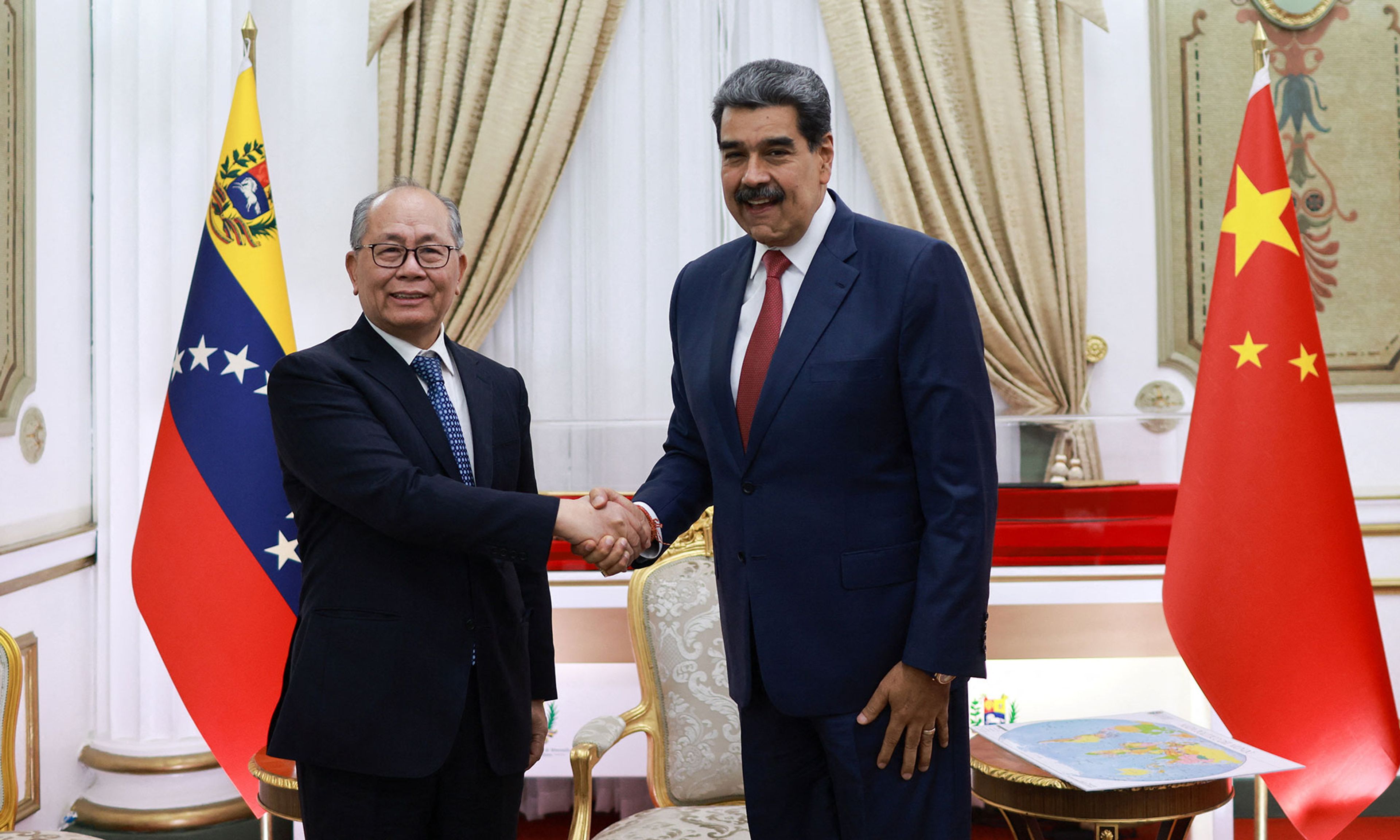
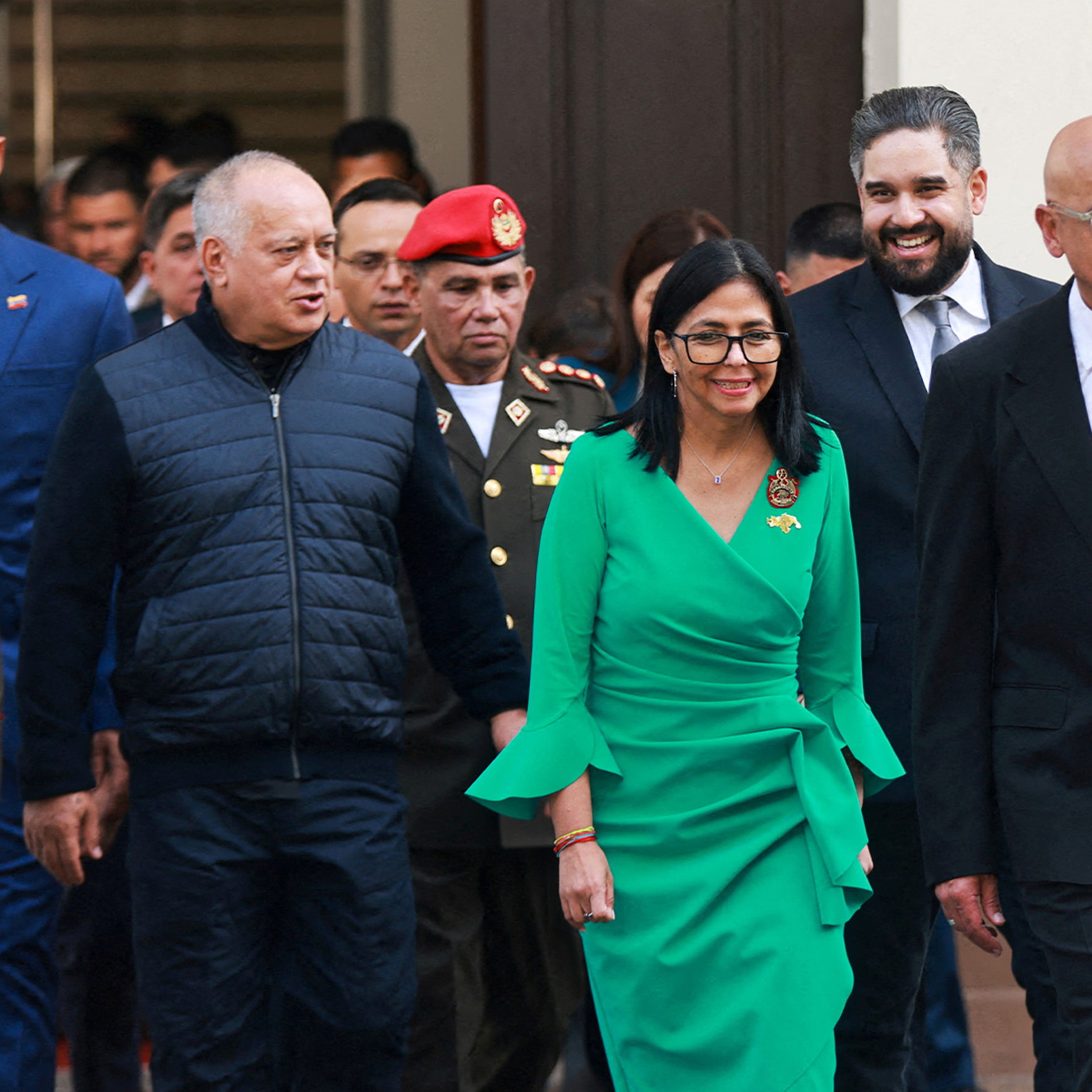
Venezuela's President Nicolas Maduro meets Special Representative of the Chinese Government on Latin American Affairs Qiu Xiaoqi at the Miraflores Palace in Caracas, Venezuela January 2, 2026.
The U.S. operation in Venezuela, culminating in the capture of Nicolás Maduro, sent shockwaves across the global system. When President Donald Trump declared shortly afterward that energy — specifically oil — was central to the mission and that the United States would now “run the country,” he was not merely signaling regime change. He was announcing the operational revival of a new Monroe Doctrine, echoing earlier assertions of U.S. hemispheric primacy that date back to the 19th century and were periodically reasserted during the Cold War.
That declaration carries consequences far beyond Caracas. It is, above all, a direct challenge to China — the external power with the deepest economic, strategic, and technological entanglement in Venezuela. Whether Washington succeeds in reshaping Venezuela will depend as much on managing Venezuelan politics as on navigating a prolonged, high-stakes confrontation with Beijing in the Western Hemisphere.
The immediate euphoria in Washington risks obscuring a sobering reality. Deciding to capture a leader is one thing. Managing the aftermath of a collapsed petro-state — while navigating its deep-seated strategic ties to China — presents an entirely different level of complexity.
Venezuela today is not merely a country in political transition; it is an institutional ruin. Decades of Chavismo have produced a deeply entrenched system that fuses party, military, state enterprises, and informal armed groups. Even without Maduro, the regime’s networks remain embedded throughout the armed forces, intelligence services, state-owned companies, and social control mechanisms.
Any U.S.-backed transitional authority will face immediate legitimacy crises, fragmented opposition forces, and the possibility of asymmetric resistance. Washington will not merely be midwifing a political transition; it will function, at least temporarily, as an emergency administrator for a society in near systemic collapse, with inflation, infrastructure decay, and mass emigration.
Energy policy illustrates the scale of the challenge. While Venezuela possesses the world’s largest proven oil reserves, according to OPEC data, it currently supplies just 1 percent of global demand. President Trump’s confidence in a rapid restoration of production underestimates the historical record. In Libya, oil output remains below pre-conflict levels more than a decade after the fall of Moammar Qaddafi. In Iraq, it took twelve years after Saddam Hussein’s removal to recover pre-war production — much of it driven not by American firms, but by Chinese companies. These precedents underscore a fundamental truth: Oil infrastructure destroyed by mismanagement, corruption, and sanctions cannot be revived by political fiat alone.
For Beijing, Venezuela is not an expendable partner. It is the single most expensive strategic bet China has ever placed in the Western Hemisphere.
Since the early 2000s, China has cultivated Venezuela as its flagship Latin American partner. Beijing extended an estimated $50–$60 billion in financing — its largest exposure to any single country worldwide — at a time when China sought to diversify energy supplies, deploy surplus capital, and build geopolitical counterweights to U.S. influence.
Venezuela quickly became one of China’s largest oil suppliers. Chinese state financing enabled Hugo Chávez to expand economic activity beyond oil and mining, which aided his regime. According to the Center for Strategic and International Studies, China provided roughly $62 billion in loans for more than 600 projects before U.S. sanctions intensified in 2019, accounting for over half of China’s total lending to Latin America during that period.
The architecture of this engagement matters. China’s “loans-for-oil” model does not merely secure energy — it hard-codes dependency. Repayment occurs through crude shipments rather than currency transfers, ensuring that oil flows to China regardless of market conditions, sanctions, or political change. Each barrel is pledged before it leaves the ground, as documented by analyses from the Brookings Institution and the Inter-American Dialogue.
By late 2025, nearly 90 percent of Venezuela’s oil exports were reportedly bound for China, either directly or via ship-to-ship transfers designed to evade detection. This was not a temporary workaround; it was structural integration.
Venezuela served as the ideological anchor for China’s strategic planning in Latin America not merely because of its oil, but because it offered Beijing a politically aligned, anti-U.S. regime willing to experiment with an alternative development and governance model. Under Chávez and Maduro, Venezuela became a proving ground for China’s integrated approach — combining energy finance, infrastructure construction, digital governance, and political loyalty — well before the Belt and Road Initiative was formally extended to the region in 2018. Success in Venezuela was meant to demonstrate that a large Latin American state could decouple from U.S. influence, withstand sanctions, and reorient its economy toward China without regime collapse. That example was then leveraged rhetorically and diplomatically to normalize deeper Chinese engagement across the hemisphere, from Argentina to Brazil, framing Beijing not as an external intruder but as a long-term partner capable of underwriting sovereignty against Western pressure.
Washington’s secondary tariffs in April 2025 were intended to sever Venezuela from global markets by punishing any country purchasing its crude. The logic was familiar: Isolate, starve, and collapse, a strategy that echoed earlier sanctions against Iran and Iraq. But the strategy misread a changing global environment. The world no longer operates under a single economic pole, and the United States no longer monopolizes access to markets or energy infrastructure. For China — already hardened by prolonged tariff conflict with Washington — the marginal cost of additional sanctions was limited. As risk-averse buyers withdrew, Venezuelan crude became deeply discounted. China stepped in.
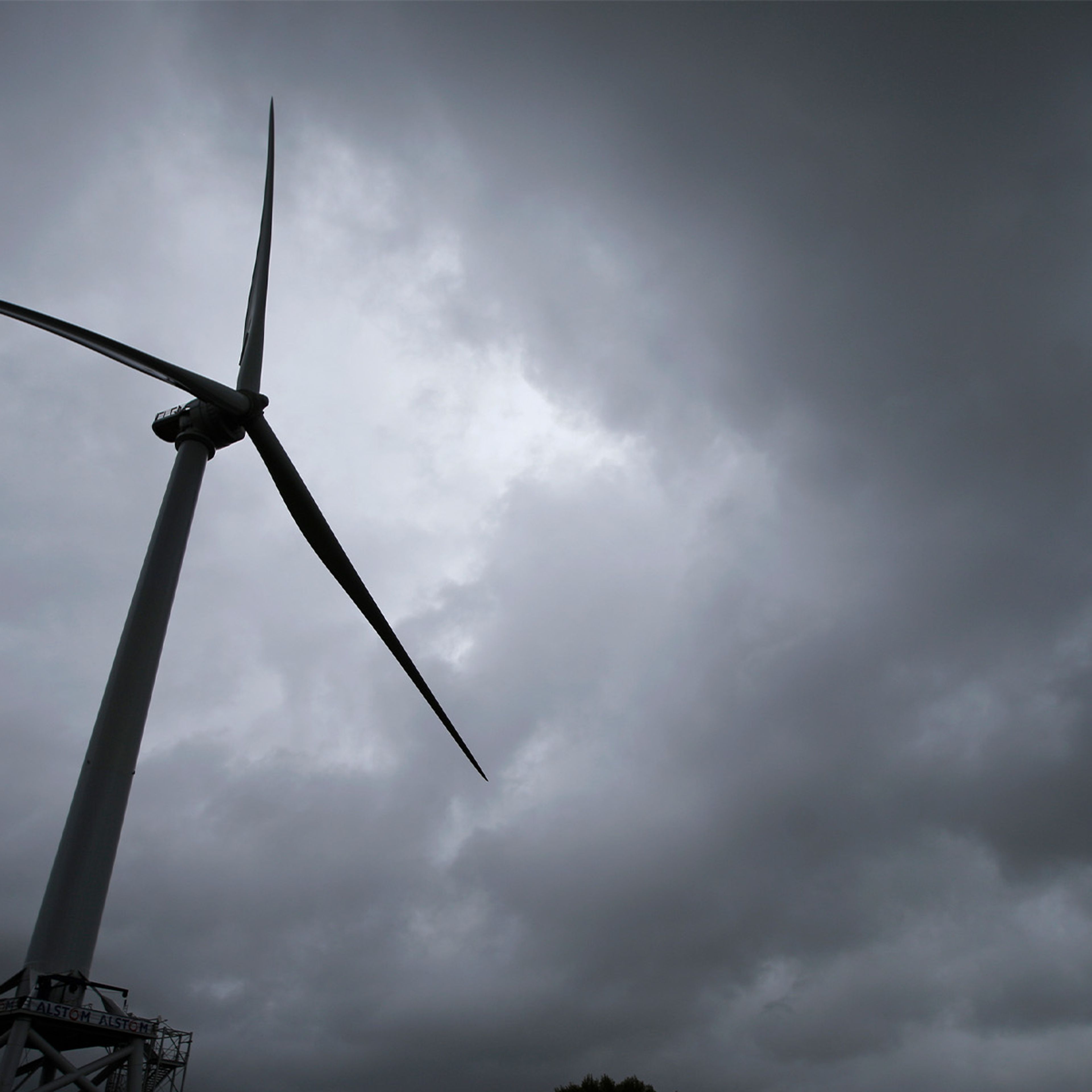
The turning point came in September 2025, when China installed the Alula, a self-elevating offshore oil platform, in Lake Maracaibo under a 20-year production agreement. Chinese firms assumed operational control of more than 500 wells and dispatched engineering teams to revive long-neglected fields. Output, which had collapsed to roughly 12,000 barrels per day, carried projections of reaching 60,000 barrels per day by 2026.
This was not a short-term play. It reflected Beijing’s confidence that sanctions would persist — and that China alone was willing to tolerate the risk. Diplomatically, this confidence rested on the elevation of Sino-Venezuelan relations in 2023 to what both sides labeled an “all-weather strategic partnership,” a designation Chinese officials have used elsewhere to signal long-term political commitment. Sanctions, instead of isolating Venezuela, created a vacuum that China was uniquely positioned to fill.
With the United States asserting direct control, China’s Venezuelan portfolio now faces unprecedented uncertainty.
Oil production agreements — including the Lake Maracaibo deal and China’s 40 percent stake in the Sinovensa joint venture in Venezuela’s Orinoco Belt — are effectively hostage to U.S. administrative decisions. Infrastructure investments such as the stalled Tinaco–Anaco railway, built by China Railway Engineering Corporation, represent massive sunk costs that Washington may sideline in favor of Western contractors.
Even more sensitive is the technological dimension. In mid-2025, Venezuela signed cooperation agreements with Chinese institutions to develop “sovereign AI,” deploy China’s BeiDou satellite navigation system as an alternative to GPS, and integrate digital governance platforms. For Washington, these systems constitute dual-use infrastructure with surveillance and military applications. Their dismantling is almost certain under U.S. management, particularly given longstanding U.S. concerns about Chinese technology in the Western Hemisphere.
Strategic minerals add another layer of complexity. Through state-linked firms, China holds extensive concessions for gold, bauxite, iron ore, and coltan in Venezuela’s Arco Minero region — materials essential to global electronics and energy-supply chains. The United States now faces a dilemma: Honor these contracts to prevent economic collapse, or seize them as illegitimate proceeds of a criminal regime.
Venezuela is a large strategic animal in a world where oil continues to underpin national power and geopolitical influence. As great-power rivalry accelerates, Venezuela is being transformed from a mismanaged petro-state into one of the most fiercely contested energy battlegrounds of the 21st century.
China cannot retreat from Venezuela without paying a steep reputational price. Nor can it confront Washington directly without risking great losses. Beijing’s response may therefore be multifaceted rather than overtly confrontational.
China has already framed the U.S. operation as a violation of sovereignty and international law, echoing its standard diplomatic language at the United Nations. Beijing will probably refuse to recognize any Venezuelan authority that unilaterally voids Chinese contracts or debt obligations, complicating international legitimacy.
Chinese economic leverage will follow. China can tie debt renegotiation to recognition, investment flows, and access to alternative markets. The lesson Beijing draws from Iraq is instructive: Regime change does not guarantee exclusion. Chinese firms eventually emerged as dominant players in Iraq’s postwar oil expansion — not despite U.S. intervention, but after it.
China’s long relationship with Venezuela’s security apparatus also cannot be dismissed. Loyalist networks trained, equipped, and technologically enabled under Chinese cooperation will not simply disappear. While overt military involvement is unlikely, covert support, intelligence sharing, or technological assistance could destabilize a U.S.-backed transition and raise the cost of American control.
China has long specialized in exporting tools of digital governance and social control. Venezuela’s “homeland card” system — using QR-coded identification to regulate access to food, benefits, and political participation — draws directly from Chinese models of digital governance. These systems, already embedded, may outlast any regime change and complicate democratization efforts.
Beyond Venezuela itself, the confrontation sends a message to the developing world.
For decades, U.S. sanctions operated on the assumption that exclusion from American markets was fatal. Venezuela’s survival — enabled by Chinese financing, logistics, and risk tolerance — demonstrates that this assumption no longer holds universally.
Across Latin America, the pattern is visible. Brazil’s trade with China continues to deepen, making China its largest trading partner. Argentina’s infrastructure increasingly depends on Chinese capital. Mexico navigates a careful dual engagement. The Western Hemisphere no longer responds exclusively to Washington’s preferences.
China’s ability to integrate an entire national economy into its strategic orbit — through energy, debt, technology, and logistics — presents the United States with a structural challenge, not a temporary one.
The U.S. operation in Venezuela is more than a regional intervention. It is a declaration of intent about how Washington views power, energy, and spheres of influence in a post-unipolar world. China’s response will test whether that declaration can be sustained.
If Washington succeeds in stabilizing Venezuela while neutralizing China’s embedded influence, it will be a decisive assertion of American hemispheric dominance. If it fails — if Venezuela becomes a prolonged contest of sabotage, debt disputes, and geopolitical signaling — it will confirm that even in its own backyard, U.S. power now faces determined, capable resistance.
Either way, Venezuela has become a proving ground for the emerging world order.
The most consequential implication may lie far from Caracas. Washington’s assertion of hemispheric primacy invites comparison. If the United States claims an implicit right to intervene in its “front and back yards,” Beijing may interpret this as tacit acceptance of spheres of influence elsewhere.
The Venezuela precedent will not go unnoticed in Beijing’s calculations regarding Taiwan and the South China Sea. It strengthens arguments that great powers ultimately enforce regional dominance when vital interests are at stake, rules-based rhetoric notwithstanding.
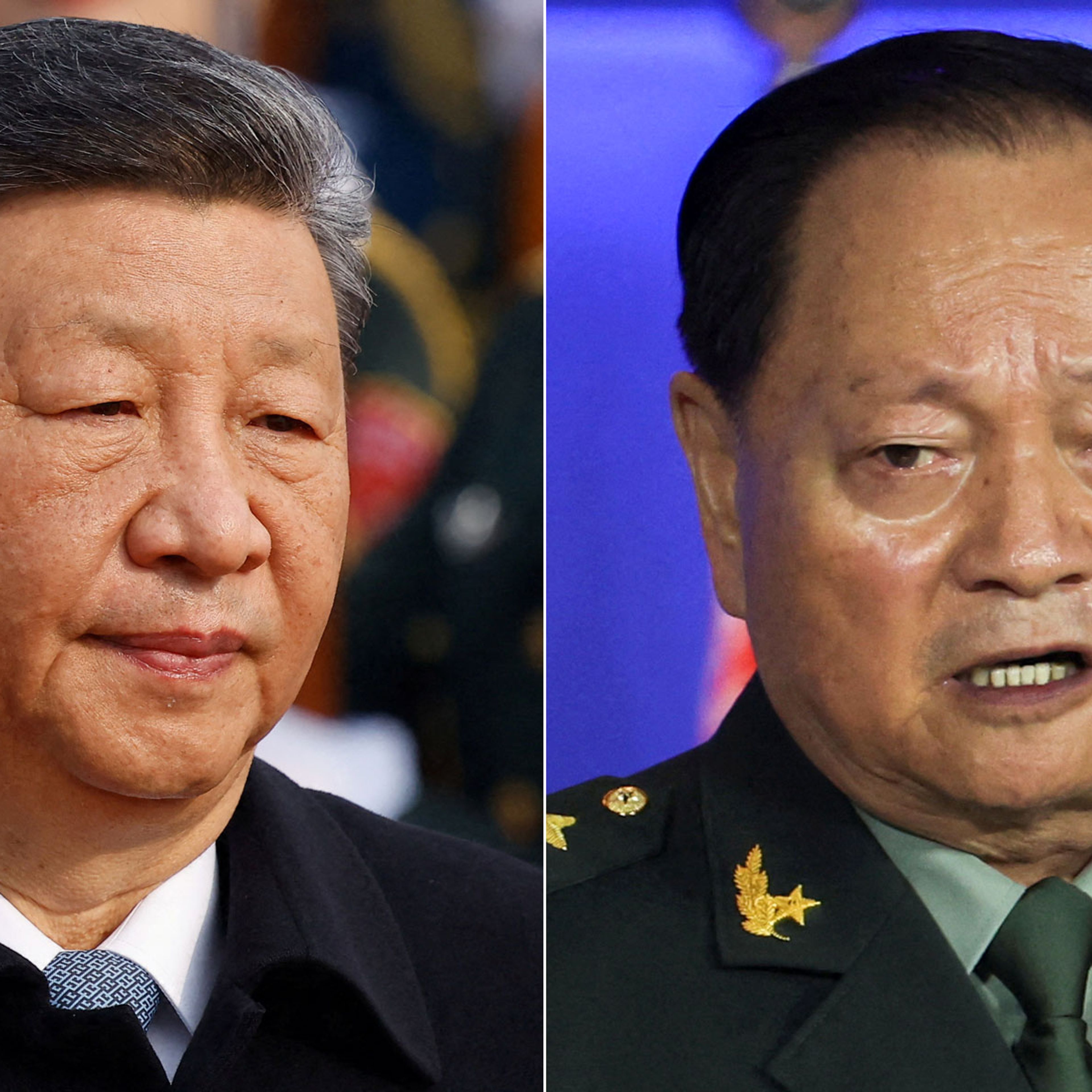
Not long after Trump returned to office, I participated in a private discussion with a former Trump-administration national security official. By that time, it had already become pretty apparent that Trump’s second-term focus would prioritize the Western Hemisphere, even at the expense of European commitments. I posed a hypothetical: If Xi Jinping were to acknowledge U.S. primacy in the Americas in exchange for American restraint in the Indo-Pacific — especially on Taiwan — what would Washington say?
There was no answer then. There is still none now.
That ambiguity, however, has been profoundly sharpened by the U.S. operation in Venezuela and its response to China’s most recent military exercises simulating a blockade of Taiwan. The fundamental question remains: Will Trump make concessions to China on the South China Sea, particularly Taiwan, in exchange for Xi Jinping’s concessions on Venezuela and the Western Hemisphere? Or will he pursue a simultaneous, confrontational strategy across all theaters? The coming months will provide the answer.
About the Author
Jianli Yang is a research fellow at the Harvard Kennedy School of Government, a columnist for National Review, and the founder and president of Citizen Power Initiatives.
Featured Tags
Advertisement
Advertisement
Comments