Beyond Feminism
Written by Alexandra DeSanctis
The Dignity of Dependence: A Feminist Manifesto, by Leah Libresco Sargeant (University of Notre Dame Press, $28)
Share this story
kieferpix/via Getty Images
This fall, the Canadian government approved Robert Munsch -- the author of beloved children’s books, who is suffering from dementia and Parkinson’s disease -- for physician-assisted suicide. A growing number of Canadians, more than 15,000 in 2023, now seek to end their lives in this sterile manner.
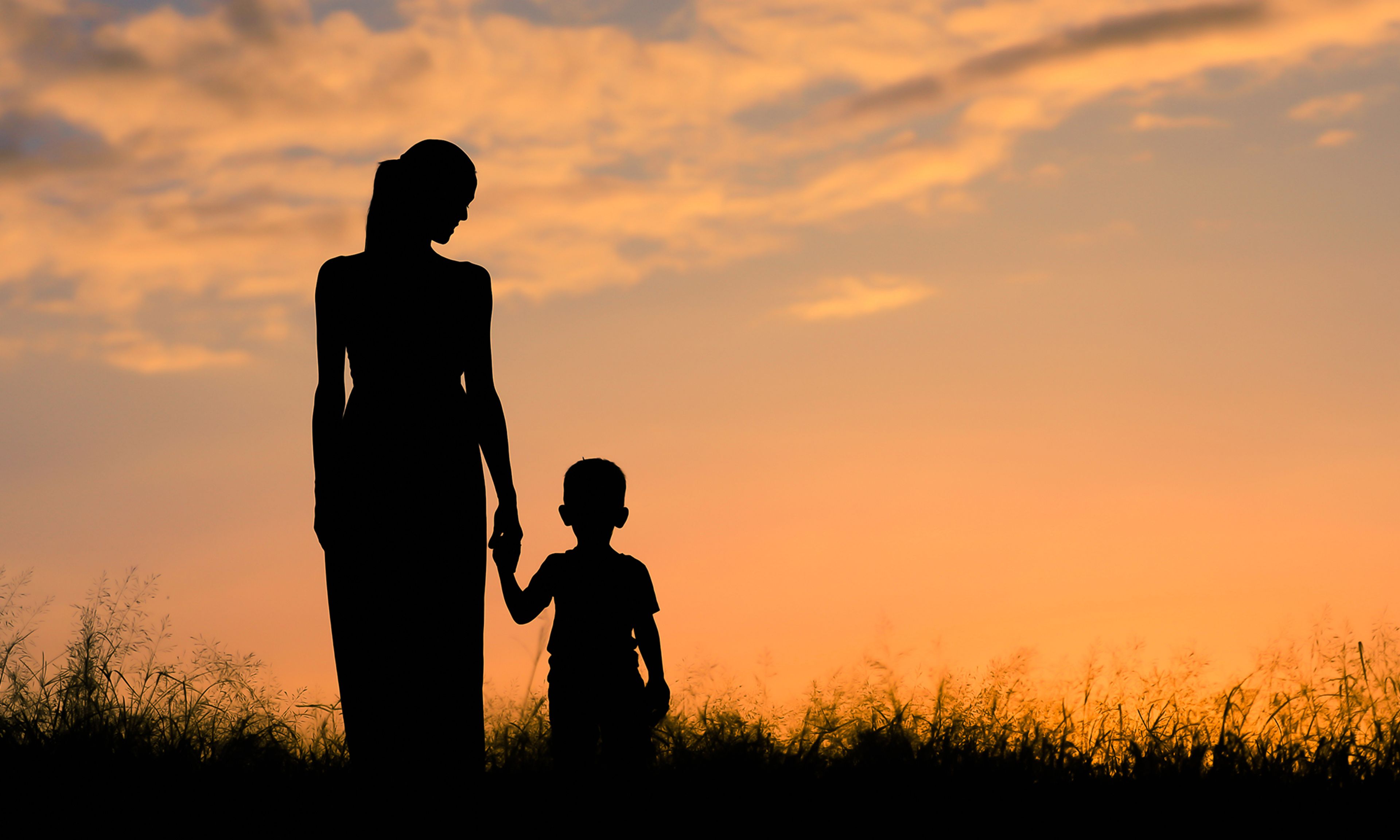
Munsch’s decision is particularly jarring. His most popular book, Love You Forever, tells the story of a mother who steals into her infant son’s room to hold him while he sleeps, a habit she maintains throughout her son’s adult life. The story concludes with the heart-wrenching image of the son cradling his elderly mother as she reaches the end of her life. In the years before Munsch wrote the story, he and his wife had two stillborn babies, which led him to compose the book’s refrain: “I’ll love you forever, / I’ll like you for always, / As long as I’m living / my baby you’ll be.”
Inclined to sentimentality even as a child, I never once managed to read Love You Forever without crying. Now, as a mother to a baby son, I can hardly think of it without tearing up. That the author of this affirmation of love at life’s weakest moments desires physician-assisted suicide strikes me as a horrific victory for the cult of death.
It is in direct repudiation of this mindset that Leah Libresco Sargeant offers her new book, The Dignity of Dependence: A Feminist Manifesto, arguing for an anthropology that accepts and honors the fact of human dependence. At the heart of the book is the observation that every human being comes into the world wholly dependent on others, and at no point in life -- not even at our strongest moments -- do we fully shed our need for the people around us. We are unavoidably grafted onto a web of chosen and unchosen relationships shaped by human frailty and need.
While the subtitle might be intentionally provocative, it feels out of place: the book is neither a manifesto nor particularly feminist. Labeling it as such risks weighing down Sargeant’s valuable insights with the baggage of the ever-evolving feminist wars. Her argument goes far deeper than that: “Dependence marks women more obviously and more intimately,” she writes, “but it is also impossible to tell the truth about who men are or treat them justly without accounting for our mutual dependence.”
Sargeant is right to see vulnerability and dependence as especially central to the lives of women, as a result of human biology. “No one comes into the world except through radical dependence on a woman,” she notes, “an overwhelming need that renders her, in turn, more dependent on those around her.” The ability to bear new life is a gift, to be sure, but it does not come without sacrifices and unique forms of responsibility. As Sargeant argues, these burdens, too, are a form of blessing, and allowing ourselves to be needed by those around us gives our lives meaning.
In a chapter titled “The World Is the Wrong Shape for Women,” Sargeant explores such commonplace challenges as standard kitchen counters, which are typically several inches too tall for the average woman to use comfortably. Elsewhere, she considers weightier topics such as abortion, contraception, and in vitro fertilization, all of which objectify the female body and foster a culture hostile to the needs of women and children. But Sargeant doesn’t wield these examples to bolster a case for feminist policy. Nor does she endorse a false vision of equality that regards men and women as interchangeable. Instead, she rejects feminism’s core proposition that women are “defective men” -- and that, in a world shaped for men, equality requires us to give women the resources to operate as men do -- in favor of a far deeper insight: The world is the wrong shape for everyone. Sargeant considers how dependence and vulnerability mark the lives of men in ways less noticeable but no less real:
Because men can more easily separate themselves from relationships with the weak, they often find that the world expects them to make this choice and that they are further expected to not have any feelings of regret. Women risk themselves without sufficient support, but men lose a lot when they are told that they are not needed, that their spare strength is superfluous at best, a threat at worst.
In what is perhaps her strongest chapter, “The Blessing of Burdens,” Sargeant skewers the modern notion that fulfillment is to be found in unencumbered selfhood and in taking on only freely chosen obligations. Reflecting on the unique burdens of bearing and raising children, Sargeant suggests that each of us is called not to close in on the “self” we think we want to be. Rather, we find fulfillment only in becoming new, better selves by serving others, an opportunity readily available for most of us in the form of parenthood.
This put me in mind of a recent essay by Abigail Shrier about what she learned in the trenches of her son’s serious illness:
When parents talk about having a child who is ill or struggling, nonparents often take the wrong message. They think, Thank God I was spared all that pain. If I can’t order up the precise specifications for my child, the condition in which he emerges, the choices he’ll make, if I can’t be assured that he’ll skirt the dangers that await him, maybe it’s better not to have children at all. . . . Each time one of ours is ill or in pain, we think, Thank God I am here for him. We sit in hospitals’ too-upright chairs and achieve silent communion with mothers and fathers the world over. We never wonder why we exist.
Ultimately, human dependence points us to the deepest reality that undergirds a truthful human anthropology: We were created out of love by God, and our entire existence depends wholly on Him. We are not, and never can be, unencumbered selves -- and that reality is a gift.
About the Author
Alexandra DeSanctis is a contributing writer at National Review.
Featured Tags
Advertisement
Advertisement

Comments