Biden’s Diagnosis Exposes a Critical Weakness in Our Political System
Written by Pradheep J. Shanker
We don’t know enough about the health of the people who want to lead us.
Share this story
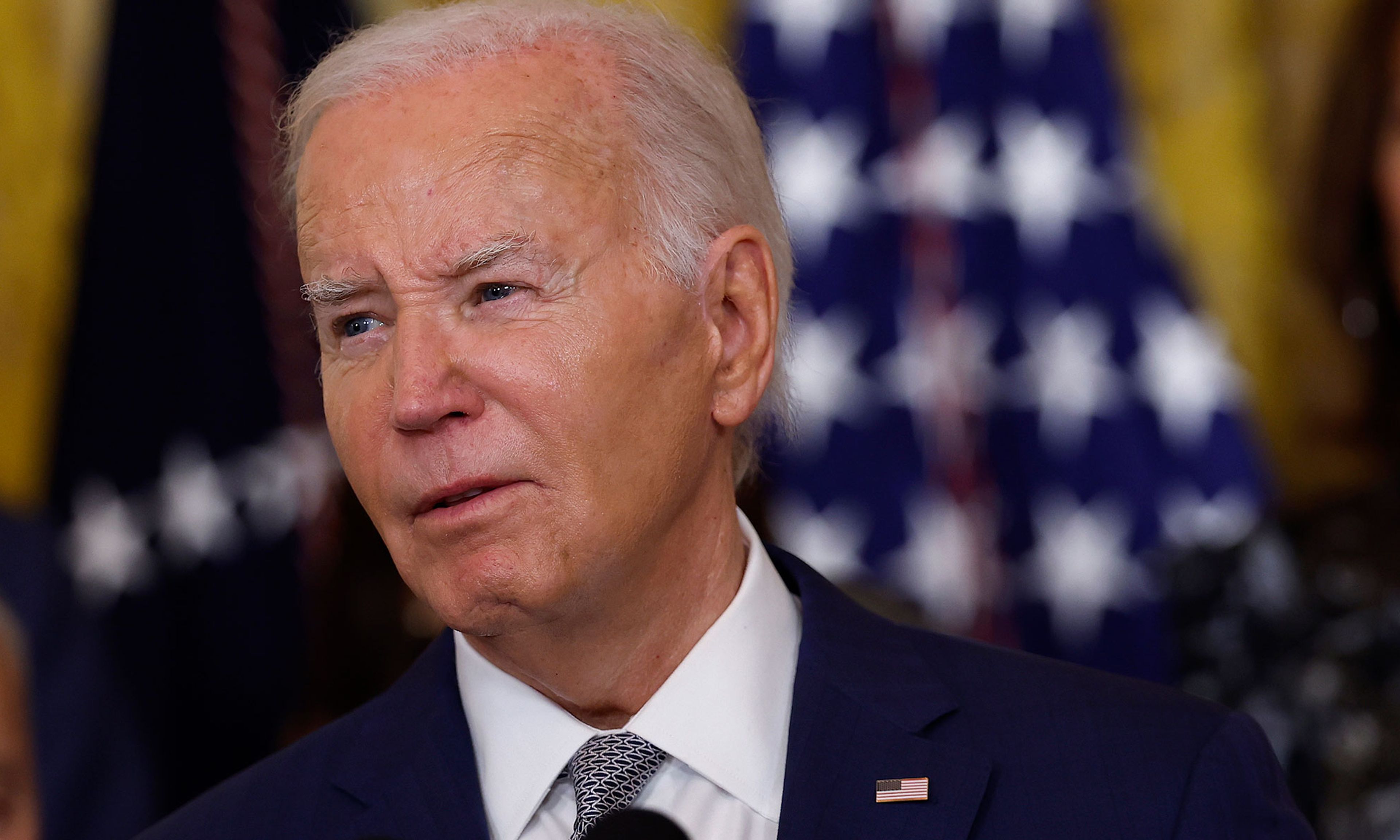
President Joe Biden speaks at an event in the East Room at the White House in Washington, D.C., June 18, 2024.
Over the weekend, we learned that Joe Biden, only four months removed from the Oval Office, had been diagnosed with aggressive, metastatic prostate cancer. Well wishes rightly poured in for Biden. But it’s hard to separate the diagnosis from the recent weeks of debate and criticism about how the Biden White House controlled and hid other Biden medical issues from the American public before the 2024 election cycle.
To start, let's take a methodical view of Biden’s prostate cancer. Prostate cancer is by far the most common cancer diagnosis among men. Roughly one in eight men will be diagnosed with prostate cancer during their lifetime. Many physicians believe it is vastly underdiagnosed. Prostate cancers accounted for over 313,000 cancer diagnoses last year alone -- the second most common after breast cancer. For men, that is approximately three times more prevalent than lung cancer, and five times more than colon cancer.
Most commonly, however, prostate cancer is a slow-growing disease that does not always spread beyond the prostate gland. Many men who have prostate cancer never know it, because the cancer growth is so limited that it never causes significant symptoms or morbidities for these patients. That is one of the main reasons there has been sustained disagreement about prostate screening protocols. In cancers that grow quickly, you want a cheap, routine screening system so you catch the tumors early in their progression. But with prostate cancer, finding tumors early doesn’t actually show any statistically significant improvement in mortality, and can actually increase morbidity, therefore potentially causing a decrease in the quality or extent of people’s lives.
For example, the most common screening test for prostate is the PSA (prostate-specific antigen) blood test. Yet studies using PSA for early screening showed only very minimal reduction in mortality. Because of this, PSA isn’t accepted by all medical bodies as a good screening test for prostate cancer for the wider population. The lack of any benefit in large populations, as well as the tendency of positive tests actually to cause increased morbidity as doctors do invasive tests to discover the cause of the elevated PSA, has diminished medical professionals’ esteem for the PSA test, especially on older men.
Other tests have their own problems. Digital rectal exams (direct examination of the prostate by a physician) are also not effective in reducing mortality. Biopsies are very invasive, and have a high complication rate: There is a real risk that investigating the positive test could cause more damage than the prostate cancer itself! Other screening tests, such as MRI, are expensive and haven’t been proven effective, either. Thus, many have questioned whether it’s worthwhile to do any at all screening on men over 70.
However, that isn’t to say the PSA test isn’t useful. Joe Biden is not the average American man. He had been a national leader since the early 1970s. He was a two-term vice president, and served one term as president. He has received the best health care on the planet during the latter two-thirds of his life, without almost any concern for cost or effort.
In fact, Biden was diagnosed with benign prostatic hypertrophy (enlargement of the prostate) in 2019. After that point, PSA could have been useful for a patient like him. The test can help sort out dangerous cases of prostate cancer. “What we want to know is whether PSA can predict who gets the sort of prostate cancer that can cause symptoms and threaten a patient’s life. It turns out that PSA is very good at doing that,” Dr. Andrew Vickers, a prostate cancer expert, explains.
So if Biden had no restrictions on cost or effort when it came to his medical care, and had a previous diagnosis, how was his condition missed so badly that he is now confronting metastatic disease? The president undergoes annual physicals, with access to the full battery of tests and evaluations. Even if we give everyone the benefit of the doubt, and say this is an exceptionally rapid growing and invasive tumor, it’s difficult to believe it grew and spread in between his last two physical examinations (from March 2023 until February 2024).
PSA exams often aren’t done because of cost or because we don’t think it would change someone’s life expectancy. Does this rationale work for the sitting president of the United States? Clearly there is a far higher standard for the president than there is for the average 80-year-old American. Don’t forget: He has had regular, intensive follow-up care yearly for the last half century. Discovering an invasive metastatic prostate cancer on this specific patient this late either means that there was a significant failure along the line -- or someone is hiding something.
Some, like oncologist Ezekiel Emanuel, have declared outright that Biden had this cancer for years. There are extremely rare, not unheard-of cancers of the prostate that can originate, grow, and rapidly metastasize. So Emanuel can’t prove he is right. But he likely is, and most experts I know would absolutely agree with him. The real question is what, in retrospect, could’ve been done about it.
The medical issues in this case are far less significant than the political problems.
The problem for Democrats is that their credibility is at an all-time low because of their lack of honesty regarding Biden’s other health issues. The American public, and the entire world, watched Joe Biden’s rapid mental decline over the last four years. He was not a robust, mentally exuberant man even when he ran for election in 2020. His campaign protected him from overexposure right from the beginning. But the presidency revealed -- and accelerated -- his advancing age.
At least two recent books have extensively detailed Biden’s quite obvious mental decline. In Original Sin: President Biden’s Decline, Its Cover-Up, and His Disastrous Choice to Run Again, CNN’s Jake Tapper and Axios’s Alex Thompson reveal that Joe Biden did not recognize world famous actor and longtime Biden supporter George Clooney when he arrived for a fundraiser in 2024. In 2024: How Trump Retook the White House and the Democrats Lost America, Josh Dawsey, Tyler Pager, and Isaac Arnsdorf state that White House staff intentionally decided against having the president take a basic mental health assessment evaluation during his annual physical.
Democrats spent much of the final two years of Biden’s presidency hiding the president’s obvious and publicly demonstrable mental decline. The fact of that decline was obvious to everyone who observed him. And yet, First Lady Jill Biden, Vice President Kamala Harris, and the entire White House staff, led by Press Secretary Karine Jean-Pierre and her daily briefings expounding how energetic and mentally agile the president was, continued to mislead the public in an incredible gaslighting effort that may be unchallenged in modern American politics.
Considering that deception, why would anyone accept that the Bidens are now being honest about Joe’s new prostate cancer diagnosis? They’ve sacrificed all the benefit of the doubt.
The Biden example is just the latest evidence that neither party really wants to confront the realities of their aging, mentally and physically diminishing leadership. Those in power always want to retain that power, regardless of the costs, even if it means lying to the American people.
But this moment could be an important opportunity for President Trump to encourage accountability and transparency when it comes to the health of the people who want to lead us.
Trump is now the oldest elected president -- he’s about six months older than Joe Biden was when the latter took office four years ago.
Thankfully, Trump appears to be in good mental and physical health for a man of his age. And he is in a unique political position. He is term-limited, and therefore doesn’t face the political risk that others do. Trump and his followers could lead a campaign to find a process by which the American people can fully and transparently know the health of their leaders, including the president, the Supreme Court, and all members of Congress.
That process will not be easy or readily agreed upon by all sides. But it’d be worth the effort. A republic can’t survive and prosper if its citizens can’t know the mental and physical capabilities of their leaders. Our system today is built to benefit those who lie to the voters, proving those in power don’t truly trust its citizens. And this deception isn’t unique to either party. In recent years, we have seen Democrats such as Dianne Feinstein and Republicans such as Mitch McConnell struggle through their duties. Even younger senators like John Fetterman now face regular attacks about their mental capacity, and there is no process for voters to know the facts regarding their duly elected leaders.
This process to evaluate the health of our leaders need not be overly invasive. Having an independent body of physicians do basic physical and mental exams on our leaders, and then publishing those results, would largely allay the country’s fears. It certainly would have been informative for Joe Biden’s reelection. And of course, our president, because of his importance and power, should have to go through yearly basic physicals.
This would be a major shift in how we view our relationship as citizens to our leaders, and vice versa. But for too long, political leaders have taken advantage of secrecy and deception when it comes to providing the essential information every voter deserves before an election. Trump and Republicans could dramatically change that relationship. We’d all be better off for it if they succeeded.
About the Author
Pradheep J. Shanker is a radiologist who focuses on health policy.
Featured Tags
Advertisement
Advertisement





Comments