Bolton Indictment: Lawfare and Real Misconduct Are Not Mutually Exclusive
Written by Andrew C. McCarthy
The 18-count case may involve both.
Share this story
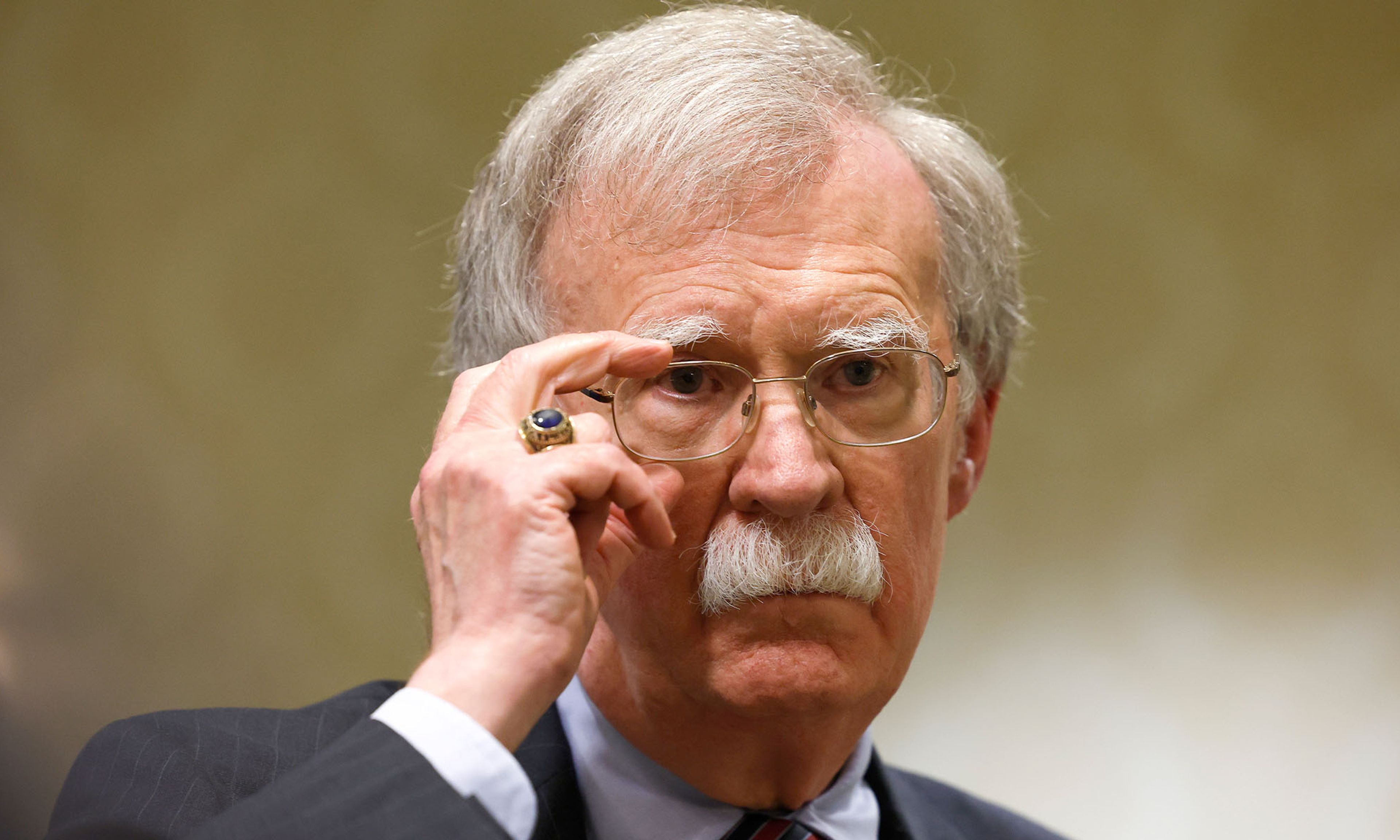
Former National Security Adviser John Bolton speaks to reporters after a panel at the Willard InterContinental Hotel in Washington, D.C., August 17, 2022.
The 18-count indictment that a federal grand jury in Maryland returned against John Bolton late Thursday so teems with information that it would be easy to pass over a short paragraph -- paragraph 53 on page 15 -- that seems unremarkable and sounds vaguely exculpatory. To wit:
On or about June 23, 2020, BOLTON’s book, The Room Where It Happened: A White House Memoir, was published and became readily available to the public. None of the classified information charged in Counts One through Eighteen, further described below, was published in BOLTON’s book.
Then why mention the book at all? Well, because unlike the slapdash indictments drawn up in Virginia against James Comey and Letitia James, who along with Bolton sit atop President Trump’s enemies list, the indictment in Maryland was crafted by prosecutors who obviously know what they’re doing.
They know that Bolton, Trump’s former national security adviser (NSA), intends to make the book his defense. And sure enough, in a combative statement issued after the charges were filed, Bolton described the indictment as “Donald Trump’s retribution against me” that began “when he tried unsuccessfully to block the publication of my book . . . before the 2020 election.”
As I’ve previously detailed, that’s a very selective account of that episode. It is true that Judge Royce Lamberth, a Reagan appointee to the District of Columbia bench, declined to block publication of the book, mainly because hundreds of thousands of copies had already been shipped by the publisher. But Bolton omits that Judge Lamberth, a former federal prosecutor who in his distinguished judicial career presided for seven years over the Foreign Intelligence Surveillance Court, took the occasion to opine that Bolton had “exposed his country to harm and himself to civil (and potential criminal) liability.”
The Case Is About the Notes, Not the Book
The prosecutors must calculate that Bolton plans to cling to the book as an avatar of our cherished right to political dissent: Trump is coming after me because I had the courage to warn the country about how unfit he is. To parry this, the prosecutors will try to turn that defense into their offense: In their narrative, the book becomes Bolton’s admission of guilt.
You might think that the book is just beside the point. After all, paragraph 53 says the book doesn’t matter to the charges in the case. Bolton can talk about the book and his right of dissent all he likes. The 18 charges in the indictment do not derive from the text of the book as published. So who cares what’s in the book?
Ah, but the real question is: What’s not in the book?
See, to get The Room Where It Happened published, Bolton went through an extensive government-review process, during which he agreed to the government’s request that he remove what Ellen Knight, the chief reviewing officer, described as “voluminous amounts of classified information,” which raised “classification concerns with literally hundreds of passages of the book.”
Mind you: Knight is the antithesis of a MAGA Republican. She is what keeps Russ Vought up at night: a career public servant, self-identified (or “selflessly identified,” as they’d prefer to be seen). If the case filed Thursday were a matter of Bolton suing Trump over abuse of the review process to try to suppress publication of the book prior to the 2020 election, Knight would be Bolton’s star witness.
But, alas, this is a criminal case about the illegal dissemination and retention of classified information -- much of it top secret. The classified information got into the book because Bolton (it is alleged) systematically took handwritten notes of his activities as Trump’s national security adviser; he would then type the notes into Word documents (accumulating to more than 1,000 pages during his 17-month tenure), which he shared in regular intervals with his wife and daughter (neither of whom had a security clearance), via channels that are not authorized for transmission of classified information. These channels included a nongovernmental messaging application that the Boltons set up as a three-way chat the day before he started as NSA -- when “Individual 2,” who appears to be Bolton’s daughter, asked, “Why are we using this now? The encryption?” Bolton is said to have responded, “For Diary in the future!!!”
From the first installment, according to the indictment, the trio edited the notes, which became the diary . . . which became the book.
Therein lies Bolton’s problem: He is insistent that the book got through the government-review process, but that was only after he agreed to remove the voluminous amounts of classified information even the Bolton-sympathetic Knight says were in the book. The classified information got into the original book manuscript because it was in Word documents Bolton made of his notes.
Hence my rhetorical question: “What’s not in the book?”
What’s not in the book -- what was consciously removed from the book -- is the classified information from the notes. But purging the book didn’t purge the notes that migrated through unauthorized accounts and to unauthorized people. The criminal case is about the notes, not the book -- as Paragraph 15 elucidates.
Yes, It’s Lawfare — but Abuse of Power Is Not a Defense Per Se
But wait, isn’t this lawfare? Of course it is. There is no doubt that Bolton is being prosecuted because he is President Trump’s political enemy. If Bolton had taken all the same steps but, instead of an attack, had produced an addition to the burgeoning corpus of Trump hagiography, there’s be a better chance he’d have been reappointed NSA than indicted.
Still, a couple of lawfare points to bear in mind.
First, the nefarious practice cuts both ways. If this case was to be prosecuted at all, it should have been brought by the Biden Justice Department. Not only are the crimes charged weighty ones; as the indictment sedulously details, Bolton himself has been scathing in his condemnation of Hillary Clinton, Pete Hegseth, and other government officials for mishandling highly classified information, the very misconduct he is now accused of. Yet, I’ll be darned: for Democrats, Bolton had been an especially valuable Trump critic in the 2020 campaign, and 2024 figured to be no different -- especially given Bolton’s frequent, blistering criticisms of the classified-information offenses for which Trump was indicted in the Mar-a-Lago case (which somehow are not included in Thursday’s Bolton indictment, even though they’d fit right in). While Democrats (like everyone else doing so) are right to decry Trump’s practices, they didn’t mind lawfare much when prosecutions happened, or didn’t, based on their own partisan expedience.
Second, to be legally actionable, lawfare must rise to a viable selective-prosecution defense. For that, it helps to be obviously innocent -- or at least quite possibly not guilty. Comey, as we’ve noted, may have a good claim. That’s partly because he was patently singled out, but it’s mostly because the indictment is so incoherent that, weeks later, we’re still not sure what exactly the crime is. They went after him just to go after him. The same could be said of Trump himself in the prosecution brought by Manhattan District Attorney Alvin Bragg.
Now compare Bolton. While he has been just as patently and unfairly singled out as other lawfare defendants, the charges against him are not obscure; they’re crystal-clear. He’s not going to be able to show that other former public officials similarly situated would not be prosecuted -- notwithstanding the notorious duo of Hillary Clinton and Joe Biden, who enjoyed the impunity of reverse lawfare. (The indictment, at page 17, gleefully quotes Bolton saying, apparently in reference to the scandal over Hillary Clinton’s use of a private email server for sensitive government business, that if he had done that while he was at the State Department, “I’d be [imprisoned] right now.”)
First Amendment Right to Dissent
To my mind, Bolton’s focus on the book in the statement issued after the indictment is a mistake. For Bolton, the book symbolizes America’s protection of speech that scorns the powerful. But Bolton’s anti-Trump speech -- which he started long before the book was published -- was never suppressed. The prosecutors are not saying that Bolton, upon leaving the first Trump administration, lacked the First Amendment right to try to out–Liz Cheney Liz Cheney if that’s what he chose to do. What a former public official is not permitted to do, however, is exploit his privileged access to sensitive government information to serve his personal purposes -- whether financial, political, or both.
The indictment alleges that Bolton took the NSA post with an obvious plan to publish a highly profitable book about his experience. Having written a few lengthy books myself, I’ve previously marveled at the warp-speed generation of The Room Where It Happened. After serving in one of the nation’s busiest 24/7 jobs for 17 months (not a lot of spare time for book writing), Bolton had somehow managed to generate a 500-plus-page manuscript in just three months.
He pulled it off, according to prosecutors, by quite consciously and in real time converting into a polished book his copious note-taking throughout the various aspects of his position at the high crossroads of national security and foreign policy. With his family helping him edit as they went along (the indictment alleges), little additional editorial work would be needed to whip the notes into a final manuscript -- one that could be hyped to potential publishers (as the indictment alleges) as a firsthand account from an NSA related “in a meticulously observed manner with direct quotes from all parties based on contemporary notes.”
Again, the case is the notes, not the book. The government-owned classified information, not Bolton’s free speech rights. Bolton needs to refute what the government alleges he did with classified information. If he can, the case will be thrown out by a judge or jury. If he can’t, the First Amendment is beside the point.
The Charges
The specific allegations fall into two categories, both charging felony violations of Section 793 of the federal criminal code. (The statute is actually titled “Gathering, transmitting or losing defense information,” but loosely referred to as the “Espionage Act” -- Bolton is not accused of espionage.) The first is illegal transmission of national defense information: During his NSA tenure, on eight occasions (counts 1 through 8), Bolton allegedly sent highly classified information to his wife and daughter. That is, Bolton is said to have included classified information in the Word documents that he generated from his handwritten notes and exchanged via email and group chat.
The second category is illegal retention of classified documents: The government charges that Bolton kept ten classified documents in his Maryland home (counts 9 through 18), nine classified top secret, and one secret. A little background: Following the searches of Bolton’s home and office in August, Abbe Lowell, an attorney for Bolton, claimed that the documents found by the FBI were “previously approved as part of a pre-publication review for Ambassador Bolton’s book, were reviewed and closed years ago.” That explanation never made sense to me because classified documents (a) don’t get “approved” as part of the book-review process (it’s the book that gets approved . . . or doesn’t); and (b) don’t get “closed” -- they either get declassified or they remain classified. In any event, although the indictment does not provide a date for each charged document, it says Bolton’s possession of them goes back to no earlier than the start of his tenure as Trump’s NSA.
Each of the 18 charges carries a statutory maximum ten-year prison sentence. Bolton is 76. The indictment also contains a forfeiture notice, which suggests that the Trump administration is hoping to seize Bolton’s book earnings. Nothing vindictive there, right?
The Iranian Hack
In late August, I discussed media reports indicating that the Trump Justice Department’s investigation was not focused solely on Bolton’s memoir. Instead, the government had learned that a foreign intelligence service may have spied on Bolton, possibly hacking his email accounts. The indictment indicates that the intelligence service in question appears to be Iran’s. Bolton was quick to point out, in the statement released after the indictment, that “when my email was hacked in 2021, the FBI was made fully aware.” The prosecutors, shall we say, beg to differ.
On July 6, 2021, the indictment says, a Bolton representative alerted the bureau that a hacker, believed to be an operative of the Iranian regime, had “gotten into Amb. Bolton’s” personal email account. Nearly three weeks later, Bolton received an email from a presumed Iranian operative, extortionate in tone, saying (in strained English) that (a) the operative doubted Bolton would like the FBI to learn about sensitive leaks from his email account, including some the operative attached as a sample, (b) “this could be the biggest scandal since Hillary’s emails were leaked, but this time on the GOP side,” and (c) urging that Bolton “contact me before it’s too late.”
The next day, Bolton’s representative turned this email over to the FBI, but only the email, not the samples that had been attached, which Bolton’s rep rationalized withholding “because there might be sensitive information in them.” Bolton then deleted the personal email account that had been hacked (his rep told the FBI he would be doing so, and the indictment contains no suggestion of an objection by the bureau). On August 5, 2021, Bolton got another extortionate communication from the presumed Iranians: “OK John. . . . As you want (apparently), we’ll disseminate the expurgated section of your book by reference to your leaked email.” To my knowledge, there was no follow-through on this threat. But that doesn’t mitigate the problem that the Iranians had the information.
To summarize, hackers, presumably from Iran, claimed in 2021 to have at least some of the classified information that Bolton had agreed to purge from his book, and it had to be assumed that they had whatever notes from his tenure as NSA that Bolton had transmitted through that email account. The indictment asserts:
At no point did BOLTON tell the FBI that, while he was the National Security Advisor, he had used the hacked email account to send Individuals 1 and 2 documents relating to the national defense, including classified information. Nor did he tell the FBI that the hackers now had this information.
I wonder whether the FBI asked. The Iranian had threatened to release excerpts; wouldn’t you think the FBI would want to know the genesis of the excerpts and why Iran believed they made Bolton vulnerable? It’s not clear what action the Biden Justice Department took other than to close the investigation of Bolton.
The upshot, in any event, is clear: Prosecutors will argue that, because Bolton did not volunteer that he’d shared sensitive information through the hacked account, it would have been impossible for the government to assess the damage to national security caused by the leak of Bolton’s account. As the indictment elsewhere explains, information is graded top secret if its “unauthorized disclosure . . . reasonably could be expected to cause exceptionally grave damage to the national security[.]” It is deemed secret if the damage would be “serious.”
Conclusion
I don’t know John Bolton nearly as well as some of my colleagues at NR and Fox News do. But I know him a bit, and he has never been anything but gracious to me. He is a patriot whose devotion to the United States has made him and his family targets of the murderous regime in Tehran. The warmonger caricature of him promoted by the president and his base is a smear. Personally, I wish he hadn’t been charged. Analytically, I’d prefer if his case were treated like those of Hillary Clinton and Joe Biden, who were not charged. I argued, based on those precedents, that Trump should not have been charged (or should have been pardoned) for classified-information offenses in the Mar-a-Lago case. I don’t think Bolton’s long career of good service to the country rates his being the only guy in the crosshairs after higher-ranked officials got a pass.
But what I personally think is neither here nor there. What matters is that this is a serious case. As we’ve seen with the Democrats’ Trump prosecutions, lawfare is a mixed bag. Some of it is frivolous, some of it is based on real misconduct that would nevertheless have been excused had it not been for the political value of prosecuting. The case against Bolton is lawfare. If the allegations in the indictment are true, it is also based on real misconduct -- meaning he’d better have a defense more compelling than “This is lawfare!”

About the Author
Andrew C. McCarthy is a senior fellow at National Review Institute, an NR contributing editor, and author of Ball of Collusion: The Plot to Rig an Election and Destroy a Presidency.
Featured Tags
Advertisement
Advertisement
Comments