Carney Gets His Free Hand
Written by Matthew Lau
The new Liberal majority in Parliament will continue the Trudeau status quo, with minor modifications.
Share this story
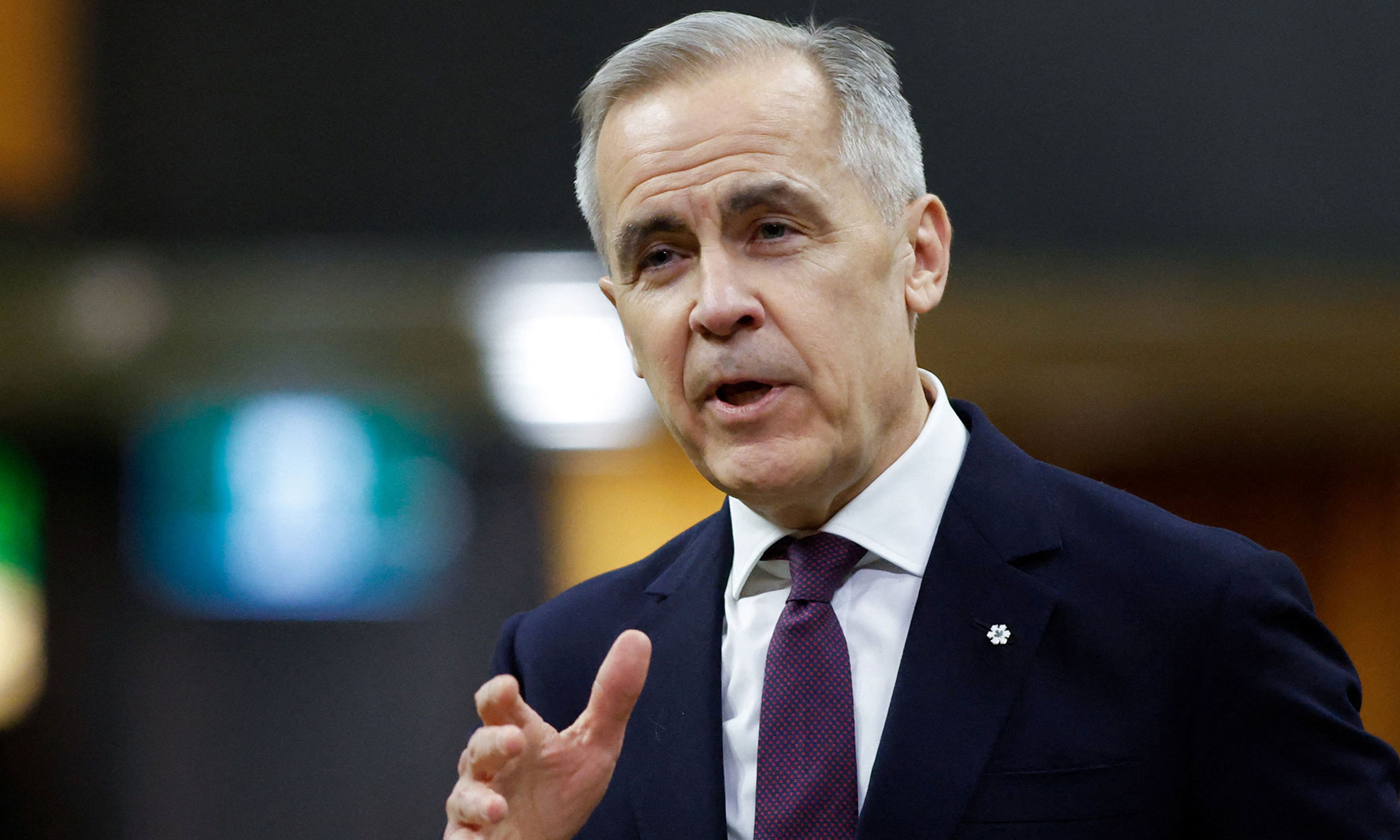
Canada's Prime Minister Mark Carney speaks during Question Period in the House of Commons on Parliament Hill in Ottawa, Ontario, Canada, February 3, 2026.
On April 13 in Canada, Mark Carney’s Liberal government finally secured a national legislative majority. His party now enjoys a majority of the 343 seats in Parliament.
How did this happen? To recap, the Liberals won a plurality (169 seats) but not a majority in the 2025 general election. However, in the past year, five Members of Parliament – four Conservatives and one from the left-wing New Democratic Party (NDP) – defected to join the Liberals. On April 13, by holding on to three seats that had become vacant, the Liberals pushed their seat count to 174. The Liberals’ new majority status means that, unless they unexpectedly lose seats, for example through resignations or defections, they can remain in power until the next scheduled election in October 2029.
What are the main implications for Canadian economic and social policy? In the immediate term, significant change is unlikely. The Conservatives and NDP were not polling well, and neither wanted a snap election, so the Liberals effectively governed as if they had a majority before they actually did. The result over the past year has been the continuation of many of the same damaging economic policies implemented by former Prime Minister Justin Trudeau since 2015.
To be sure, Carney noticeably adjusted the Liberals’ style of governance. Unlike his predecessor, Carney does not behave like a juvenile. There is now more talk about economic competitiveness and less about social justice fads. And the Liberal government is finally trimming federal employment after a decade of unjustifiable and unsustainable growth. These are all positive developments.
However, on policy substance, there has been no change in direction. The fiscal and economic benefits of taking some employees off the federal government’s payroll are more than offset by new spending. Carney promised more than $13 billion for a homebuilding initiative and budgeted over $12 billion to subsidize “strategic industries.” He has increased funding for public broadcasting, arts, and climate change initiatives. Carney is also continuing Trudeau’s disastrous $10-a-day national child-care program – an effective government takeover of Canada’s child-care sector that has created widespread shortages, hurt quality, and strangled private providers while costing taxpayers billions each year.
As a result of immense pressure, and because the policy was unrealistic to begin with, Carney scrapped Trudeau’s electric vehicle (EV) mandate, which would have prohibited new internal-combustion engine sales by 2035. Unfortunately, at the same time, Carney imposed a new greenhouse-gas emissions standard — not so dissimilar to what Joe Biden imposed in the United States — that would force EV sales to reach 90 percent of the market by 2040 (from under 10 percent in 2025). Not quite as bad as 100 percent, but still very damaging.
Another bad Carney policy: reviving consumer subsidies for EVs, which are expected to cost taxpayers $2.3 billion over five years. Canadian studies find that federal and provincial subsidies for EVs generate far fewer environmental benefits than they cost. This senseless measure — largely a continuation of bad Trudeau policies — will likely continue for at least three more years now that the Liberals have an outright majority.
Even fuel shortages from the war in Iran are unlikely to sway the Liberals from their decarbonization agenda. As Conservative Member of Parliament Michelle Rempel Garner points out, Carney and other proponents of decarbonization “should have had a moment of sobriety when Russia launched its full-scale invasion of Ukraine four years ago, which exacerbated energy security issues across Europe. But again, in Canada, no movement was made to scrap far-left laws that prevented the hand-in-glove development of climate policy and Western energy sovereignty.”
In his public statements and actions, Carney didn’t reverse course on decarbonization in 2022. With a majority government, he probably will not adjust his course now. Carney has campaigned against fossil fuels for years, after all.
Lastly, an aisle-crosser in Parliament who helped deliver Carney his majority seems to be moving the party in a more Beijing-friendly direction. One of the Conservative defectors to the Liberals was Michael Ma, who represents a Toronto-area electoral district marked by Chinese interference. Shortly after joining the Liberals, Ma accompanied Carney on a trip to China and later aggressively questioned a witness at a Parliamentary industry committee meeting to cast doubt on reports of human rights abuses and slave labor in China. His efforts received cheers in Beijing. (Ma later apologized, saying he thought the witness, Margaret McCuaig-Johnston, was referring to Shenzhen and not Xinjiang, where forced labor and other atrocities are well-documented).
In sum, despite marginal improvements in some areas, Carney has not delivered substantial change in fiscal policy, environmental policy, foreign relations, or other key policy areas -- and, in some cases, has made things worse. A majority government makes it much more likely that bad Liberal policy on all fronts, which began under Trudeau in 2015, will continue until at least 2029.
About the Author
Matthew Lau is a writer in Toronto.
Featured Tags
Advertisement
Advertisement



Comments