Share this story
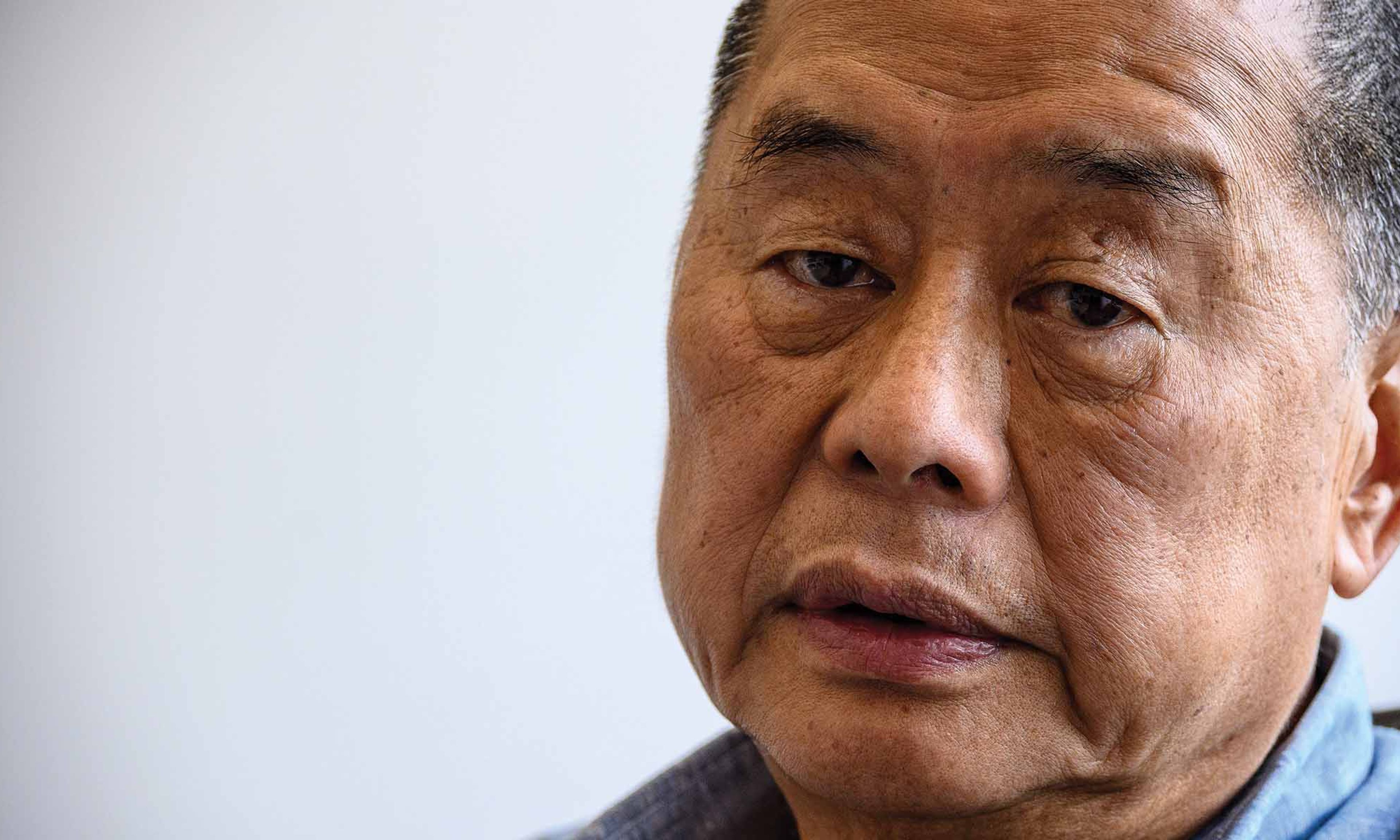
Jimmy Lai in 2020
The monstrous sentence — 20 years — just handed down by a Beijing-controlled “Hong Kong” court to democracy campaigner Jimmy Lai, a 78-year-old man in failing health, was an affront to human decency, a display of raw power, and an insult to international law. It was also a warning to the people of Hong Kong, who will understand it, and, if inadvertently, to those who still believe in engagement with China, who will not.
Aged only twelve, Lai escaped from Maoist China to Hong Kong. Lacking any money, he found work in a garment factory, the beginning of an ascent that took him to great wealth and something grander still. He made a fortune in the fashion business and branched out into the media, a process that included founding Apple Daily, a newspaper that, like Lai himself, became a prominent voice in the increasingly dangerous fight for democracy in Hong Kong. When Britain handed over Hong Kong, it was on the basis that its former colony would retain the freedoms that distinguished it from the mainland for half a century. Until 2047, promised Beijing, there would be one China, but two systems.
It was a promise that the CCP had no intention of keeping, but, as Beijing’s ratchet tightened, Lai, a rich man who could easily have moved elsewhere (he took British citizenship in 1996), stayed put. After years of harassment that ranged from arrest to the petrol-bombing of his house, he was arrested again in 2020. In late December of that year, he was locked up again and, with the exception of his lengthy show trial, has been held in solitary confinement almost ever since. In December, he was convicted of conspiracy to collude with a foreign country to endanger national security and conspiracy to publish seditious publications. He pled not guilty, although the verdict was never in any doubt. Given his age, his health, and the even tougher conditions he can expect as a convict, the length of his term, the harshest ever imposed under Hong Kong’s controversial national security law, is effectively a life sentence. Lai has the right of appeal, but there is no chance that he will prevail. He says that he has no regrets.
By treating Lai this way, Beijing has demonstrated once again that it can do what it wants in Hong Kong. That it did so to a British citizen was a calculated insult to Hong Kong’s former rulers made more humiliating still by the fact that Keir Starmer, Britain’s embattled prime minister, was only recently grubbing around in Beijing for a few scraps from Xi Jinping’s table.
The best hope for Lai is that the numerous appeals for his release will persuade China to let the old man go into exile. After all, a display of mercy — if that is the word — can be a demonstration of power, too, as well as an opportunity for a horse trade or two. President Trump already called for Lai’s release last year, and Marco Rubio on Monday called for him to be given “humanitarian parole.” For our part, we would like to see this brave man set free as soon as possible.
As we alluded to above, we would like those who believe that they can treat China as a reliable trading partner to pay attention to the message sent by Beijing’s treatment of Lai. Moreover, the fact the CCP is willing to trample all over the liberties and the rule of law that enabled Hong Kong to flourish is more evidence that, if Beijing deems it necessary, there is no goose so golden that it cannot be strangled.
Like those to our north and across the Atlantic, we are (sometimes) dismayed by the Trump administration’s approach to foreign policy. Nevertheless, before they proceed too far with their attempt to use China as some sort of strategic counterweight to the U.S., they should ponder what Beijing’s treatment of Hong Kong in general and Jimmy Lai in particular says about the nature of the Beijing regime. An old saying about the devil and a long spoon comes to mind.

About the Author
The Editors comprise the senior editorial staff of the National Review magazine and website.
Featured Tags
Advertisement
Advertisement

Comments