Share this story

gorodenkoff/iStock/Getty Images
Although words are our main tools for thinking about the world, in public life they’re used most relentlessly to keep us from thinking at all. As we discussed last month, demagogues twist language until it no longer helps us track reality but only stirs our emotions. In the mid-20th century, an idiosyncratic thinker named Alfred Korzybski invented a discipline he called general semantics -- an attempt at “mental hygiene,” a way to restore the link between words and the world to enable effective thinking. In a climate of weaponized slogans and endless “news,” its core insights feel astonishingly current.
In the 1930s, Korzybski and his followers described a pattern they called the IFD disease: idealization, followed by frustration, ending in disillusionment or despondency. They didn’t have to look far for an illustration. In that decade, Adolf Hitler was converting the genuine hopes of many otherwise decent people into a cult of national redemption, promising to restore an imagined ancestral magnificence. Those hopes, warped by delusions, led many to commit horrific acts.
People around the world have since followed a similar script. They start by projecting their hopes onto a leader who promises redemption and a return to some glorified past. The slogans are simple. Villains are clearly named. The future sparkles. Then reality bites. The economy doesn’t transform. Crime and disorder don’t vanish. Political opposition doesn’t disappear -- so it’s demonized. The result is frustration, which can harden into rage or sink into resignation. People see their hopes exploited as mere political expedience. As with an abusive partner, the initial infatuation operates as bait, and the more intense the infatuation, the nastier the hook it hides. Demagogues count on the early swell of starry-eyed enthusiasm and ride it as long as they can.
General semantics tries to interrupt this pattern by teaching people how language fuels each stage. Korzybski’s signature claim is that “the map is not the territory.” The phrase denotes a disciplined mode of thought. Our sentences, slogans, and theories are maps. They point toward events and objects, but they’re never identical to them. The word isn’t the thing. The symbol isn’t the thing symbolized. A phrase like “real Americans” or “the silent majority” doesn’t describe a concrete, uniform group. It vaguely evokes some traits, ignores others, and bundles them into a usefully amorphous fiction that nonetheless feels real. Demagogues speak as if such abstractions were literal objects. When a crowd chants about “enemies of the people,” the words work on the nervous system as if they’d pinpointed a fixed, dangerous species rather than a shifting collection of critics, journalists, or judges.
General semanticists liked to expose this move with simple, almost comic examples. A child says, “Pigs are rightly named because they’re such dirty animals.” The name and the trait have fused. Adults do something similar when they say, “Illegal immigrants are vermin” or “People on welfare are leeches.” A legal or economic category turns into an essence, something that seems built into the kind of person named. Once that happens, evidence about individuals loses force. Demagogues know how to exploit these thought-stopping clichés. They repeat a nickname or stigma until it feels as though it is a fact about the target.
Meanwhile, fact -- hard, verifiable fact -- tends to shrink in public discourse. The institutions that supply it lose funding and public trust. Experts become objects of suspicion; statistics are dismissed as biased or irrelevant. Once credibility crumbles, language turns self-referential, feeding on emotion instead of verification. A claim like “Job creation is down 7.3 percent” can’t compete with the surge of confidence one might derive from “Jobs are way up!” In such exchanges, excitement replaces accuracy as the test of truth. Demagogues rely on that reflex. They don’t need to ban facts -- only to make them seem dull or dubious.
General semantics brings out the distinction between fact, inference, and value judgment. It sounds like schoolroom hair-splitting until you watch the three levels at work in political talk. “This train is going 20 miles per hour” reports an observable condition. “At this rate we’ll be two hours late” is an inference. It might prove right or wrong. “This lousy railroad is never on time” is a sweeping judgment, a global verdict that far outruns the specific data. Demagogues nearly always speak at that third level. “The old policies failed” becomes “My predecessors hated you.” “Some rules were broken” becomes “The system is totally corrupt.” Listeners who’ve never practiced sorting these levels slide quickly from fragments of evidence to moral condemnation. They aren’t just misinformed. They have been trained to make the leap.
Korzybski blamed part of this jumpiness on what he called “Aristotelian evaluative habits,” especially the drive to think in rigid either/or terms. Something is true or false, in or out, loyal or treasonous. Demagogues thrive in this bipolar climate. They split the world into friends and enemies, patriots and traitors, believers and heretics. Under that pressure, nuance looks like cowardice. Saying “I don’t know yet” feels like betrayal. General semantics pushes in the opposite direction. It encourages people to talk about “more or less,” “so far as we know,” “in these conditions,” “for these purposes.” Those small qualifiers don’t weaken thinking. They strengthen it by keeping the map adjustable. They also allow a person to revise an opinion without humiliation, which weakens the grip of the IFD cycle.
If mental hygiene in this sense could be distilled into one word, it’s accuracy. A general semanticist aims to have fewer and fewer misconceptions about more and more things -- to let the structure of language reflect the structure of events more closely. Demagogues, by contrast, traffic in mass delusions. They depend on blurred distinctions between words and things, on uncontrolled signal reactions in which a phrase triggers anger or fear without reflection. The more people can delay those reactions, even for a moment, the less power slogans have over them. That small delay, for checking the map against the territory, is where education comes in.
In a serious classroom, the principles of general semantics translate into eminently practical exercises. Students can take a campaign speech, a viral video, or an editorial and mark each sentence as report, inference, or judgment. They can list the labels used for different groups and ask what each label highlights, what it hides, and how it nudges emotion. They can track how loaded phrases such as “law and order” and “real Americans” have been used at different times, noticing how the map keeps shifting even as the words stay the same. They can compare two news stories about the same event and ask what each one omits. None of this requires students to adopt a particular ideology. It requires them to practice more exact noticing.
Media-literacy efforts already do much of this work, with nary a mention of Korzybski. Teachers ask where a statistic came from, what it measures, and what falls outside its frame. They draw attention to images, cropping, and headline verbs. They encourage students to ask, “What would count as evidence against this claim?” That question alone forces a shift from pure judgment to testable inference. Over time, students start to feel the difference between reacting to words as if they were things and treating them as provisional tools for inquiry. They begin to recognize when language invites them to think and when it orders them to stop.
Where, then, does general semantics stand today as a discipline? As an organized movement with its own institutions and jargon, it no longer occupies the place it held in the mid-20th century. Some of its language feels dated. Some of its grander promises, including hopes to transform human conflict, have lost credibility. (IFD?) In that narrow sense, it’s fair to call it passé. It’s no longer a fashionable banner under which many scholars gather.
Yet the substance has outlived the label. Ideas central to general semantics have seeped into fields such as linguistics, communication studies, cognitive psychology, and critical-thinking pedagogy. When a communications course teaches that language frames perception, that metaphors guide reasoning, and that levels of abstraction matter, it’s reworking old general-semantics insights in a new vocabulary. When a media-literacy program drills students in separating observation from evaluation and in recognizing spin, it’s repeating Korzybski’s map–territory warning. The name may have faded, but the habits are built into much of today’s education about rhetoric and propaganda.
General semantics lives on as a caution and a resource. The caution is against imagining that any single method will immunize us against demagogues. There’s no vaccine for IFD. The resource lies in its insistence that effective thinking about the world depends on more honest talk about the world. We can’t clean up public life without cleaning up the way we use words, move from facts to inferences to judgments, respond to labels, and revise our maps when the territory refuses to cooperate. That’s not a task for some bygone school of thought. It’s the ongoing work of education in any society that wants citizens rather than a mob.
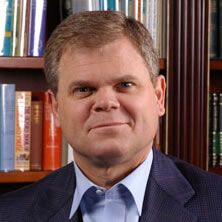
About the Author
Bryan A. Garner is the author of The Chicago Guide to Grammar, Usage, and Punctuation, Garner’s Modern English Usage, and The HBR Guide to Better Business Writing.
Advertisement
Advertisement


Comments