Share this story
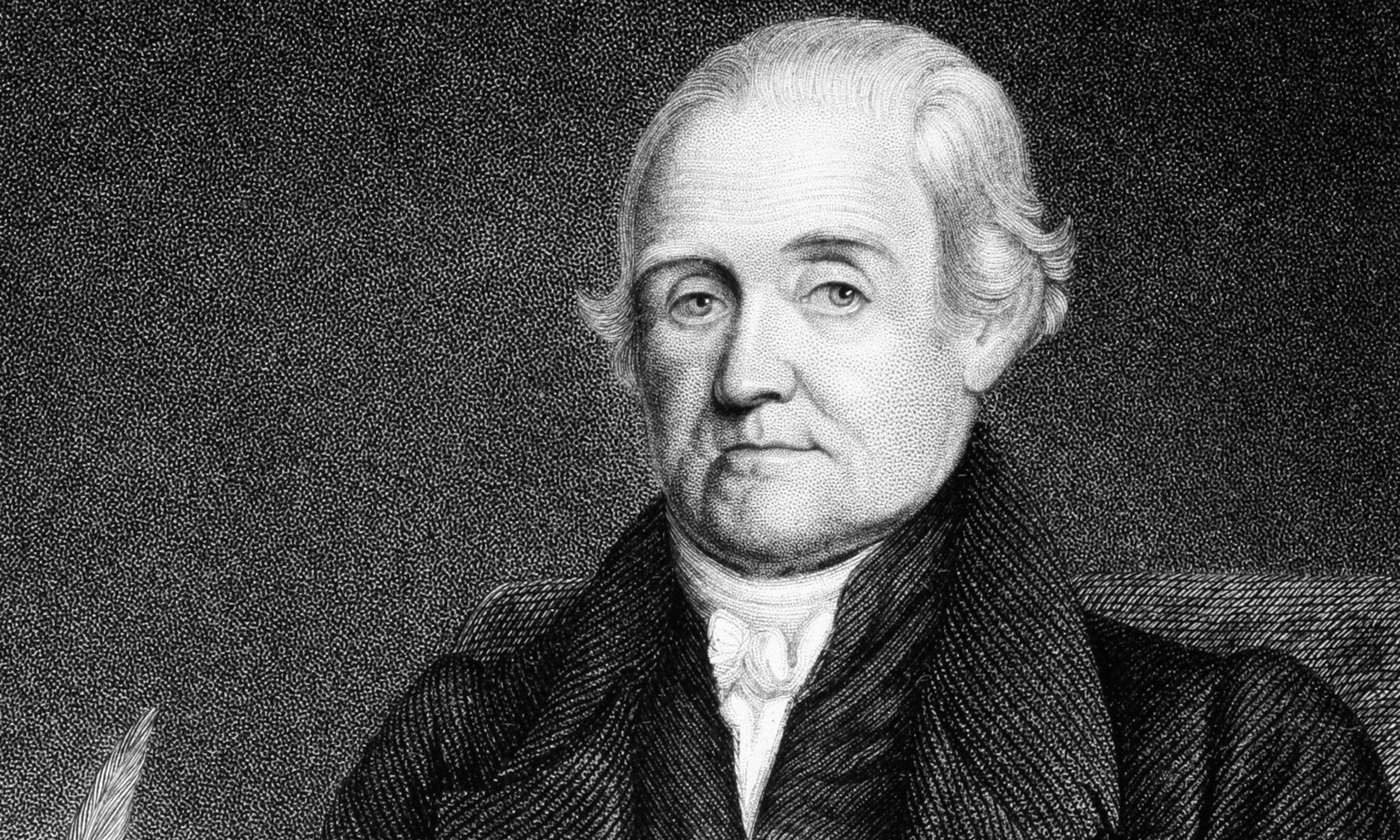
G. Parker, <i>Noah Webster</i>, 1835, engraved portrait.
American English didn’t begin with a clean break so much as a raised eyebrow. The Declaration of Independence and the Constitution kept their British spellings; the Framers had war, not honor/honour, on their minds. A few years later, though, the young republic produced a “forgotten founder” who wanted to reform the nation’s spelling even if he couldn’t reform Congress. That man was Noah Webster.
Webster didn’t invent the urge to tinker. Benjamin Franklin had already sketched out plans for a reformed alphabet that would strip away surplus letters and make spelling mirror sound with Enlightenment neatness. He even designed new characters -- ingenious symbols no printer wanted to set and no reader wanted to learn. Webster admired the impulse but not the apparatus. He shelved Franklin’s strange letters and kept the core idea: spelling should be simpler, closer to pronunciation, and, crucially, distinctively American.
Out of that program grew the now familiar preference for center over centre and labor over labour, not because Madison and Hamilton commanded it but because printers, teachers, and schoolchildren quietly normalized it. The Constitution itself still parades defence and behaviour in full British dress, yet the newspapers reporting on that document soon favored leaner American forms. Linguistic independence didn’t arrive by statute; it arrived in copybooks and schoolrooms.
Two and a half centuries on, American and British writers still share a language but dress it in different upholstery. The Atlantic is now narrower than a page margin, yet wide enough for color/colour, gotten/got, and sidewalk/pavement to trade long, knowing looks. Literary American and literary British English are less separate languages than intertwined traditions, like siblings who grew up in the same house but chose different cities and still swap gossip.
At the top end of prose, the famous “two nations divided by a common language” are divided less by grammar than by surface habits. An American novel follows a lawyer to his apartment across from a movie theater; a British novel escorts a barrister to his flat opposite the cinema. The mood shifts, the cultural wallpaper changes, but the sentences remain mutually intelligible. Most contrasts are visual and idiomatic: favor versus favour; “Did you write him?” versus “Did you write to him?”; “college” as four years of dorm life versus “college” as one agreeable slice of a university.
Spelling is still the quickest giveaway, the accent you see rather than hear. An American critic writes about “the center of honor in modern theater,” while a British critic praises “the centre of honour in modern theatre,” both reviewing the same production, both spotlighting the same director. A New York essayist will “analyze the organization’s behavior”; a London essayist will “analyse the organisation’s behaviour.” The shared irritation with management shines through all the z’s and s’s. Orthography here works like a passport stamp, not a border wall.
Grammar nudges the varieties apart, but politely. Americans are relaxed about tense contrasts, saying “I just ate” and “She already left” where Britons prefer “I’ve just eaten” and “She’s already left,” determined to keep the present perfect in steady employment. Modal verbs tilt differently, too. An American editor writes, “The author should contact us if there’s a problem.” A British editor is more likely to write, “The author ought to contact us if there is a problem,” sounding one part helpful and two parts tutorial. British usage also pluralizes collectives with cheerful freedom -- “The government are reconsidering their position,” “Manchester United are playing well” -- while American usage keeps them grammatically singular and emotionally divided: “The government is reconsidering its position,” “Manchester United is playing well.”
Vocabulary and idiom supply most of the theater. An American novelist loads kids’ backpacks into the trunk, heads down the freeway to a fall soccer game, and stops for gas. A British novelist stuffs rucksacks into the boot, takes the motorway to an autumn football match, and stops for petrol at the services. On a New England campus, students pull all-nighters in dorm rooms and fret over their GPA; in an Oxbridge satire, undergraduates doss about in rooms in college and fret over whether they’ll scrape a First. The anxieties are universal, the props charmingly local.
Nor is every “Americanism” new. Many are time capsules. “I guess you’re right” for “I suppose you’re right,” “He’s been feeling sick” where a Briton might say “ill,” and the much mocked gotten in “She’s gotten used to the noise” often preserve older English usages that faded in Britain. British English largely exiles gotten to set pieces such as “ill-gotten gains” and prefers “has got used.” American English also keeps mad for “angry” and fall for “autumn,” like a language that’s rummaged through the 17th-century wardrobe and refused to throw anything out.
These differences are trivial for comprehension but sharp for style, tone, and identity. A British reviewer sneers at an American novel “stuffed with elevator shafts, freshman dorms, and zucchini,” while an American reader confronts a British book “thick with lifts, freshers’ week, and courgettes” and feels vaguely underfed. A “car park” in a Manhattan thriller sounds as wrong as a “parking lot” beside a Sussex village pub. One noun can drag the story onto the wrong continent.
So are the varieties drifting apart or sliding together? Geography still tugs toward divergence; technology now shoves toward convergence harder than any academy ever did. A hundred years ago, an English visitor might describe American speech as English “in an odd suit of clothes,” all drawls, flat vowels, and “right away” and “you bet.” Today, the same visitor arrives fluent in “rain check,” “season finale,” and “you guys,” trained by decades of imported television. Any remaining shock usually comes from the coffee, not the idiom.
Global media and publishing do most of the fusing. A British teenager raised on American films talks about prom, road trips, and roommates while still queuing for chips rather than standing in line for fries. An American teenager cheerfully says “no worries” and “cheers” after bingeing British series, and may pack “holiday reading” even though she still goes on vacation, not on holiday. Meanwhile very young Americans emerge from Peppa Pig marathons with tiny British accents, asking for the “telly,” the “petrol station,” and “Mummy’s glasses” -- a media-induced episode happily dubbed the Peppa Pig effect. Franklin offered theoretical phonetic reform; Peppa offers preschoolers tomahto as well as tomayto.
Editors try to smooth differences further. A British edition of an American novel may change sidewalk to pavement and diaper to nappy; an American edition of a British fantasy may flip jumper to sweater and wardrobe to closet. On top of that, a loose “World English” has emerged in international publishing. A scientific article might use American spellings like organization and globalization but Briticisms such as learnt and mark (for “grade”), and no reviewer complains. Textbooks for learners cheerfully print “at the weekend” on one page and “on the weekend” on the next, and students still pass their exams.
Yet this isn’t a tale of fusion into one beige super-English. Pronunciation keeps the borders bright. Many American accents are stubbornly rhotic: every r in car and hard is sounded. Standard southern British accents drop those postvocalic r’s, so car becomes cah and hard becomes hahd, with a faintly theatrical swoop. Vowel systems diverge, too: in many parts of the United States, cot and caught have merged; in much of England, they’re still affably distinct. Even when the page looks identical, the soundtrack is unmistakably local.
New terms keep bubbling up from local institutions. American higher education has community colleges, majors, and sororities; British universities answer with freshers’ week, halls of residence, and modules. American politics offers filibusters, super PACs, and red states; British politics responds with quangos, backbenchers, and hung parliaments. These words can travel in journalism, but they rarely feel fully at home abroad.
What stops these divergences from hardening into separate languages is the sheer amount of shared reading. British readers devour Toni Morrison, Don DeLillo, and Marilynne Robinson; American readers inhale Hilary Mantel, Zadie Smith, and Kazuo Ishiguro without feeling that they’ve strayed into a foreign tongue. A Pulitzer-winning novel about strip malls and Little League sits happily beside a Booker-winning novel about allotments and test matches, and readers cope -- often with delight.
In the end, Webster’s push for linguistic independence and Peppa Pig’s accidental elocution lessons belong to the same long story: a language endlessly renegotiating its loyalties while stubbornly refusing to split. The differences between American and British English are tuned finely enough to carry tone, identity, and local flavor without blocking understanding. An American novelist who writes mom instead of mum summons a whole emotional landscape in three letters; a British narrator who chooses lorry over truck conjures a road running through a very different place. English remains gloriously mongrel, perfectly able to let both sides sound entirely themselves -- and still, cheerfully, understand one another.

About the Author
Bryan A. Garner is the author of The Chicago Guide to Grammar, Usage, and Punctuation, Garner’s Modern English Usage, and The HBR Guide to Better Business Writing.
Featured Tags
Advertisement
Advertisement

Comments