Elbridge Gerry’s Complex Legacy
Written by Daniel J. Flynn
Historians and politics watchers continue to be confounded by the Founding Father.
Share this story
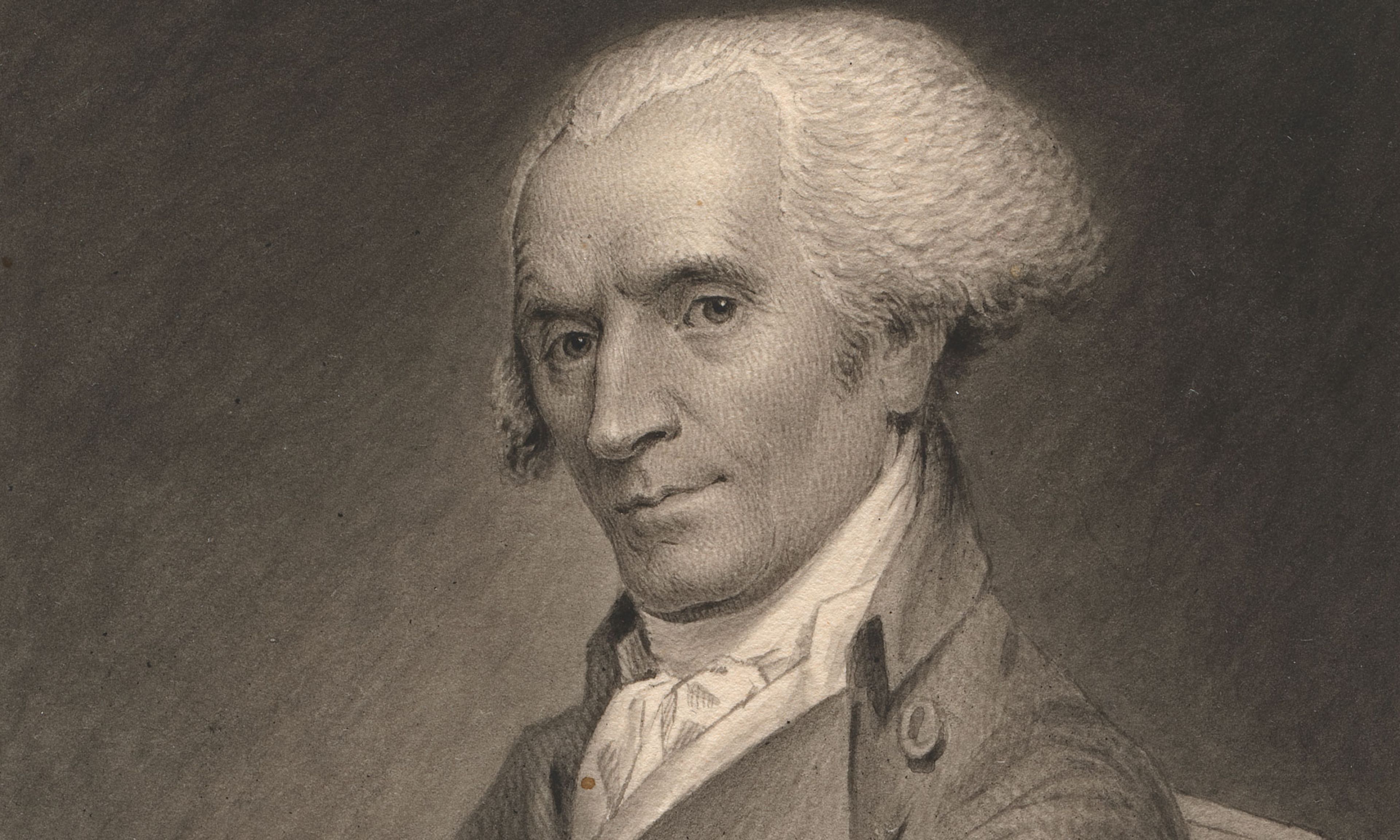
Portrait of Elbridge Gerry by James Barton Longacre, c. 1820
As an MS NOW headline from earlier this week noted, House Minority Leader Hakeem Jeffries is asserting that “the GOP started the gerrymander fight — and Democrats will finish it.” Well, in a technical sense, 214 years ago, the Democrats — or at least their Democratic-Republican Party forbears — actually started the gerrymander.
The gerrymander was named after Founding Father and Democratic-Republican politician Elbridge Gerry. “Constantly referred to yet forgotten” sums up Gerry quite well, a paradoxical yet principled politician hard to pin down. We primarily know his name through what Clifford Chesley Hubbard described in the third volume of the Commonwealth History of Massachusetts as his party’s “shortsighted methods by which it hoped to maintain itself in power.” The Democratic-Republican Party’s creative redistricting resulted in the election of 29 of their own ranks to the state senate to just eleven Federalists, despite the latter party’s candidates receiving more votes in 1812.
The practice of gerrymandering “was nothing new, except the name,” Hubbard judged. “The reshaping of district lines so as to place large numbers of the opposition in one district which they could surely carry, and thereby subtracting their minority strength from several other districts, is a device probably as old as the representative system itself.”
In other words, Gerry did not invent this. His party just honed it to such a degree that Californians, Texans, and Illinoisans imitate hundreds of years later.
That this footnote to the career of a figure of such massive import — a key revolutionary, signer of the Declaration of Independence and Articles of Confederation, champion of the Bill of Rights who opposed the Constitution, pilloried player in the XYZ Affair, and vice president under James Madison — came to overshadow all else strikes as one of those insults historians periodically hurl upon history to its permanent disfigurement. That this particular disfigurement worsens during the 250th anniversary of American independence, which Gerry fought so hard to attain, feels like an insult added to the injury.
So much about Gerry confounds modern eavesdroppers.
His name conjures up partisanship but, as Joseph T. Burns pointed out in National Review last month, Gerry had served as an elector for Federalist presidential candidate John Adams and supported the economic programs of Federalist Alexander Hamilton before switching parties.
Historians depict him as a parochial figure obsessed with safeguarding the rights of Massachusetts. Yet his central role as provisioner and propagandist for the American Revolution, signatures on the Articles of Confederation and Declaration of Independence, presence at the Constitutional Convention, and efforts aimed at diplomacy in France made him a player in national and even world history.
He spoke 153 times at the Constitutional Convention — more than all but five others. But his words in Philadelphia were said largely in vain. In Massachusetts, where he successfully urged his fellow Bay Staters to recommend a bill of rights upon ratification, his words, unheard by his fellow Framers, ultimately proved more influential than anything he said in Philadelphia, as evidenced by the amended Constitution that emerged.
He championed the Bill of Rights as a protection against government. But as Massachusetts governor, he hectored newspapers by appealing to libel laws.
During the Constitutional Convention, he defended the states against national power. Later, when the War of 1812 approached, as governor, he informed the state legislature that he had “received several anonymous threats of assassination, for having supported the national government.”
A revolutionary and Samuel Adams understudy, Gerry nevertheless showed himself anything but a small-d democrat and rejected various populist crusades.
He defended the rights of the property owners (to include himself) against the rabble, largely in rebellion against his push for smallpox inoculation, when they destroyed a hospital and threatened to wreak further havoc. He again stood against the mob during Shays’s Rebellion. But he oversaw the theft of property by privateers on the high seas during the American Revolution. When he opposed the Constitution, elite opinion depicted him as defending those elements he had previously stood athwart. He wrote a friend:
There seems to be a disposition in the dominant party to establish a nobility of opinion, under whose control, in a short time, will be placed the government of the Union and of the states, and whose insufferable arrogance marks out for degradation all who will not submit to their authority. It is beginning to be fashionable to consider the opponents of the constitution as embodying themselves with the lower class of the people, and that one forfeits all title to the respect of a gentleman unless he is of the privileged order. Is this, my friend, to be the operation of a free government, which all our labors in the revolution have tended to produce?
It seems ungracious toward our inheritance that one of a handful of men to attend the Constitutional Convention and sign the Articles of Confederation and Declaration of Independence should come up in conversation solely because his political opponents conscripted his name to describe an unsavory if perfectly legal partisan practice embraced by his political friends. From the early 1770s until his 1814 death while serving as James Madison’s vice president, Gerry played an oversized role in the American story. For friends of limited government, he played not a villainous but heroic role — albeit one with complications and shades of gray befitting a 2026 hero.
“Gerry was a small-republic man,” M. E. Bradford wrote in Founding Fathers: Brief Lives of the Framers of the United States Constitution. “None other in that Philadelphia meeting spoke more forcefully for a bill of rights than Gerry. And its utility, once included, he made clear, would be in restraining the federal authority.”
This, rather than a salamander-shaped map, fits better as an epitaph.
[slideshow slideshow="811032" /]
About the Author
Daniel J. Flynn, the author of The Man Who Invented Conservatism: The Unlikely Life of Frank S. Meyer, is an American Spectator senior editor, visiting fellow at the Hoover Institution, and YouTuber @RightWingWilderness.
Featured Tags
Advertisement
Advertisement

Comments