Elephants Crowd the Room as Chemical Abortion Gets a Senate Hearing
Written by Monique Chireau Wubbenhorst
Some would prefer to ignore these inconvenient truths.
Share this story
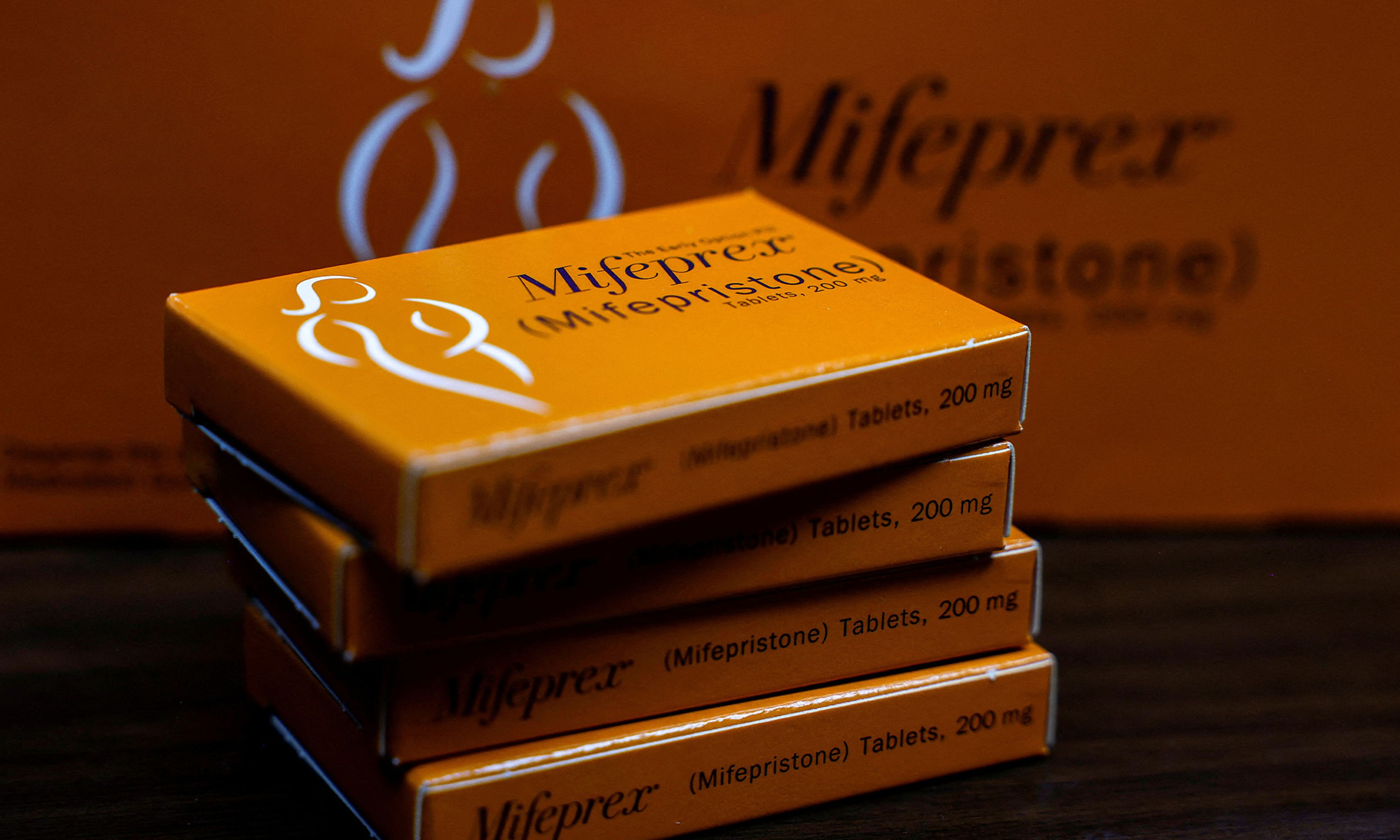
Boxes of Mifepristone, the first pill in a medical abortion, are seen at Alamo Women's Clinic in Carbondale, Ill., April 9, 2024.
Two things occurred to me during the Senate Health, Education, Labor and Pensions Committee hearing Wednesday on chemical abortion drugs, where I was a witness. The first was that there were several elephants in the room. The second was that numerous fallacies were propped up among the elephants.
The first elephant was the humanity of the unborn child. This elephant was studiously avoided by the minority’s witness, Dr. Nisha Verma, and by the minority’s committee members, perhaps because the humanity of the embryo, the fetus, and the unborn child is a scientific fact even among those who are pro-abortion. Alan F. Guttmacher, former president of Planned Parenthood, stated in his book Life in the Making, “We of today know that man is born of sexual union; that he starts life as an embryo within the body of the female . . . This all seems so simple and evident to us that it is difficult to picture a time when it was not part of the common knowledge.” Steve Jacobs, a Ph.D. student at the University of Chicago, surveyed 5,502 biologists from about 2016–2018. Almost 75 percent of those who identified as pro-choice said that human life begins at the moment of fertilization.
The unborn child is a human being and has human dignity. As Christopher Tollefson and Robert George note in Embryo: A Defense of Human Life,
The unborn child is therefore not a part of the mother’s body, in the way that her heart or her pancreas are; he or she is a unique human being. . . . When someone destroys a human embryo, it is a human being that is killed. . . . Therefore, ending an embryo’s life is ending a human being’s life.
In contrast, Dr. Verma and minority members euphemistically referred to the unborn child as “a pregnancy” and to abortion as “women not receiving the healthcare that they need.”
The second elephant was abortion as a tool of eugenics and, relatedly, abortion in the black community. Abortion is eugenic by intent for “anomalous fetuses.” The goal of eugenics is the “weeding out” of the unfit, those who are considered deformed, weak, unwanted, or less than human. Across studies, an estimated 67 percent of children with Down syndrome are aborted.
Abortion is eugenic by outcome for African Americans. In the United States, 14 percent of women of reproductive age are black, but 24.4 percent of abortions were performed in black women in 2022. There were striking racial disparities in abortion across states in 2022 and 2023 reports:
- In Delaware, African-American women make up about 12 percent of the population, but 45.2 percent of abortions were performed in black women.
- In Virginia, African-American women make up about 10.2 percent of the population, but 34.8 percent of abortions were performed in black women.
- In Wisconsin, African-American women make up about 3.4 percent of the population, but 32 percent of abortions in 2023 were performed in black women.
The third elephant in the room was sex trafficking. In a 2014 study by Laura Lederer and Christopher Wetzel of trafficked women, 71 percent reported at least one pregnancy while being trafficked; 21 percent reported having five or more pregnancies; 55 percent reported at least one abortion; and 30 percent reported multiple abortions. One young woman had 17 abortions.
A recent report noted:
In 2017, a survivor group undertook an informal survey of other survivors of sex trafficking, who were minors at the time. Of the 1,123 women surveyed, 758 responded they were trafficked as children (67%). . . . Of the 758, nearly 90% (683) had had one abortion as a minor (ages 11–17). Of the 90% . . . 92% had had multiple abortions, sometimes at the same facility. . . . All of them were given the abortion and not screened for trafficking or abuse. All of them were sent home with their trafficker after the abortion, with birth control or some kind of prophylactic. Nearly 88% of the original respondents said a Planned Parenthood facility was where they were [seen].
The reality of abortion and sex trafficking was minimized during the hearing. According to Senator Maggie Hassan, “Women have been coerced before mifepristone, and they have been coerced since mifepristone. . . . The murder rate, the assault rate on pregnant women by their partners to end a pregnancy, has been a longstanding part of human history.” Hassan continued, “So to blame it on mifepristone misses the point.”
Among the fallacies at the hearing was the assertion that abortion decreases maternal mortality. But no patient-level study has ever documented that abortion reduces maternal mortality. Another fallacy was the implication that chemical abortion is necessary because women live in “maternity deserts,” where they have no access to hospitals or birth centers. Minority members also stated that “Planned Parenthood provides lifesaving healthcare to millions of women” and that the lack of access is associated with maternity deserts. But prenatal services accounted for only 1.7 percent of services provided by Planned Parenthood. Federally qualified health centers outnumber abortion clinics 15 to 1, and pro-life pregnancy centers outnumber them by 4.5 to 1.
Yet another fallacy was the repeated statement that mifepristone-misoprostol is safe, according to the “settled science.” The minority witness stated “To date, mifepristone has been discussed in more than 780 medical reviews and used in more than 630 published clinical trials — of which more than 420 were randomized controlled studies, the gold standard in research design”; this statement is lifted verbatim from the ACOG’s amicus brief in FDA v. Alliance for Hippocratic Medicine. The brief doesn’t cite these studies, merely stating that this conclusion was “based on a review of PubMed, the National Institute of Health’s sponsored database of research studies,” so this is an unverified claim, based on the citation.
But the American Association of Pro-Life OBGYNs has noted, “In examining the peer-reviewed literature on medication abortion, the alert reader will notice two disparate trends. Studies performed internationally or by non-biased researchers often find that failures and complications after medication abortion are common. Meanwhile, studies performed by vocal abortion advocates tend to find much lower incidences of adverse outcomes.”
Even a casual review of the scientific literature reveals more than ten studies showing adverse effects associated with chemical abortion. And the retraction of some studies confirming such adverse effects appears to be part of abortion advocates’ efforts to suppress any data contradicting their narrative. This is why some of those editorial decisions are reportedly in litigation. As with much of the research carried out during the Covid pandemic, “settled science” would seem to mean “science that you must accept uncritically,” with the threat that “if you don’t, you will be punished” -- which, of course, runs counter to both the scientific method and free speech.
Though the room was crowded with elephants and fallacies, the minority raised one more: that those who oppose abortion are “uncomfortable” with it. Opposition to chemical abortion is not based on a subjective sense of discomfort. It is based on the recognition of the unalienable right to life for all human beings; on a principled objection to their killing; on the entirely defensible position that there are known, and possibly unknown, harms to women associated with chemical abortion that must not be ignored; on the conviction that it is wrong to expose girls to a drug that was never tested in children; and on practical objections to American taxpayers footing the bill.
The pro-life, pro-family opposition to chemical abortion is solidly based on values and supported by clinical data and science. It’s time to bring the elephants out of the room and to torch the fallacies.
About the Author
Monique Chireau Wubbenhorst has been an obstetrician-gynecologist for more than 30 years. She is currently a senior public policy fellow at the Notre Dame Center for Ethics and Culture, and an adjunct professor of obstetrics and gynecology at Indiana University School of Medicine.
Featured Tags
Advertisement
Advertisement





Comments