Glories of the Gilded Age, at Chicago’s Driehaus Museum
Written by Brian T. Allen
For opulence on every front — furniture, fixtures, bric-a-brac, and paintings — it’s hard to top the Driehaus.
Share this story
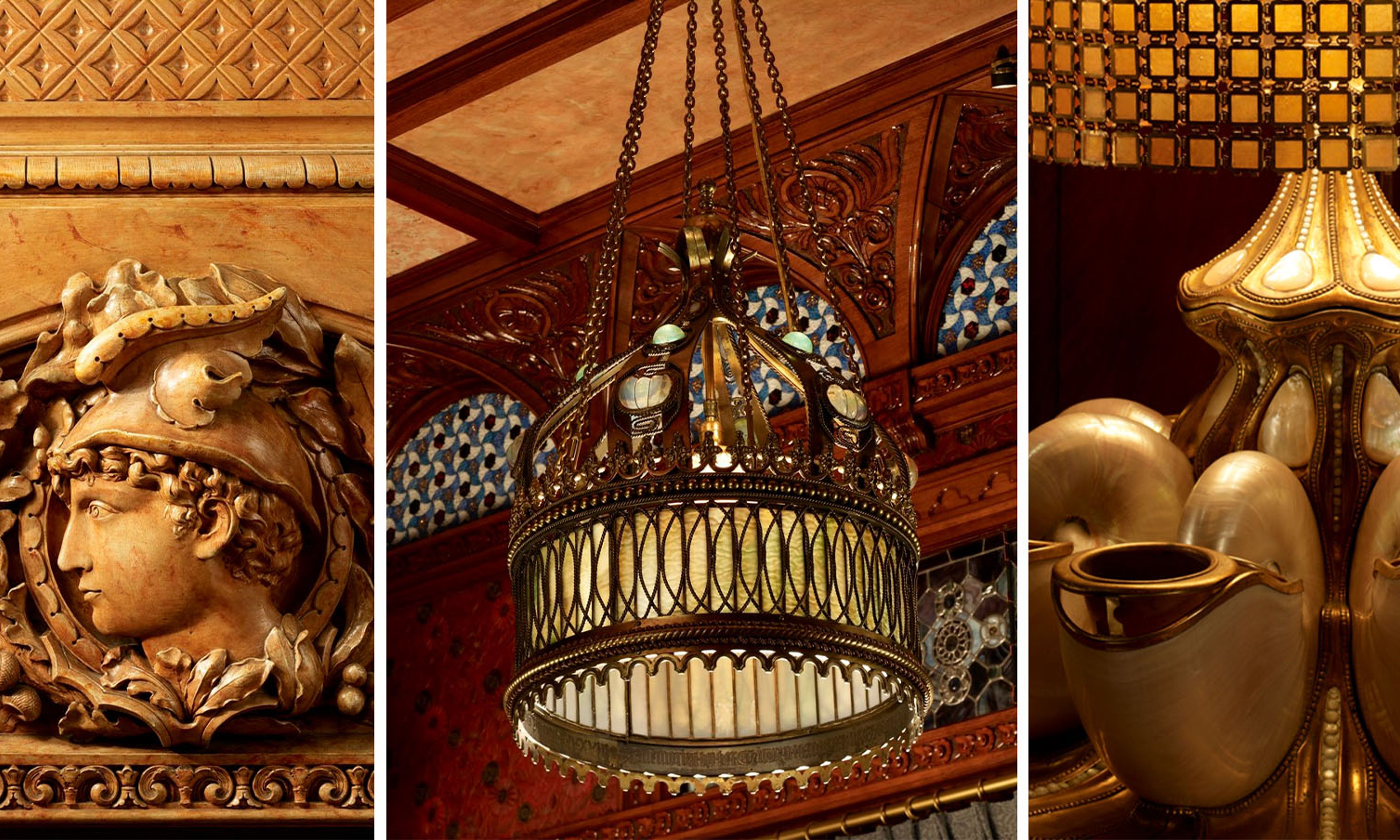
<B>Left</B>: Fireplace surround in the Smoking Room, depicting the god Mercury in limestone. (Courtesy of the Richard H. Driehaus Museum, photo by Steve Hall of Hedrich Blessing, 2008) <B>Center</B>: Tiffany Studios, Gothic-style memorial chandelier, late 19th century. (Courtesy of the Richard H. Driehaus Museum, photo by Steve Hall of Hedrich Blessing, 2008) <B>Right</B>: Tiffany Studios, nautilus-shell-centerpiece table lamp, 1910. (Courtesy of the Richard H. Driehaus Museum, photo by Steve Hall of Hedrich Blessing, 2008)
A few weeks ago, I was in Chicago to see the Art Institute’s splendid exhibition of the work of Gustave Caillebotte, but part of my mission was to see the Richard Driehaus Museum, a Gilded Age house I’d never visited. It’s been open only since 2008 and just opened a building next to it that it renovated and restored. Mostly it displays the collection of decorative arts, nearly all from around 1870 to 1910, of Driehaus (1943–2021), a lifelong Chicagoan and himself a man on a mission. It’s an extraordinary museum and an antidote to all that’s drab, common, cheap, and beige about contemporary American home design.
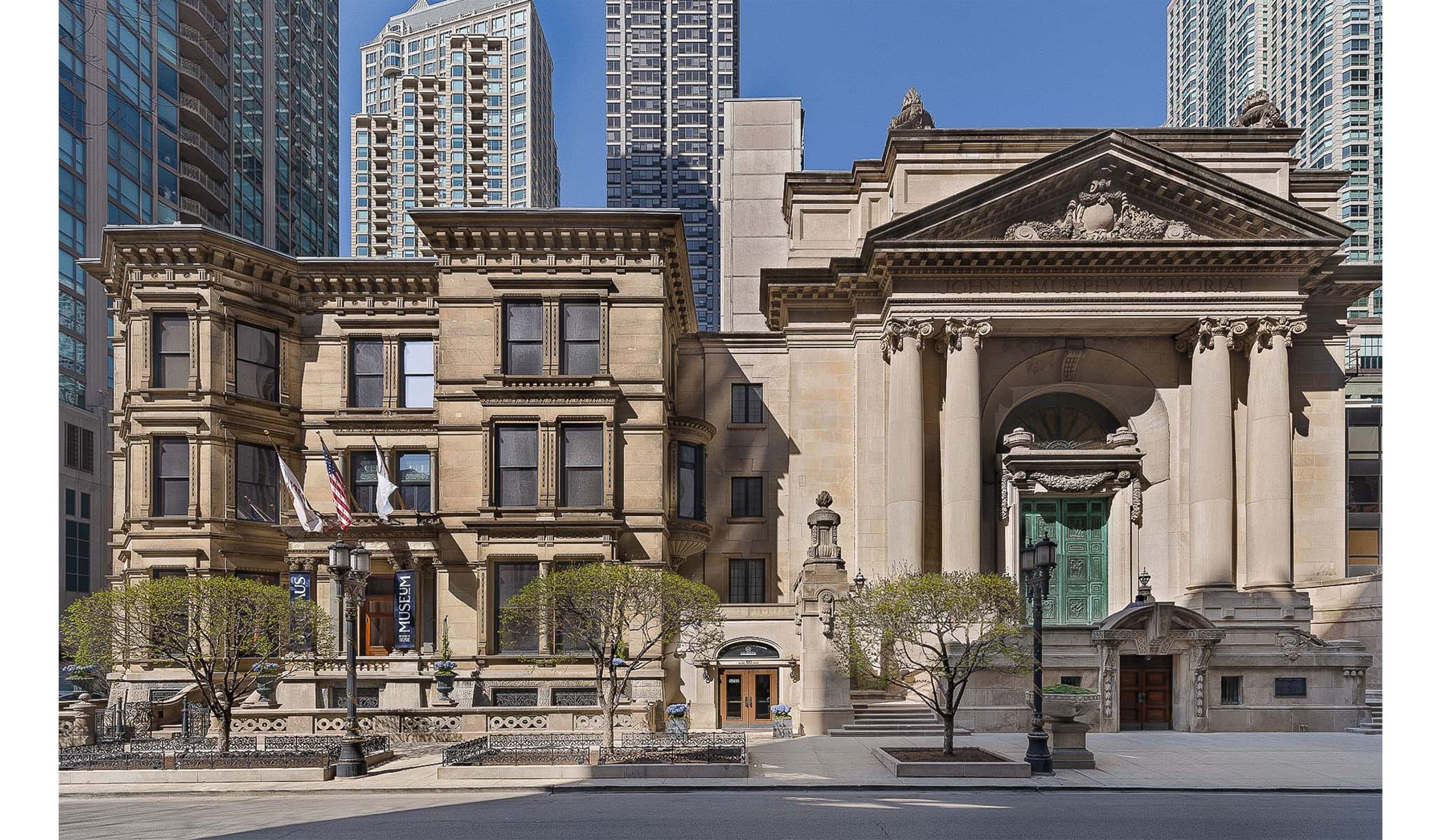
The Driehaus started as Samuel Mayo Nickerson’s Italianate mansion, built a few years after the Great Fire in 1871 for Chicago’s great banking, booze, and dynamite millionaire. It’s the museum’s biggest and grandest work of art. The neighborhood in the Near North Side of Chicago drew the city’s elites, and Nickerson poured out plenty of dough to make his new home what we’d call a Gilded Age palace, with 17 types of marble, alabaster, plenty of inlaid and carved wood details, tile, mosaics, and embossed wallpaper. Like many big Gilded Age houses, it’s a mix of styles -- Renaissance Revival, Georgian Revival, Gothic Revival, Chinese, Japanese, Moorish Revival, and Second Empire. It’s lavish. Nickerson and his wife were deeply involved in Chicago high culture. He was a founding trustee of the Art Institute of Chicago. Both provided anchor leadership for the 1893 Columbian Exposition in Chicago. Their masked balls were renowned.
And it’s next to the elegant St. James Cathedral, the seat of the Episcopal church in Chicago. It’s good to be up against an Episcopal church on a Sunday morning when you might need to borrow a bottle of gin.
The house’s interior and exterior have miraculously stayed mostly intact. In 1900, Nickerson sold it to a millionaire crony, the real estate and paper-bag mogul Lucius Fisher. When the house went on the market again in 1916, a group of Chicago potentates bought it -- a remarkable, early example of historic preservation. They feared that what was then considered a treasure would be demolished. They presented the house as a gift to the American College of Surgeons, which then made Chicago and the house its headquarters. They added a grand auditorium, roughly in French Renaissance Revival style, with a princely stained glass window. Over time, though, the College of Surgeons outgrew the space and moved. It was a commercial art gallery and also offices for years, but no one trashed the place.
Driehaus entered the picture in 2003. He was already well known in Chicago for promoting architectural preservation and also known nationally as a champion of Classical architecture. He was both an original and a typical American collector. He made millions as a hedge fund investor, so, typical of many flush, smart American art lovers, he shopped and bought well and thought about philanthropy and teaching the public. He was original in that he fancied Gilded Age art, design, and architecture for its opulence and aesthetic fecundity. The Gilded Age look had long gone out of style when he started collecting. Too ornate, too puzzling, too daring, and definitely not beige.
What did Driehaus think about the architecture of his lifetime? “The problem is that there’s no poetry in modern architecture,” he said in an interview with Chicago magazine in 2007. “There’s money -- but no feeling or spirit or soul.” He was a booster of old styles because they’re part of our past and how we evolved as cultures. The Driehaus Prize, which he endowed, honors architects working in styles with deep historical roots, giving them a modern spin. It’s as important as the Pritzker Prize, which tends to go to architects bound up in Modernism.
Driehaus bought and restored the Nickerson house, still in good shape, as a Gilded Age decorative arts museum anchored by his collection. It opened to the public in 2008. In 2022, the museum was able to buy the old auditorium, renovating it and opening it as a lecture and performance space last year.
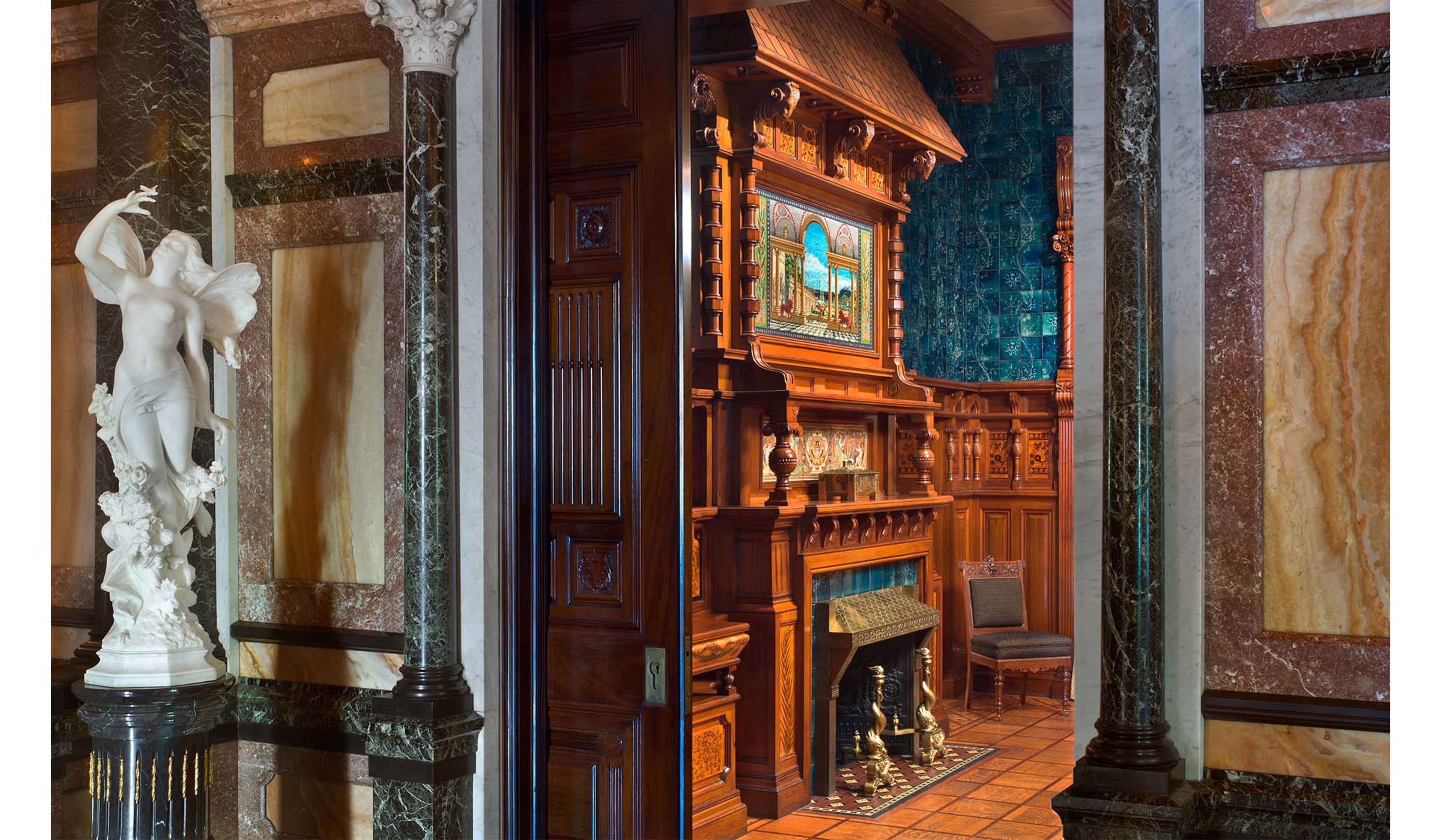
I spent half the day at the Driehaus. The day before, I’d visited buildings designed by Frank Lloyd Wright in Oak Park. After so much Modernism, I craved profusion, chandeliers, Aesthetic Movement painting, stained glass, ornamental plaster, mythological sculpture, fancy mantles, plush textiles, and color, color, color. I lusted for over-the-top décor.
The Driehaus is the mother lode. America has more than a handful of Gilded Age house museums, each one with a twist. Mark Twain’s house in Hartford, Conn., the Biltmore in Asheville, N.C,, and the Flagler Museum in Palm Beach, Fla., are three favorites. But for museum-quality opulence on every front -- furniture, fixtures, bric-a-brac, and paintings -- it’s hard to top the Driehaus. He was a savvy collector. The museum has a lively, scholarly exhibition program, too.
The Driehaus gives guided tours, but I visited on my own, enjoying my own pace and reading all the labels. My visit started in the auditorium. The Willet Stained Glass Company window designed for the auditorium celebrates medical science and is big and elegant but conservative. It was made in the 1920s, after the glory days of American stained glass. Tiffany Studios proposed a design for the commission but wasn’t picked. There’s Tiffany galore elsewhere in the house from Driehaus’s collection.
The Driehaus is very good at drawing our attention to detail and immersing us in how architectural elements were produced. A display showing how ornamental plaster was made -- with a sample visitors can touch -- has depth and is also easy to understand. The red Tennessee-marble staircase, the Gothic Revival stage seating for the big-shot surgeons, and pipe organ, along with elaborate plaster decoration and a Roman Revival apse above the stage make for an impressive, eclectic space. And all has been restored over the past two or three years.
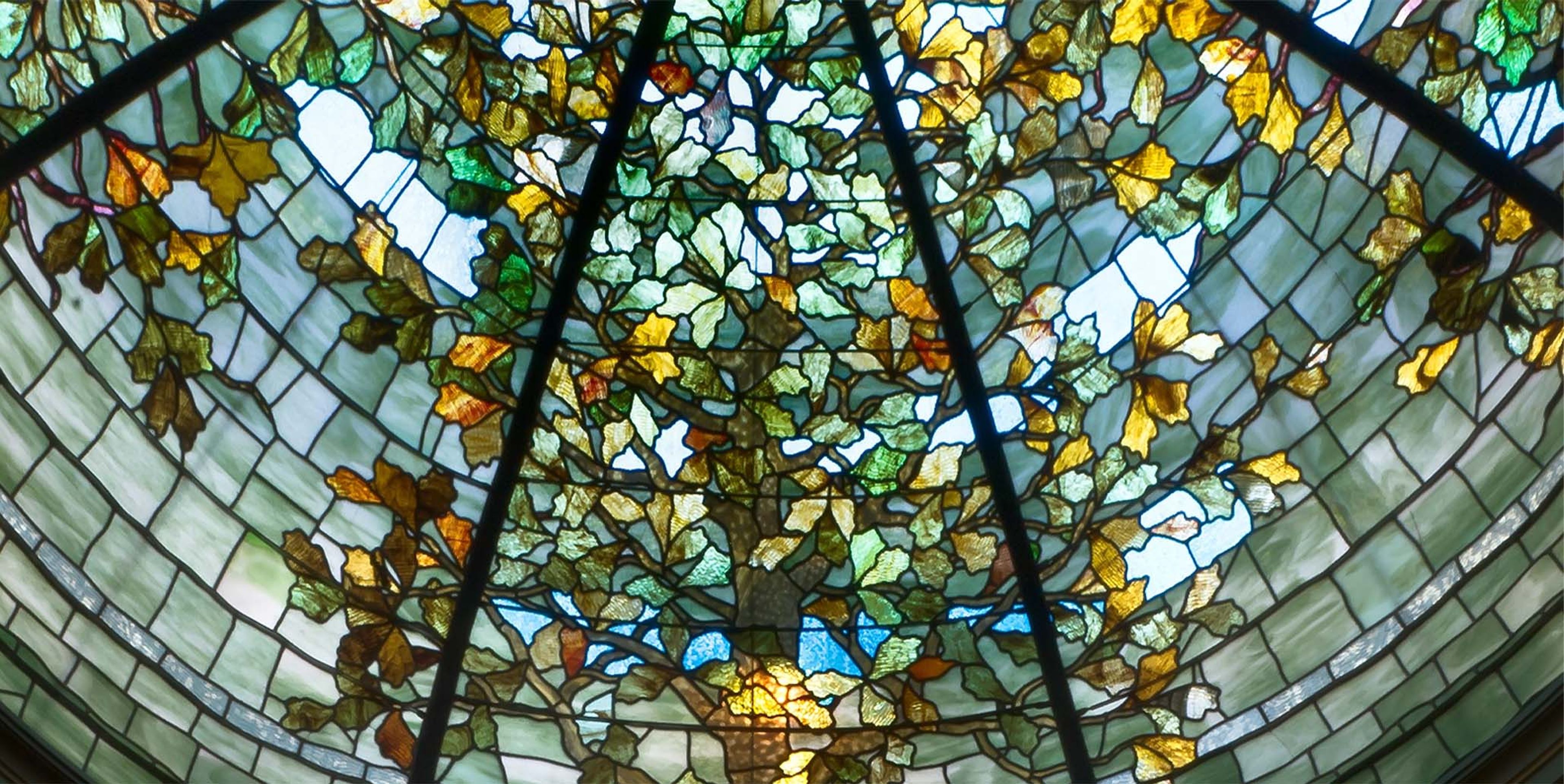
The Driehaus is a house museum, so it displays art and also evokes an age and lifestyle during the time when the Nickerson family lived there but also during the Fisher era. Fisher and his wife made some changes, including a gallery space for his animal trophy heads, thankfully gone, a magnificent stained glass dome, and a monumental fireplace decorated with iridescent tile. They were also responsible for the dozens of passages of carved acorns and oak leaves and lions’ heads throughout the house.
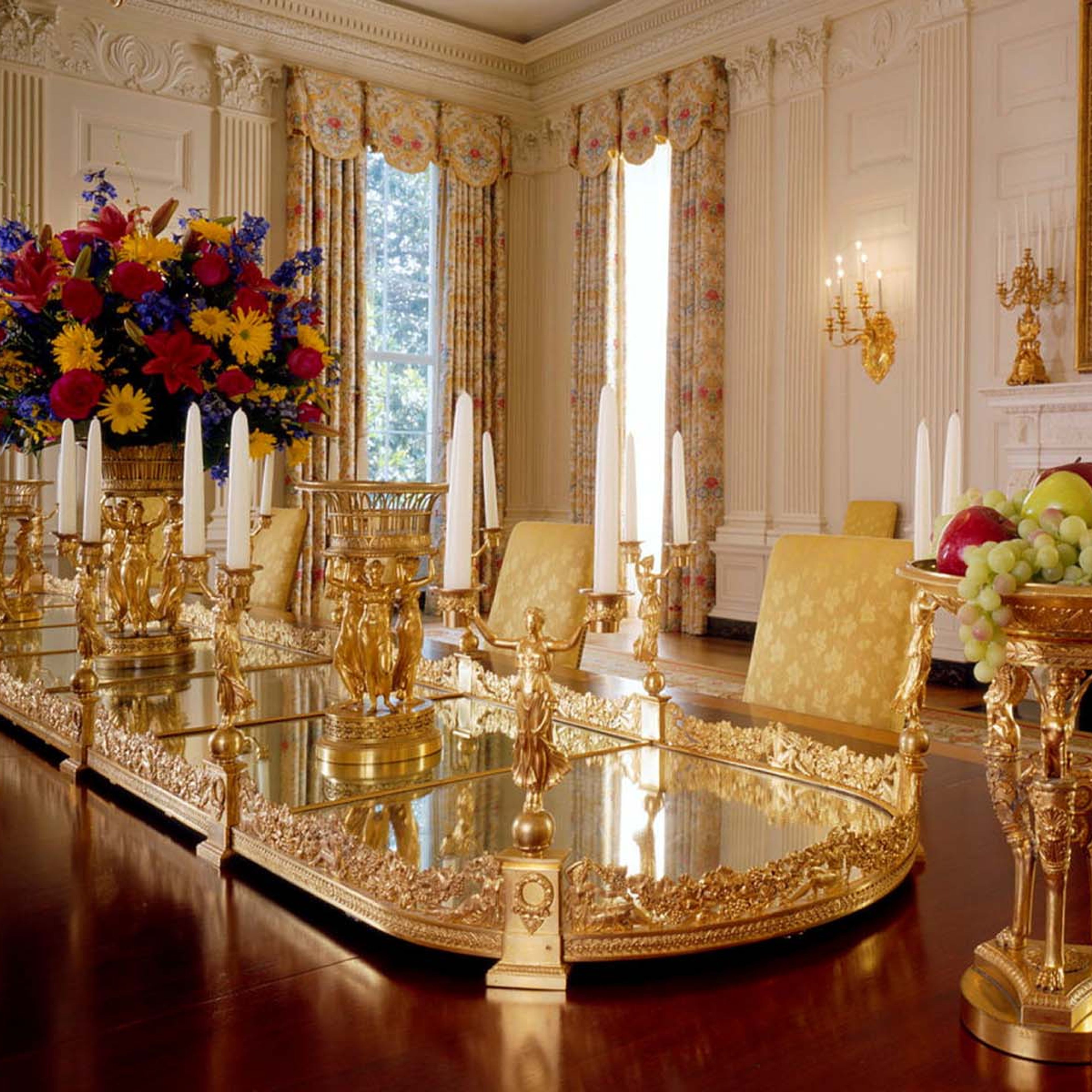
The Smoking Room, Grand Staircase, Drawing Room, main dining room, and library are packed. Styles vary from space to space, unified mostly by the theme of opulence, but along with the carved oak and lion motifs are repeating features such as impressed tiles -- pressing natural elements like leaves and flowers into the clay -- and lots of Lincrusta. That’s wall covering made from linseed oil and wood pulp and then embossed with chrysanthemum, rosette, garland, and grid motifs and painted. All of these features were hardly fuddy-duddy. They were cutting-edge high style.
I focused on fireplace mantels, often tile, sometimes stone, and a floor-to-ceiling mantel covered with carved ram’s heads, mosaics depicting an Italian garden, and Minton tile. It’s splendid, as is a polished onyx mantel in the Drawing Room.
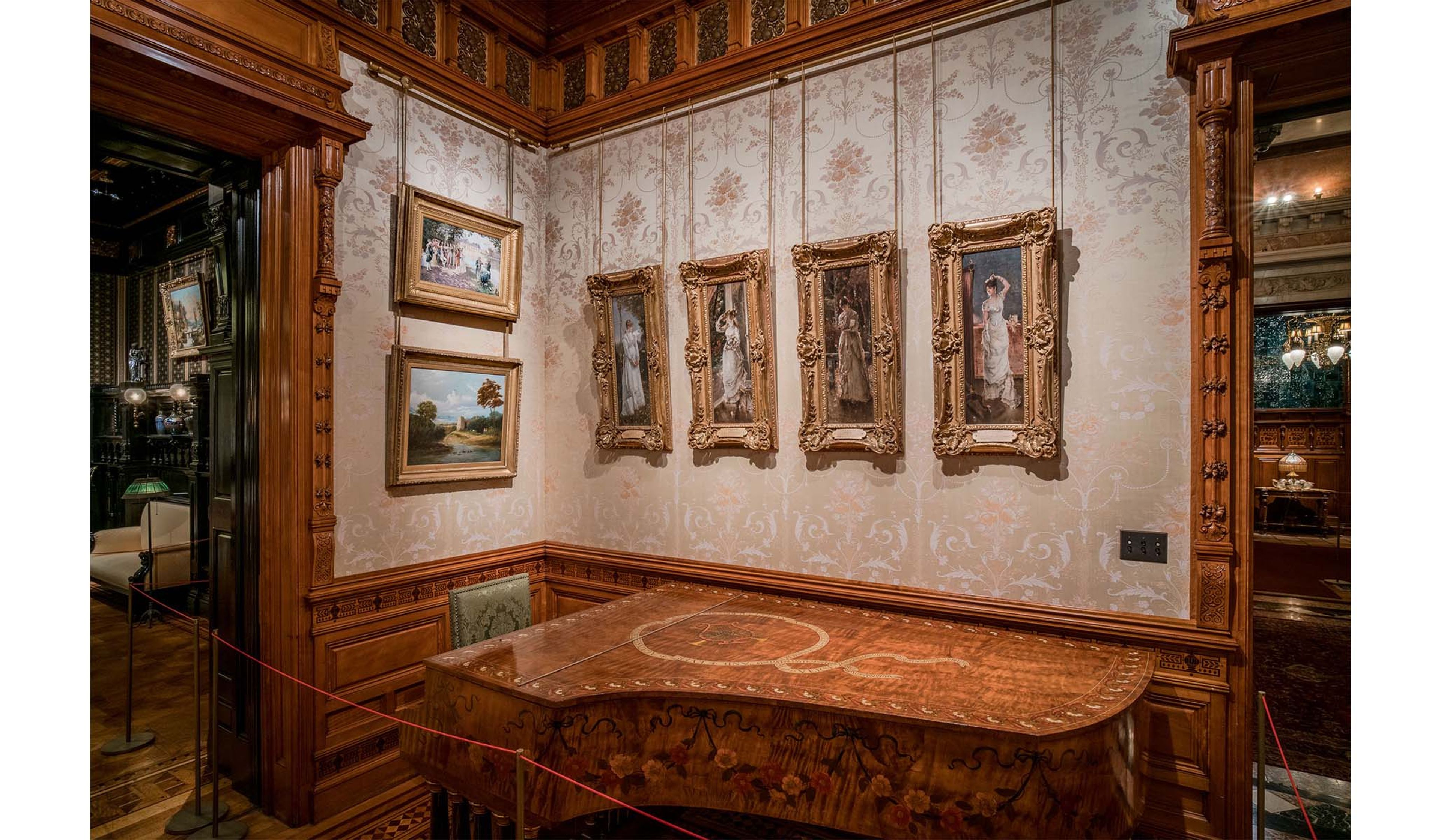
There are so many other treasures -- a Chickering & Sons grand piano, a German ink stand from the 1860s ornamented with diamonds, emeralds, and rubies, and a set of Alfred Stevens’s Four Seasons paintings from the 1870s, the best of his iconic Ladies of the Eighties pictures. The museum is beautifully done, welcoming, and revels in objects that are very serious yet filled with joy. Decorative programs like these have to be seen to be believed.
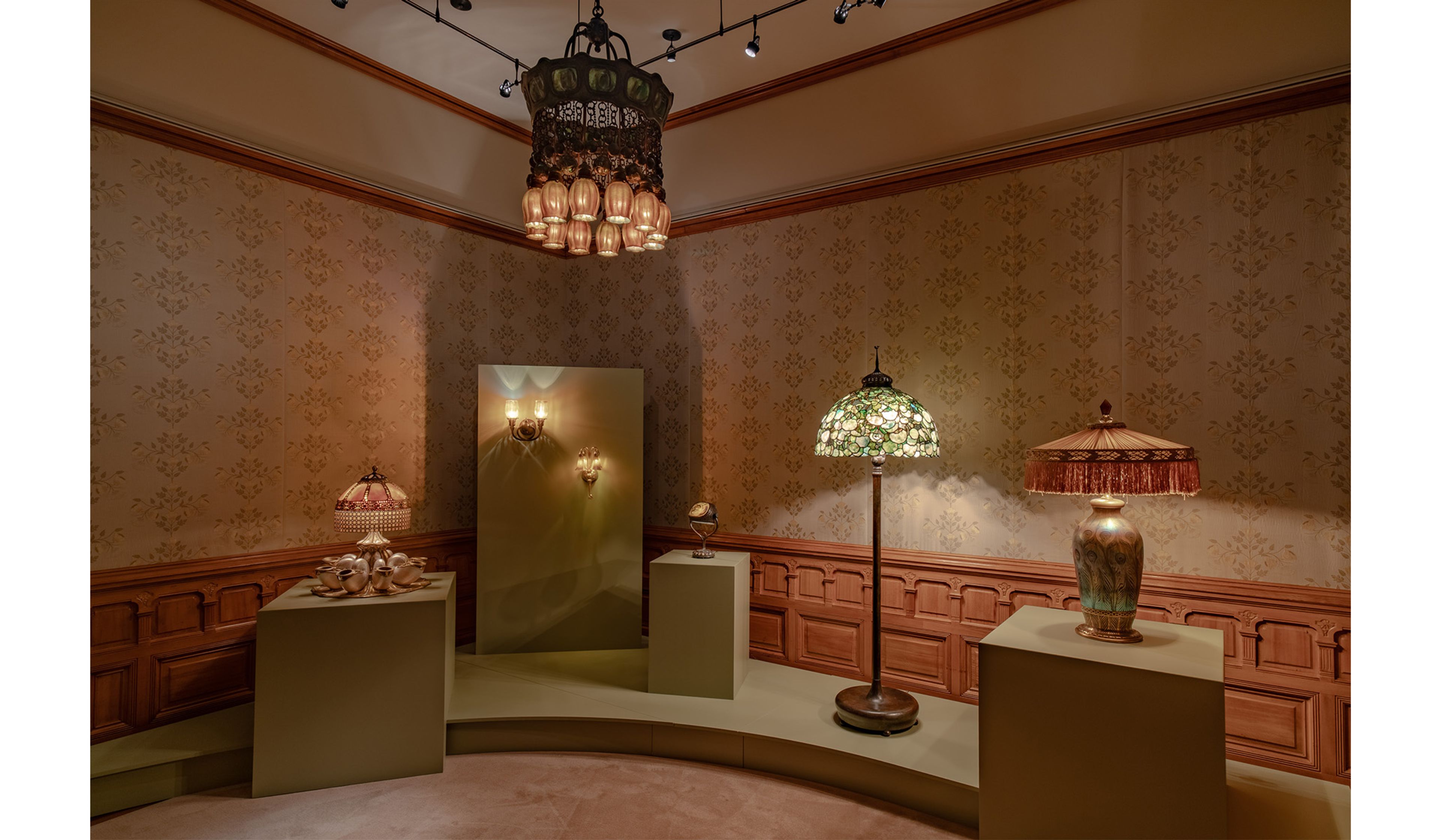
The museum’s Tiffany Studios show Beyond the Shade is on view now. It’s a gorgeous, new look at this most famous of artists and, among Gilded Age designers, the one who was the cleverest at color. Louis Comfort Tiffany's paintings of Near Eastern subjects from the early 1870s marked him out as various. He studied art with George Inness, among the last and dreamiest of the Hudson River School, so these early things are reverie pictures and exotic. From there, it’s no shock to see him move specifically to stained glass in the 1880s and generally to the design of opulent interiors. I’ve written about Tiffany’s stained glass windows and John LaFarge’s. LaFarge’s are the more visionary and subtle, while Tiffany was a design and business genius who was among the first to understand how stained glass could fit in a new world of electric light. Among the splendors of the museum are works by Tiffany owned by Driehaus.
There aren’t any splashy church windows in Beyond the Shade. Tiffany’s classic stained glass shades have been done over and over. There’s a few of them in the exhibition since they’re Tiffany hallmarks, but the revelations -- and they’re splashy objects -- are Tiffany and Co.’s bases, offbeat glass shades, and vases. There’s also Tiffany’s 18-light “Lily” table lamp from 1902, made from the company’s trademark Favrile glass. By combining different colors while the glass was in a molten state in the furnace, Tiffany could produce subtle gradations of color. There’s a Tiffany Gothic chandelier, too, shaped like a crown and made from bronze and opalescent glass. The museum’s nautilus-shell design centerpiece lamp from 1910 and pineapple-shape vase, from the same decade, are showstoppers.
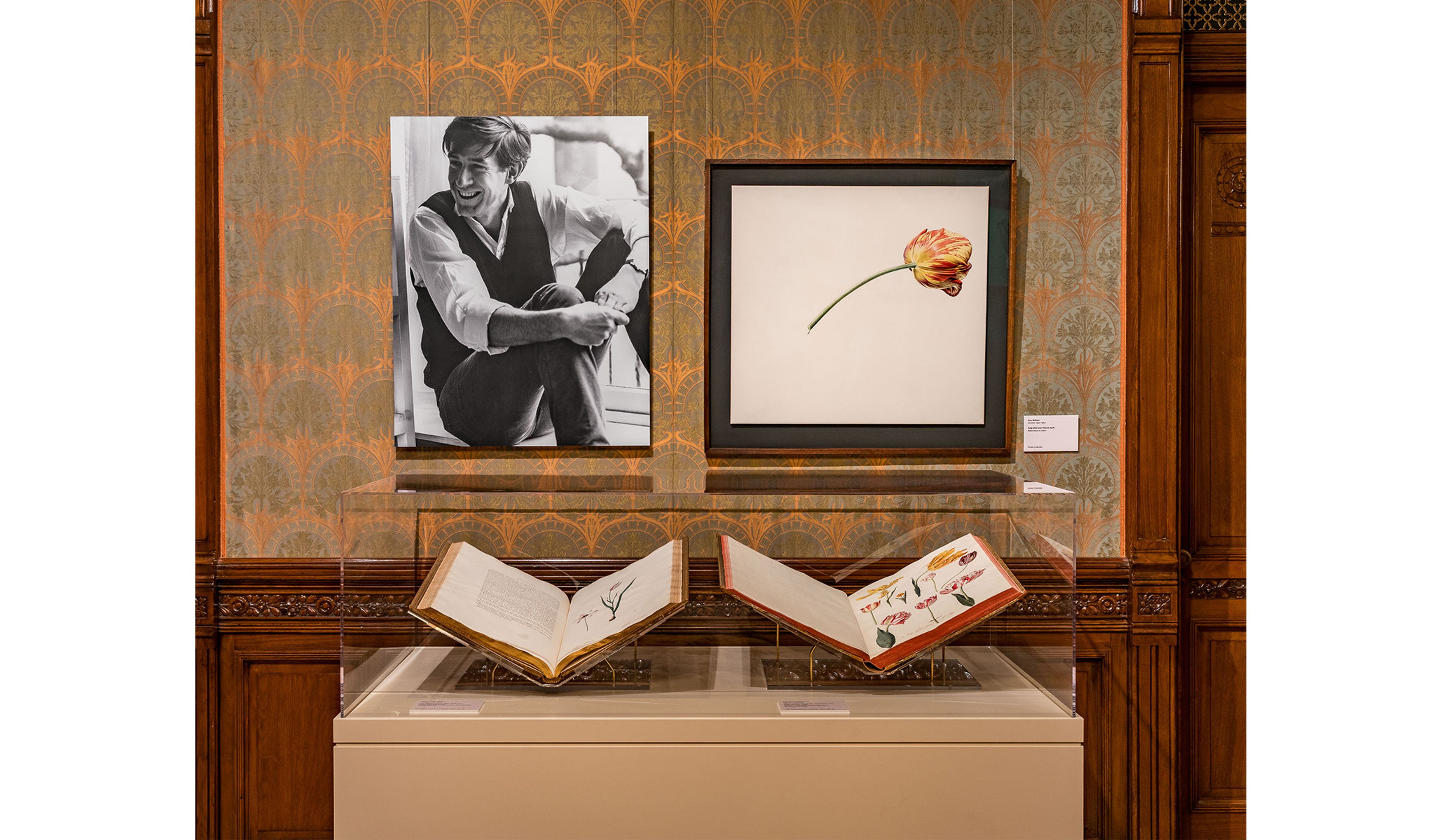
When I visited the Driehaus in August, its traveling exhibition Rory McEwen: A New Perspective on Nature was on view. I’d never heard of McEwen (1932–1982), a Scottish painter focusing on plants. It was a big, ambitious exhibition, organized by the Driehaus, and a look at an extraordinary artist who brought a modern sensibility to Old Master flower painting. I first walked in what I think is the middle of the show -- it didn’t matter since it’s organized mostly by subject rather than chronology -- and saw a group of watercolors of fritillaries. These are rare plants mostly found between Greece and Afghanistan in hard-to-access mountains and semi-deserts. I’ve seen them only in botanical gardens. They’re not conventionally beautiful like roses or tulips or lilies, but often fragile, spindly things with jewel-like color. McEwen isolates them -- he’s a modern painter, so he tends to avoid clutter -- and they look like a new species, like flowers with individual characters and stories. “This is an old soul,” I thought.
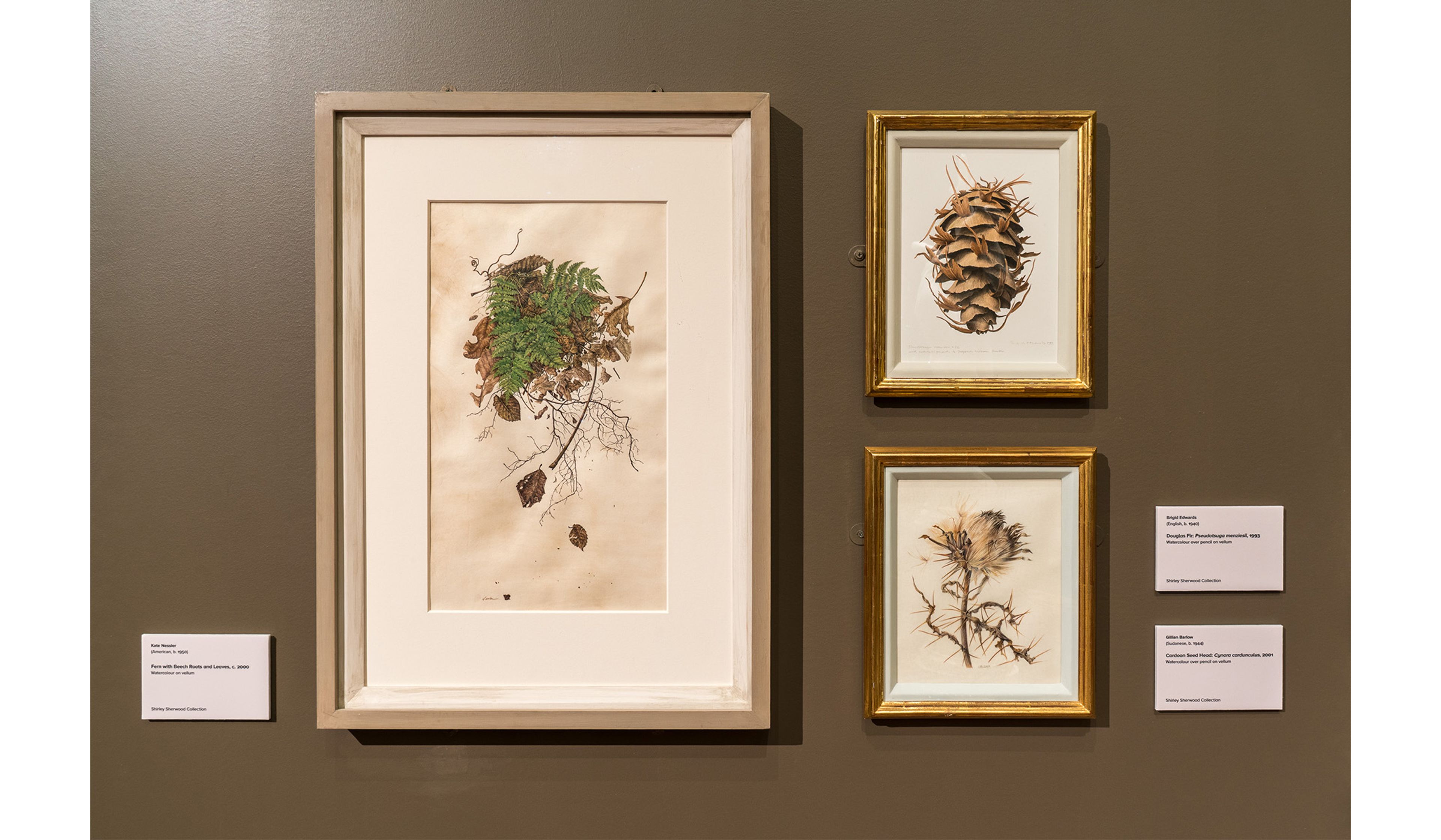
It’s not a noisy exhibition, though McEwen was originally a performer who sang old whaling songs, twice on The Ed Sullivan Show. Rather, it’s an enchanting one. McEwen published illustrations in botanical books and had a modern, minimalist, and sometimes offbeat aesthetic. He painted flower buds and decaying leaves. He did indeed paint tulips in full flower but also individual tulip petals, lush and looking like fresh young things in a harem. With lots of white space around them and no shadows, his subjects, inanimate as they are, have the feel of ancient wisdom. His format’s mostly small, but the works have presence. They’re installed in Gilded Age rooms, so they have to compete with tile, funky wall coverings, marble, and carved wood.
Botanical illustration is a niche of its own, especially starting in the 18th century with the Enlightenment’s interest in plants and animals. That said, flower painters were abundant in the Netherlands in the 17th century and among artists working on medieval illuminated manuscripts. McEwen reinvigorated the field. He collaborated with Bunny Mellon in cataloguing her Oak Spring Garden in Virginia. The foundation published the exhibition’s lovely catalogue.
The exhibition is having a great tour. Aside from Chicago, it’s gone to the art museum at Wellesley College, the Gibbes Museum in Charleston, S.C., and the Society of the Fine Arts in Palm Beach, Fla. It’s at the Garden Museum in London now. Next year, the Driehaus is doing a show called The Land of Oz: Beyond the Page, which looks at how MGM’s script writers, set designers, and costume designers brought L. Frank Baum’s children’s books to life onscreen. Yes, the Ruby Slippers will be on view. What a smart show.
Earlier this week, the Driehaus hosted a dance class -- Bowties, Bustles & Ballroom Basics -- focusing on dancing in 1880s, not 1980s Flashdance, Footloose, or Fame style, not modern interpretive dancing, not the twist, but the waltz and the two-step. Dancing while outfitted with a bustle and corset must have taken practice as well as endurance, but period dress is admired, not required. It must have been very fun. I’m a big believer in teaching dance. The Driehaus’s stained glass workshop is sold out, but, of course, the Driehaus is where to go for a Gilded Age Christmas. The museum sponsors concerts and lectures in its dramatic auditorium. It also hosts school groups for Chicago-area children, who go to teacher-union-run schools, so they need more beauty and less lazy, insipid trash in their lives.

About the Author
Brian T. Allen is National Review’s art critic.
Advertisement
Advertisement

Comments