Grand Jury Refuses to Reindict Letitia James
Written by Andrew C. McCarthy
Bondi should try to persuade her headstrong boss that enough is enough.
Share this story
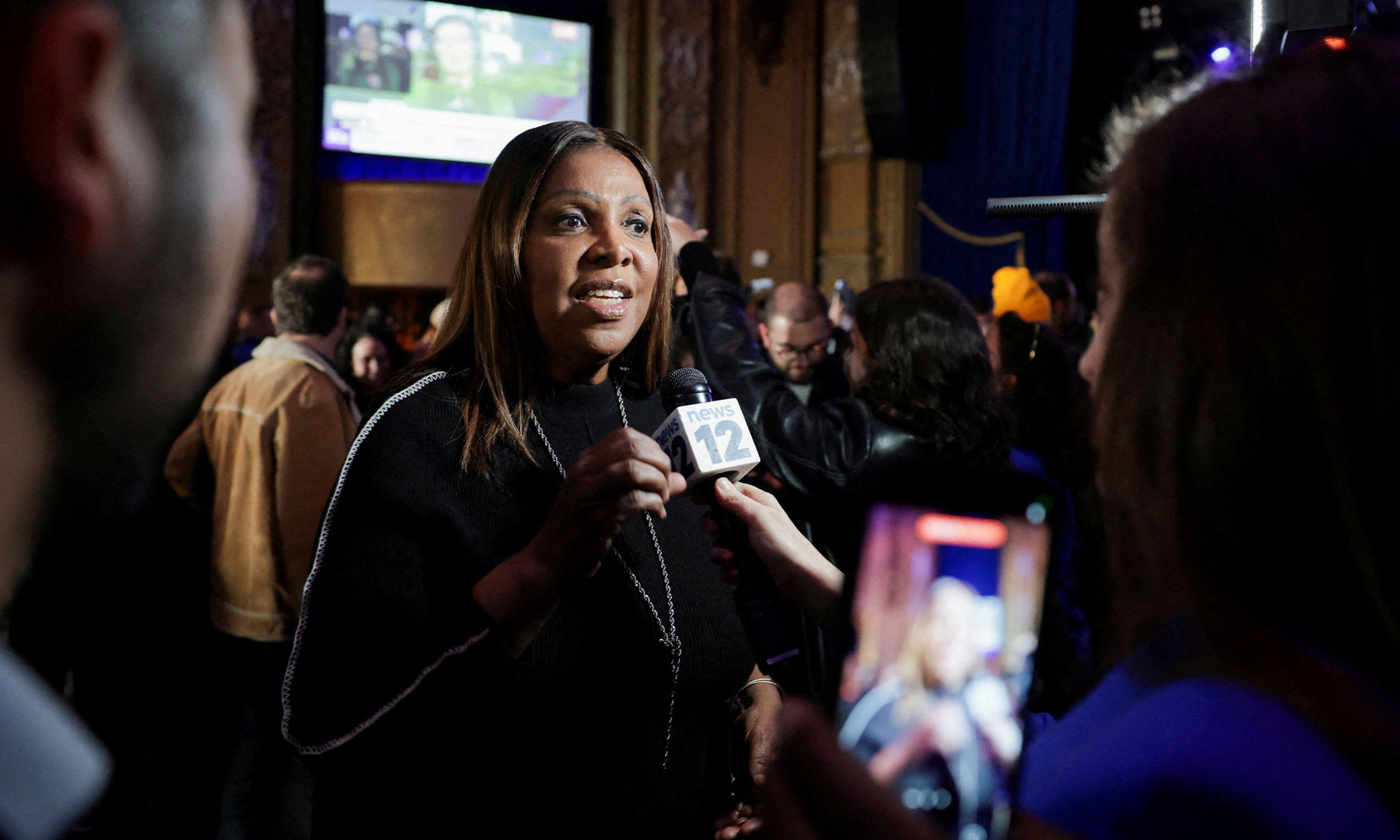
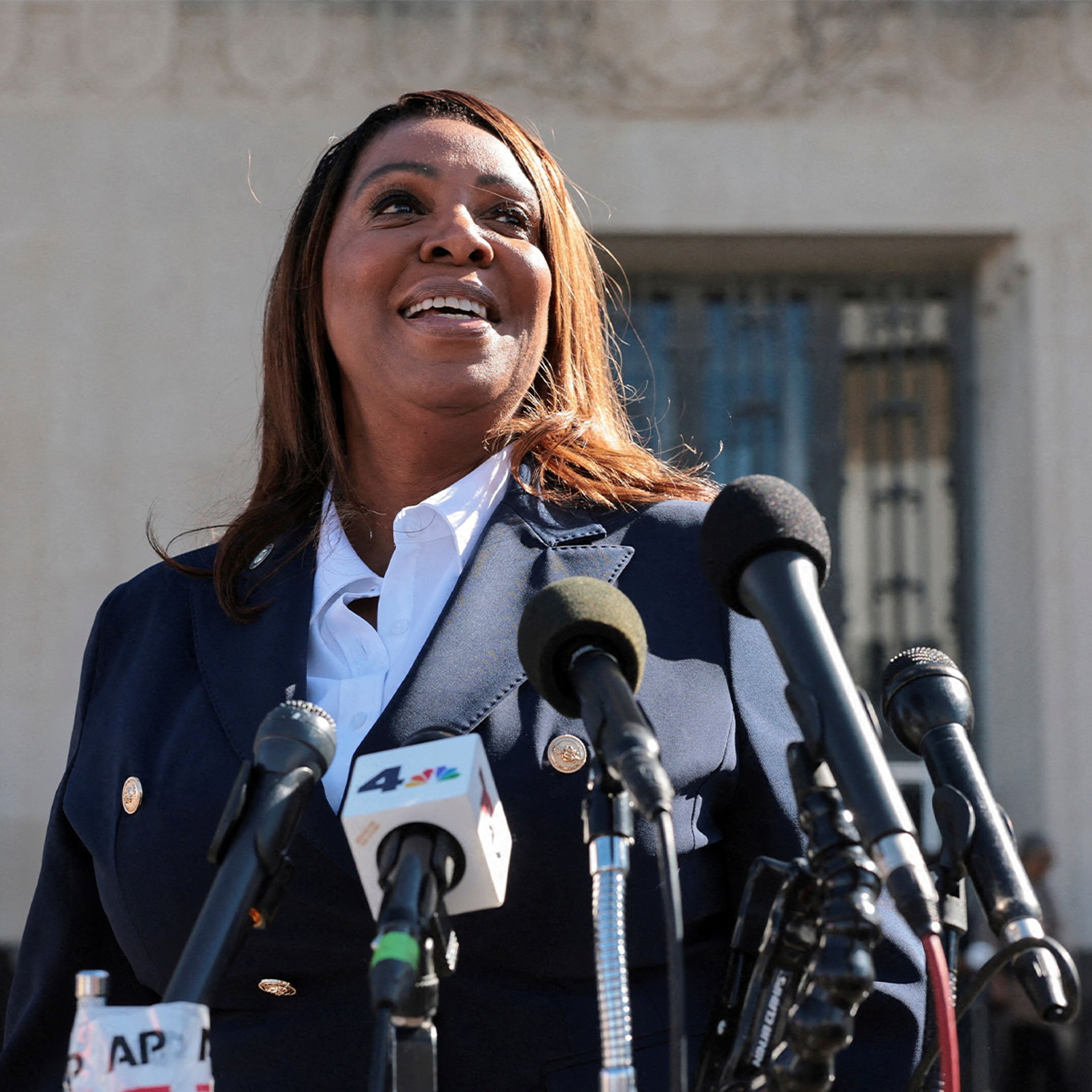
New York Attorney General Letitia James speaks to members of the media during an election night rally in the Brooklyn borough of New York City, New York, November 4, 2025.
A federal grand jury has rejected a bid by the Trump Justice Department to reindict New York Attorney General Letitia James. The no true bill was reportedly returned late on Thursday.
James was initially indicted on October 9 by Lindsey Halligan, whom Attorney General Pamela Bondi purported to install as interim U.S. attorney for the Eastern District of Virginia (EDVa), at President Trump’s direction. This was after Trump banished Erik Siebert, then the district’s interim U.S. attorney, when Siebert refused to indict James and former FBI Director James Comey -- believing the evidence of wrongdoing was too weak.
As I’ve detailed, the indictments against James and Comey were dismissed on November 24 because (a) Halligan was statutorily ineligible to be appointed interim U.S. attorney, and (b) without legitimate prosecutorial authority, she had unilaterally presented the Justice Department’s evidence in the James and Comey cases to the grand jury. That ruling was made by Judge Cameron McGowan Currie, a senior Clinton appointee in the District of South Carolina, whom the Fourth Circuit had assigned to hear disqualification motions related to Halligan in the EDVa.
The Trump DOJ has thus far taken no further action against Comey, against whom false-statement and obstruction charges were filed just five days before the five-year statute of limitations was to expire. A decision was made, however, to revive the case against James, with a new prosecutor -- Roger Keller of Missouri -- taking over. Unlike Halligan, Keller is an experienced assistant U.S. attorney whose authority to prosecute is firmly established.
If you have been following the Trump DOJ’s lawfare against the president’s political enemies, you know that the bank fraud allegations against James were dubious. They were also beneath the standards of the Justice Department, which generally leaves claims of de minimis financial irregularities to be addressed, if at all, by state authorities or private civil suits. (See here, here, and here.)
The original indictment alleged that, in order to obtain a marginally more favorable interest rate, James falsely represented to her lenders that she would occupy a modest home in Norfolk, Va., rather than rent it.
It has since emerged that (a) James allowed the home to be inhabited by the family of her niece, who says James did not charge rent; (b) while the original indictment alleged that the difference between mortgage rates for owner-occupied rather than rental properties was 0.815 percent (which itself is minor), the actual difference may be as little as 0.25 percent, meaning the alleged “fraud” could have been as little as $15 to $30 per month (just $10,800 over the life of the 30-year loan, not the $17,837 alleged in the indictment -- which itself would generally be deemed too negligible to warrant a federal prosecution); and (c) there was a clause in the mortgage agreement that gave James more leeway in how the property could be used than the indictment claims.
Given all that, it seems quite the stretch that a prosecutor could believe in good faith that fraudulent intent beyond a reasonable doubt could be proven at trial. The standard for merely approving an indictment is more lax -- probable cause sufficient to warrant a trial -- and the grand jury only hears the government’s side of the case. Still, the grand jury in Norfolk discerned the weakness of the case and, on Thursday, declined to approve the Trump Justice Department’s proposed charges.
Career EDVa prosecutors had declined to indict James prior to Halligan’s arrival. Nevertheless, the existence of viable criminal charges had been urged on the president by Bill Pulte, a non-lawyer and Trump loyalist installed by the president as director of the Federal Housing Finance Agency. In that post, Pulte has scoured the mortgage records of Trump political nemeses -- such as James, Senator Adam Schiff (D., Calif.), and Federal Reserve Board Governor Lisa Cook -- for apparent irregularities. Evidently, Pulte is unaware that -- because prosecutors must prove the elements of a crime, including criminal intent, beyond a reasonable doubt -- apparent misstatements in financial documents are just the beginning of a fraud investigation, not apodictic proof of fraud.
As is typical of lawfare in Trump’s second term as president, the allegations against James have nothing to do with the abuse of power that drew the president’s ire.
James is a monstrous public official who should be disqualified from wielding prosecutorial power. A progressive Democrat, she ran for state attorney general vowing that, if she won, she would use the powers of the office to hound Trump, the Democrats’ principal political enemy. She made good on that promise by bringing an absurd civil fraud lawsuit: an unprecedented invocation of a statute intended to protect consumers from fraud, which she applied to arm’s length transactions between sophisticated financial actors -- Trump and his business lenders and insurers.
Helped along in the non-jury bench trial by Judge Arthur Engoron, an elected progressive Democrat whose disdain for Trump was uncontained, she “won” a fraud finding despite the lack of any fraud victims, inducing Engoron to impose financial penalties that, with interest, amounted to a half-billion dollars. The noxious objective of the Democrats’ lawfare was to destroy Trump financially as well as politically.
The astronomical financial penalty has since been thrown out by a state appellate court. Trump is continuing his appeal to the state’s highest court, challenging the finding that he was liable for business fraud, which the intermediate appeals court did not disturb. (He’ll have a hard time on that score because there is no doubt that he did inflate the value of some of his assets -- although he also admonished his counterparties to do their own due diligence.)
All that said, the Pulte and Trump DOJ mortgage fraud allegations have nothing to do with James’s abuses of power as state attorney general. That is to say, Trump has done to James exactly what James did to him: select a despised person and instruct investigators to find a crime -- any crime. Good faith prosecution, to the contrary, starts with a crime and tries to determine who committed it.
While the case against James should never have been brought in the first place, the grand jury’s no true bill is not necessarily the end of the matter. The Constitution’s double-jeopardy safeguard protects a person from being tried multiple times on the same charges, not from being charged multiple times. Consequently, Thursday’s filing of a no true bill does not bar the Trump DOJ from trying to convince another grand jury to indict.
This is a humiliating development nevertheless for Attorney General Bondi and her department. She should try to persuade her headstrong boss that enough is enough. But the rest of us ought not hold our breath.
About the Author
Andrew C. McCarthy is a senior fellow at National Review Institute, an NR contributing editor, and author of Ball of Collusion: The Plot to Rig an Election and Destroy a Presidency.
Featured Tags
Advertisement
Advertisement
Comments