Share this story
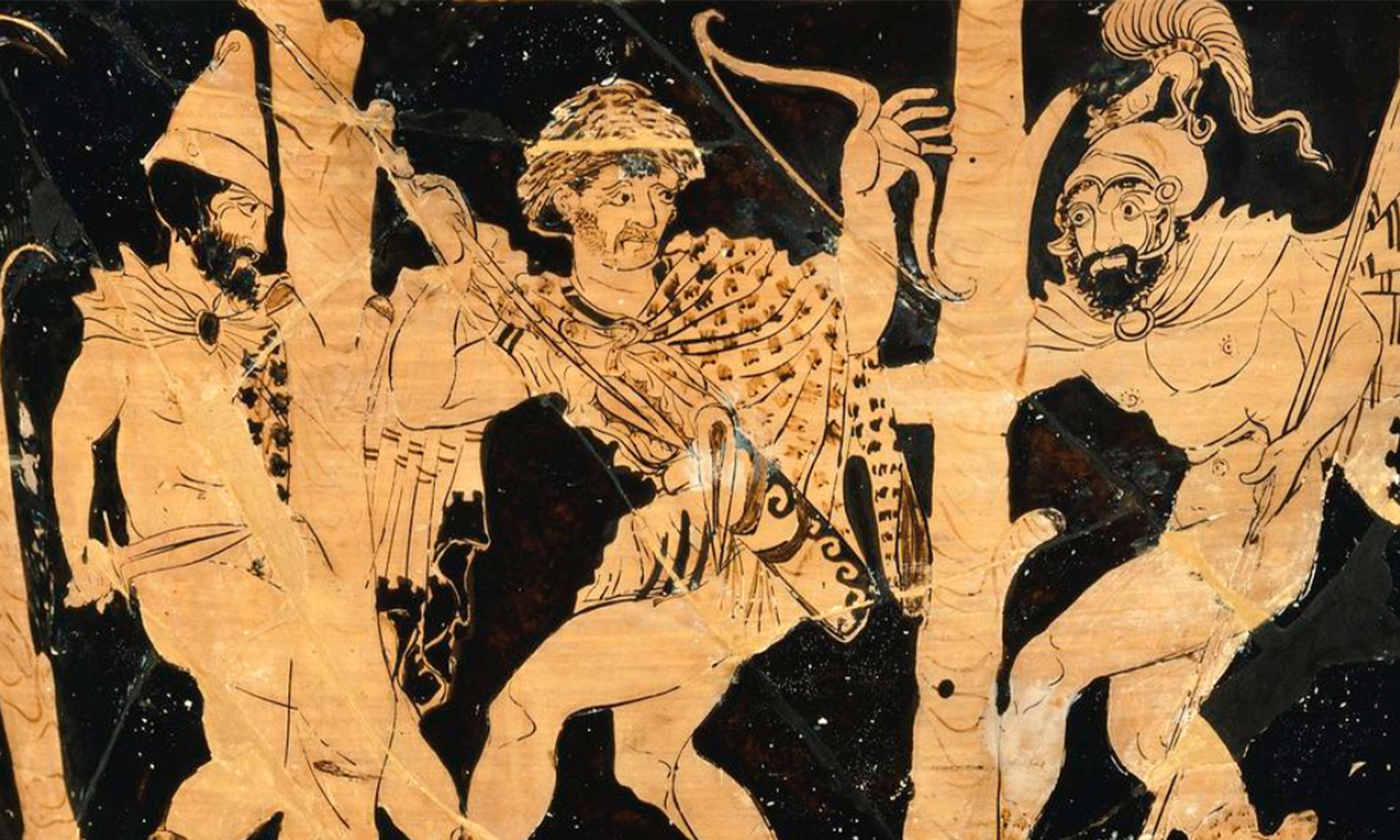
Detail of The Dolon Painter, <i>Dolon Surprised by Odysseus and Diomedes</i>, c. 390–380 B.C., red-figure calyx-krater.
For C.K.
For Diomedes, Dolon had outlived
His use. He begged for mercy; mercy did
Not come. His legs gave way, and, looking up,
He reached out for the chin of his assassin
With shaking fingers, nauseous, blank despair
In eyes that swam. Once more he begged for mercy,
But mercy did not come. While yet he spoke,
The sword ripped through his throat. It sliced the tendons,
As when a reaper mows grass with a scythe;
Before the swinging blade the green falls down
And disappears, returning to the earth.
You would not think a living thing could be
Undone so easily. Just so, the head
Of Dolon fell toward earth, still speaking, still
Begging for mercy. Mercy had not come.
He was, like me, afraid to die. Not all
Are so. Not all are so. Not all are so.

About the Author
E. J. Hutchinson is an associate professor of classics at Hillsdale College, where he also directs the Collegiate Scholars Program.
Advertisement
Advertisement





Comments