In Fiery Order, Judge Again Tells Trump to Return Illegal Alien Deported to El Salvador
Written by Andrew C. McCarthy
Prepare for a very loud week.
Share this story

An inmate walks at the Terrorism Confinement Center (CECOT) prison, in Tecoluca, El Salvador, April 4, 2025.
A federal judge has reiterated her order directing the Trump administration to return an illegal alien to the United States, scalding the administration for seizing him without lawful authority, “forcibly transport[ing] him to El Salvador in direct contravention of” federal immigration law, and arranging his detention in a foreign prison that “by design, deprives its detainees of adequate food water, and shelter.”
Judge Paula Xinis issued her order after a tense hearing on Friday in federal district court in Maryland. There, a top Trump Justice Department immigration lawyer conceded that the alien, Salvadoran national Kilmar Armando Abrego Garcia, had been erroneously repatriated despite a 2019 immigration court order that he not be sent back to El Salvador.
Early Sunday morning, Judge Xinis, an Obama appointee, issued a 22-page memorandum opinion, reaffirming and elaborating on her Friday order. She inveighed that the administration’s conduct, in particular the risk of harm to which it subjects Abrego Garcia, “shocks the conscience.”
Background: Was There a Removal Order?
Abrego Garcia entered the United States illegally in 2012, when he was 17 years old. He did not seek asylum within a year of entering the country, as the law requires, so he should have been adjudicated a removable alien when he was detained in 2019.
Alas, the record is confused on this point.
Excerpts from the relevant documents in the 2019 proceedings have been posted on X/Twitter by Will Chamberlain of the Article 3 Project (see thread, here). They suggest that there was a dispute regarding whether the alien was detained in connection with a murder investigation or was merely loitering. Incontestably, there was no murder prosecution; Abrego Garcia was held in immigration custody because he was in the country illegally.
But was he ever ordered removed?
Chamberlain says yes, but the documents he excerpts on that score pertain to the related but separate litigation over whether Abrego Garcia should have been released on bond while the removal proceedings ensued, not a straight-up decision on the issue of removal itself.
This distinction is salient because, Xinis’s opinion recounts, the Justice Department has not produced any order of removal. To the contrary, DOJ conceded at Friday’s hearing that “no order of removal is part of the record,” and admitted that (quoting government counsel) “the removal order” from 2019 “cannot be executed.” Xinis added that DOJ failed to produce any “warrant for removal/deportation,” though such process is “customarily served on an alien as part of a lawful deportation or removal.”
We can only conclude, then, that either (a) there was no removal order, or (b) any such order was so flawed that DOJ won’t publicly rely on it (perhaps because it is explicitly tied to the immigration judge’s express prohibition on deporting Abrego Garcia to El Salvador -- a prohibition that the government admits it has violated).
Is Abrego Garcia a Member of MS-13?
Dissembling on the matter of removal is not the sole instance of troubling divergence between the Trump administration’s provocative public rhetoric and what it more modestly represents in court.
In public statements, the administration continues to assert that Abrego Garcia is a member of the Mara Salvatrucha (MS-13) international criminal gang. Yet Xinis writes that, at Friday’s hearing, the Justice Department decided “to abandon this position,” for what she describes as the “good reason” that “no evidence before the Court connects Abrego Garcia to MS-13 or any other criminal organization.”
Is this an overstatement? It’s unclear -- although the bottom line is that the Justice Department declined to proceed with any evidence on this point and, Xinis says, forfeited its claim that Abrego Garcia “is a danger to the community.”
Chamberlain shows that in 2019, when the question of release on bond came up, the immigration judge ruled against Abrego Garcia based, in part, on danger-to-the-community grounds. This dangerousness finding was rooted in information from a “past, proven, and reliable source of information,” based on which the alien’s “gang membership, rank, and gang name” were said to be “verified.” The finding was complemented by the disputed claim that Abrego Garcia was the subject of a murder investigation, as well as his clothing, which appeared to corroborate gang membership (although the judge was reluctant to deduce gang membership from clothing).
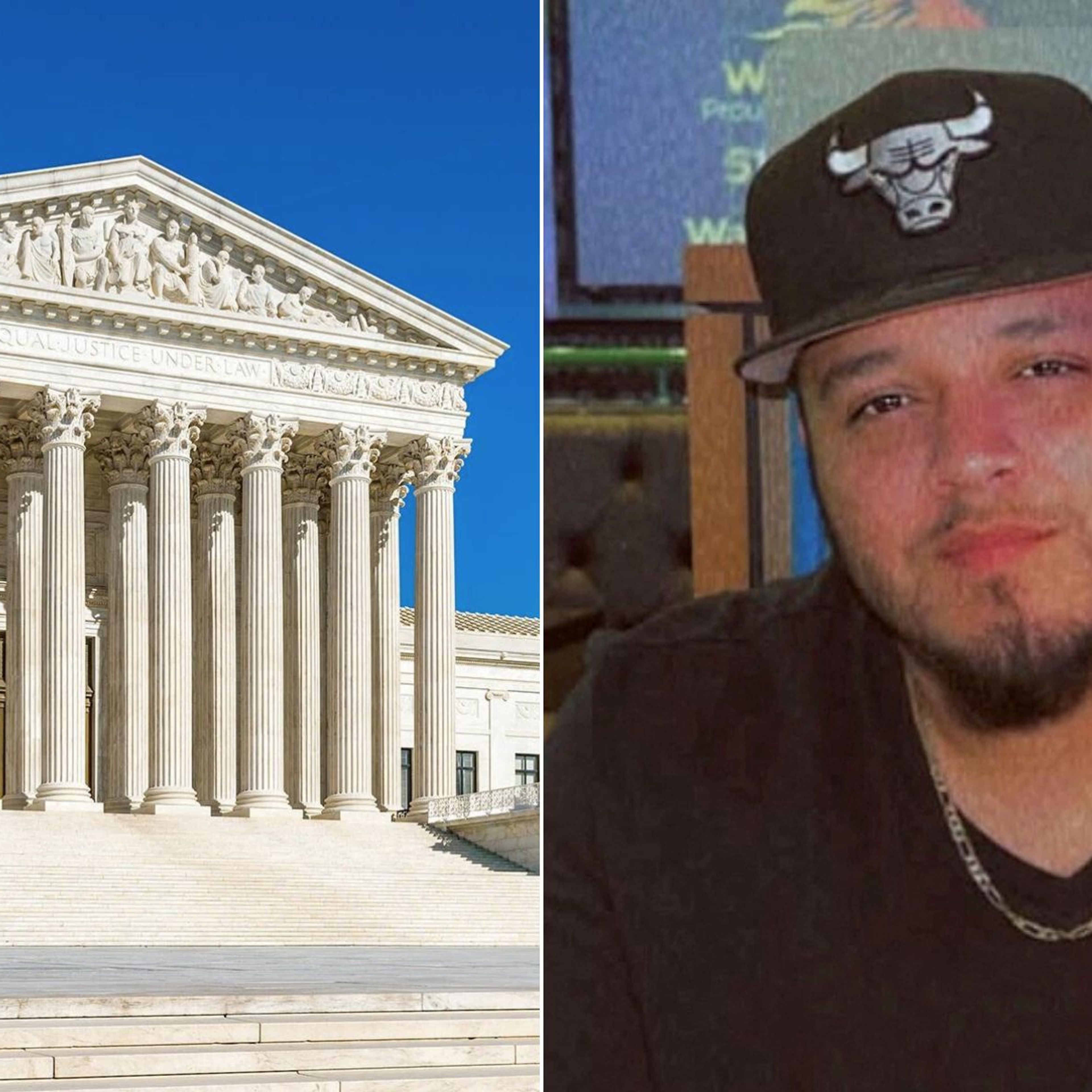
Yet whatever force the dangerousness finding had in 2019 was nullified at the hearing on Friday because the Justice Department shied away from relying on it. Even so, Xinis addressed the 2019 finding in her opinion -- to further discredit it. Since the Justice Department was conceding the point, the judge was free to dismiss the 2019 evidence as “a singular unsubstantiated allegation that Abrego Garcia was a member of MS-13.” Xinis elaborated in a footnote that the government’s showing amounted to “nothing more than [Abrego Garcia’s] Chicago Bulls hat and hoodie, and a vague, uncorroborated allegation from a confidential informant claiming [Abrego Garcia] belonged to MS-13’s ‘Western’ clique in New York – a place he has never lived.”
Even if one suspects the left-leaning judge is understating the evidence of MS-13 membership, the stubborn fact is: The Trump DOJ abandoned the MS-13 allegation in the court proceedings, even if Trump officials continue incanting it publicly.
Does Abrego Garcia Have a Credible Fear of Persecution in El Salvador?
Those parroting the administration’s narrative that the president’s agenda is being undone by radical left-wing judges will also be exercised by Xinis’s uncritical acceptance of the dubious, uncorroborated story Abrego Garcia told in 2019 about his fear of persecution if repatriated to El Salvador. In a nutshell, he claimed that a Salvadoran gang, the Barrio 18 Revolucionarios, had threated to kill him over an eight-year-old dispute involving what he portrayed as its extortion of his mother’s family “pupusa business.”
To my mind, this could very well be a sob story that the alien made up or embellished when he was arrested seven years after sneaking into our country. At the time, Abrego Garcia obviously wanted to stay here: He was seemingly settled in Maryland with his American citizen wife, a newborn child, and at least one American citizen brother. But if his fear-of-persecution story had been credible, he’d have proffered it when he got here in 2012, as the law requires, rather than living here for years as an illegal alien, dodging required court appearances in connection with traffic violations (as illegal aliens are wont to do), and weaving a fear-of-persecution tale only after being apprehended in a run-in with law enforcement.
Here is the problem, though: Even if the story is untrue, it is the story based on which an immigration judge in 2019 granted Abrego Garcia withdrawal from removal (i.e., protection from deportation to El Salvador), and the government never appealed that ruling.
While the record is fuzzy on whether there ever was an order of removal, there is no doubt that, despite being an illegal alien, Abrego Garcia was released from detention in 2019 and given some kind of authorization to work. It appears that the government treated the immigration judge’s order prohibiting deportation to El Salvador as if it were a de facto authorization for Abrego Garcia to remain in the United States.
This is what the government has been doing for years, which is why we now have an illegal alien population of about 20 million. The government has made minimal efforts to deport removable aliens, and if it encounters any resistance in the rare enforcement action, it stands down, rationalizing that there are too many illegal aliens and too few enforcement resources.
So yes, Xinis uncritically recites Abrego Garcia’s fear-of-persecution claims as if they proved beyond doubt that he faces certain persecution -- perhaps even death -- in El Salvador. But she is able to do that because the government did not contest Abrego Garcia’s claims. At this point, those claims are binding on the issue of fear-of-persecution unless and until the Justice Department follows the legal process for reopening the matter. AG Bondi has failed to do that -- certainly, no thought was given to doing it prior to Abrego Garcia’s sudden arrest and deportation in mid-March.
The U.S. Government’s Continuing Control Over the Deported Aliens
So understand: The Justice Department’s reluctant position in court is that (a) there is no 2019 removal order against Abrego Garcia; (b) there is no claim that Abrego Garcia is an MS-13 member or otherwise a danger to the community; (c) Abrego Garcia has a viable claim that he must not be returned to El Salvador due to fear of persecution by a gang; and (d) it was an error for the Trump administration to apprehend Abrego Garcia on March 12 in the absence of a removal order and swiftly deport him to El Salvador in violation of the 2019 order.
On this record in court (as opposed to how the administration publicly describes the case), Xinis had no trouble concluding that Abrego Garcia was lawlessly deported to El Salvador -- a fact the government did not contest at the hearing.
The only real issue remaining is whether a federal court has authority to order the alien’s return to the United States for proceedings to challenge his deportation, which the government now concedes Abrego Garcia should have been given to opportunity to do. On that issue, the Trump administration contends that Xinis has no jurisdiction because the alien is now in El Salvador’s custody -- i.e., he is physically beyond both the writ of American courts and the power of the executive branch to demand that a foreign government release him.
Yet, as Xinis counters, the public record -- including the El Salvador government’s announcement of its deal with the United States -- indicates that our government has paid El Salvador $6 million to hold prisoners transferred from the U.S. “for one (1) year, pending the United States decision on [their] long term disposition” (emphasis added). Manifestly, if the Trump administration has retained the power to dictate what happens to the aliens after they have been in Salvadoran custody for twelve months, then the administration still has control over the aliens.
Hence, the federal court still has jurisdiction over them -- just as it would if the executive branch had exercised its authority by moving the aliens to a prison within the United States. If the Trump administration has not ceded control over the aliens, it cannot credibly contend that it is powerless to facilitate their return to the country for court proceedings.
The Midnight Monday Deadline and Prospects on Appeal
Beyond that, Xinis largely follows the D.C. Circuit’s ruling against the administration in connection with the Venezuelan detainees it deported to El Salvador’s notorious prison.
She rejects the Justice Department’s risible claim that federal courts lack jurisdiction because the alien must seek habeas corpus in the place where he is held -- El Salvador. In effect, the administration is arguing that it can apprehend and deport anyone in the United States -- whether citizen or alien -- and that person will have no recourse, even if the apprehension and deportation were clearly illegal, because the foreign country is outside the jurisdiction of the courts. Like the D.C. Circuit held with respect to the Venezuelan aliens, Xinis holds with respect to Abrego Garcia that because he is challenging his deportation, not his detention, he can bring his claim not only under habeas corpus in the place where he is detained, but under the Administrative Procedure Act in the place where he was arrested.
In essence, the APA vests the court with authority to issue a restraining order if the government has acted lawlessly and the claimant stands to suffer irreparable harm. With the government having admitted it acted lawlessly and the claimant sitting in a Salvadoran prison, that is what Xinis has done.
Keep in mind: The reality of Abrego Garcia’s case is based on what positions the Justice Department takes in court (and the court’s rulings thereon), not on how the case is described in the political messaging by the White House press secretary and Main Justice. Because its presentation in court is far weaker than its strident public rhetoric, the Trump administration is very likely to lose its appeal to the Fourth Circuit -- and to the Supreme Court if things get that far.
Judge Xinis has given the administration until just before midnight Monday night to return Abrego Garcia to the United States. The Justice Department is being obstinate because, if it admits it can cause the return of one detainee, it effectively admits it can cause the return of all the detainees it has deported to El Salvador -- including the hundreds of Venezuelan aliens it has claimed it cannot bring back, even though it now admits those aliens were entitled to challenge their deportation.
When the Trump Justice Department takes a public position it cannot back up with proof in court, its practice is to bash the judges rather than admit error. Prepare for a very loud week.

About the Author
Andrew C. McCarthy is a senior fellow at National Review Institute, an NR contributing editor, and author of Ball of Collusion: The Plot to Rig an Election and Destroy a Presidency.
Featured Tags
Advertisement
Advertisement

Comments