Is Big Brother Watching You?
Written by Elan Kluger
The Information State: Politics in the Age of Total Control, by Jacob Siegel (Henry Holt, 336 pp., $29.99)
Share this story
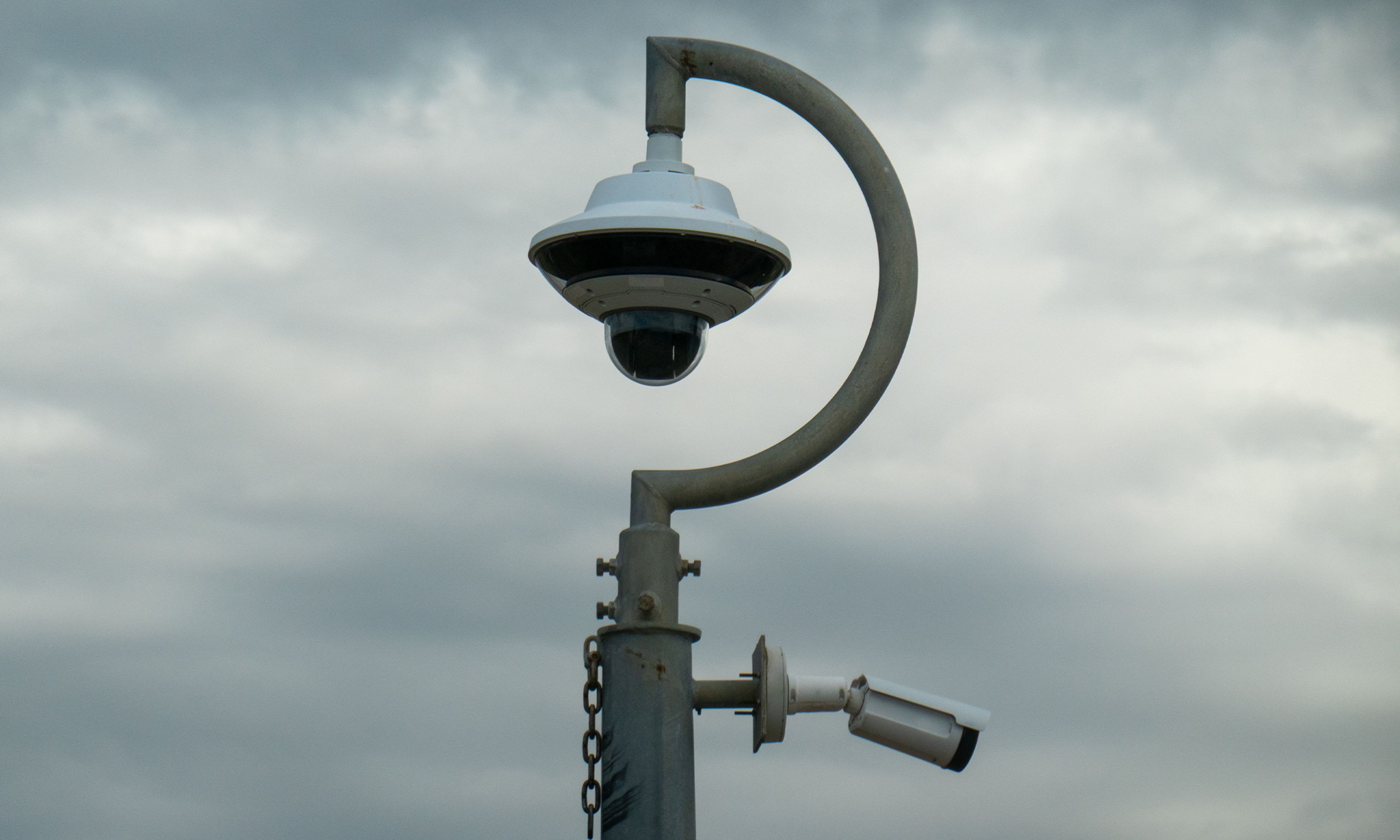
SCM Jeans/iStock/Getty Images
Few speak of Russiagate now. Acrimony about the alleged Russian subversion of the 2016 U.S. presidential election consumed four years of news coverage. The Steele dossier — opposition research for the Hillary Clinton campaign, conducted by former MI6 officer Christopher Steele — was supposed to prove decisively that Donald Trump was a Russian asset. CIA Director John Brennan’s declassified intelligence-community assessment was supposed to demonstrate Vladimir Putin’s desire for a Trump victory and the tools — including a supposed private video of Trump — that the Kremlin used to achieve it. None of these claims was substantiated. The Steele dossier amounted to a collection of rumors. Brennan’s assessment had involved only handpicked analysts.
So Russiagate and its lies are behind us, and America can move on. Not so, says Jacob Siegel. In his new book, The Information State: Politics in the Age of Total Control, which builds on an essay he published in Tablet in 2023, he argues that Russiagate was not an isolated instance of partisan deception. Rather, it was the “hoax of the century”: the most consequential public falsity since Wisconsin Senator Joseph McCarthy declared that he had a list of names of communist subversives who worked within the United States government. More important, Russiagate is the product of a century-long development in state information control. The Information State charts this development.
In his first chapters, Siegel recounts a brief history of information in politics, from Plato’s Phaedrus to the writings of Francis Bacon and Jean-Baptiste Colbert. But his story really commences with the First World War and Woodrow Wilson’s creation of the Committee on Public Information (CPI), which Siegel calls “America’s first state propaganda organ.” Its task ostensibly involved creating films and leaflets to stir the hesitant American populace — which had elected Wilson on an anti-war slate in 1916 — into supporting American involvement in the conflict. More than just producing information, the CPI began censoring the anti-war press. The most famous result was the arrest of socialist presidential candidate Eugene Debs, who opposed the war and the draft. The American people were enraged, and Wilson’s successor, President Warren Harding — no friend of socialists — commuted Debs’s sentence.
For Siegel, the CPI was the beginning of the American information state. “Wilson’s greater legacy endured,” he writes. “The American propaganda complex triumphed by outlasting both the temporary state of emergency and the postwar backlash.” Siegel does not mean that the state continued uninterruptedly to pump out propaganda. Rather, the state retained the technological capacity and legitimacy to do so.
Siegel moves on to the familiar stories of Alan Turing and Claude Shannon, then to the development of the internet. In a blink, the reader has entered the Obama era, which used Wilsonian levers to control public opinion. Barack Obama, in Siegel’s telling, is our Wilson from Hawaii. His administration, as well as Biden’s, did much more than attack Trump. Siegel recites the now well-known sagas of forced media uniformity in the early days of Covid-19 and of Biden’s stifling the reporting about the contents of his son Hunter’s laptop. Siegel’s argument is simple enough: Once the American state had the ability to flatten the distinction between the public and private spheres, and use what is termed a “whole of society” approach, it did. The premise was the old belief that American citizens cannot be trusted with their own minds.
For Siegel, two developments define the current information state. One is recent advances in technology, which make possible the government’s stifling of information and intrusive meddling in the media. The other is an identification of the American ruling class with interests contrary to those of the American people. Again, the Wilson administration serves as a blueprint. Wilson staffed the CPI with graduates of elite universities, such as Walter Lippmann. “The ethos of the state bent toward the values of the Ivy League that had shaped Wilson,” writes Siegel, and this, he claims, remains the case. Democracy, in this telling, is mostly a ruse.
Siegel’s argument that the ruling class has distinct interests is not new. One need only flip open C. Wright Mills’s New Left classic, The Power Elite, or earlier texts by Western Marxists such as Max Horkheimer and Theodor Adorno to see similar arguments about the collision between state and society, business and culture, all under elite direction. Siegel’s advantage is his detail: His section on the Obama administration, for example, traces the comings and goings of officials between Google and McKinsey and public administration. And yet one can accept his detail but reject his theory. Moreover: What does this all have to do with Russiagate?
If one steps back from the grip of Siegel’s narrative, one may ask: Do not both parties seek to change society in accordance with their worldview? One could trace the movement of Palantir officials in and out of Republican (as well as Democratic) administrations, for example. President Trump and Vice President JD Vance have had careers in the private sector, and they maintain those ties. Opponents of the current administration could consider X to have been a state organ during the brief period of happy relations between President Trump and Elon Musk. Both major parties, it seems, use all the means they have. It is a stretch to declare, as Siegel does, that “the information state represents a third form of political regime,” the other two being authoritarianism and democracy. Siegel’s justly celebrated reporting on and analysis of Russiagate wears thin when he tries to argue that the entire structure of the American regime has changed.
He nonetheless makes some worthwhile observations, if in an ultimately unpersuasive way. In one of his essays in Tablet, titled “The New Truth,” Siegel describes a recent past:
When I think of the Waverly Diner on 6th Avenue and Waverly Place in Greenwich Village, I am moved by romantic nostalgia. By that I only mean that when I think of the Waverly I feel, in some way, what it was like to be young and in the rush of the conversation. The conversation was everything. . . . It was democratic in the best sense. You could talk to anyone, butt into any stranger’s conversation, as long as you had something interesting to say.
Instead of diners and conversation, we now have elite control. His pithy statement that, according to our leaders, we cannot be trusted with our own minds reflects a latent instinct in all mass political movements. To worry about the effect this has on the public sphere is to participate in a very old conversation. Has anything really changed?
Coming away from The Information State, one would think that recent American history is all about coastal elites’ mind-controlling the noble Americans of the heartland. Even if one were to grant that, what then? Siegel writes: “To the question ‘What are we supposed to do now?’ I can only respond with the standard excuse of the writer, which is that the task begins by trying to see the world as it is.” While the book tends toward overstatement, Siegel has usefully exposed some of the foundations and mechanisms of information control.
About the Author
Elan Kluger is a founding editor of the New Critic.
Featured Tags
Advertisement
Advertisement

Comments