It’s the End of the World, LOL
Written by Yael Bar tur
If you want to understand how a democracy can survive in an age of constant crisis, pay attention to what people laugh at when they’re afraid.
Share this story
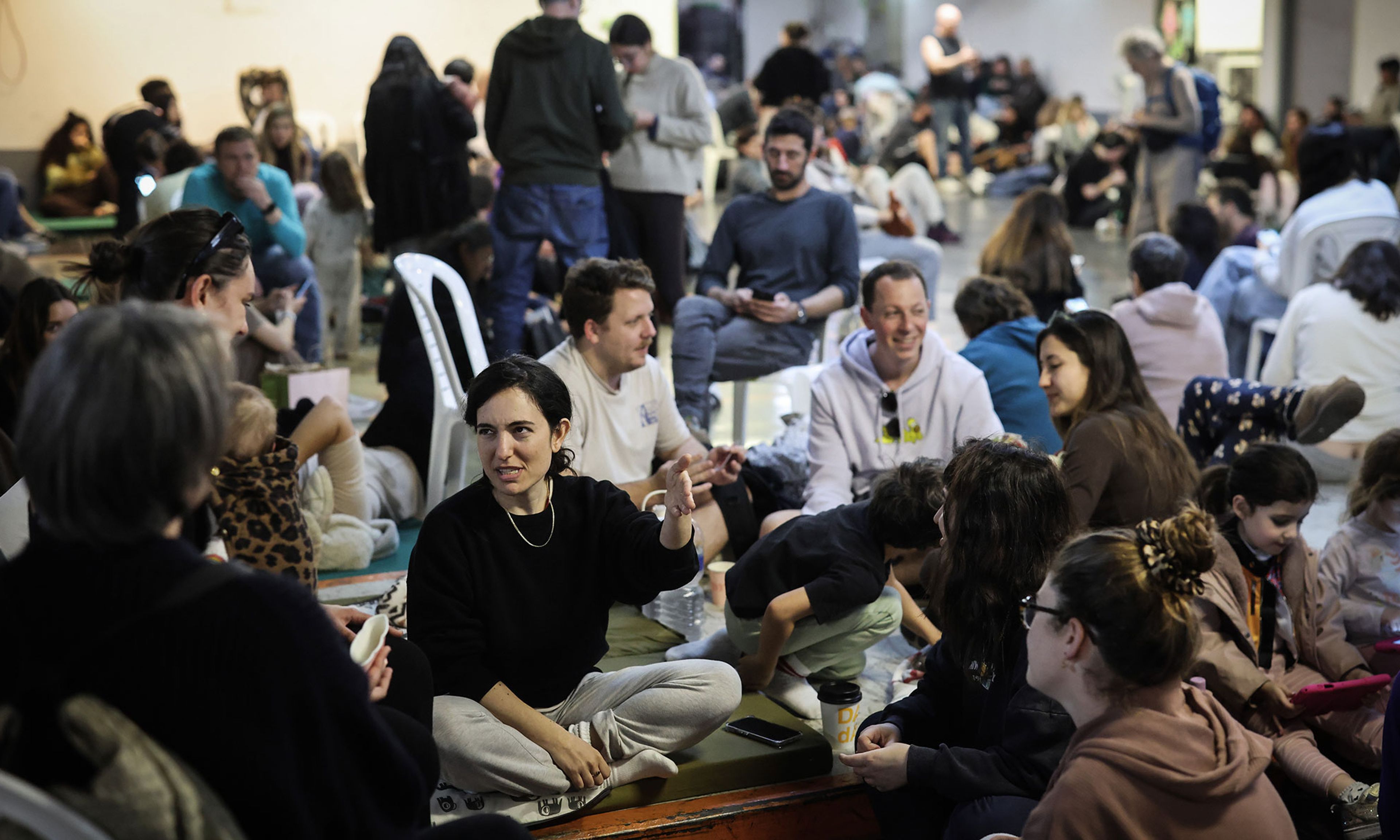
People take shelter in an underground parking lot following alarms for incoming missiles from Iran in Tel Aviv, Israel, February 28, 2026.
I don’t know if it’s true that there are no atheists in foxholes, but there certainly are very few humorless people in them. On February 27, Israelis were bracing for war. No one knew what was about to happen, but the unease was palpable, and you could almost feel the stress in the air. Plastic bomb‑shelter chairs were getting dusted off, and Purim costume chatter between neighbors was replaced with whispers of “maybe tonight?” The wait, some said, was worse than the upcoming war. Israelis have been through a lot of both: war and waiting, making this an informed opinion.
For me, the tension was broken when an X user posted something along the lines of, “You know, in Australia the war has already begun.”
As the war actually began, the first salvos of the meme barrage start to land in precision strikes as Israelis hunkered down in their bomb shelters with nothing to do but churn out content. Phone screens were blowing up with “shelter in place” alerts, interwoven with the latest Netanyahu or Trump impression, or the occasional Google Maps bomb shelter review (“Amazing experience, will come again next missile”). One Instagram user decided to use the frequent shelter runs to surprise his neighbors with a different costume each time. Another created a helpful “how-to” video for our Middle Eastern neighbors who were experiencing attacks for the first time (“be prepared that war is both terrifying and very, very boring”). An emotional eating sub-genre developed, with pictures of terrorists who had been targeted replaced with snacks that had successfully been eliminated by the Homefront.
For as long as I can remember, Israelis and Jews have been under attack -- and somehow, laughing throughout. To an outsider, this may seem disrespectful, but for us, sharing these laughs is more than a gallows-humor defense mechanism; it’s almost a national duty. The uncontrollable laughter that interrupts your chest from racing in fear is an essential reminder that we have much to live for, and the desire to share a funny moment with your entire contact list in the midst of terror is a welcome break from the present and an invitation to hope for a better future. When we clap back at Iranian accounts warning us to “Leave Tel Aviv” with answers like “My dad when he heard how much I pay in rent,” we aren’t making light of the situation; we’re holding on to the “before” days that we can’t quite remember, and yearning to return to arguments about parking spots instead of loitering munitions.
American social media often erupts into arguments and mudslinging in the face of adversity, with each side hoping to occupy the high ground. Israelis are no strangers to a fiery political debate, but when everyone around you is scared, why share insults when you can share something that will make your friends and family laugh? In these moments, poking a little fun doesn’t feel wrong; it’s almost essential.
This nationwide cope offers a view into the unique situation when an entire population, with all its political, religious, and ideological fractures, is going through the exact same thing at the exact same time. An Iranian warhead doesn’t care if you are an Arab or a Jew, and Hezbollah has yet to develop the technology to target citizens based on voting patterns. That inside joke you have with your friends? Its range has just been expanded to the entire country. Shared humor brings us closer together in a time of crisis, and pointing out the absurdity of it all is an important reminder that perhaps it won’t always be our day-to-day reality.
Here in the U.S., we shouldn’t wait for physical danger to remember that in a democracy, what we laugh at together can matter more than what we scream at each other online. If we can’t manage that, well, there’s always emotional eating.

About the Author
Yael Bar tur is a social media consultant and former director of Social Media for the NYPD. She co-hosts the podcast "Ask A Jew" and writes at "Everyone on the Internet Hates You."
Featured Tags
Advertisement
Advertisement





Comments