Jay Kelly, or Why I Skipped the Sergio Leone Award
Written by Giancarlo Sopo
Jay Kelly reminds us that home isn't merely a place to which you return. It's a presence you build through daily acts of attention, and those acts are their own quiet forms of heroism.
Share this story
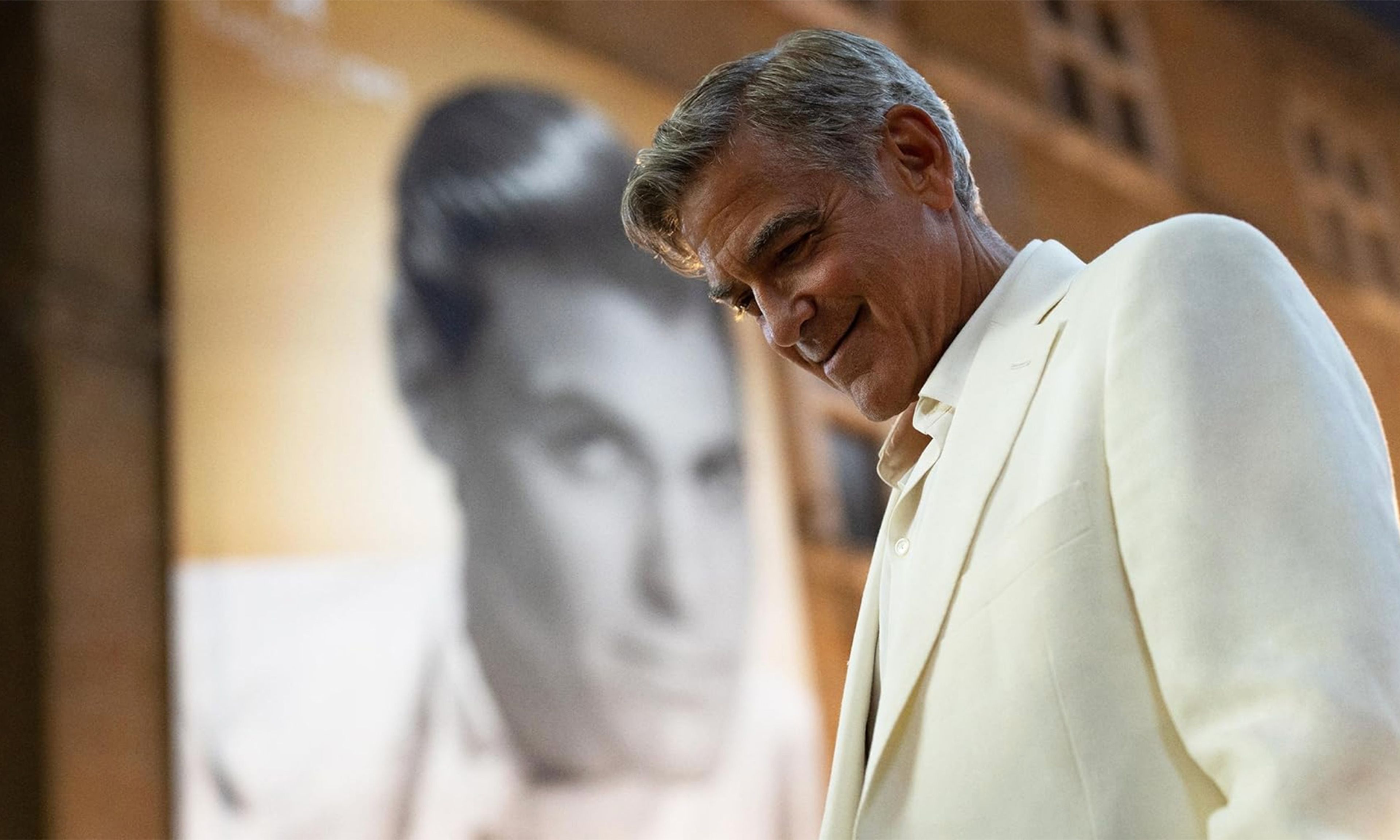
George Clooney in <i>Jay Kelly</i>
A bottle of limoncello, a rustling bag of porchetta-flavored chips, my jet-lagged wife beside me, and our cherubic ten-month-old asleep in the next room. That's how I watched Jay Kelly last week in an apartment in Trastevere, the old bohemian quarter across the Tiber where ochre walls peel like sunburnt skin and someone always seems to be arguing or singing beneath your window.
George Clooney plays the eponymous leading man in a role cut from his own cloth. Jay is a dashing movie star nearing the age when tributes start outnumbering offers, but what haunts him isn't the prospect of his career slowing down. It's that the relationships that were supposed to justify it have thinned into formalities. Wife? Long gone (both of them). His older daughter wants little to do with him. His younger one will see him, but she won't choose him — not when there's anywhere else to be. His father hovers at the margins — never quite proud, never quite absent. His only real companions are the help, especially his manager, Ron Sukenick (Adam Sandler), a man who has dedicated three decades to Jay's career and is only now beginning to reckon the toll it’s taken on him.
When Jay's mentor dies, an old friend from acting school, Timothy Galligan (Billy Crudup), resurfaces to accuse him of stealing his future. The two come to blows in a parking lot. Shaken, the star flees to Europe, chasing his younger daughter under the pretext of accepting a lifetime-achievement award in Tuscany.
Noah Baumbach structures the film like A Christmas Carol by way of Wild Strawberries: an aging man traveling to collect an honor while the ghosts of his past crowd in uninvited. In a flashback, we watch Jay land the audition that made him famous. It was a role that his former classmate initially discovered; he brought Jay along to the audition for support. But Jay got the part. Timothy got a lifetime of what-ifs. These scenes don't offer absolution. They clarify the cost. Consequences, in the film's moral architecture, are permanent. Regret arrives, but restoration doesn't.
The director has long been drawn to artists whose lives tilt dangerously out of balance. I sometimes wonder what Frances Halladay, the endearing young dancer Greta Gerwig played in Frances Ha (Baumbach's finest work and one of the best films of the century), is up to now. In 2012, she was the quintessential Millennial, bouncing between Brooklyn apartments and dead-end apprenticeships. I like to think she made it big in the best sense — that she found love and today is a Park Slope mom whose proudest choreography these days is her kids' school Christmas show.
Jay is everything Frances wasn't. She showed up for the people in her life. He was always somewhere else, being somebody else. That Gerwig, now Baumbach's partner, appears briefly here as Ron's long-beleaguered wife feels less like a cameo than a personal admission by the filmmaker.
Some critics have played the world's smallest violin for Jay's problems. Fair enough. This is a man who wouldn't recognize a TSA line. But his failures aren't unique to A-listers. Most of us aren't movie stars being pulled to exotic locations, but we have our equivalents: the phone at the dinner table, the Zoom call that bleeds into the family vacation, the inbox you check while a child is mid-sentence. Too often we forget — and Jay Kelly reminds us — that home isn't merely a place to which you return. It's a presence you build through daily acts of attention, and those acts are their own quiet forms of heroism.
Clooney carries this weight in the most vulnerable performance of his career and his best turn since The Descendants. There, he played a man blindsided by grief; here, he plays one who constructed his own solitude and recognizes it too late. Sandler matches him scene for scene, even if Baumbach doesn't quite give him enough room. Ron is the one who always showed up — for Jay, not himself. He lost another client because his life orbited someone else's sun. He missed his own daughter's games because the actor needed him on set. "When I look at you, I see my whole life," Ron tells him. It's not a compliment.
The debt to Federico Fellini’s 8½ is unmistakable. Jay drifts through railway carriages and sun-bleached villas with the weary grace of a late-period Marcello Mastroianni, glamorous but gutted. In one scene, he stares into a mirror and repeats his own name after those of screen legends: Clark Gable. Cary Grant. Jay Kelly. Is he willing himself into the pantheon, or wondering if he belongs there at all?
The film has its longueurs. The train ride meanders, subplots evaporate, and some beats serve the thesis more than the man. Would a Hollywood icon like Jay — even one desperate for human connection — really invite a train car full of strangers to an awards ceremony? Clooney's natural likability also cushions the blow more than it should. A harder film would have shown us the hollow where Jay's soul used to be rather than the regret that's moved in to furnish the space.
Still, the ending earns its power. At the award ceremony, Jay watches a montage of his greatest roles (Clooney's own highlight reel) and feels nothing beyond the faint recognition of a stranger who shares his face. But what finally breaks him is the home video that follows: his daughters as children, performing a backyard play for an audience of one who left early because he thought he had somewhere more important to be.
In the opening scene, he asks his director for a second take. "Can I go again?" Now, he stares past the camera into something no one wants to see and repeats the line. But life doesn't work that way. Children grow up. The moments you miss don't wait in the wings for you. They just disappear.
The morning after, my wife and I took a Trenitalia to Florence. As the Umbrian countryside blurred past, I thought about Jay's Italian journey, chasing his daughter through these same hills while mine slept in my arms, her small fist curled around my finger.
We hurried back to Rome after brief visits to Santa Croce and Il Duomo. I had an invitation to attend the first-ever Sergio Leone Award that evening. Italian film luminaries, collaborators of the maestro himself. Exactly the kind of night I would have dropped everything to chase a year ago.
Only this time, I stayed in with my family. Lucia won't remember that night. She wasn’t even awake. But I will, and, if I’m lucky, maybe one day she'll be glad I didn't go.
Jay Kelly would understand.
https://www.youtube.com/watch?v=I8GbcVkqZwQ

About the Author
A veteran of political campaigns, Giancarlo Sopo is a cultural writer exploring the intersection of cinema, politics, and the conservative imagination. In addition to National Review, his commentary on culture, aesthetics, and public life has been featured in IndieWire, the New York Times, and CNN. Follow him on X (@giancarlosopo) and Letterboxd.
Featured Tags
Advertisement
Advertisement



Comments