LACMA: A Star Is Born, Spotted Crossing Wilshire Boulevard
Written by Brian T. Allen
The Los Angeles County Museum of Art’s soon-to-open new building is an epic story in itself.
Share this story
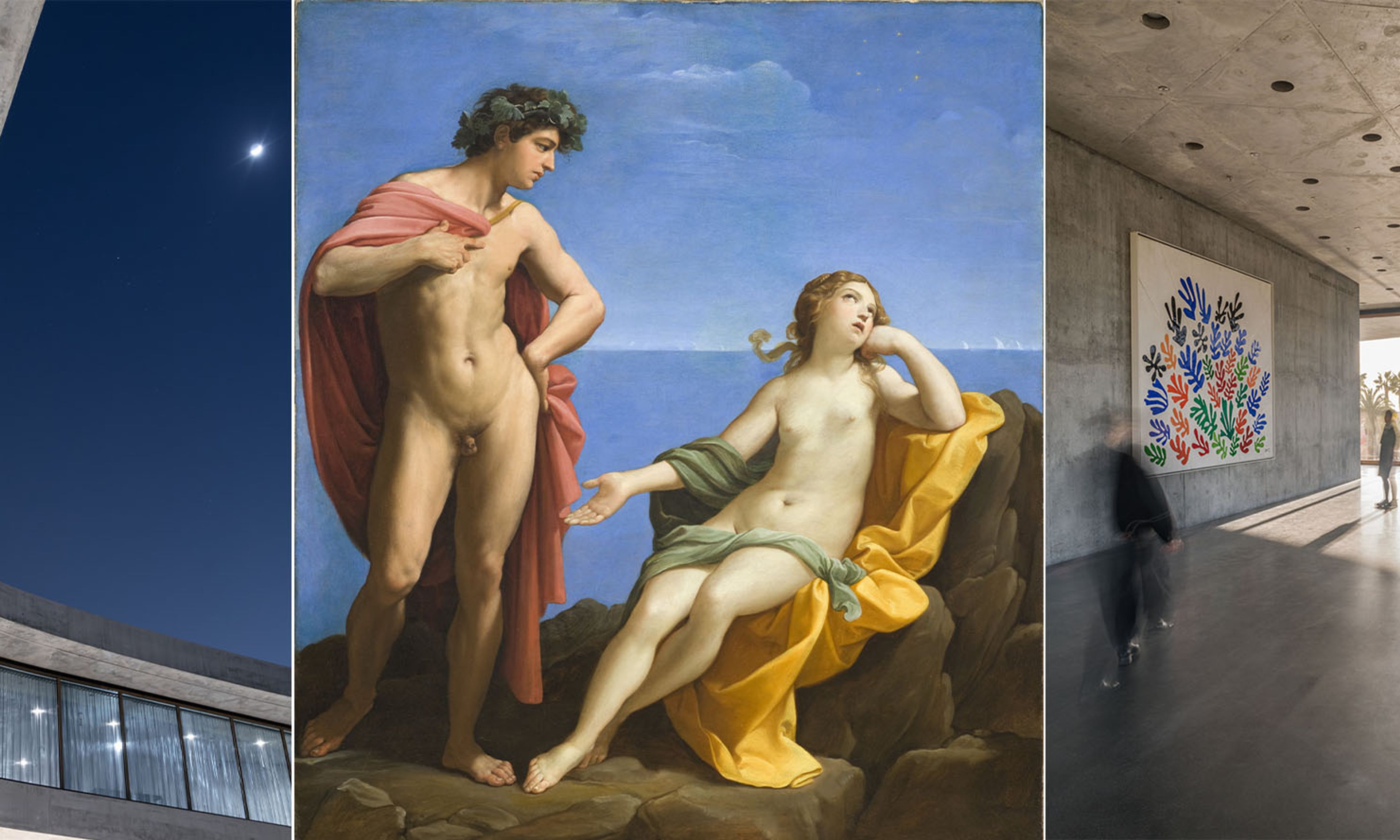
<B>Left</B>: Exterior view of the exhibition level at night. (Courtesy David Geffen Galleries at LACMA, photo © Iwan Baan) <B>Center</B>: Guido Reni, <i>Bacchus and Ariadne</i>, c. 1619–1620. (Los Angeles County Museum of Art, photo © Museum Associates/LACMA) <B>Right</B>: View from the exhibition level toward Resnick Pavilion and BCAM with Henri Matisse’s <i>La Gerbe</i> (1953) at left. (Courtesy David Geffen Galleries at LACMA, art © 2012 Succession H. Matisse/Artists Rights Society N.Y., photo © Iwan Baan)
I don’t go to press previews for exhibition openings, since spinning is wasted on me. I’d rather visit in stealth, chameleon that I am. But the preview for the new LACMA -- more precisely the Los Angeles County Museum of Art’s David Geffen Galleries -- was exceptional. The $750 million concrete, curvaceous space, with 347,000 square feet overall and 110,000 square feet for galleries, has transformed one of our great civic and encyclopedic museums into an array of boutique galleries, elegant and gorgeous. The new building is three football fields long, sweeping from the La Brea Tar Pits across Wilshire Boulevard not far from the Petersen Automotive Museum. The Screen Actors Guild and the Academy Museum -- as in Oscar -- are a block away. So is LA Fitness. There are only so many Hollywood parts for blobs. In more ways than mere location, the new LACMA is very L.A.
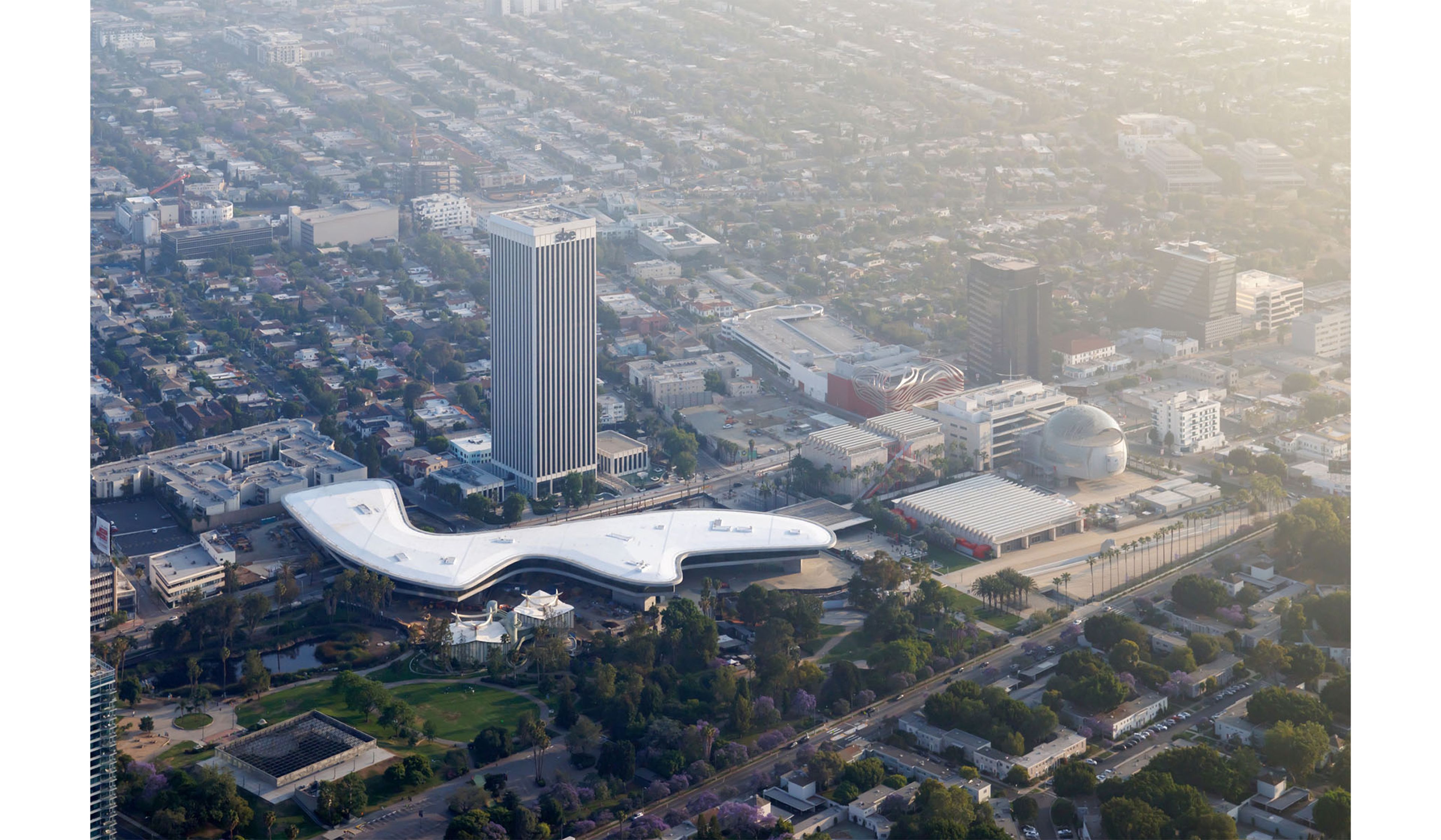
The architect, Peter Zumthor, who’s Swiss, 83 next week, and Michael Govan, LACMA’s director, together created a building that spans ages, looking primeval and at the same time fresh and glamorous. I didn’t think LACMA would ever get it done.
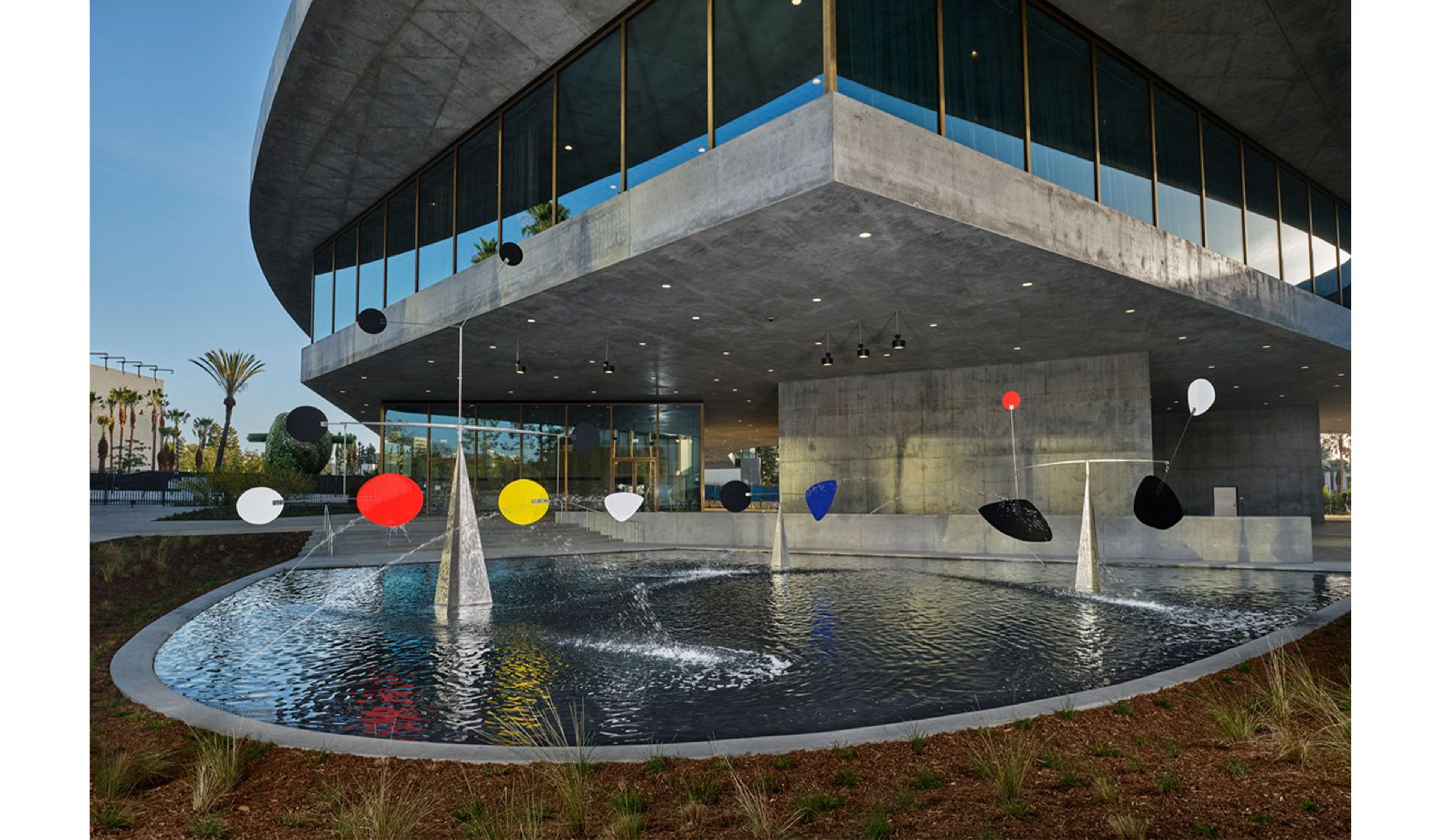
The galleries, all on one floor, are elevated and accessed by stairs or elevators from attractive plazas. Even before we go up, we see outdoor art. It’s California. People are happy to linger over art amid the sea breezes. The Cantor collection of Rodin’s bronzes rises above drought-resistant grasses in its own parklike space near one entrance. The Calder sculpture, Hello Girls, made when one of the old LACMA buildings opened in 1965, is in a fountain by the outdoor café and the entrance to the education center. Cantilevered above it is one of the Geffen galleries. Reflections from the water below it dance on its concrete base. Jeff Koons’s Split-Rocker, a 37-foot-tall living sculpture with 45,000 plants, is at one end. Pedro Reyes’s giant volcanic rock sculpture, called Tlali, Aztec for land or soil, sits by one of the entrances and is already popular. There’s more, and more will come.
The exterior does not, as I'd feared, look like an airport terminal. And it doesn’t look like it’s extraterrestrial or a giant concrete creepie crawler from the tar pits next door. It’s human-scale. The galleries sit on ten piers with long external staircases, so the building, 30 feet above us, feels as lofty as a palace but also grounded. It’s suggestively serpentine on one side -- Hogarth called the form the Line of Beauty -- and it looks tranquil and even intriguing. A serpentine line suggests a meandering journey. The other side is curvy or busty or amoebic, however you look at it. Viewed by drone or from the plaza, it looks organic. It seems at home, too. Sleek mid-century modern and Art Deco thrived in Los Angeles, as do the far newer civic ramblers like the Getty and the Disney Center.
The visitor never feels fully inside, since views through floor-to-ceiling glass make an indoor-outdoor space that suits Los Angeles. Sheer metallic draperies filter light when that’s needed. Seen from outside, they shimmer. The roof’s overhang enlists shadows as the day passes. Darkened galleries for the most light-sensitive objects create drama.
LACMA’s main talking points about the galleries are their free-flowing, un-directional yet immersive character and the arrangement of art not strictly by chronology or school, as nearly all museums do, but by theme. There are no hierarchies by national school, place of origin, or media. There’s no grand façade, and there’s no back of the bus. And the concept of a more or less fixed arrangement of the permanent collection is as outdated as those matte painted backgrounds in silent pictures. Art in the galleries will rotate and often, as will gallery themes. “Amoebic” describes a shape but also a philosophy. Those little darlings morph for a living.
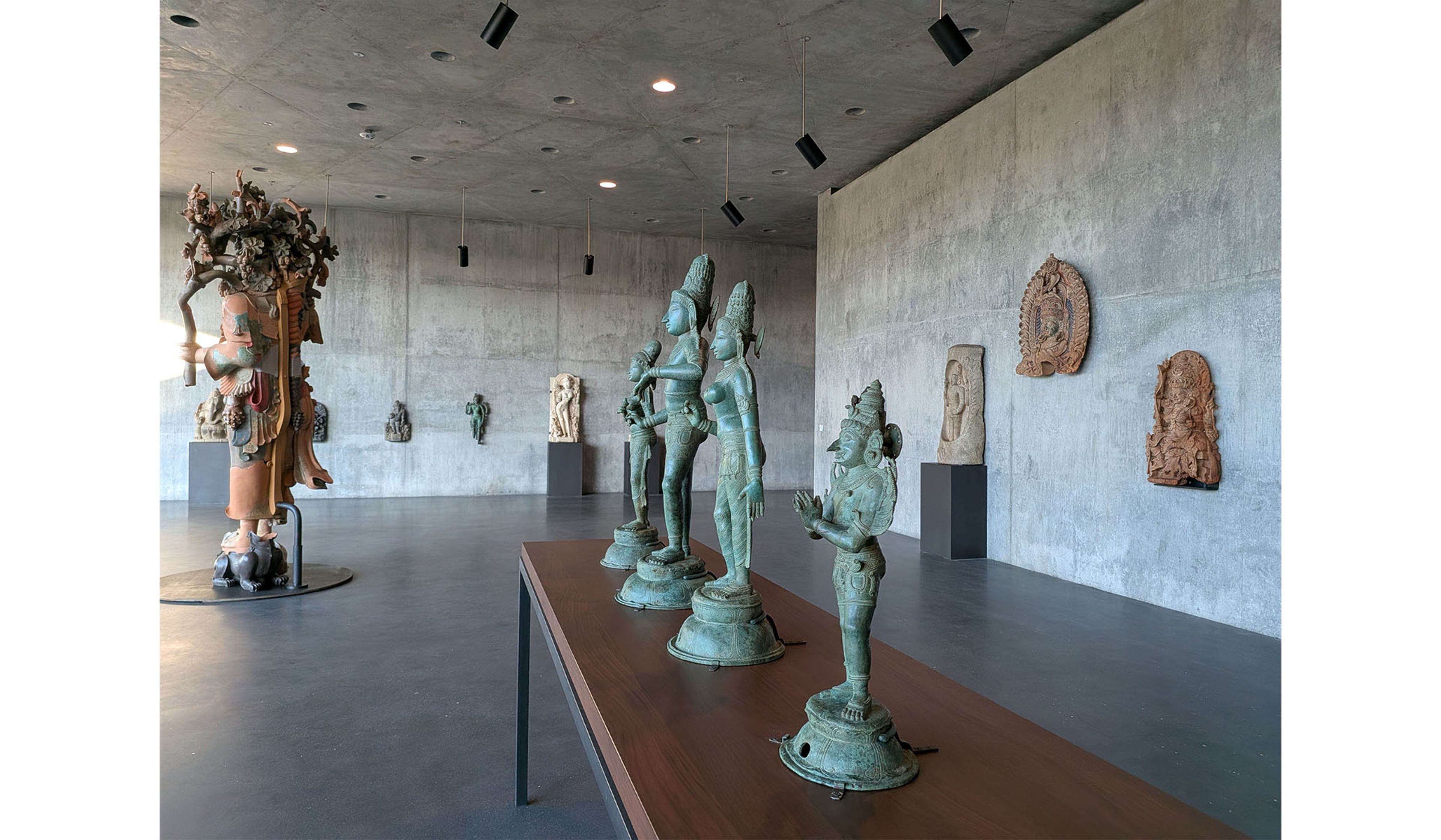
There’s no architectural push and pull guiding the visitor to follow a particular route. I took an elevator that landed me steps from spaces for Spanish colonial art, old Korean porcelain, ninth-century Rajasthan religious sculpture, and Japanese screens. It’s easy to get lost, but the goal is to encourage wandering -- the curved shape of the building promises a good meander.
Galleries are immersive in different ways. The Japanese screen space displayed water scenes. In Japanese visual culture over centuries, water embodied impermanence -- shifts in mood and atmosphere -- and there I was, in a small, dark space, looking at water scenes and feeling not wet but at one with water’s energy and rhythm.
LACMA has done something I did and that I wish other museums would do. They’ve removed most of the cases from sculpture and ceramics. These objects are now unmediated by plexiglass, glare, hardware, and bases. What a difference it makes in pulling people in and uniting them with the art. These objects are bolted, but guards have to be Argus-eyed. I wonder whether in-the-raw display is possible in a big city.
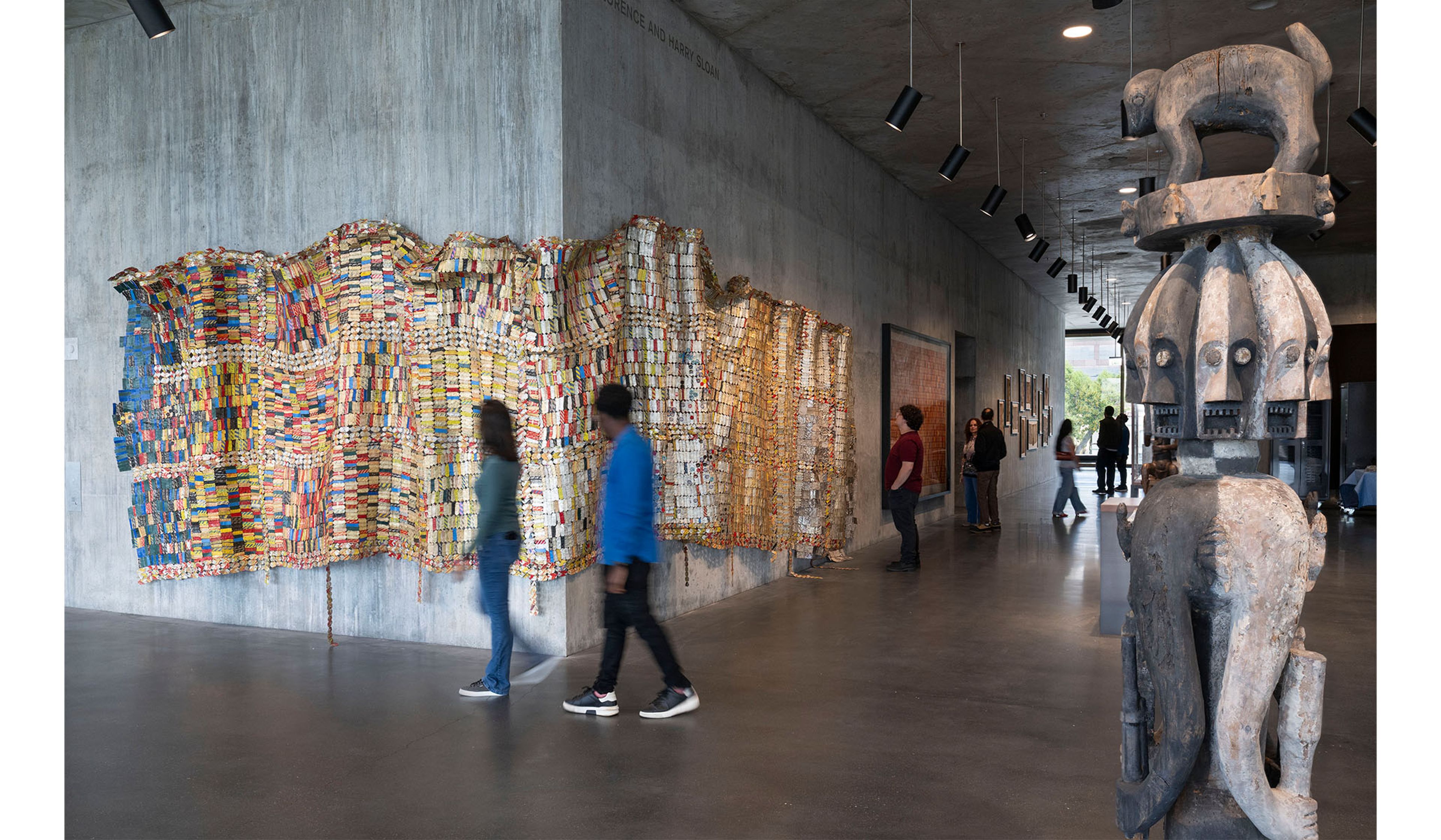
In most galleries, there’s an anchor object to pull us in, usually a sculpture, such as Dora De Larios’s 8-foot-tall stoneware and porcelain Earth Goddess (2009), which is in the middle of a section on ancient sculptures from Asia. De Larios is Mexican but fascinated with goddesses in many cultures and religions. Fading Scroll (2007), by Ghanaian artist El Anatsui, wraps majestically around a corner. The Buglioni cousins’ massive terra-cotta Buonafede Nativity, from 1520 or so, and an unusually bombastic Christ on the Cross, by the Master of the Fiesole Epiphany, from the early 1490s, compete for top dog in the Grandeur in Sacred Spaces gallery. A space called Classical Revivals is packed with sculpture, American and French mostly but also ancient. We feel we’re among company. On the walls are two Thomas Cole Italian pictures from 1845 and a Grand Tour portrait, from 1758, by Pompeo Batoni.
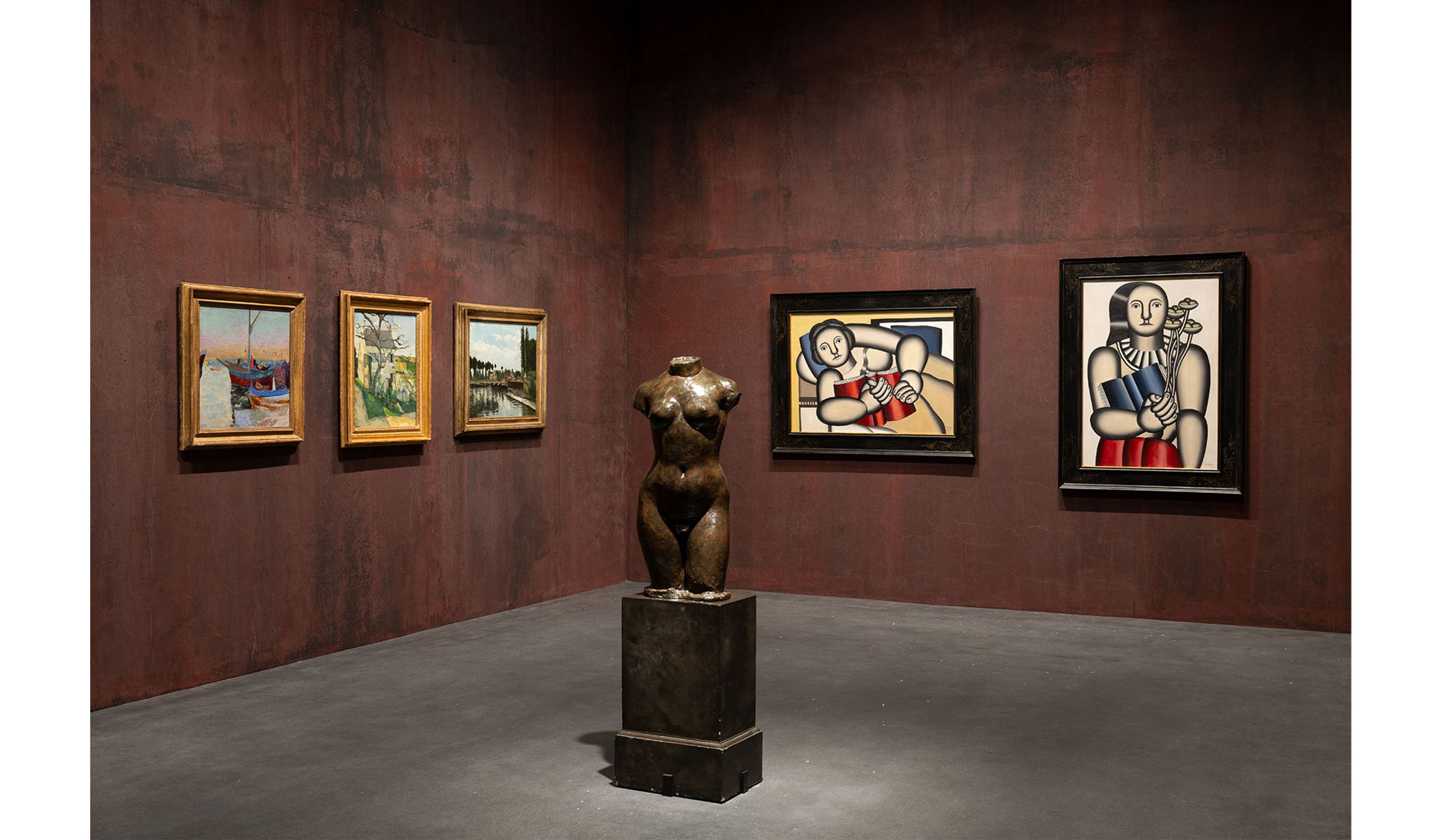
Traditional art history displays? With a few exceptions, they’ve gone the way of the tar pits’ giant ground sloths. A Dutch Old Master gallery swathes us in clouds, cows, and flowers; The Raising of Lazarus, an early Rembrandt; and a burgher portrait by Hals. The concrete walls are painted blue, so it’s all very cuddly. All the art is from the Carter Collection, a gift to LACMA from a past museum-board president that’s to be kept together, so it’s a straight art history gallery. Another is Jerrold Perenchio’s bequest of mostly French art from the 1870s to the 1930s, Manet and Monet to Léger and Magritte. It’s linear, more or less, but offbeat, with a chess board designed by Max Ernst in the middle of the gallery.
If you want to learn what Mannerism, Baroque, or Rococo art might be, go to the Getty, crack open a book, or go east, young man or woman, to art museums in stodgier places and colder climes. People in Southern California probably don’t go to museums for art history. They go to enjoy art, to contemplate, commune, and escape, but they don’t go for history. The culture isn’t academic. People aren’t rooted in the region over generations as they are, say, in New England. So LACMA galleries now revolve around themes such as car culture, labor and leisure in American cities, how Modernism found a marketplace, heraldry, and turmoil and optimism in Latin America. These are absorbing topics. The theme, for instance, of the Gandhara and Rome: Crossroads of the Classical World gallery -- that’s Gandhara in northwest Pakistan and eastern Afghanistan -- is New Agey, but we’re not in Kansas anymore. We’re in L.A.
There is an overall theme for the Geffen’s arrangement of art, but even that isn’t permanent. The galleries, as a very general proposition, explore networks of exchange around the Atlantic Ocean, the Mediterranean Sea, the Indian Ocean, and the Pacific.
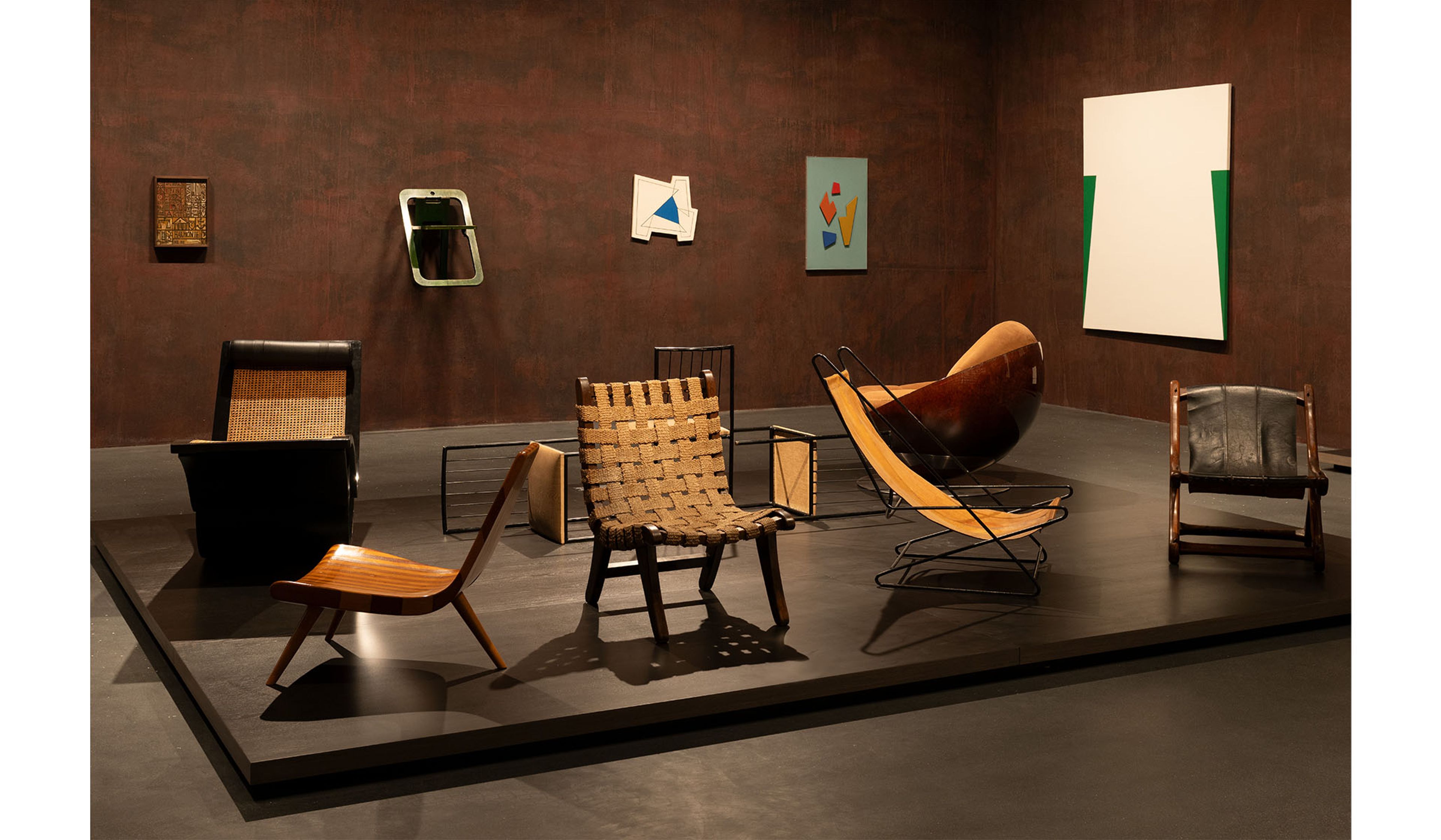
Each water feature has a quadrant in the Geffen building. Each washes up on many shores. For the Pacific, there’s a good gallery on silver mined in South America that powered the Spanish acculturation of much of the Western Hemisphere. Andean textiles, Polynesian feather art, the Japanese screens I liked so much, California plastic art, and Ruth Asawa sculpture from the 1950s are in the mix, too. Does it work? It doesn’t flop and is so subtle that I wasn’t aware of the ocean theme until I saw Andrea’s Gursky’s sublime 8-by-11-foot aerial photographs of oceans from 2010.
I’m in awe of what the museum has done, its collective courage, doggedness, grace under pressure, and superpower juggling skills. For a building of LACMA’s size, Zumthor was an extraordinary -- and risky -- choice as an architect, since he’s never done one remotely as big. He’d also never worked in the United States, and he’s anti-glitz, while the museum is in flashy, celebrity-mad Los Angeles. He lives and works in a little town in Switzerland. His shop is small and he’s detail-oriented, having been trained as a master cabinetmaker. In his speech at the press preview, he spoke about living at the base of Father Mountain near Basel. Zumthor looks like Father Mountain, tall, elderly, reserved, laconic, and imperturbable. He’s so not L.A. That’s part of his appeal. He’s enigmatic and a very different kind of strong, silent type. He’s the bricks-and-mortar, or cement-sand-and gravel, version of slow food. He describes his style and philosophy as less minimalist and more back-to-nature, back to basics, back to architecture of human scale that looks made by human hands, as was much of the bespoke concrete forms at LACMA. Govan wanted him from the start.
Govan, a once-in-a-generation culture leader, was, of course, driving the project. He was offered the job of LACMA director in 2006. He’d been director of the Dia Foundation for a while, and I was a new museum director, but I knew him through Williams, where we both studied art history. I told him he’d be crazy to take the offer. LACMA was notoriously dysfunctional, in part because Masters of the Universe loom large among its donor class. The directorship was a revolving door.
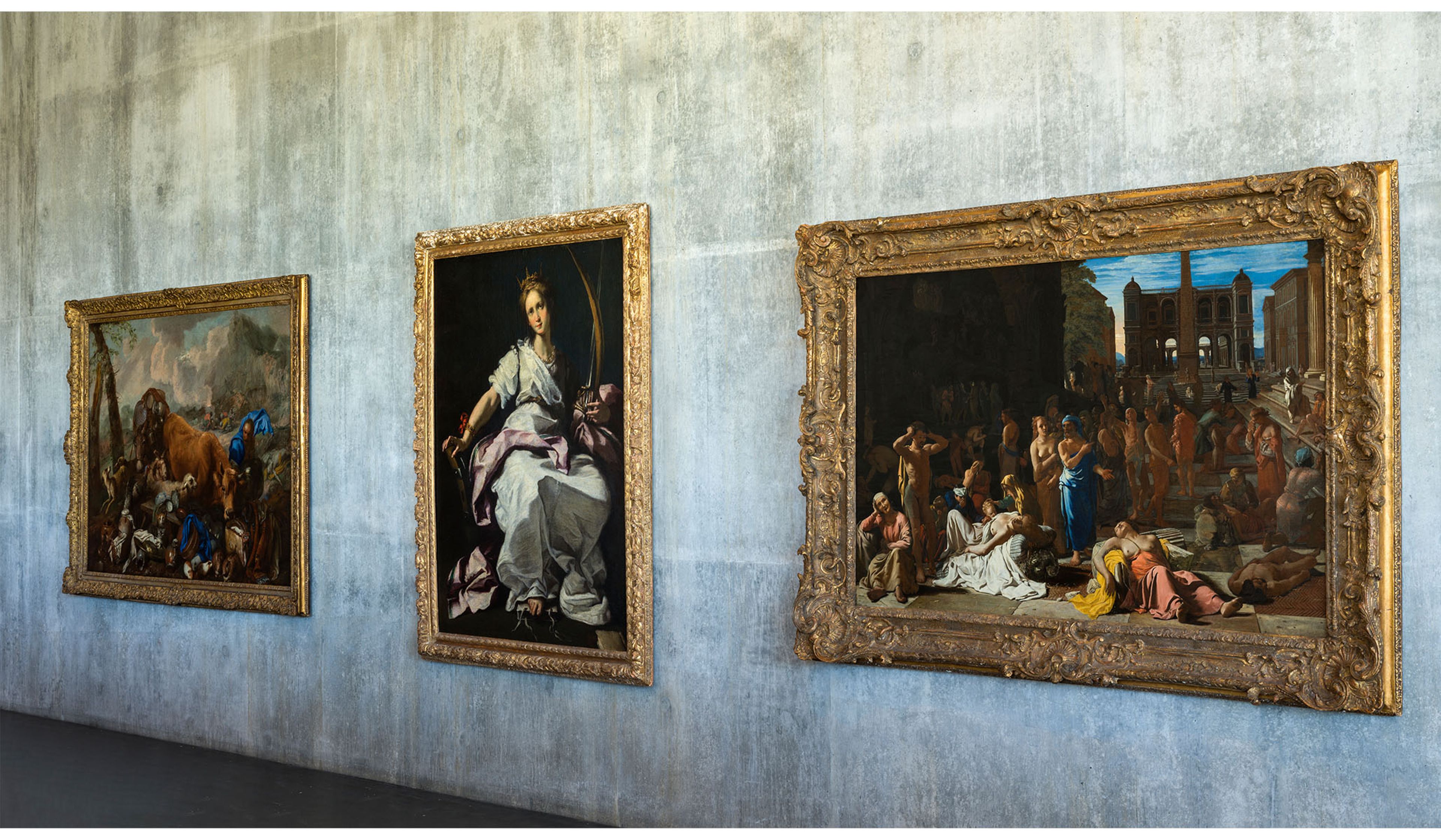
Zumthor’s design was very, very contested for its concrete and for its unorthodox sweep across Wilshire Boulevard. Lots of people were fond of the old LACMA buildings demolished for the new LACMA. They weren’t stunning, but they were adequate. That the Geffen galleries are a bit smaller than those in the old buildings correctly grated. What LACMA standpats hated the most was the abandonment of their encyclopedic museum. That’s the big civic museum that has departments from nearly every era in human creativity, top-notch objects in each department, depth in areas, a culture of scholarship and teaching, and separate galleries for movements and national schools.
The Boston MFA, the Met, the Philadelphia Museum of Art, and the Art Institute of Chicago are encyclopedic museums. L.A.’s old WASP and Jewish monied class, mostly gone now, saw LACMA as the West Coast’s version, which it is, though I’d add “lite” as a modifier. It became a cherished symbol that California, much derided by New York culture snobs as a cow town, finally had heavy-duty art and couth.
The collection is still intact, with about 150,000 objects, from prehistoric rocks to paintings so new that the paint’s still wet. Govan eroded the traditional curatorial departments. At the new LACMA, fiefdoms are gone. Each Geffen gallery is a collaboration among three, four, or five curators from different fields. None look like a bland committee project. This is a good thing and has been happening more and more all over the country. What’s radical is the dilution of the concept of a permanent collection where a fixed group of anchor objects and old favorites are always on view and in the same place. The icons become part of the identity of the museum and ingredients in the civic pride that people feel from having art treasures on view. These icons are theirs. At the new LACMA, good luck finding an old favorite. It could be anywhere, or, however much loved it might be, it could be in storage.
Govan wanted to build satellite art spaces throughout Los Angeles County to bring more art out and to put it in neighborhoods. Here, his past explains something. He was the deputy director of the Guggenheim for years and an acolyte of Thomas Krens, its visionary director. It was during Govan’s time there that the Guggenheim developed its Bilbao branch and conceived its Dubai museum, which still hadn’t opened. Krens was also working on a Guggenheim branch near Ground Zero in Manhattan. Will Govan’s satellites happen? I doubt it.
Many will be infuriated that Govan turned LACMA from a museum -- a repository of history and an art history classroom -- to an experience, an art space gone IMAX, with many galleries having as much of a decorator’s touch as a curator’s. Praise the Lord, though, gallery interpretation is short and sweet, almost always one thematic panel in a gallery, with dogma-free and didactics-free labels for every object. And, wow, what a shock some will experience when they learn that we Americans didn’t invent slavery. It’s barely mentioned. I think American art is well treated. LACMA’s fabulous Sargent double portrait and its Eakins wrestlers scene have places of pride.
The future? Of course, locals and tourists will visit once or twice for the building’s novelty. It’ll be programs, usually exhibitions, that keep them coming. Usually museums with new, pricey, statement homes soon land in a hangover phase. At one point in his speech, Govan dropped a pregnant phrase: “when the debt’s paid off.” LACMA has $617 million in debt to be paid off over 30 years. Its credit rating from Moody’s is A3, not bad at all. It’s got county support and a strong donor base. It won’t be beggared even if fancy, custom-made systems start behaving like pedigreed terriers and function only when they feel like it.
In our vast museum culture in America, there’s plenty of room for innovation. The new LACMA has its own eccentricities, but it’s a relief to see that our conformist, risk-averse culture can still yield something so distinctive and so real.

About the Author
Brian T. Allen is National Review’s art critic.
Advertisement
Advertisement

Comments