Share this story
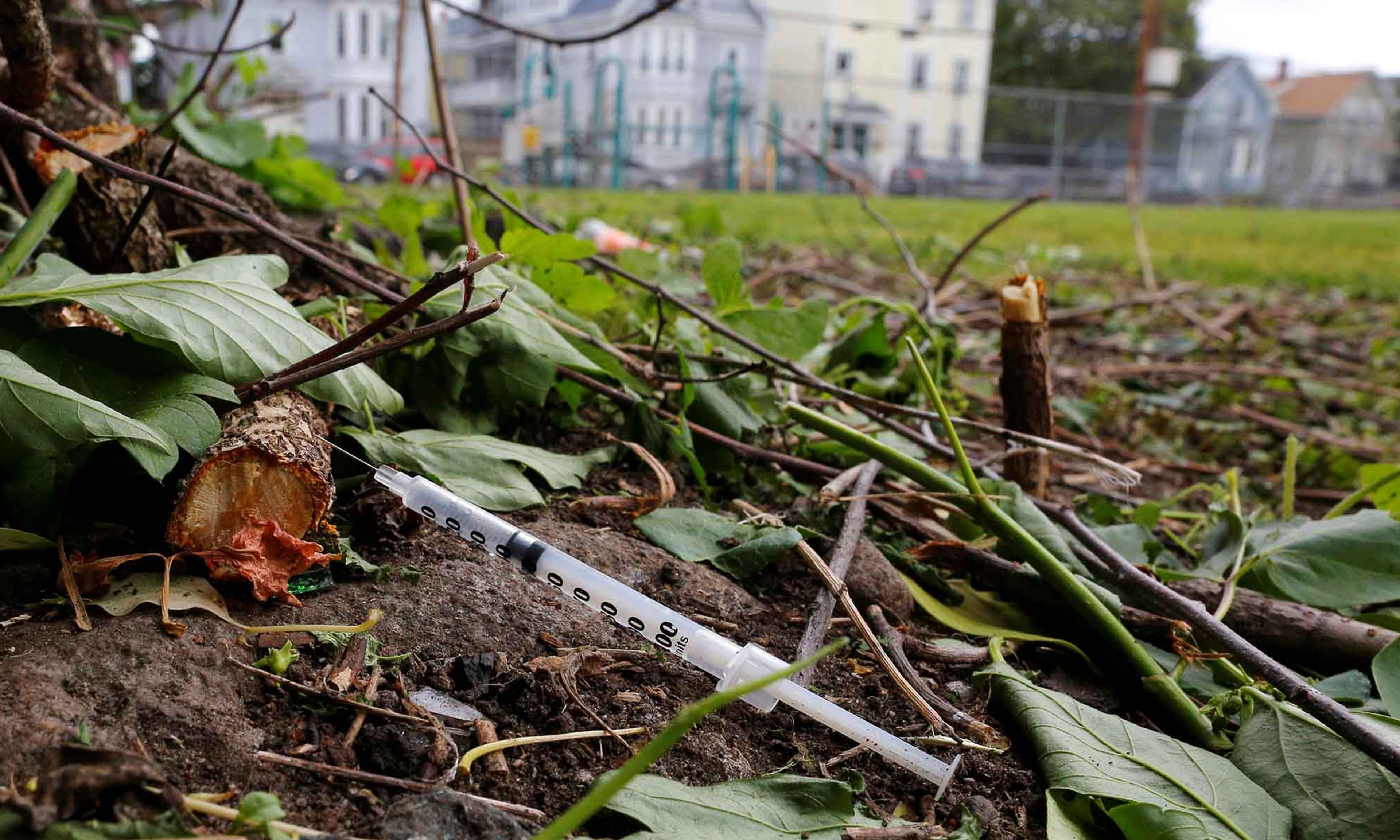
A used needle sits on the ground in a park in Lawrence, Mass.
Dispute on Drugs
Michael Brendan Dougherty argues for continuing the war on drugs (“A Just War,” October 2), but his analysis confuses the effects of drugs with those of prohibition. Outlawing drugs plausibly has some effect in reducing use, but it makes use far more dangerous. And prohibition ensures violent black markets, corruption, interference with medical uses of drugs, racial profiling, and reduced respect for the law.
Legalization has had a promising track record. In a study of 28 states that liberalized marijuana laws, my co-authors and I found little impact on youth drug use, suicides, or crime, a result supported by many other researchers. Legalization has not fully eliminated the underground market for marijuana, but that is because legalization is incomplete: Excessive regulation, taxes, and continued federal prohibition keep much of the market underground.
Dougherty is right that accidental overdoses have continued to increase as states have legalized marijuana; that reflects continued prohibition of opioids. Moreover, most research finds that liberalizing marijuana laws does not increase opioid deaths.
The vast majority of overdoses come from opioids and reflect users’ accidentally ingesting an overly potent dose, as in the tragic story of Melanie Ramos. Legalization would help prevent these deaths because legal drugs have labels indicating potency. Indeed, criminalization incentivizes high-dose alterations, as smugglers can more easily transport concentrated products.
Finally, Dougherty argues that ending the war on drugs lets drug dealers off the hook. That is a separate question; legalization need not imply pardoning past offenders. Going forward, however, legalization would minimize criminality and allow safer drug use.
Jeffrey Miron
Harvard University and Cato Institute
Michael Brendan Dougherty responds: I thank Jeffrey Miron for his letter. He is correct that violent black markets and corruption exist under the prohibition of drugs. But, as was documented in the article, legalization efforts have not meaningfully shrunk the black market. Arrests for marijuana-related felonies went up in Colorado after a generous legalization. Miron sees this evidence and argues that true legalization has never been tried.
He asks for the legalization of opioids. But during the opioid crisis, we saw how even habituation to the legally prescribed opioids tended to lure users to higher doses until a fatal one was consumed. Unlike alcohol users, who can achieve satisfactions and stupefactions of drunkenness long before alcohol poisoning becomes a danger, hard-drug users end up seeking out fatal doses in the search for the effect they experienced with smaller, nonfatal doses. That’s what makes hard-drug legalization so much more hazardous than the relaxation of the prohibition on alcohol.
The law is justly used to prevent certain forms of morally evil exploitation. We forbid people to sell themselves into legal servitude. States forbid usurious interest rates that make desperate debtors the slaves of predatory lenders. And we forbid the exploitative trade in known poisons.
Correction: In “The End of Medicine,” by Alexander Raikin (October 2), a female physician who was tried and acquitted in the Netherlands was erroneously referred to as male.

About the Author
NR Editors includes members of the editorial staff of the National Review magazine and website.
Featured Tags
Advertisement
Advertisement


Comments