LNG Plant Shutdown Means Greater Costs for U.S. Consumers
Written by Roy Mathews
The explosion at the Freeport LNG facility in Texas couldn’t have come at a worse moment.
Share this story
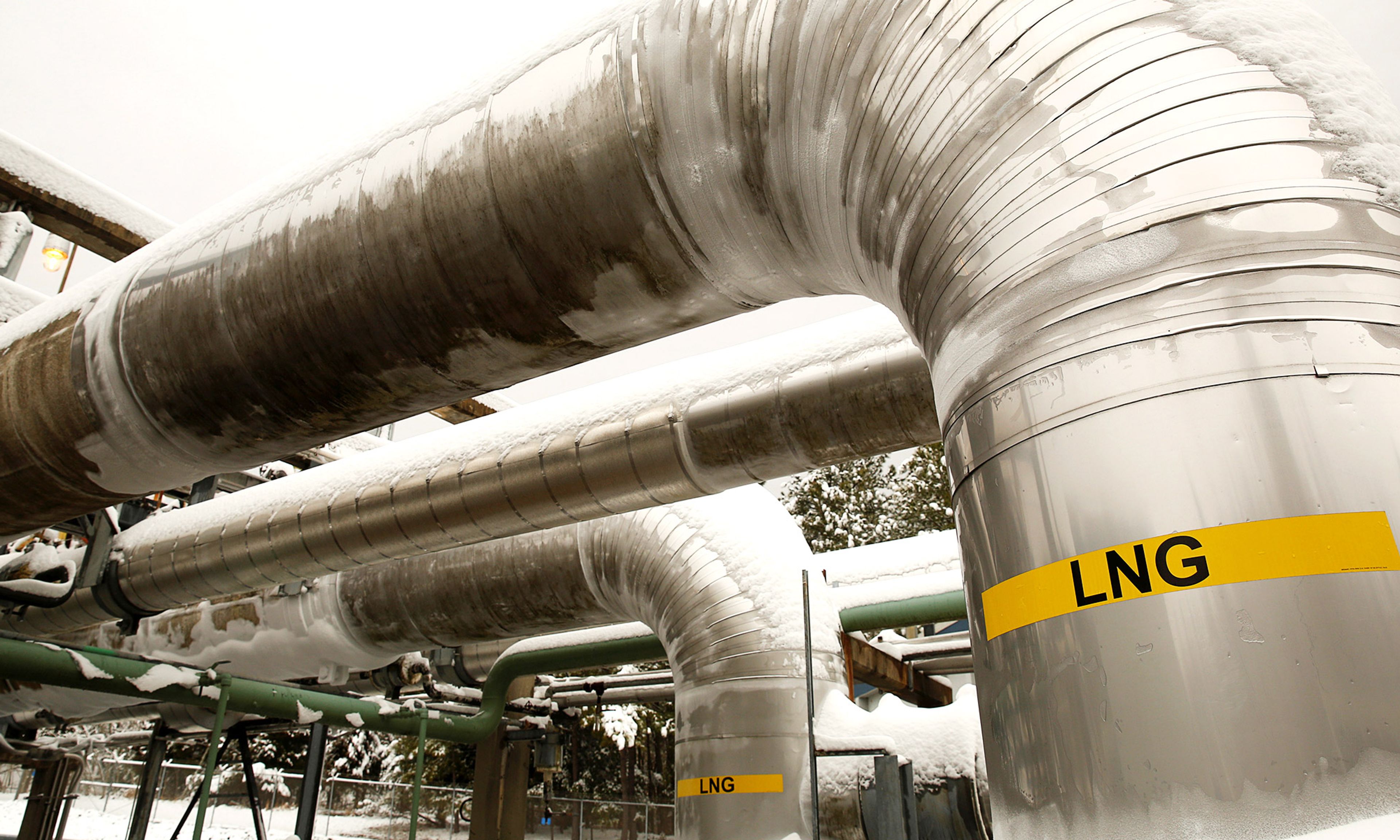
Transfer lines at the Dominion Cove Point Liquefied Natural Gas terminal in Lusby, Md., in 2014.
Last month, an over-pressurized pipeline at a liquified natural gas (LNG) plant in Quintana, Texas, caused an explosion that led to the partial shutdown of the facility. The plant is not expected to be able to return to full production capacity until late 2022.
This constraint and the fact that existing U.S. contracts designate a majority of LNG for export to Europe and China spell bad news for consumers. Amid already elevated fuel and energy prices, we’ll likely see our energy bills jump even higher.
The Freeport LNG plant provides 20 percent of U.S. LNG processing capacity. Its shutdown has immediate impact on the domestic market. The current summer surge in demand is just a precursor to higher prices for U.S. consumers as hurricane season approaches, and winter, too, will lead to a further uptick in demand.
The explosion will mean higher energy prices for U.S. consumers and potential energy shortages. (Current limits on our capacity to produce electricity from coal, gas, and oil don’t help.)
And as the U.S. has been a world leader in LNG exports since 2016, the Freeport shutdown impacts the global market as well. Any further disruption to critical LNG facilities in Texas and Louisiana will contribute to a further tightening of global supply.
European countries that once touted themselves as leaders in the green energy movement are already reactivating coal power plants amid LNG supply constraint worries. Germany has 45 gigawatts (GW) of coal-power capacity and the coal plants could provide a 10 GW boost to electricity production as gas reserves are saved for winter. Coal plants in the Netherlands were also projected to stay online longer than initially planned.
Then there’s the geopolitical element. LNG export terminals like Freeport are trying to keep up with a global energy crunch as countries seek alternatives to Russian energy. Currently, U.S. LNG exports are mainly destined for Europe and China.
These export demands, along with fears of another curtailment of energy supplies, have caused natural gas prices to rise 90 percent since the beginning of March.
Meanwhile, the U.S.’s level of stored gas is 16 percent below its five-year-average. Supply is short, yet domestic demand surges.
With the Biden administration currently engaged in pushing a renewable-energy transition and heading off efforts to increase production capacity, natural-gas prices are projected to remain elevated. These price hikes will be passed on to American consumers in the form of higher power bills and potential lag in energy supply as rates adjust.
Finally, since the Covid-19 pandemic resulted in countries scaling back production to mitigate losses, industry has had to ramp up production capacity again as demand has surged. The addition of six new oil and gas rigs in early May 2022 could have provided additional production capacity, but the Freeport shutdown has decreased their impact immensely. Companies have repeatedly pointed to difficulty in building new pipeline networks due to inflation increasing the costs of building materials and the Biden administration discouraging investment in oil and gas. Particularly in the Permian Basin in West Texas, which produced 19 percent of all U.S. natural gas last year, production could slow if new pipelines are not constructed.
High production costs and lawsuits have hampered the companies’ ability to build these essential pipelines. With the cost of steel mill products elevated 74.4 percent in the last year combined with the oil and gas industry’s labor shortage, costs to build pipeline infrastructure remain high. Even when materials and labor exist to construct pipelines, companies will still face lawsuits. Several pipeline projects in the Northeast are being canceled after costly legal fights. The Mountain Valley Pipeline, which runs from West Virginia to North Carolina, was projected to have cost $3.7 billion, has been delayed multiple times due to legal and permitting challenges and has seen costs elevated to $6.6. billion, despite the pipeline being 94 percent complete.
The Freeport shutdown couldn’t have come at a worse moment. As the Biden administration continues to beg oil companies to increase production after canceling their drilling leases, the Freeport shutdown is another hurdle that will contribute to higher natural-gas prices. Consumers will face higher energy bills and increased costs to the hundreds of products that utilize gas as a feedstock, from petrochemicals to backpacks to mattresses.
About the Author
Roy Mathews graduated from Bates College in Lewiston, Maine, and previously worked at Aii, an energy think tank in Washington, D.C. He has been published in Law & Liberty, The American Mind, and The National Interest.
Featured Tags
Advertisement
Advertisement

Comments