Michigan’s Corporate Welfare Reform Could Be a Model for America
Written by James M. Hohman
The Great Lakes State took great steps for taxpayers this year — and the best could be yet to come.
Share this story
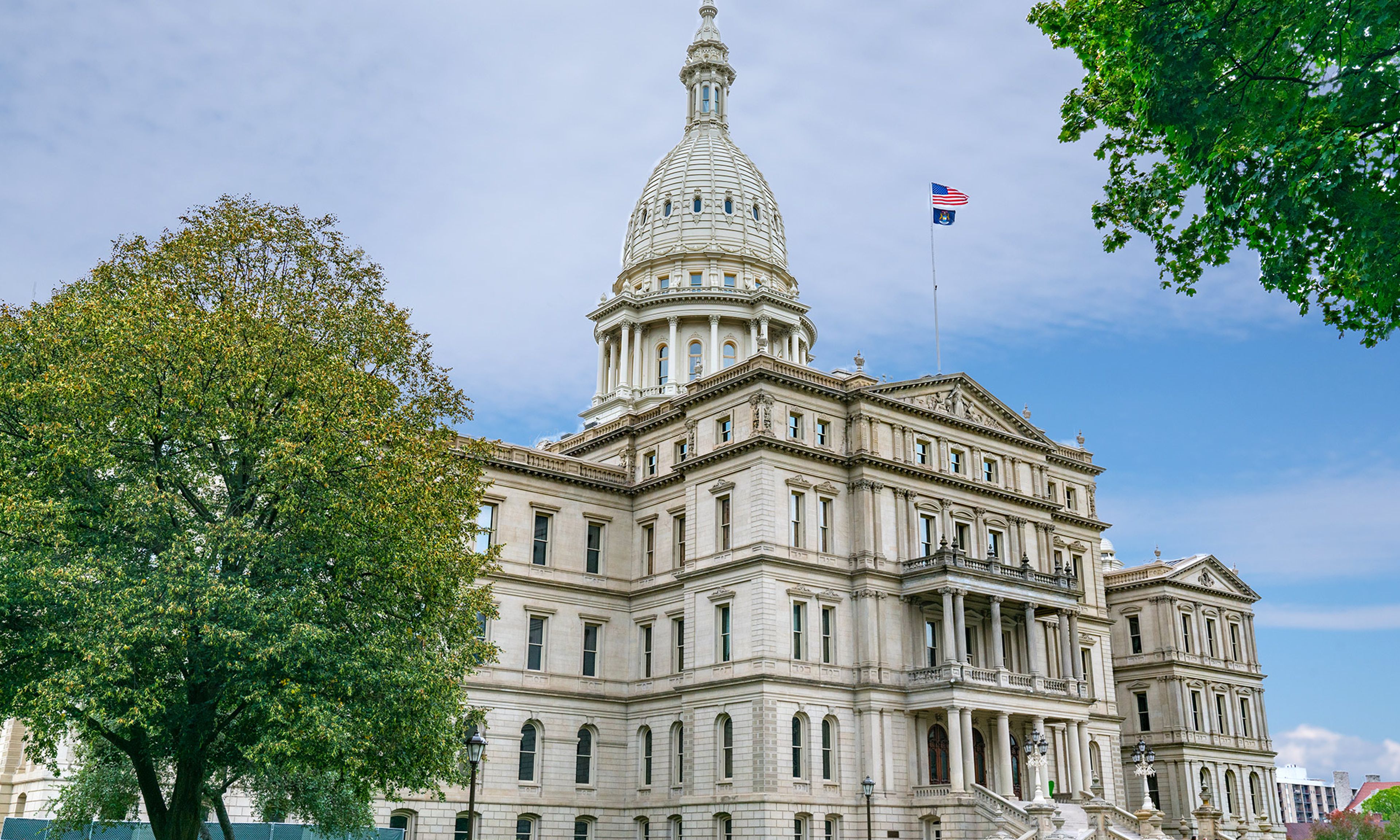
Michigan State Capitol building in Lansing
When it comes to corporate welfare, few states bilk taxpayers more than Michigan. Since 2000, Republicans and Democrats alike have thrown more than $23 billion at politically favored companies, especially the Big Three automakers. But this year, the state did something it hasn’t done in the 21st century: Its lawmakers authorized no new corporate welfare. They also repealed the biggest subsidy program and are moving to reform the giveaway schemes that still exist.
Michigan is moving away from its model of cronyism. Other states and Washington, D.C., should follow its lead.
At a time when federal and state leaders alike are lavishing companies with taxpayer cash, Michigan’s reversal stands out. The state has averaged $930 million in annual corporate handouts over the last 25 years, which helps to put this year’s total of zero dollars in perspective. The repeal of the SOAR subsidy program, which Governor Gretchen Whitmer signed into law in 2021, also eliminates $500 million in earmarked giveaways. That program already spent more than $700 million, yet it created exactly zero jobs — a common theme with corporate welfare programs, since politicians are usually terrible at picking winners and losers. The abject failure of this taxpayer-funded largesse helps explain why Michigan leaders decided to change course.
But the biggest changes could arrive in the new year. Earlier this month, Republican and Democratic leaders in the state House unveiled a massive package of anti-corporate-welfare bills, which they hope to pass in 2026. It’s notable not only its bipartisan nature, but for its sheer size and scope. This legislation represents one of the largest attempts to roll back corporate welfare in American history.
Indeed, Michigan could become the first state in the nation to begin the process of ending corporate welfare altogether. The proposed legislation commits the state to an interstate compact that would prohibit all special-interest handouts. The compact would go into effect once enough states join Michigan in signing up. This idea — which was only created in the past decade — now has gained momentum, with Michigan telling competing states that it’s acceptable to stop distributing taxpayer money to the favored few.
Getting other states to follow suit could take time, so in the immediate term, Michigan’s reforms would make it easier to kill corporate welfare projects before they launch. Currently, state officials are allowed to dole out taxpayer money without telling taxpayers in advance. Lawmakers now want to require the state to give the public at least ten business days’ notice. That gives concerned citizens time to notice and raise almighty hell.
Had this transparency existed in the last few years, residents of the small town of Green Charter could have stopped the state from allocating $175 million to build a Chinese Communist Party–linked battery plant for the company Gotion. Residents only found out about that deal after it was signed, so they had no chance to fight it. Under the proposed reforms, that would never happen again.
Crucially, the legislation would also allow Michigan to tell taxpayers when taxpayer-funded companies don’t deliver on their promises — which they almost never do. In Michigan, battery maker One Next Energy got $70 million on the promise that it would create 2,000 jobs, but it has now closed its facility and laid off almost all of its employees. The state trumpeted the deal when it was announced but stayed quiet when it failed to deliver. The new reforms would force the state to report when a company doesn’t meet its obligations under a corporate welfare agreement. In such a situation, the reforms would then amend the deal to provide less taxpayer support to the failing company — if any at all. This is basic due diligence on behalf of taxpayers.
These are just a few of the pro-taxpayer and pro-fairness reforms that lawmakers have introduced. Does such a sweeping reform package have a real chance to pass? In a word, yes. It starts with strong bipartisan support, including from a member of Republican leadership. While Whitmer hasn’t said whether she’ll support the package, it’s a promising sign that she ended the SOAR subsidy program earlier this year. It’s also good news that she has signed budgets authorizing no new corporate welfare. The governor will be hard pressed to oppose further reforms, especially given the new package’s bipartisan backing.
Michigan is turning the corner on corporate welfare, finally putting taxpayers ahead of special interests and fairness ahead of political favoritism. The handout bonanza has historically been a bipartisan affair, but members of both parties are uniting to say no more. Here’s hoping that what’s starting in Michigan sweeps the nation.
About the Author
James M. Hohman is the director of fiscal policy at the Mackinac Center for Public Policy.
Featured Tags
Advertisement
Advertisement


Comments