Share this story
poco_bw/Getty Images
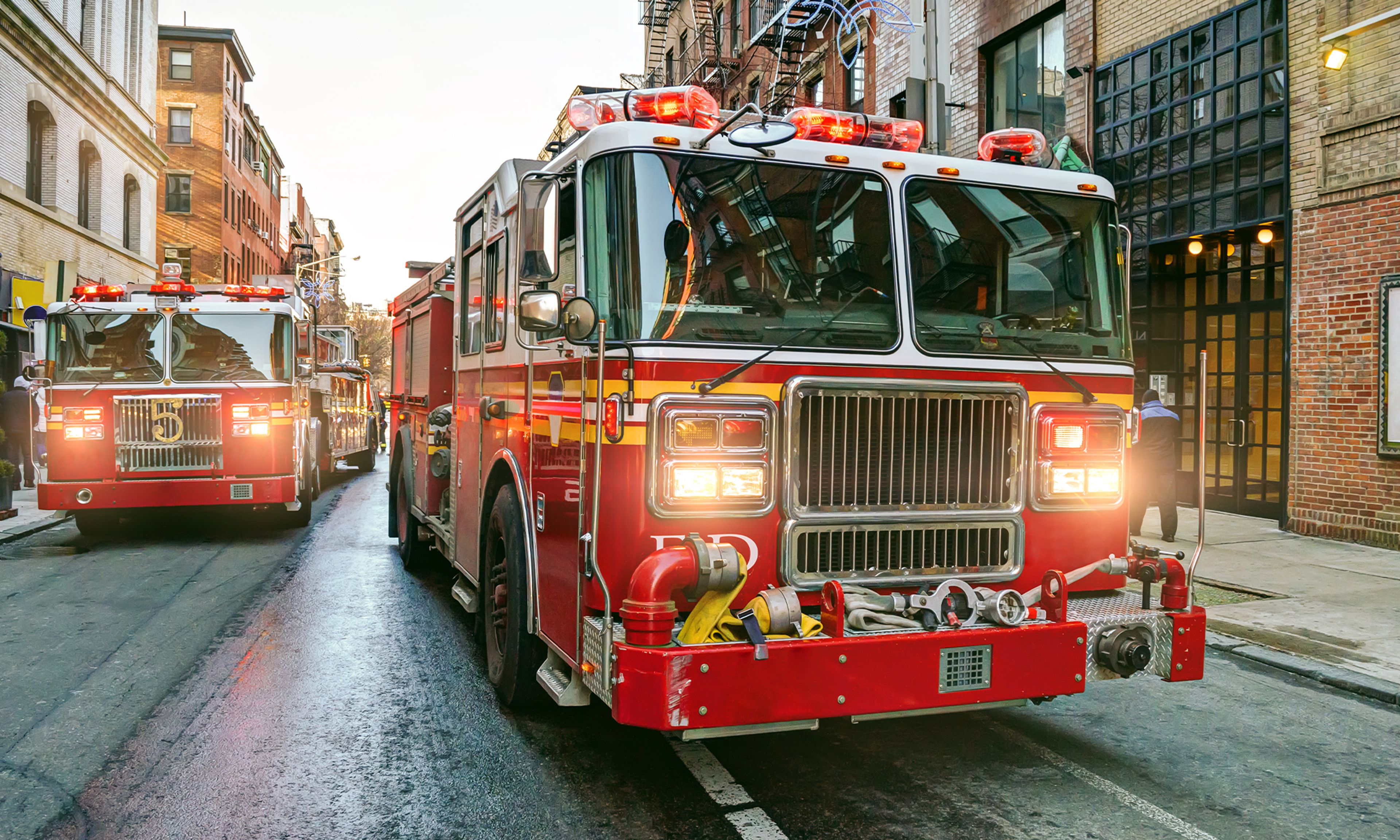
Our upstairs neighbors have kids, so we are used to a certain amount of running around. But the night before Christmas there came loud thumps, as of large objects falling, followed by screaming. I went out into the hall, following the sound to the well of the interior staircase. I heard a child yelling, “Fire!” then a man hurrying downstairs past me repeated, “Fire!” I went back to our apartment and got on the intercom. “It sounds like there’s a fire on the floor above us.” “We know,” said the doorman, tersely.
What does one take away from a housewarming? I grabbed a bag -- idly, from surprise and incredulity. Soon enough there were sirens in the street. There are always sirens there, whether from fire trucks, EMS vehicles, or police cars. As I expected, these sirens tolled for us.
A crew of firemen appeared on our floor. There must have been at least ten, mostly young, all bearing their cumbersome gear -- helmets, pants, tools of the trade. The most prominent tools were the long hoses. They hooked one up to the standpipe in the stairwell and ran it up the stairs to the floor above. The seal, I noticed, was not completely tight, so a rivulet of leakage began trickling downstairs. I would later see the new watercourse, 13 floors below, on the lobby level, headed for the basement. Raised sills prevented it from oozing out onto the hall carpets.
I watched discreetly, keeping well out of the saviors’ way. I asked one question: why do you hook up the hose on this floor, not the floor above where the fire is? Answer: to avoid smoke, which rises rather than sinks. There was no water seeping through our ceiling -- nothing to flee -- and the elevators had been shut off, standard fire department procedure -- no way to flee -- so we sat tight. After half an hour, the firemen began packing up, which took as long as putting out the fire had done. The hoses had to be laid out along the hallway, then folded up. I gave one of the men a bag of Christmas cookies to garnish the firehouse chili.
Days later I went upstairs to see the damage. The residents had decamped to a vacant unit elsewhere in the building. Planks and subflooring were being ripped up, down to the concrete, because water had soaked under everything. The ceiling was black from smoke, with a puckered center like a burnt pizza crust. A Christmas tree had done the work: dry, because long cut; quick burning, because pinewood; really quick burning, because every needle, exposed to air on all sides, becomes an incendiary device.
So much for the drama. The work of repair stretched into the new year, as short Central Americans banged with hammers and picks, sanded and drilled. They might as well have been working on the tympanic membrane. We fled for half a week, returning to the silence of painting.
The hecatombs of Maui and the Pacific Palisades are horrible, but the caveman mind half-expects disaster in the wild: Out There are beasts, spirits, danger. For protection we huddle together. And indeed, brick and stone construction and broader streets have made the citywide blazes of the past -- San Francisco (1906), Chicago (1871), London (1666) -- a memory. (In the Boy Scouts we used to sing a jolly ditty about old Mrs. Leary and her lantern in the shed. We also had another one about the sinking of the Titanic; what did we know?) But death still stalks buildings and the men summoned when they light up. Twelve firemen died on October 17, 1966, when the floor of a burning drugstore on 23rd Street collapsed. There is a memorial to them in the Cathedral of Saint John the Divine. This was the infernal record until September 11, 2001, when 343 fell with the Twin Towers. A statue of a kneeling fireman honors them in Midtown, with an accompanying verse prayer (“. . . if, according to my fate, I am to lose my life / Please bless with your protecting hand my children and my wife”). And every year before, between, and after came losses one by one. (In 2025 there were two, a paramedic and a firefighter.) This is to say nothing of the ordinary city dwellers, consumed or stifled by smoke. Thirteen seniors have perished in the first six weeks of this winter -- a “very concerning statistic,” said the city’s chief fire marshal.
We are lucky.

About the Author
Historian Richard Brookhiser is a senior editor of National Review and a senior fellow at the National Review Institute.
Featured Tags
Advertisement
Advertisement


Comments