New Lighting, a New Roof, and Beloved Treasures Reopen Yale’s British Art Center
Written by Brian T. Allen
But first, a look at some recent history
Share this story
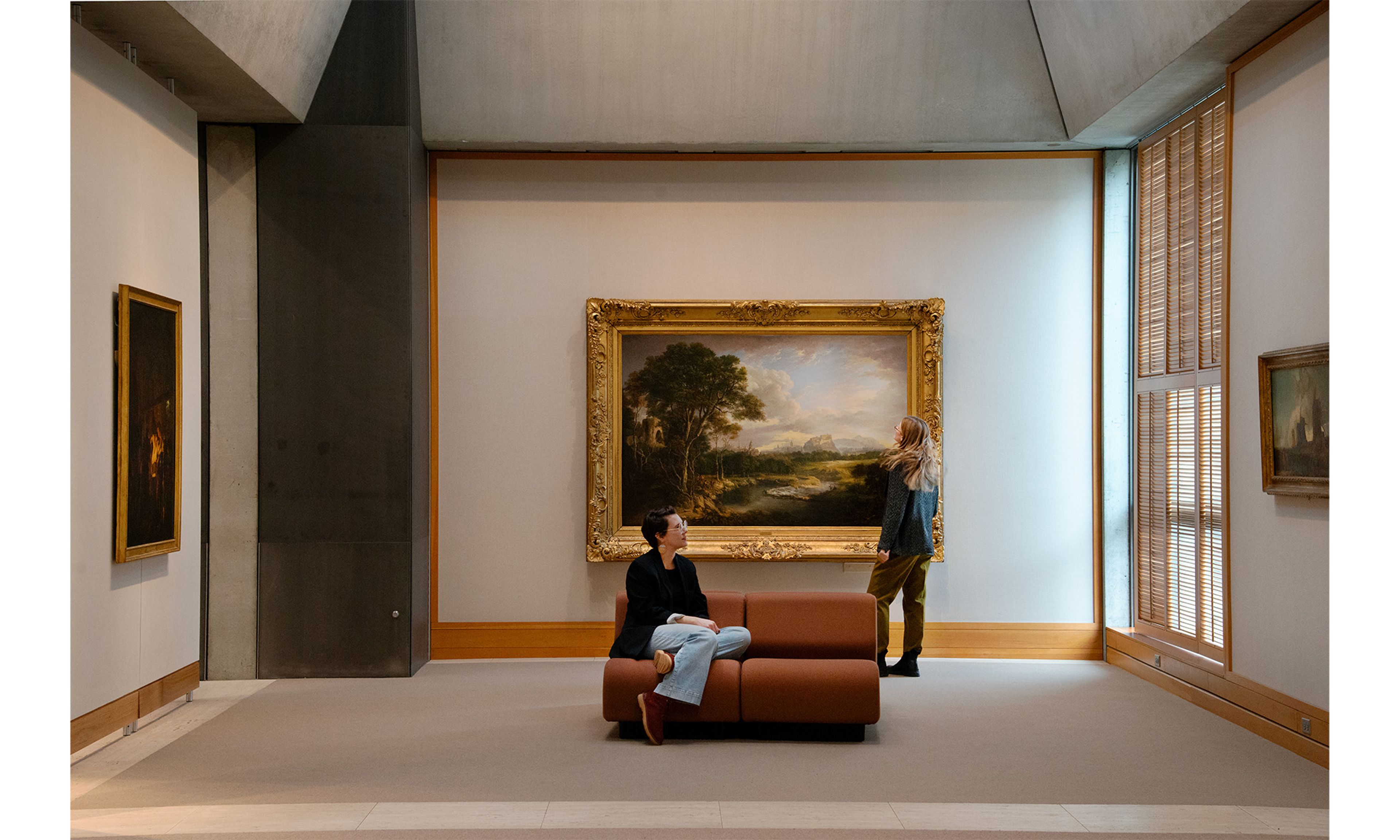
The British Art Center reopens, stately, serene, and intimate as always.
Earlier this week, I visited the Yale Center for British Art in New Haven. Colloquially called the British Art Center, or the BAC, it’s been closed for a two-year renovation. Finally reopened, it looks splendid. The BAC, blissful and revelatory, is our little planet’s best collection of British art outside the U.K. As both a Yalie and a townie, I’ve written about it a half dozen times over the years not only from provincial pride and warm sentiment but for the quality of its scholarly exhibitions. Since the BAC opened in 1977, I’ve been a regular. It’s one of two art museums -- the other’s the Clark Art Institute -- that soothes my soul when riled, refreshes my eye for beauty, and makes me smile. I’m grateful it’s part of my life.
Today I’ll review the renovation, the rehang of the permanent collection, and Tracey Emin: I Loved You Until the Morning, one of its impressive opening exhibitions. But, first, I’ll dwell on the past, bitchily. Alas, the BAC’s had a forlorn five years. On Yale’s orders, and like the splendid Yale University Art Gallery across the street, the BAC put a big Keep Out sign on its doors for nearly two years during the Covid mass hysteria and vacation from reality. You’d think that Yale, packed with credentialed scientists, would have led the charge against the biggest medical fraud in history but, captured by chumps, brown nosers, and slugs, the university kept its museums closed to the public nearly longer than anyplace else did. Wee Dr. Tony-the-Phony even spoke at Yale’s medical-school commencement, to cheers from faculty and graduates steeped in received wisdom and evidently untroubled by labs leaking pathogens.
Yale’s art museums are also, as a practical matter, the civic museums serving New Haven and the towns that surround it. That’s about half a million people denied access to two of America’s finest museums. They’re among the few places at Yale that are free and open to the public. Shame on Yale for keeping them closed for so long.
After opening for a few short months, the BAC closed again, in February 2023, this time for two years for a new roof, new lighting, and other, more modest refurbishments. In academia, “time is of the essence” is a concept as inscrutable and irrelevant as the Etruscan alphabet. You’d think that good planning would have compressed things and done at least the lighting during the lockdown.
So the BAC’s been shut for nearly five years. Adding insularity to a vanishing act, the BAC’s programs since 2019 or so were mostly given to the art and art theory of the British Black Arts Movement, the political art movement in the 1980s that was concerned with race, gender, power, and imperialism. Around then, having been blessed with five first-rate directors since the ’70s -- my dissertation adviser Jules Prown, Ted Pillsbury, Duncan Robinson, Patrick McCaughey, and Amy Meyers, who retired -- Yale picked Courtney Martin, a young, black art historian with next to no museum experience, to run the place.
Martin, a nice, well-meaning person, pushed what she knew best -- the topic of her Yale dissertation on the British Black Arts Movement -- but the BAC covers 500 years of art. Her artists are well worth a spotlight but not the marquee. Most of their art is rote, trite, and, after 40 years, it doesn’t stand the test of time. Martin is gone now. I don’t know why they hired her in the first place. Judging from what I saw during my visit on Thursday, the BAC has regained its balance. The new director, Martina Droth, was the sculpture curator and, later, chief curator at the BAC. She stewarded the renovation and relaunch and seems to have the catholic taste that a director needs.
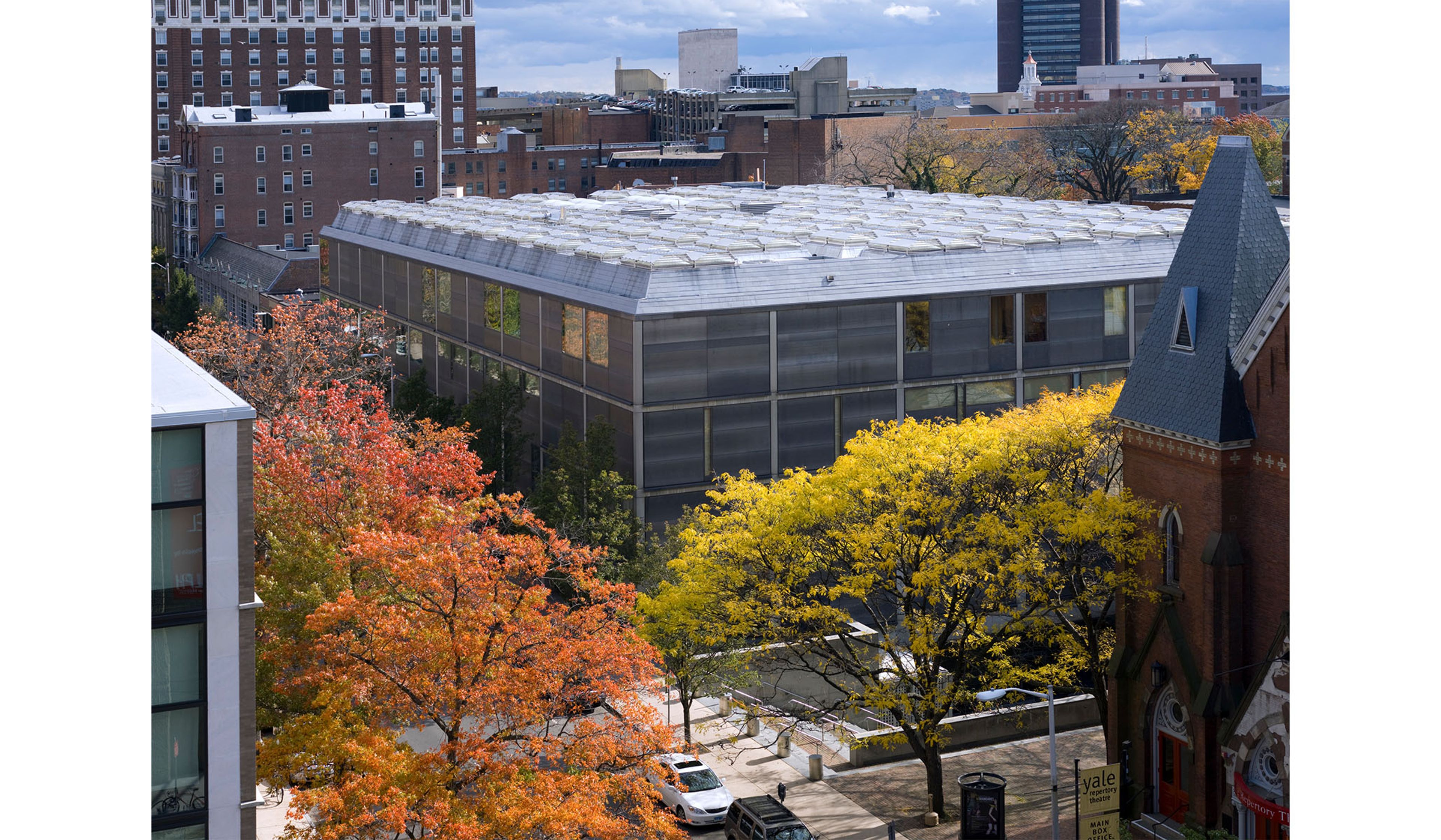
So, after putting foot after foot wrong, the BAC finally has something to celebrate.
Its building, Louis Kahn’s last, is among Yale’s many wonderful Modernist buildings and probably the most user-friendly. The exterior is a smooth, lustrous concrete, matte steel, and glass. The four-floor interior, with two courtyards and plenty of natural light, is concrete, travertine marble, white oak, Belgian linen, and wool from New Zealand, all in a restrained palette of gray and beige. These interior elements were freshened. Some of the oak and linen-covered walls had faded from light exposure. Worn carpet is now replaced. New lighting updates a system that diffuses natural light as it pours into the building and changes throughout the day. Along with the lighting, the big feature of the project is a new roof. A good roof is unglamorous but essential. I don’t doubt that all the work needed to be done. The entire project cost $16 million. It looks clean and tidy and hasn’t been wrecked.
The BAC, among Yale’s newest buildings and flush with cash from founder Paul Mellon, has always been pristine. It never experienced the decades of deferred maintenance that made the campus a firetrap and a roost for rats. It’s still pristine, and, I’ll add, it’s a Brutalist building. Brutalism gets a bad rap. Most of it is indeed oppressive, impersonal, cold, ugly, polarizing, cracked, cold, and damp. Some of it isn’t.
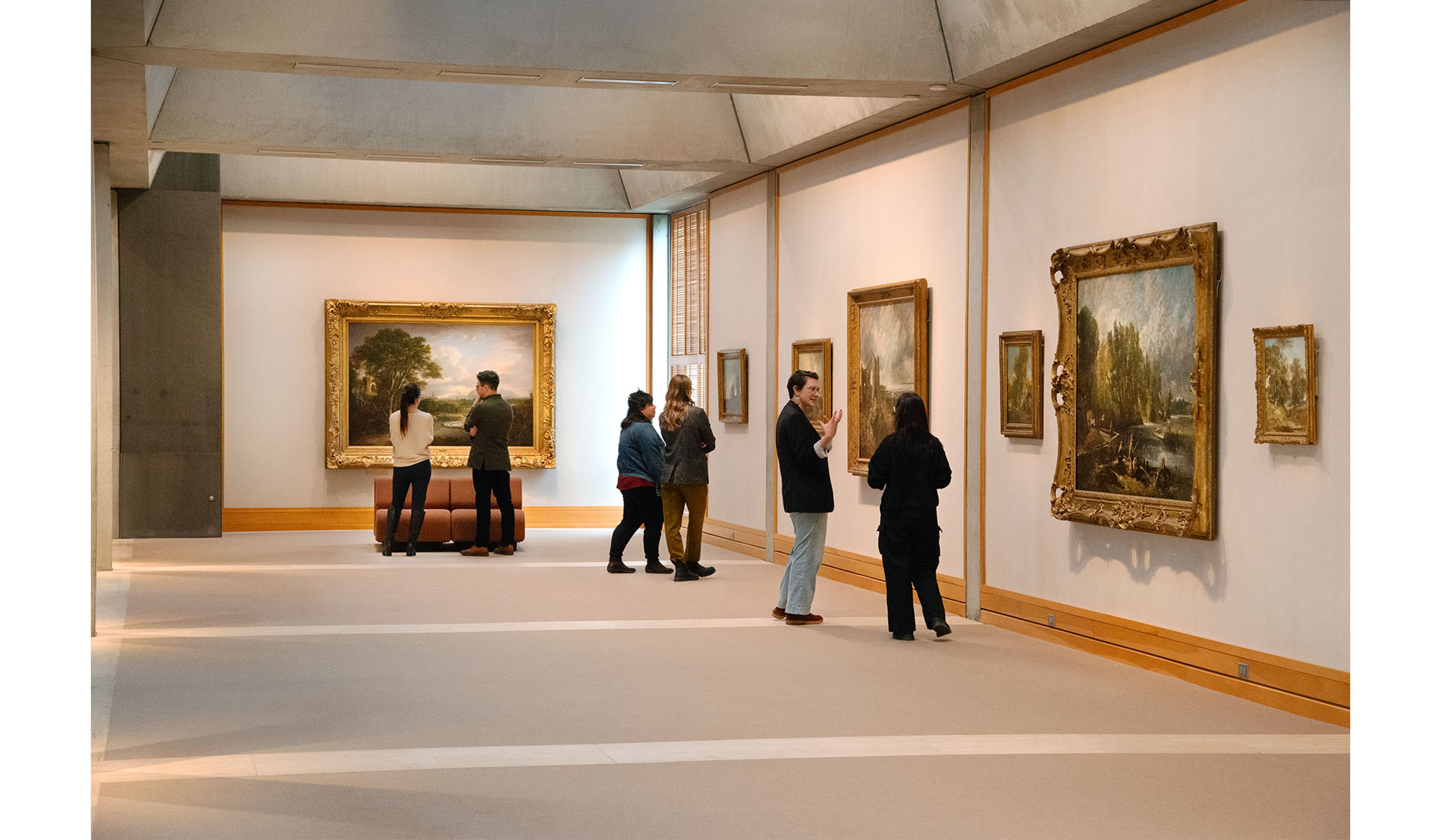
Brutalist or not, the feeling at the BAC is open, airy, and stately. The architect Kahn dictated the very beige interior palette for the permanent-collection spaces. In the early ’70s, light wall colors were de rigueur for paintings, whether of Old Master vintage or done yesterday. These days, art before, say, World War I is best placed against saturated colors. Think deep blue, green, or red. At the BAC, that’s not allowed for the Hogarths, the Gainsboroughs, the Constables and Turners, or the Pre-Raphaelites. There are dashes of color -- generally introductory text panels only -- but beige and gray rule otherwise.
The historic art doesn’t suffer. The cool colors, warm wood, lots of fabric, comfortable sofas, and natural light make for a variegated, elegant setting for art from all eras. Spaces are austere and serene. Our eyes are happy, we linger and peruse, and the pictures enjoy the attention.
Part of Kahn’s genius is in designing architecture that serves art rather than upstages it, and at the BAC he delivers. The default reserve of British art and its homey, domestic quality complement Kahn’s palette. Italian art tends to have putti flying and martyrs bleeding. French Old Master art can be grand and showy. Both invite majestic galleries and wall colors with drama. But British art, even aristocratic portraiture, seems to keep calm and carry on.
In a New Light: Five Centuries of British Art displays highlights from the permanent collection, organized loosely around themes but mostly by what looks best where. It’s well done and, of course, I was thrilled to see old favorites. A mustard-yellow introductory text panel makes the ideologically mandated references to Britain’s “troubling” history, imperial decline, and its “brutal” class system, but this is Yale. These flourishes aside, there are few preachy, didactic labels. Just the artist, title, date, and when the object came to the collection. It’s bliss to be left to enjoy art without a curator pushing a single, officially sanctioned meaning.
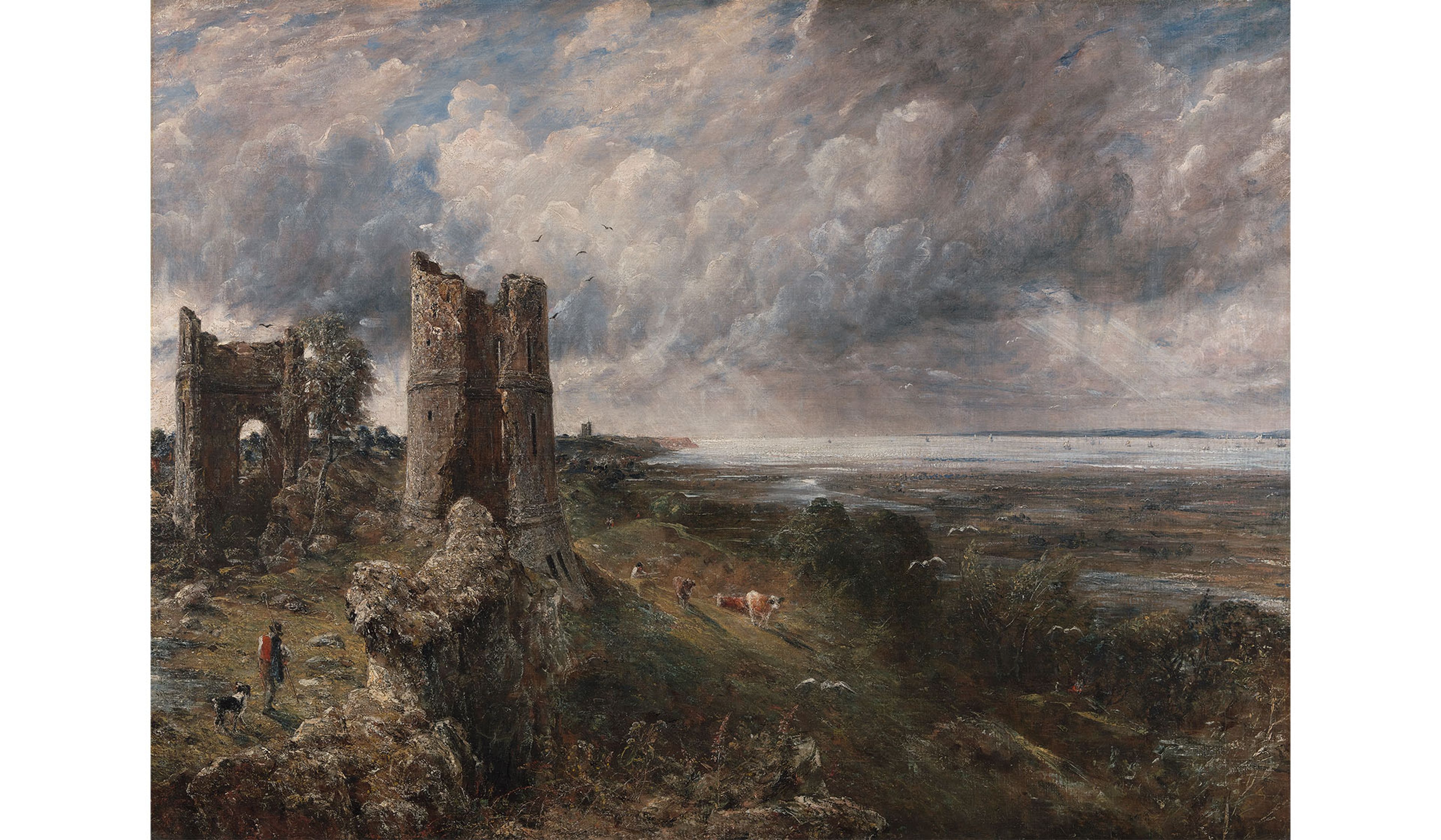
The BAC’s fantastic Turners are in its Romance and Reality exhibition, which I’ll review soon, but there’s no lack of landscapes and seascapes by others. Constable’s Hadleigh Castle, from 1829, can command any gallery, anywhere. It’s the ultimate romantic-ruin picture. Low, freestanding glass walls display his small cloud studies back-to-back. John Linnell’s tiny landscapes sparkle.
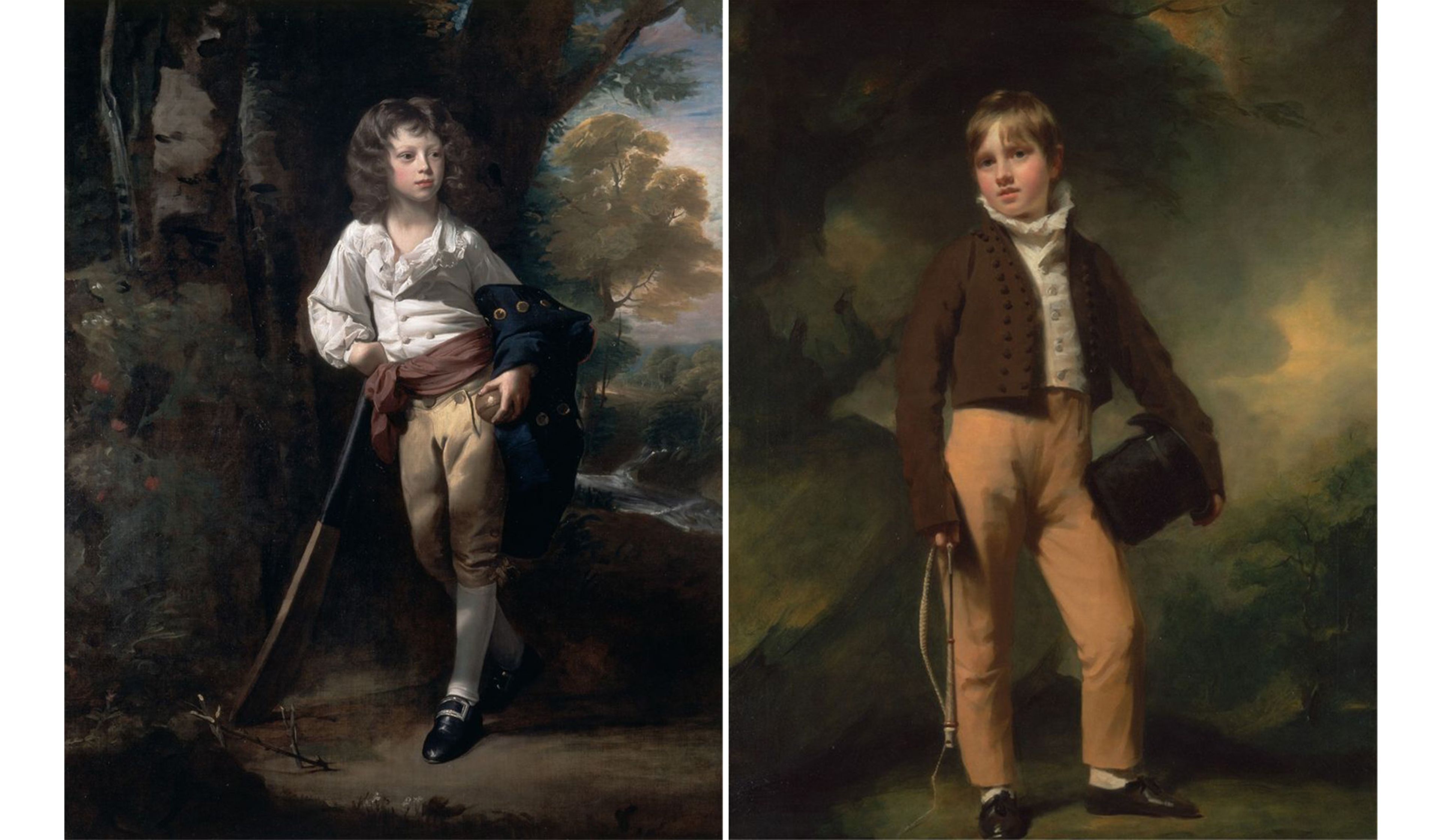
Opposite a wall of landscapes by half a dozen artists, among them a Whistler nocturne, are John Singleton Copley’s full-length portrait of the young Richard Heber from 1782 and Henry Raeburn’s portrait of Quintin McAdam from around 1815. Copley had both a Boston period in the 1760s and the early 1770s and a London one after he and his Tory family fled the rebellious colonies. Copley’s father-in-law, you see, owned the tea tossed in Boston Harbor. Raeburn was Edinburgh’s premier portraitist. “British” is a far-reaching term.
Heber, then about ten years old, is dressed for cricket -- fashion-model casual and stylish. McAdam, also ten, had just inherited a vast estate. He looks like a little grandee. They’re variations of the swagger portrait but with a light touch. Even Thomas Lawrence’s Lord Granville Leveson-Gower, looking like a dapper young god, with a sweeping crimson curtain for a backdrop, seems accessible and present. Hung low, he shares our space as we turn a corner and see him nearly head-on.
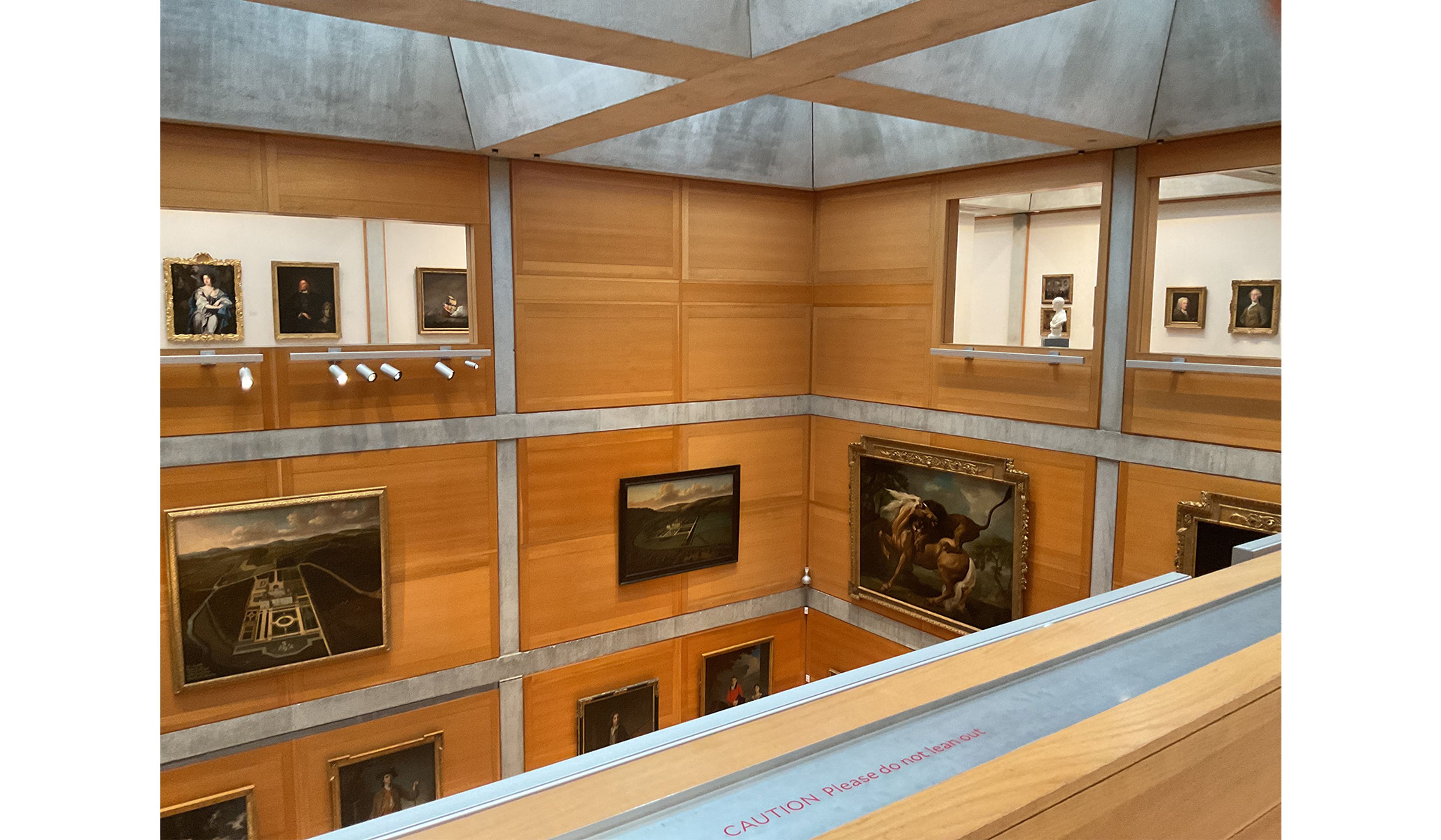
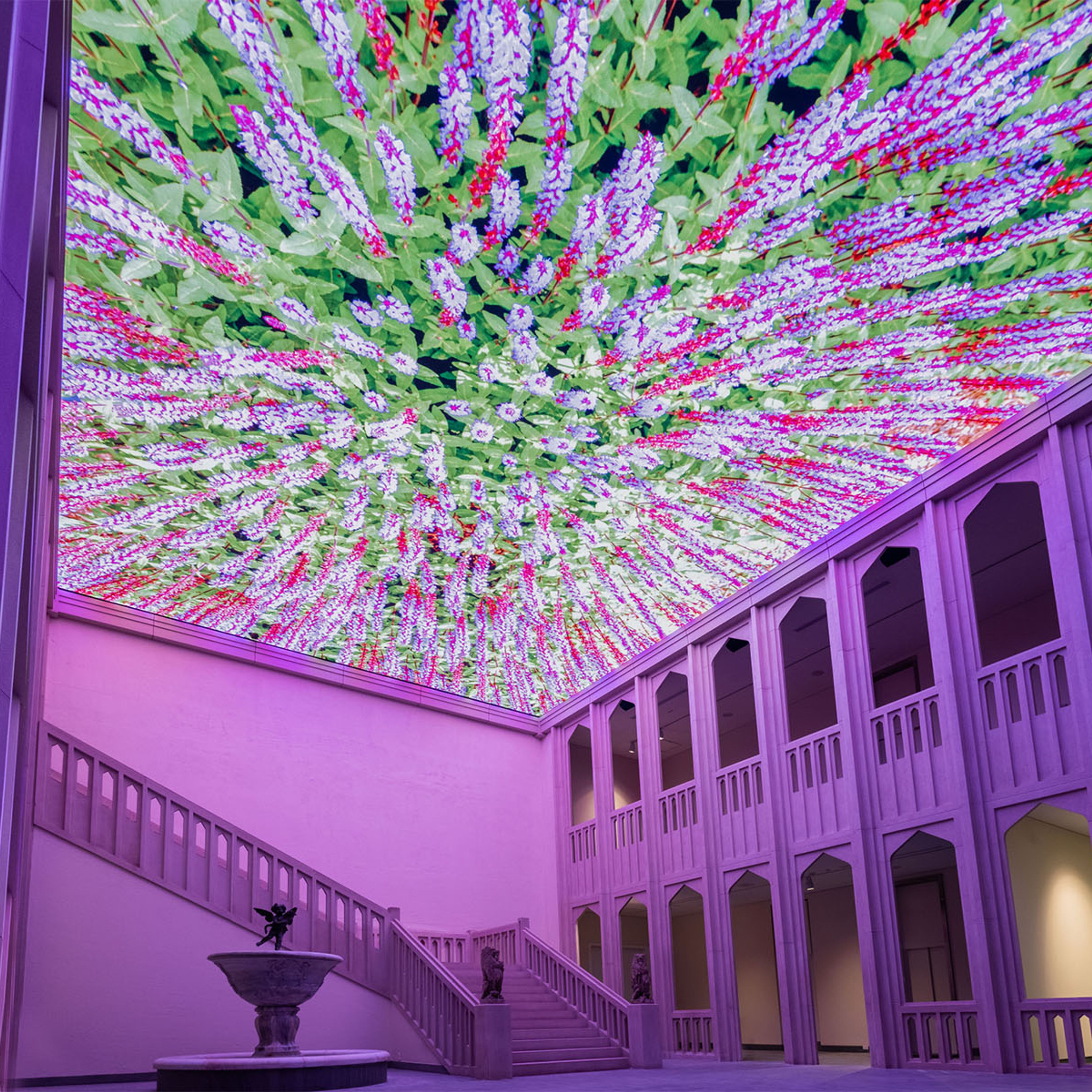
One of the BAC’s interior courtyards rises from the second floor to the fourth, where In a New Light is shown. Punctuating the fourth-floor walls are wide openings. Visitors can see from a gallery filled with Hogarths across the courtyard to the BAC’s Restoration portraits. There’s a royal mistress or two. We can look down and see a second-floor space installed with George Stubbs’s massive Lion Attacking a Stag, from the 1760s, full-length aristocratic portraits, and topographical landscapes of vast estates owned by the 1/100th of the 1 percent.
The BAC has been acquiring the work of living artists at a good clip, as it should. The gift of art from Mellon that established the museum was almost all pre-1900. Cecily Brown’s Hound with the Horses’ Hooves, from 2019, is a new addition. It looks great.
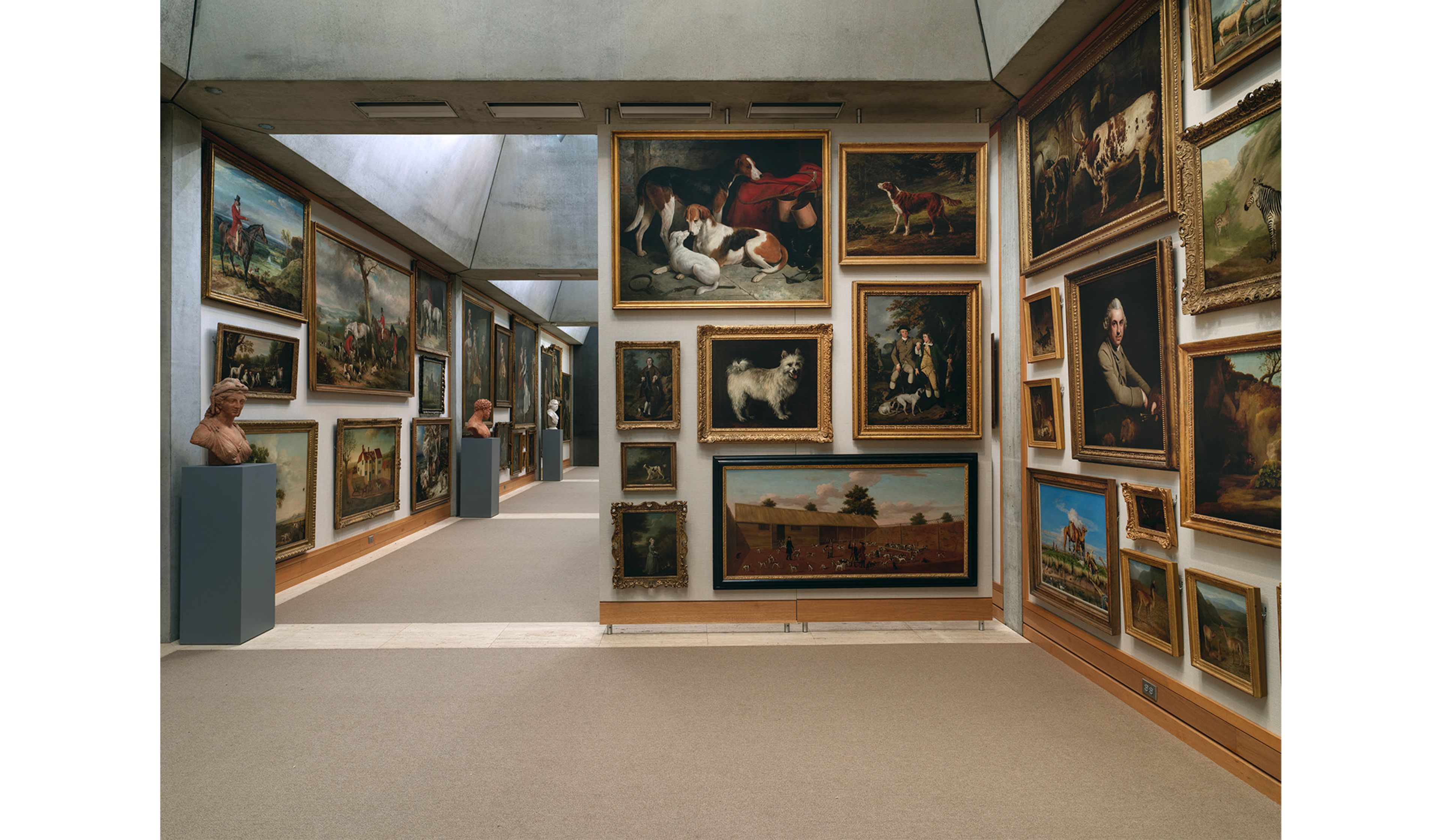
The BAC’s Long Gallery, the stately, 150-foot-long space for paintings from floor to ceiling, is, loosely, part of the In a New Light look. It was art storage when I was a student, but art storage fit for scholars, so it didn’t look like a warehouse. It opened, a bit nattier, to the public in 1998 and swiftly became must-see. Each partitioned space, and there are seven of them, is a niche about 20 feet wide, with a theme, and they delight. Since it’s British art, there’s a niche for paintings of dogs, one for horse portraits, one for a miscellany of man and beast, one for India, and another for racing. On and on it goes.
The space is filled with nuance and surprise. The Brits are curious and acquisitive, happy on land and sea, on horseback and on stage, frilly and plain, slavers and abolitionists. They make a little spot on the globe seem idiosyncratic and big.
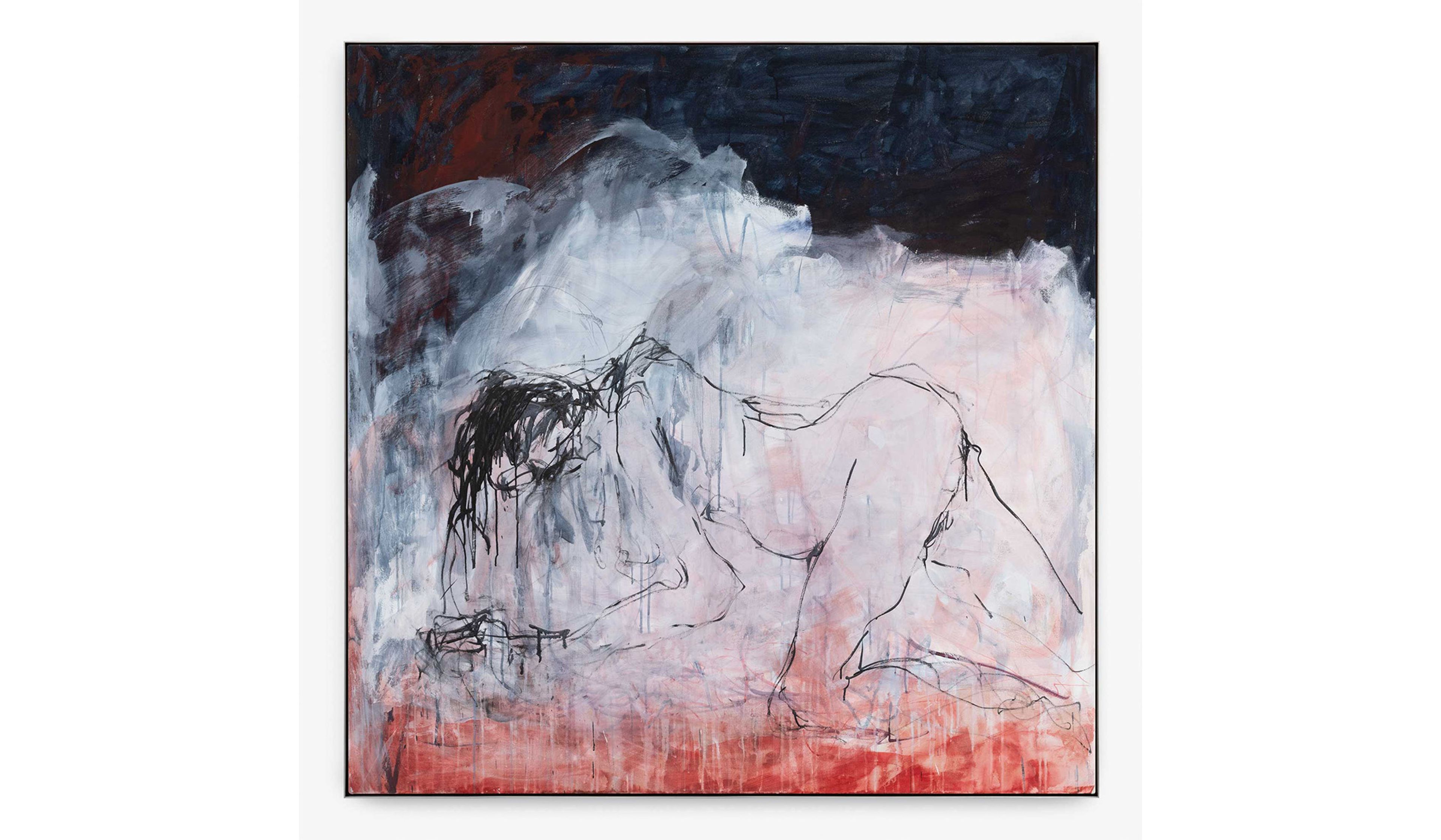
Tracey Emin: I Loved You Until the Morning isn’t my cup of Earl Grey. Emin, born in 1963, was the shock-jock gal star of the Young British Artists movement in the 1980s into the ’90s. This is not to be confused with the British Black Arts, also from the 1980s. The YBA crowd -- Emin, Chris Ofili, Damien Hirst, and the Chapman Brothers, among others -- were less into political upsetment than concepts, aggressive style, and celebrity. Emin was the most confessional among them and the Janis Joplin of installation art. I saw My Bed in the late ’90s. It was an installation of her own bed, unmade after a few weeks of sleeping, smoking, fornicating, eating, and boozing in it.
What would Mrs. Miniver have said?
Now Emin is a Royal Academician, a Dame of the British Empire, and a painter. I Loved You Until the Morning is her first exhibition in an American museum, showing about 20 large formal paintings and a group of drawings. They’re loosely painted women’s bodies, some fragmentary, some full-figure, heavy on white and slashes and splashes of red, evoking the messy details of the human body, loneliness, trauma, resilience, and mortality. I Followed you to the end, from 2024, is a new gift to the BAC.
Emin’s a very good painter and an icon of a moment in British art, so she ought to be in the BAC’s collection. I didn’t spend lots of time in the exhibition -- my take is that one painting of hers is enough.
I loved my visit. The BAC and the Yale University Art Gallery make New Haven one of the Northeast’s great art centers.

About the Author
Brian T. Allen is National Review’s art critic.
Featured Tags
Advertisement
Advertisement
Comments