No One Wants Another ‘Summer of Love,’ Right?
Written by Noah Rothman
A combustible situation is set to unfold this weekend, and too many stakeholders have an interest in seeing it combust.
Share this story
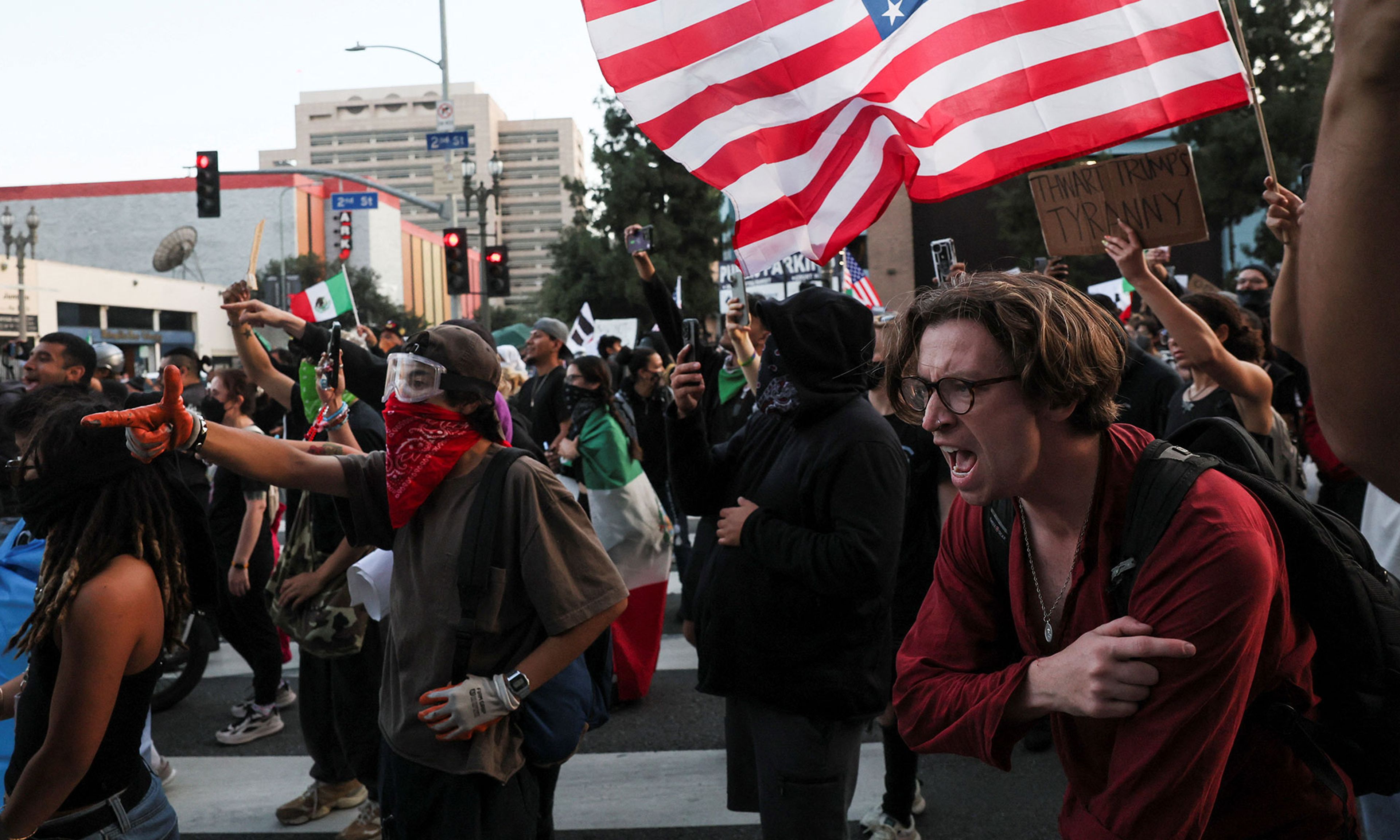
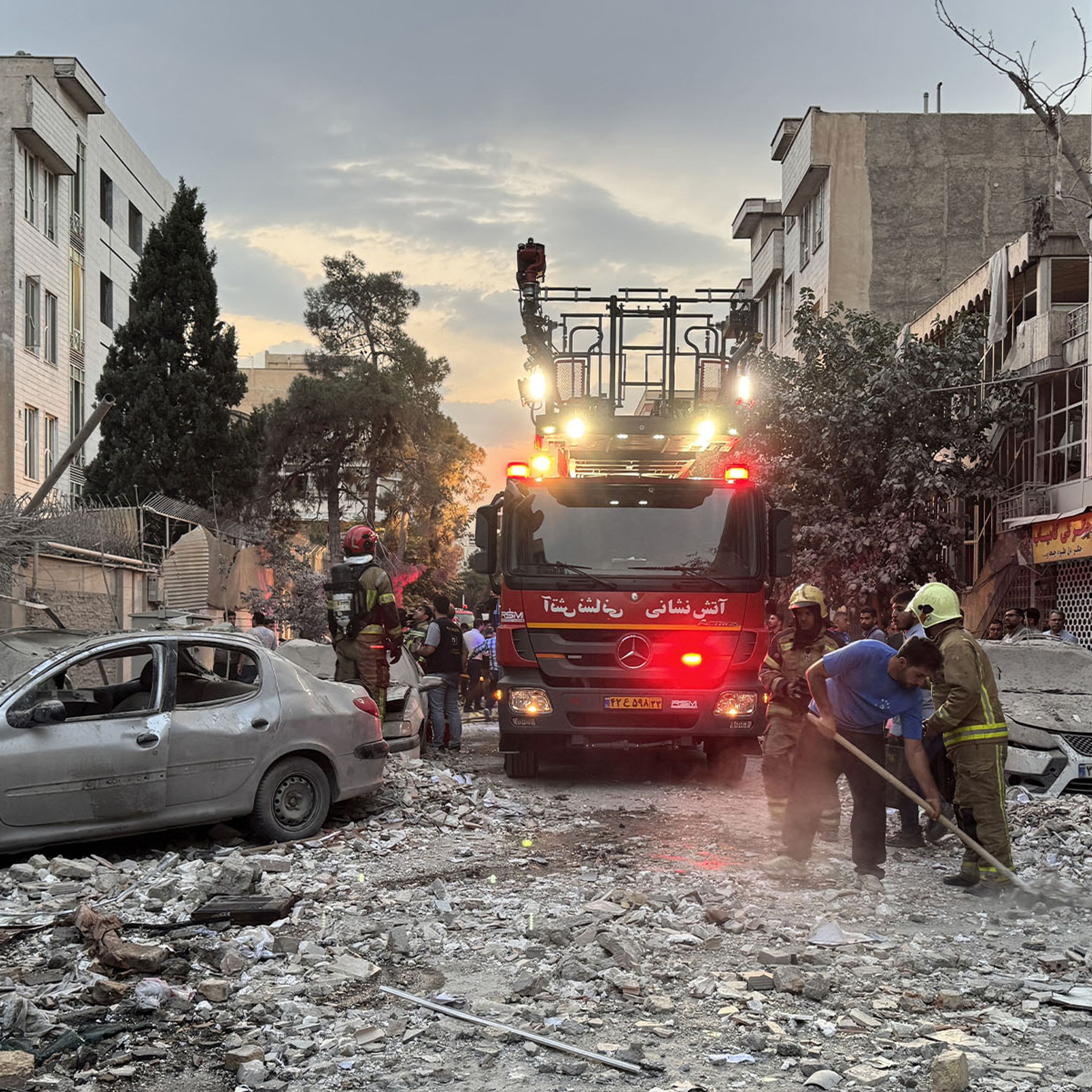
Demonstrators react to crowd control munitions being shot at them as protests against federal immigration sweeps continue in downtown Los Angeles, Calif., June 10, 2025.
They’re doing it again.
In his latest column, Rich zoomed in on some of the more prominent liberals -- those who write for legacy publications -- working themselves into a lather over the degree to which the president’s application of his legal authority to restore order to Los Angeles’s streets is “what autocracy looks like.”
Indeed, the U.S. began “sliding” down the “path toward authoritarianism” within hours of the president’s inauguration. Even if the Constitution has not yet been subverted -- just yesterday, in fact, the president quietly but definitively lost his battle with the courts over the provision of due process to deportation targets -- the semiotics of “authoritarianism” are everywhere. From the deployment of National Guard units and Marines in L.A. to a military parade in Washington, D.C., to mark the U.S. Army’s 250th anniversary (conspicuously timed to coincide with Donald Trump’s birthday), the warning signs, they say, are all flashing red.
The rhetorical stakes are high, and the implication is clear: Awaiting the onset of a real constitutional crisis amounts to reckless passivity. The time to act is now. Given the nature of the threat to American democracy itself, excess zeal in defense against Trump’s civic aggression is no sin.
This is the message that gets introduced into social media, which serves as an accelerant. Those who cosset themselves in these information silos are bombarded with negative stimuli and apocalypticism. They flatter themselves, tell one another that they alone are keen enough to sense the coming dystopia and only they can stop it.
This was the story of the “Resistance” that emerged during Trump’s first term, and it looks to be the story of the anti-Trump movement that will succeed it. Even if Trump’s critics understand that the imprudence associated with Resistance-style theatrics proved counterproductive, the catharsis found in overwrought expressions of distress is just too seductive.
Think-piece authors who decry the descent of despotism across the land will not be manning the barricades themselves, of course. But they must know that there is a vast audience of impressionable agitators who will heed their calls. What we saw in Los Angeles last weekend may have just been a foretaste of what’s to come.
“Activists had also gathered in New York, Boston, Chicago, Dallas, Atlanta and elsewhere, rebuking the Trump administration’s tough stance against migrants and its aggressive round-up efforts,” NBC News reported. So far, the satellite protests have been small and uneventful. That may not be the case for long.
Timed to coincide with Trump’s military parade on the 14th, a coalition of progressive protest groups calling itself “No Kings” is rallying its supporters to participate in a “Day of Defiance.” Although the organization explicitly and repeatedly rejects “political violence,” the language to which it appeals logically prescribes extraordinary measures. “Now, this military escalation only confirms what we’ve known: this government wants to rule by force, not serve the people,” the group’s statement reads.
The amalgamated left-wing protest outfit plans to hold about 1,800 rallies on Saturday at locations across the country. And to their credit, organizers emphasize the need to contrast what they claim is excess violence from the administration designed to stifle the exercise of individual constitutional rights with peaceful displays. But the tenor of the discourse at the grassroots level among those who affiliate, for example, with one of the protest groups -- 50501 (“50 Protests, 50 States, One Movement”) -- is hardly innocuous.
Hopefully, the weekend’s demonstrations will remain peaceful, although that seems unlikely given the riotous backdrop against which this drama will play out. For his part, the president does not seem at all tormented by the prospect of self-discrediting violence by his political adversaries. Rather, he seems inclined to stoke their senses of grievance and paranoia.
“For those people that want to protest, they're going to be met with very big force,” Trump told reporters on Tuesday. The president’s imprecise threat to mete out consequences in response to the exercise of free expression has set left-wing forums alight. So, too, has an internal memo attributed to Homeland Security Secretary Kristi Noem urging the Pentagon to direct military authorities “to either detain, just as they would at any federal facility guarded by military, lawbreakers under Title 18 until they can be arrested and processed by federal law enforcement, or arrest them.” This, too, is “what happens in a dictatorship,” the president’s critics stressed.
A combustible situation is set to unfold this weekend, and too many American stakeholders have an interest in seeing it combust.
Both the MAGA movement and its opponents are committed to self-fulfilling prophecies that their adversaries are violent, lawless nihilists and need merely to be exposed as such. The Trump administration is not goading its skeptics into acts of violence, as too many Democrats have claimed. But its officials are not above leveraging violence for maximum political benefit and tarring all their opposition as would-be terrorists. The president’s skeptics are mostly nonviolent themselves. But they are far too eager to assign blame for violence not to the violent but their alleged instigators in positions of authority. This stratagem encourages vandals and malcontents to tear at their surroundings -- a level of maladjustment that progressives often confuse with enthusiastic and even laudable civic engagement.
No one wants violence, everyone insists. But every player in this performance is positioned to make the most of violence when it occurs. The odd thing is that much of this is, for now, a show. The units Trump deployed to Los Angeles have merely adopted a posture of support while local and federal law enforcement do the heavy lifting. No one is being arrested for exercising their First Amendment rights. The president has not invoked the Insurrection Act. Demonstrators are not organizing efforts to attack the United States military on the streets of Washington, D.C. Los Angeles is not a “city of criminals.”
America’s stakeholders claim that they’re eager to avoid reprising the nightmare to which we were all subjected in the summer of 2020, but few are acting like it. The president’s supporters and opponents alike understand that there is currency in being seen as the innocent victims of the other side’s fanaticism. Hopefully, this weekend passes without incident, but it will not be the last weekend in which the fringes of America’s two political coalitions square off. For now, at least, no one seems particularly interested in taking the temperature down.

About the Author
Noah Rothman is a senior writer at National Review. His third book, Blood and Progress: A Century of Left-Wing Violence, will be published by Hachette in May 2026.
Featured Tags
Advertisement
Advertisement
Comments