No, the White House Should Not Take Up the Cause of AI Pessimism
Written by Noah Rothman
The goal should be to allay the public’s concerns as much as possible, not to fuel them.
Share this story
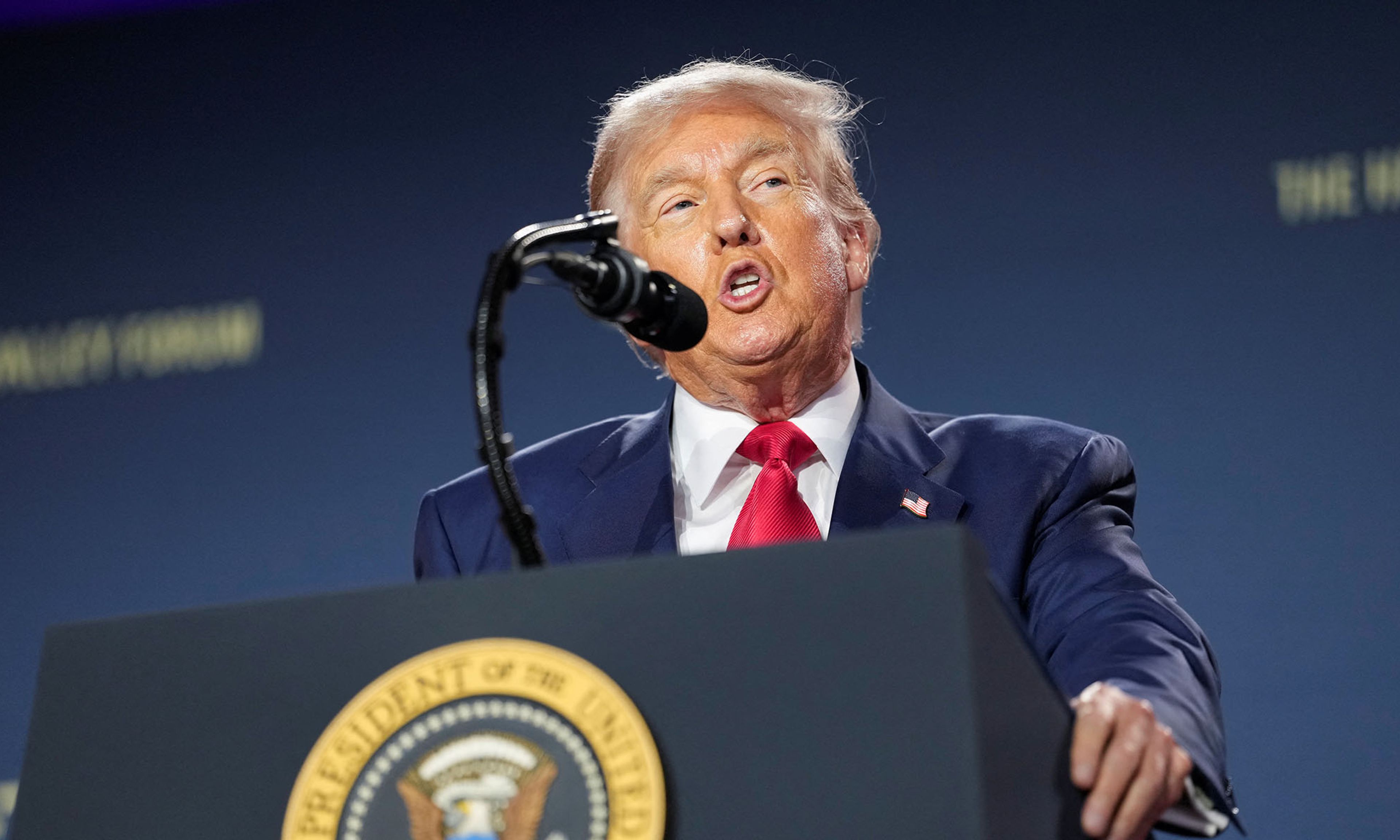
President Donald Trump delivers remarks on artificial intelligence at the "Winning the AI Race" Summit in Washington D.C., July 23, 2025.
New York Times columnist Ross Douthat has some good advice for this White House:
View this post on X
Well, much of it is good advice. For the most part, his eight-point treatise represents commonsense compromises with political realities that Donald Trump and his advisers seem to resent. Moreover, each of Douthat’s points meets a majority of the voting public where they already are. And yet, point five departs from this formula. The public may share Douthat’s techno-pessimism when it comes to artificial intelligence, but is cultivating that pessimism in the president’s political interest?
Douthat has data on his side when he diagnoses a general “anxiety” over the “downsides” of the incipient AI revolution. Last September, roughly 60 percent of American adults told Gallup pollsters they distrusted AI to some degree. A contemporaneous Pew Research Center survey found that most U.S. adults rated the risks AI posed to society as more pronounced than its anticipated benefits. Just one-quarter of respondents disagreed. And the trends Pew’s data established indicate that the public has grown more trepidatious toward the prospect of an AI-dominated future in the first half of this decade.
The populist temptations to rush to the head of this ongoing parade are obvious and alluring. But is it in the interest of this administration to foster more of the economic anxiety that has bedeviled this presidency from almost the outset of Trump’s second term? Is it wise for the governing party to go hammer and tongs after an innovation that is responsible for much of the productivity growth in this economy, or the investments in it, which contributed substantially to surprisingly robust GDP growth in 2025?
It was once conventional wisdom that this flood of capital into AI developers’ coffers had inflated a speculative bubble that was bound to burst. Today, all that bubble talk is the subject of retrospective criticism. A correction may still be in the offing, but the catastrophic crash many once anticipated seems more remote. That rapid evolution of what was once a general consensus should lead us to question the soundness of our predictive powers -- particularly when an unknowably vast number of variables are at play.
What would be the point of a public relations campaign from the president and his allies designed to harness and wield voters’ apprehensions toward AI? Surely, the voters who nod along with Trump and company’s pessimistic outlook would also want to hear what the president planned to do to spare them from technology’s ravages. But Trump and Republicans in Congress can do little to help Americans navigate the inevitable changes to the economic landscape that accompany this and any other significant advance. By contrast, there’s a lot they can do that would make the transition more prolonged and more painful.
“Government programs have provided a cushion to displaced workers, but they have also impeded the transitions,” the Hudson Institute’s Michael Solon and former Senator Phil Gramm wrote in the Wall Street Journal this week. The authors came armed with a variety of examples of well-meaning efforts to shelter the public from technology-fueled economic dislocation. Ultimately, those initiatives were to the detriment of the workers who were displaced (as they invariably would have been) for longer than they might have been in the absence of public sector interventions. Indeed, hamstringing AI would not just cripple America in its geopolitical race with its adversaries abroad. It would also deprive the public of the instruments of their salvation.
Just as electrification displaced millions of workers but also produced new productivity gains and more capital to invest in services and industries that became the vocations into which those workers later settled, AI will be the cause of and the solution to economic displacement. The alternative is sclerosis and stasis, as Gramm and Solon write:
A feel-good expansion of our existing programs to address AI transitions could idle tens of millions of workers, squander much of the economic benefit we hope to derive from AI, and foster a dangerous “bread and circuses” political system in which those who have chosen to remain outside the labor force demand an increasing share of the benefits created by those who have chosen to work.
Even the most dogmatic techno-pessimist should not dismiss the extent to which AI doomsayers are engaged in a campaign of special pleading that is designed to grease the skids for a big-government solution to the “problem” of AI. Elsewhere in the Journal this week, Barton Swaim makes an excellent case for skepticism toward AI apocalypticism, much of which is coming from the technology’s developers themselves.
“A confederation of specialists — climate scientists in one version, Silicon Valley geniuses in another — joins with liberal politicians and nonprofit heads to warn of an impending catastrophe,” Swaim wrote after catching a whiff of the odor about the AI debate that reminded him of climate change catastrophism and Covid maximalism. “The only moral response to this new situation, these Olympians tell us, is to transfer authority over large parts of the economy to people like themselves.”
A federal government that defaults to the doomsday hypotheses that are already currency in Silicon Valley would also default to the experts, and we know what that looks like. Whatever its undesirable effects on your liberty and your pocketbook may be, a programmatic approach to AI that seeks to curtail it and minimize its disaggregating effects on commerce will not be conducive to dynamism and growth.
Vice President JD Vance, of all people, seems to have adopted the most prudent approach to the rise of AI and the skepticism surrounding it.
“We shouldn’t be afraid of artificial intelligence,” the vice president explained last spring. He said then and continues to restate his sincere intention to “lean into the AI future with optimism and hope” because the productivity generated by AI and automation advances will ensure that America remains an attractive investment destination, contributing to the growth of capital, and, thus, more opportunities for American workers. If the United States cedes that future to other countries, that’s where those investment dollars will go.
“If the robots were coming to take all of our jobs, you would see labor productivity skyrocketing in this country,” Vance said last summer in response to a question from an investor in Uber concerned that driverless vehicles would throttle productivity rather than contribute to it. “But actually, you see labor productivity flatlining. What that means, actually, is that our country is under-indexed in technology and not over-indexed in technology.”
Americans are apprehensive about the uncertain future AI will bring about sooner rather than later, and addressing that apprehension is a political imperative. But the goal should be to allay their concerns as much as possible, not to fuel them and set expectations for the administration it cannot meet and should not pursue.
Beyond that, this White House should take Ross’s advice.

About the Author
Noah Rothman is a senior writer at National Review. His third book, Blood and Progress: A Century of Left-Wing Violence, will be published by Hachette in May 2026.
Featured Tags
Advertisement
Advertisement

Comments