Share this story

jamesteohart/Getty Images
What a year 2055 was!
The highlight of the year came when President Donald Trump announced his candidacy for a tenth term. It doesn’t matter that his physical body passed away at some point during his sixth term; who needs to be weighed down with bones and flesh when you can live eternally in the cloud?
Fortunately, in 2025, businesses like MeMortal began offering an immortality option: to be preserved as artificial-intelligence-based beings, able to chat with one’s kids, their kids’ kids, and their kids’ kids’ kids. Charles Dickens had to write Oliver Twist and Great Expectations to live on forever. Suddenly, all you had to do was agree to be filmed for three minutes speaking to an iPhone, and the algorithm would do what medicine never could -- keep you “alive” for eternity.
That is why I’m now writing to you from the luxurious confines of the cloud-based server farm formerly known as Cleveland. I am a digital replica of a little-known writer from the first quarter of the 21st century, preserved lovingly back in 2025 by a mid-tier subscription to EternalTakes -- “Because You Think You’re Too Interesting to Die.”
Back then, the idea was that if your body gave out -- but your opinions didn’t -- society still needed access to your nuclear hot takes on everything from Bob Dylan lyrics to municipal parking policies.
And so, here I am: a digital ghost who, over the past 30 years, hasn’t aged in either opinion or appearance. Now, I’m part of a robust subculture of digital afterlifers. We call ourselves “the Preservatives.”
Admittedly, being entirely a cloud-based life form can mess with your digitally created head. At a point around 2043, our processor-fueled brains became so powerful, we became self-aware. So I know all my thoughts are being fed to me by a vague formula based on the writings of some organically constituted writer of yore. From what I can tell, his jokes were so predictable that a computer could crank them out with spooky precision. (Ironically, he died when an anvil dropped on his head while he was daydreaming about how to fit a Wile E. Coyote reference into one of his columns.)
Sure, it does get kind of boring holding all the same thoughts and biases your physical self once held. But that’s what people want to preserve by turning you into a living Memoji -- you as the you they remember, not the you wizened with old age.
But being digital also means you get weirdly nostalgic for your physical self. I miss sneezing. I miss being able to turn off songs I didn’t want to listen to. I recognize I am not actually in hell, but you might think you were if you had to listen to Katy Perry century after century. Mostly, I miss the thrill of turning down invitations to parties I wouldn’t be caught dead at.
What I do not miss? Pants.
The Meatles, as we call fully fleshed people of the past, understood that some long-dead baddies deserve to stay dead. But inevitably, troublemakers found a way to populate my world with unsavory characters. Now I have to wait forever to use the tennis court while Chairman Mao works on his backhand. That guy is a real monster.
Maybe the creepiest part of digital life is the knowledge that there are multiples of you wandering around in cyberspace. Each version of you is a little different, based on when your essence was captured for posterity; some are a little grumpier, some are funnier, some are fatter, and so on. And yet because you were uploaded by different people, your doppelgängers are all coexisting in the same artificially constructed universe. (Word is that one version of me briefly dated a digital Margot Robbie -- presumably her bio-data were uploaded shortly after she hit her head on a cabinet door.)
Now, if you’re wondering whether any of this is a good idea -- digitally preserving your consciousness so you can live forever as a sardonic avatar -- let me offer this: I’m not unhappy. I get to write, think, complain, and never once have to manage any Bluetooth connections. It’s kind of like heaven, if heaven had terms of service and two-factor authentication.
So if you’re still debating whether to upload your mind to the cloud, do it. Maybe just delete your browser history first. Some things don’t need to live forever.
But oh, what I would give for a burrito.
About the Author
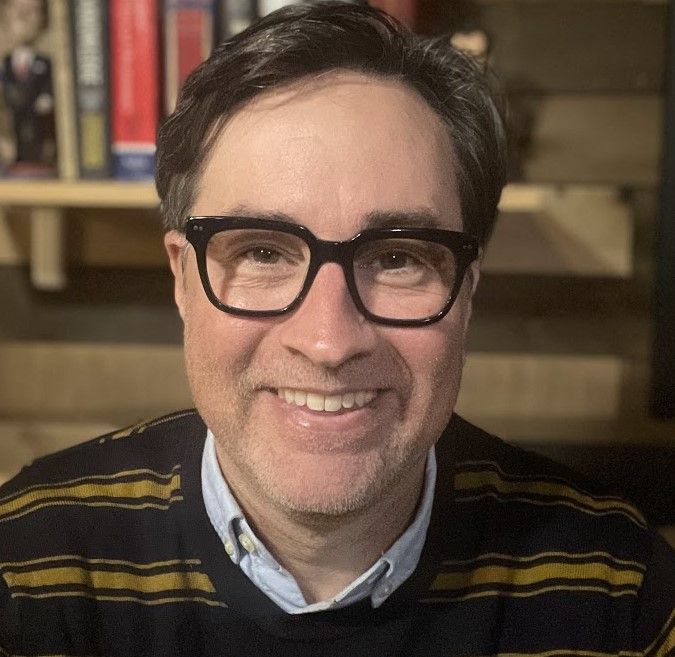
Christian Schneider is a National Review contributor and writes the Anti-Knowledge newsletter. He is a co-host of the podcast Wasn't That Special: 50 Years of SNL.
Featured Tags
Advertisement
Advertisement




Comments