Our National Parks Need Help
Written by Rob Portman
We’re at risk of squandering the progress we’ve made to maintain America’s national parks.
Share this story
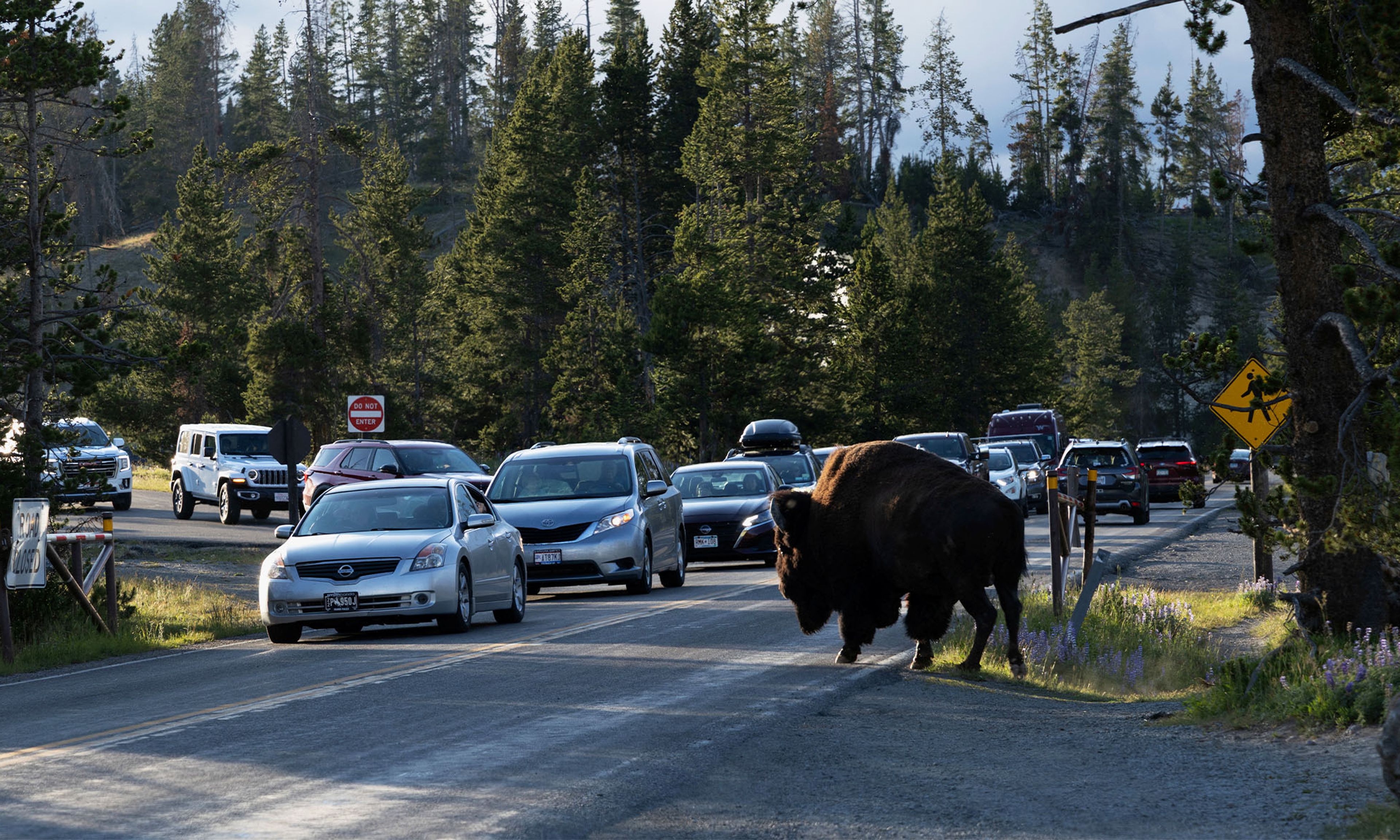
A bison walks on a road near visitors' cars in the Hayden Valley of Yellowstone National Park, Wyo., July 5, 2025.
Our national parks have been called America’s best idea. They embody the best of our great nation’s heritage, natural beauty, and the legacy we leave future generations.
But our parks need help after years of failure to address basic infrastructure repairs. To put it simply, our wonderful parks are showing their age, and they need Washington to act.
The good news is that help may be on the way. The annual White House budget proposal specifically calls for addressing deferred maintenance in the parks and other federal lands. In addition, over half of the Senate — evenly split between Republicans and Democrats — has signed onto innovative legislation to restore and revitalize these national park treasures.
Here’s the reality: When we think of our national parks, we envision majestic landscapes, wildlife, and historic places. But behind the natural scenery lies aging, outdated infrastructure. Wastewater treatment plants, power lines, roads, trails, bridges, visitor centers and campsites — the very systems that keep our parks open and accessible — are being pushed past the breaking point by years of neglect and more wear and tear from record visitation.
Over the past decade, it became clear to park supporters and the National Park Service that a growing backlog of repair projects was negatively impacting visitor access, local economies, and the parks’ mission to preserve and protect our nation’s natural and cultural treasures. In 2020, I was pleased to join a bipartisan team of senators, including Steve Daines, Cory Gardner, Lamar Alexander, Angus King, Mark Warner and Joe Manchin, who worked with the Trump Administration to craft and have signed into law the Great American Outdoors Act (GAOA).
A major component of the law — and the key to beginning to address the deferred maintenance at the parks — was the creation of the Legacy Restoration Fund (LRF). Over the last five years, this commonsense policy has provided more than $6 billion to execute over 400 park infrastructure projects that strengthened local economies and improved the backbone of our parks, making them safer, more accessible, and more enjoyable. But the LRF had a five-year sunset, and with its expiration last fall, we’re now at risk of squandering that progress — and racking up an even bigger deferred maintenance bill down the line.
Our parks help bring us together as a country. They belong to everyone. Every year, more than 300 million visitors explore our National Park System’s hundreds of parks, recreation areas, and historic sites. They serve as economic engines, powering local, state, and national economies — to the tune of over $56 billion a year.
The LRF injected $5 billion into local labor markets, supported more than 72,000 jobs for skilled workers and contractors, and contributed to our national economic success with $8 billion added to our GDP. And it did all this without costing American taxpayers a dime, as 100 percent of LRF funding came from energy development on federal land and waters, not tax dollars. The LRF also leveraged private funding from individuals and local park friends groups that stepped up.
The bottom line: The LRF pays for itself, levies no new taxes, and generates significant savings and irrefutable economic impact. And the funds are needed now: When the LRF expired in September 2025, $23 billion in needed repairs identified by the park service remained.
If Congress does not act to reauthorize the LRF, progress will stall, endangering existing and planned projects, reducing visitor safety, and jeopardizing the economic vitality of park communities. Failing to act doesn’t save money; it guarantees that today’s needed fixes become far more expensive emergencies tomorrow, while the list of repairs grows.
Congress has the opportunity to demonstrate to the American people that even at a time of partisan division, we can all unite around our parks. As noted above, in the Senate, there is a strong, growing bipartisan effort to extend the LRF — the America the Beautiful Act, led by Senators Daines and King. In the House, the Natural Resources Committee, led by Chair Bruce Westerman and Ranking Member Jared Huffman, is expected to consider similar legislation later this month.
Millions of Americans will celebrate America’s 250th anniversary at our national parks and historic sites this summer, from Independence Hall in Philadelphia to the National Mall in Washington, D.C., to Cuyahoga Valley National Park in my home state of Ohio. As we mark this momentous milestone and continue our nation’s legacy, it is our patriotic duty to steward the landscapes and historic places of our National Park System by passing game-changing legislation to preserve our most awe-inspiring places for Americans today and tomorrow.
About the Author
Rob Portman served as U.S. Senator of Ohio from 2011 to 2023 and, before that, as a member of the U.S. House for 12 years and as Director of the White House Office of Management and Budget. He currently serves on the board of the National Park Foundation.
Featured Tags
Advertisement
Advertisement




Comments