Park Avenue Armory Treats
Written by Brian T. Allen
Crossing borders via Degas, Toulouse-Lautrec, the moon, and more
Share this story
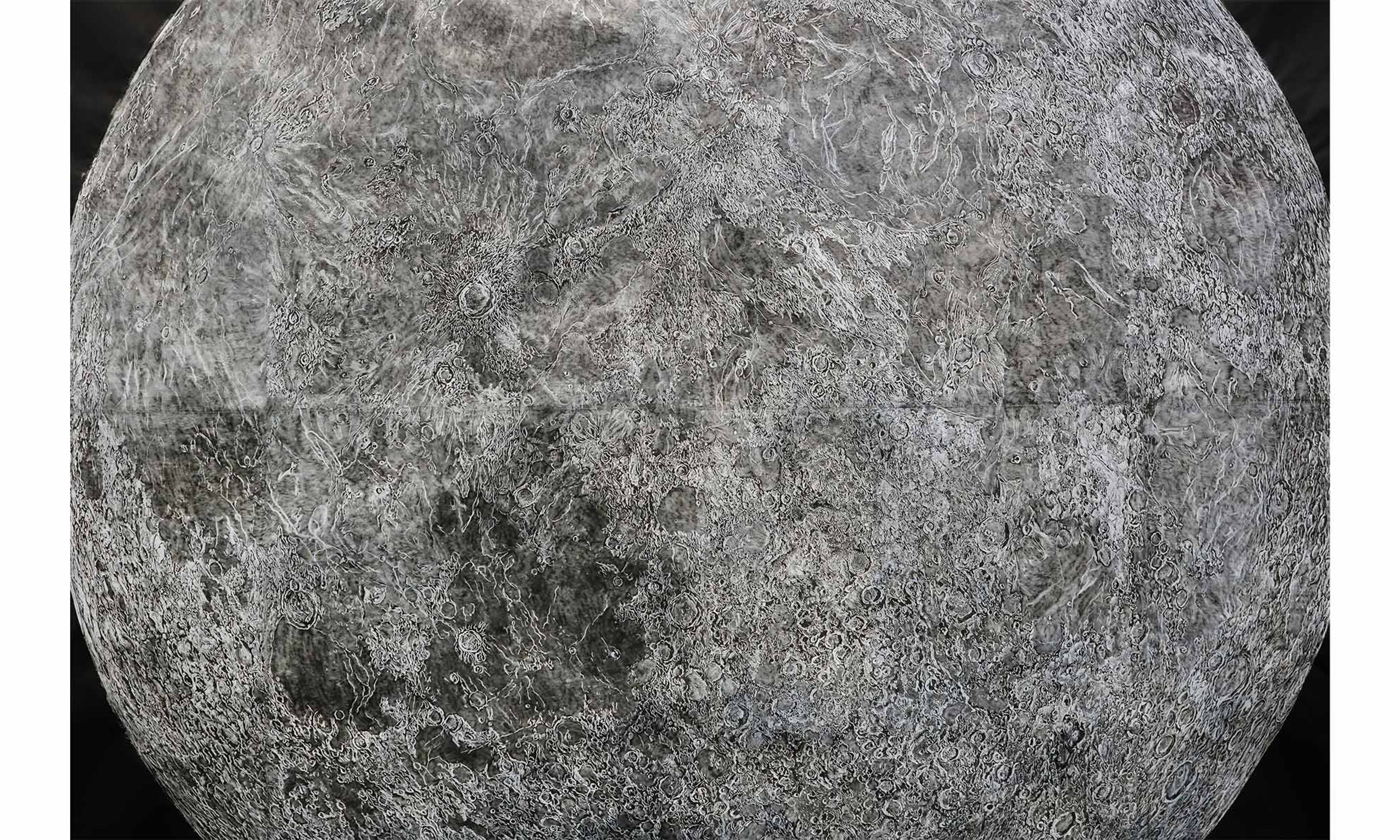
A detailed look shows Smith’s watercolor work and the fine lines of the wood engraving technique. Kiki Smith, <i>Wooden Moon (detail)</i>, 2022, wood engraving with ink and hand-painted watercolor on collaged Xuan paper.
For close to 40 years -- a long time -- I’ve been going to the International Fine Print Dealers Association (IFPDA), and I enjoyed my visit on Thursday to this preeminent art fair known for Old Master to contemporary prints, held at the Park Avenue Armory in Manhattan. I can’t say I enjoyed it any less, but it’s sad to see the fair change its membership criteria. Once the realm of print dealers only, it’s now expanded to include drawing dealers, so the fair has both. I know, it’s not Russia 1917, but it’s among the many signs of the times I don’t exactly love. Call me Colonel Blimp.
Yes, both prints and drawings revolve around surface, pressure, and line, but prints are nearly always mechanical reproductions with a printing press huffing and squeaking and clanking. A drawing is a unique work of art. Tools are different. Connoisseurship is very different. So the merger isn’t an event on the order of the Golden Spike, linking the East and West by rail, with routes built to align. In this case, the train has left the station. Most Old Master print dealers are floating on clouds in an aquatinted sky or nearing retirement, as are most prints-only dealers. Many of our best artists move eagerly and easily among media, as do many dealers these days. As I walked through the fair, though, I decided that the change was a work in progress but fine and inevitable.
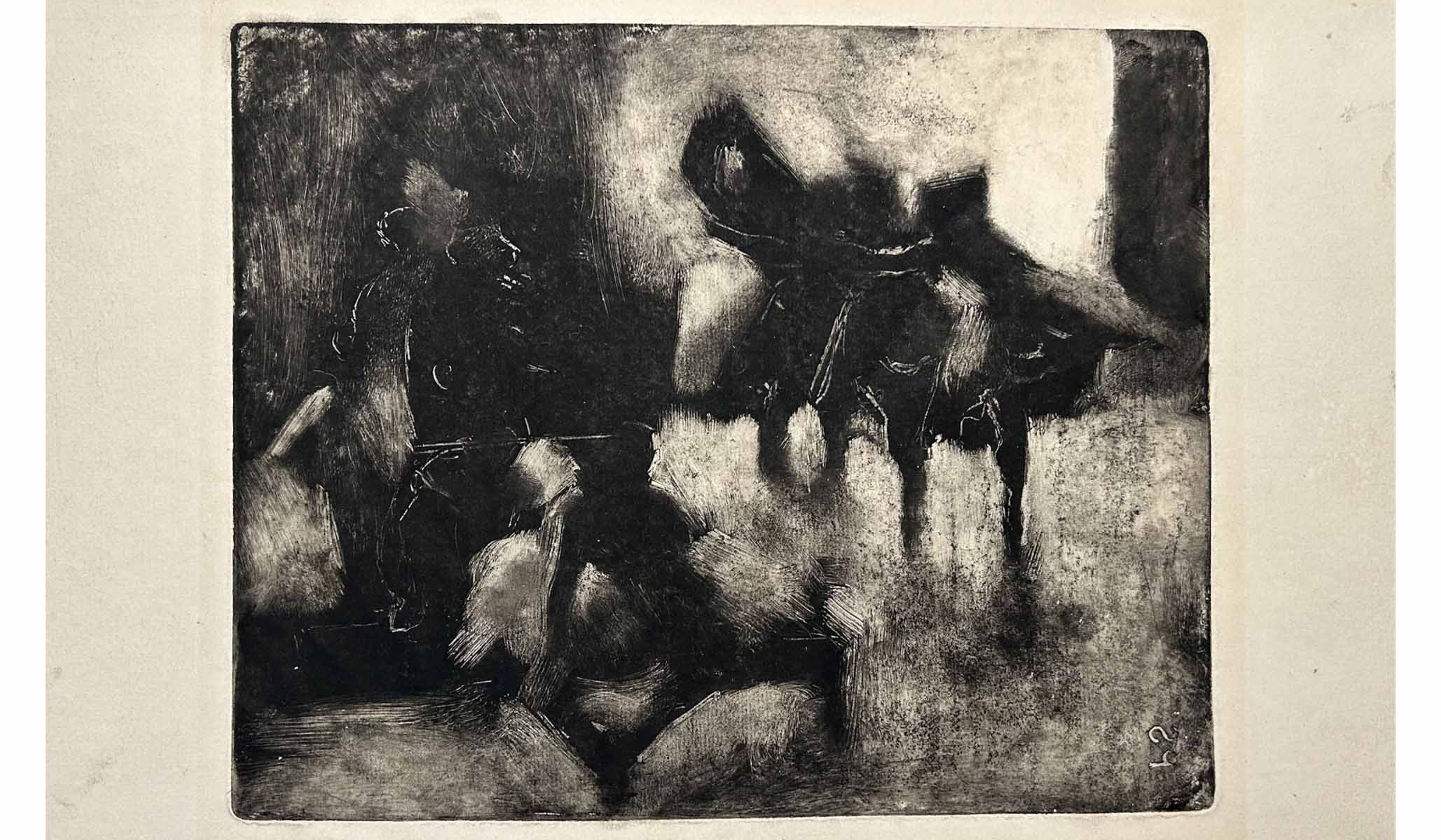
Onward and upward. If prints and drawings dealers are now to be married, market-wise, there could be no more perfect child than Edgar Degas’s Dancers in Rehearsal, a monotype done between 1874 and 1878. The Paris dealer Galerie Martinez D. is offering it for $175,000. Monotypes dwell nearly alone in the pure, abstract space where the two media -- prints and drawings -- intersect. Degas (1834–1917) did a few monotypes, looking at them as experiments. What are these rare birds? For the gorgeous and seductive Dancers in Rehearsal -- a dance gone occult -- Degas applied black ink to a sheet or metal or glass, manipulating the ink with a swab or rag or brush or his fingers to create lights against darks. He then ran the plate through the press to create a single image, a shadowy, gauzy one since the ink smears under pressure. Degas’s genius is in controlling what happens to get the look he wants.
The object causes the jaw to drop. Degas pushed and pulled and sopped the ink to create shapes and space as well as figures moving and thin lines shaping the heads of onlookers. I’ve been thinking of it the way my dog thinks of his nightly marrow bone.
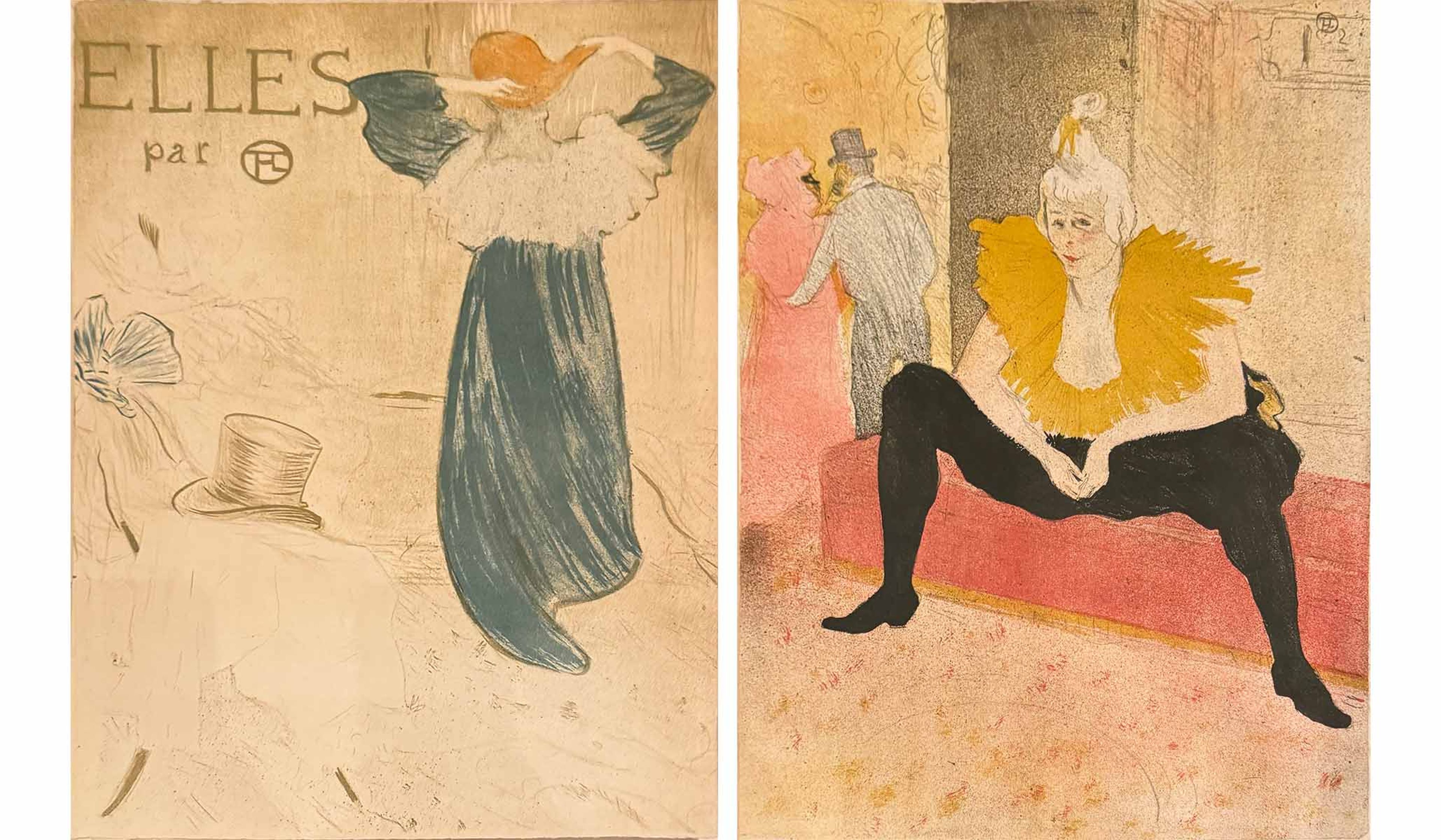
David Tunick is offering the complete set of twelve color lithographs that are Henri de Toulouse-Lautrec’s Elles portfolio depicting day-to-day life among prostitutes he knew, patronized, and befriended in Paris. The set is from 1896 and a rarity given its pristine condition, and, after all these years, it’s still intact. The subjects aren’t especially erotic -- women sleeping, combing their hair, or drawing a bath. The frontispiece shows a woman seen from the back arranging her hair while a man’s top hat reposes at attention, on a shirt, presumably his, on a chaise longue. Her hat is tossed near it. Let the action begin!
Toulouse-Lautrec (1864–1901), born an aristocrat, had a form of dwarfism and felt unsatisfactory as a sexual partner for women of his class, so he whoopied with prostitutes. He became a client, confidant, decorator, and occasional gourmet cook for women in two upscale Paris brothels in the 1890s. He was the court artist of Paris’s demimonde, too. His hundreds of drawings, paintings, and lithographs are still the icons of that moment. He would have loved the disco era as a raconteur and image maker as well, though he would have been no Travolta, alas.
Lithography, invented in 1796, has many characteristics but, basically, it’s a type of mechanical reproduction that starts with the look of a charcoal drawing. The artist starts by drawing the image on a surface with a greasy crayon, so lines are thicker and streakier. The look is spontaneous and the image seems on-the-spot, like a drawing. Goya’s bullfighting prints made lithography famous.
How did Tunick find the Elles portfolio? A collector bought it in the late 1890s, put it in a drawer, and there it stayed, unmolested. He always has the best of the best, and he’s been selling and buying art since 1966, making this his 60th anniversary as a dealer and marking him the dean if not the patriarch of the art market in Old Master prints and drawings. In the last few years, he’s added Modernism to his mix.
On a personal note, David is an old friend, and we both went to Williams, whose art professors endowed us -- blessed us -- with an aversion to boundaries, not an abhorrence of them but a reverence for art’s autonomy and a desire for freedom from too much dogma and classification. He also sees firsthand the changes in the marketplace propelling the IFPDA’s expansion. He’s the president of it. Collectors in ye olden days would dive deeply into Goya or Whistler or Rembrandt, or niche masters such as Piranesi or Max Klinger, since there are so many variations among states and editions, but that kind of will for depth is now feeble. People today have a bit-of-this-a-bit-of-that sensibility.
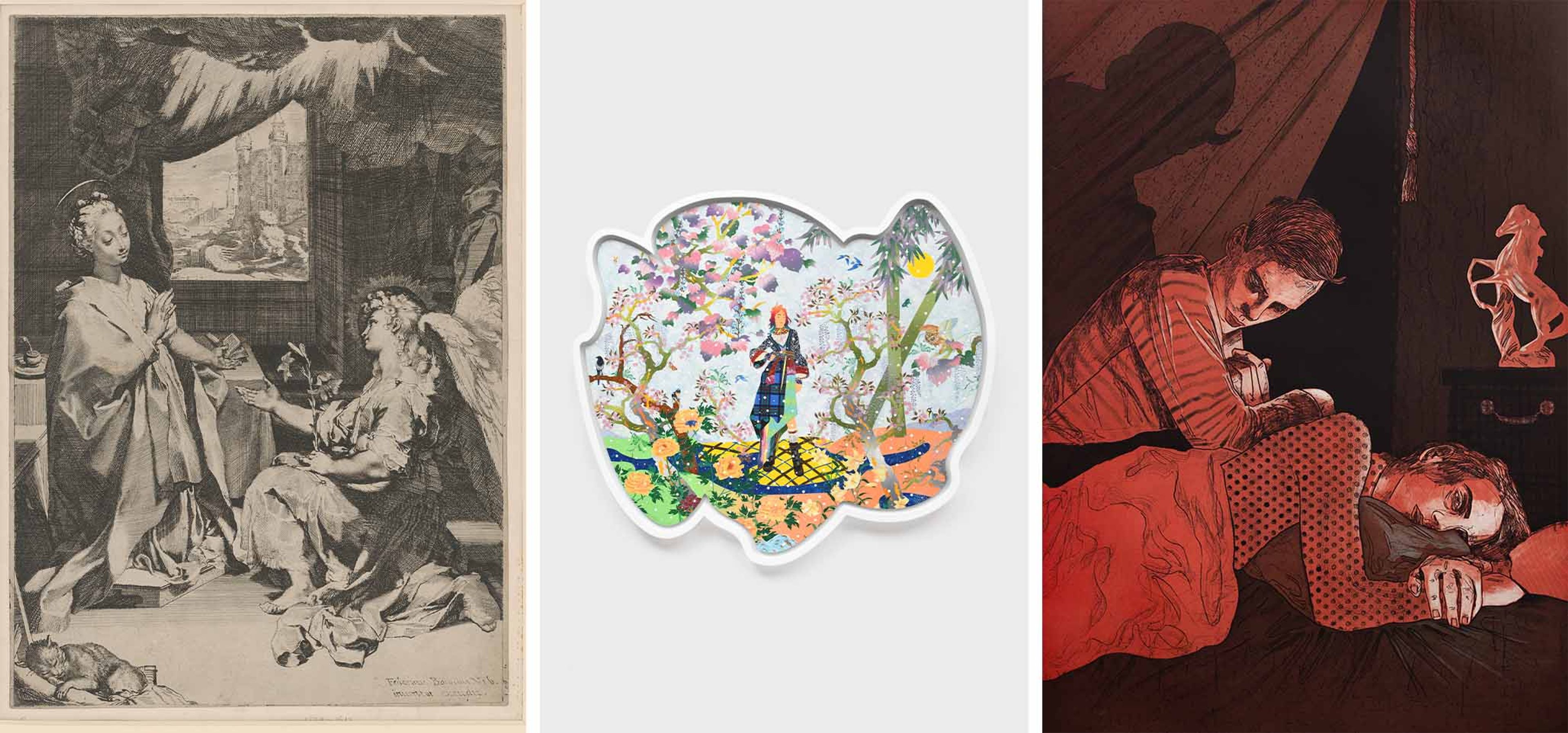
There are treasures everywhere, things like a pristine etching/engraving of The Annunciation, by Old Master Federico Barocci, and Nightmare (red), an aquatint by future Old Master Hernan Bas. I’d never heard of the Japanese artist Tomokazu Matsuyama (b. 1976), now based in Brooklyn, but he startled me with The True Oasis Erase, from 2025, shown at Pace Prints. I’m not sure what the title means, and neither is the dealer, but it sounds good. It’s a magnificent mongrel made from ink, acrylic, collagraph, relief, engraving, pochoir, collage, hand finishing, and there’s a jigsaw involved. He’s not, as you can tell, a boundary guy. That he was once a semiprofessional snowboarder tips us off to that. He feels free to chart his own course. It’s 49 by 41 inches and needs to be seen to be believed. It’s dazzling, multilayered with color, movement, and images, so why not multi-media?
When I first saw a photograph of it, it looked like a piece of porcelain, small and dainty, but it’s very Bollywood, with apologies to Japan and Matsuyama -- bright, sassy, and cinematic. Omnivorous in his inspirations, he develops a conceptual look and goes wherever it takes to get it. It’s $30,000.
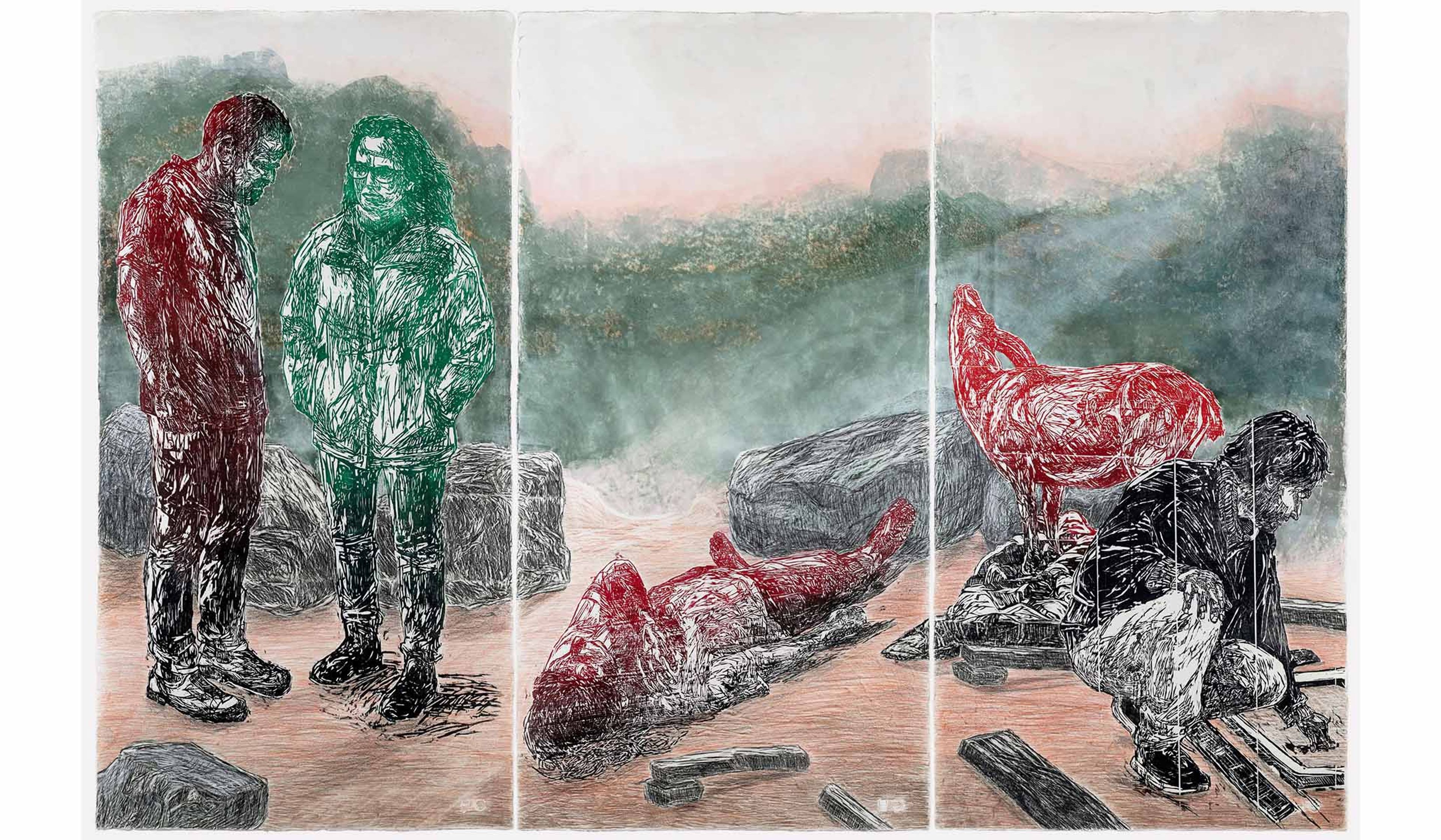
Cade Tompkins is a Providence-based dealer whose artists embrace luscious color, shapes that could have come from dreams, and messages that are as various as they are unpredictable. This time, she’s focusing on Orit Hofshi (b. 1959), an Israeli artist whose monumental colored woodcuts seem to reach for the Old Testament for gravity and mood. Woodcuts do indeed start with wood, as does printmaking itself, since carving a design into a block of wood and then submitting it to paper, ink, and a press is the start of the medium. Dürer’s Apocalypse woodcuts from the late 1490s were the medium’s first triumph. Woodcuts also remind me of old stained glass in which the lead borders become part of the design. Hofshi’s Ephemeral Passage, from 2025, is 80 by 120 inches, a woodcut with rubbed colored pencil; it seems like an altarpiece. There’s a lot of finesse, but the themes are powerful, somber, and timeless. The handmade paper feels like bark.
I don’t read any particular Old Testament story into Hofshi’s work but, rather, take titles seriously. Hers suggests land that lasts as we come and go, we mortals, animals, anything that lives, grows, and dies. Whatever story the individual viewer might contrive, it’s going to feel hewn by hand, not mass-produced, and not frilly and flaky. Ephemeral Passage is unique, not part of a limited edition as are most prints. It’s $75,000. I adore Tompkins for her good taste, her artists who don’t fear color, and her fierce but very classy advocacy on their behalf.
Kiki Smith (b. 1954) is an adventurer artist I’ve followed since the early 1990s. She’s made art powered by in-the-headlines themes such as AIDS, feminism, and ecology, but she thinks big and is never one-dimensional, making art about mortality, the human body, Mary Magdalene, and the moon, as in Wooden Moon, a 12-foot-wide wood engraving from 2022 and well suited to a moment when the moon, a big topic, happens to be in the news. It’s offered by Krakow Witkin Gallery.
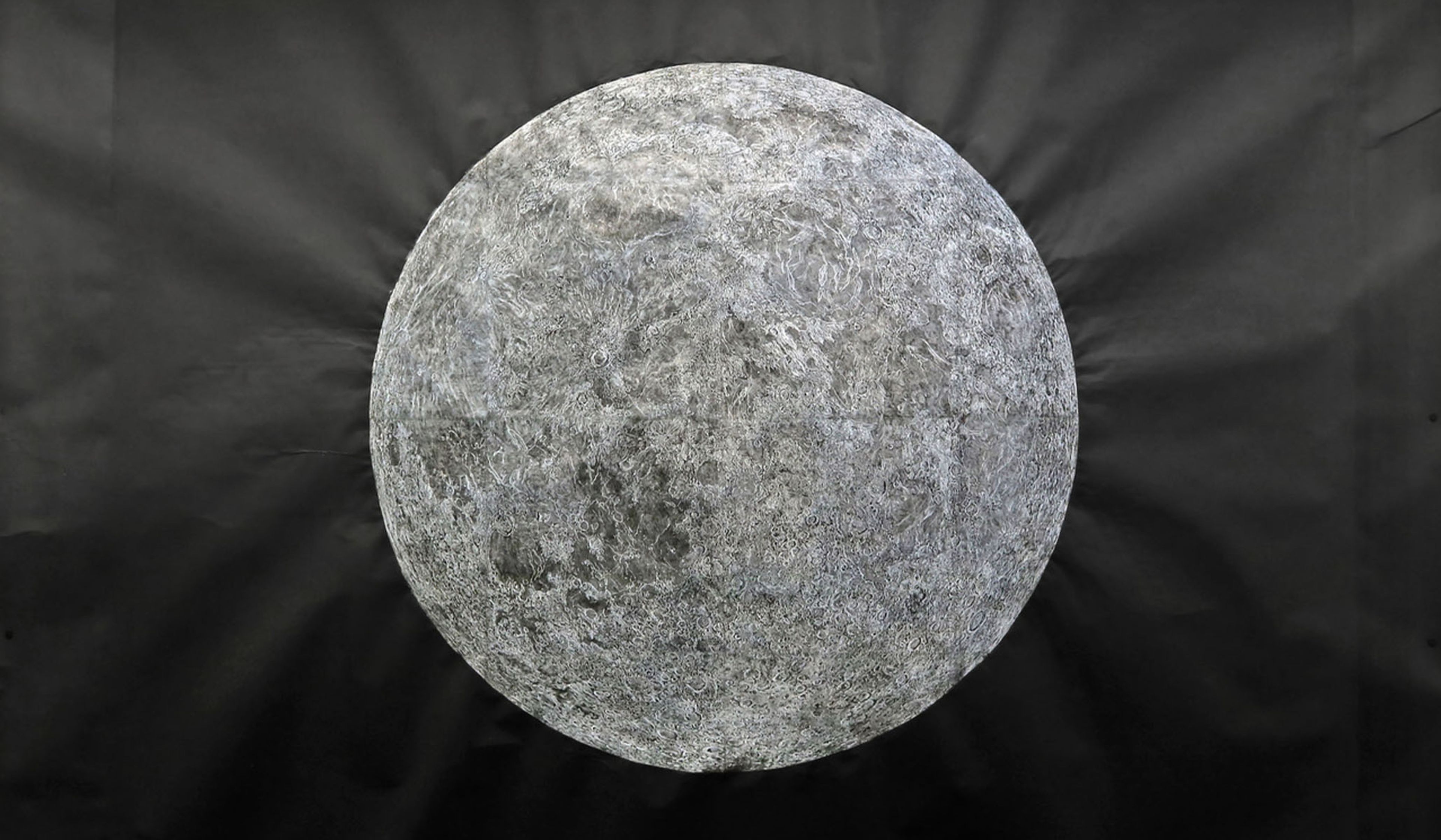
It’s a wood engraving on handmade Xuan paper, a Chinese paper that looks like rice paper, but it’s made from bark and has a soft, malleable texture that captures and then caresses details. A wood engraving is a child of the woodcut, but instead of lines that look gouged and assertive, it allows details from fine, precise, engraved lines. Etched lines fly like wind spirits. There’s some blue-and-white watercolor work, too. It’s awesome. I don’t think there’s a press that big, though. The work took 20 blocks whose prints are stitched together.
This big moon of ours might be a reality TV star these days, but it’s beyond us and beyond the moment, both ingredients in the best art. Wooden Moon is affordable for college and university museums, too. They should jump at it since it’s the ultimate “think about things bigger than yourself” art. It’s as far from woke junk as we can get.
Paula Rego (1935–2022), a Portuguese artist in London and thus a great novelty, is a so-so artist who’s hard to love since she’s so derivative, having a dash of Goya, a dollop of Surrealism, and a surfeit of intense feminism. She’s collectible and suited to curators and directors pressured to buy work by women and attracted by headline names. The Met is doing a retrospective of her work in 2028. Rego will soon have as many retrospectives as Alice Neel or Georgia O’Keeffe, which means too many.
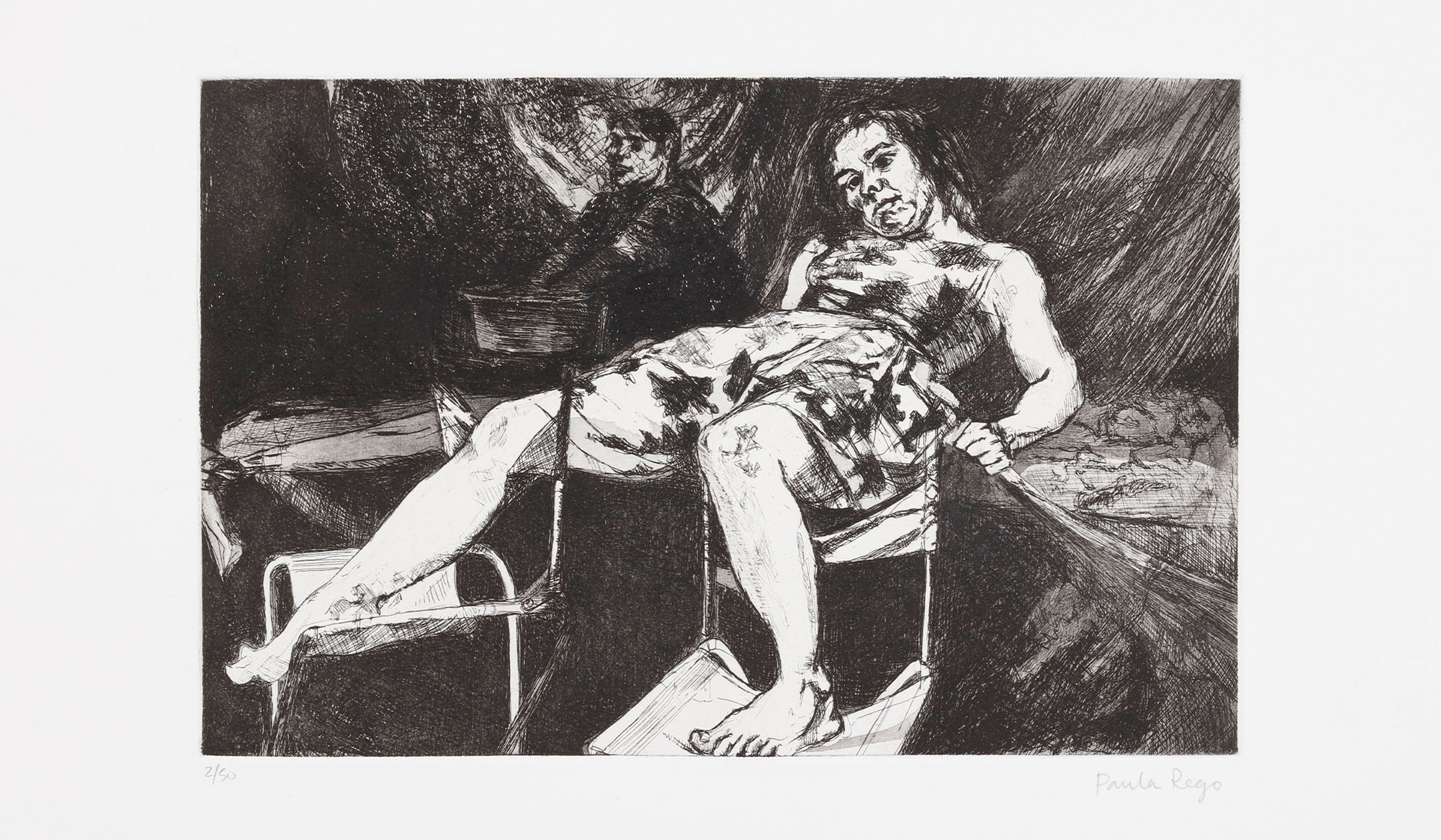
The Met’s curators bought a group of Rego’s Abortion Series etchings from around 1999, along with her pastels, to protest Portugal voters’ rejection of a plebiscite legalizing abortion. Voters reversed themselves in 2007, with Rego’s much published etchings said to have been persuasive. Talk about woke junk. They’re schlock art, Goya Ultra Lite with no intrigue or nuance. Rego said she’d had “lots of abortions.” Careless, and callous, for starters. Her work is at Cristea Roberts Gallery’s booth. They also represent the estates of Anni Albers and Howard Hodgkin. Now, those are artists with sparkle and substance.
I also visited a booth filled with Warhols -- and who hasn’t overdosed from too much Warhol? – and another owned by women and showing only art by women. I can’t believe that Gemini G.E.L., the printer and artist workshop that worked with Josef Albers, Richard Diebenkorn, Philip Guston, David Hockney, Jasper Johns, Ellsworth Kelly, James Rosenquist, Richard Serra, Claes Oldenburg, Ed Ruscha, Frank Stella, and lots and lots of women is only doing projects for women artists. How blinkered.
Of the 80 dealers at the fair, only four -- Childs Gallery, Paramour, the Old Print Shop, and William P. Carl -- do it the old-time way, with hundreds of prints on racks and on the walls, arranged loosely by theme or by size and nationality, with no theme. Almost everyone else at the show curates his or her booth, so it’s like a small museum gallery. That’s what people like and expect now. I’ll focus on Bill Carl since this is his 50th year in the print business and I love anniversaries, measures of durability that they are.
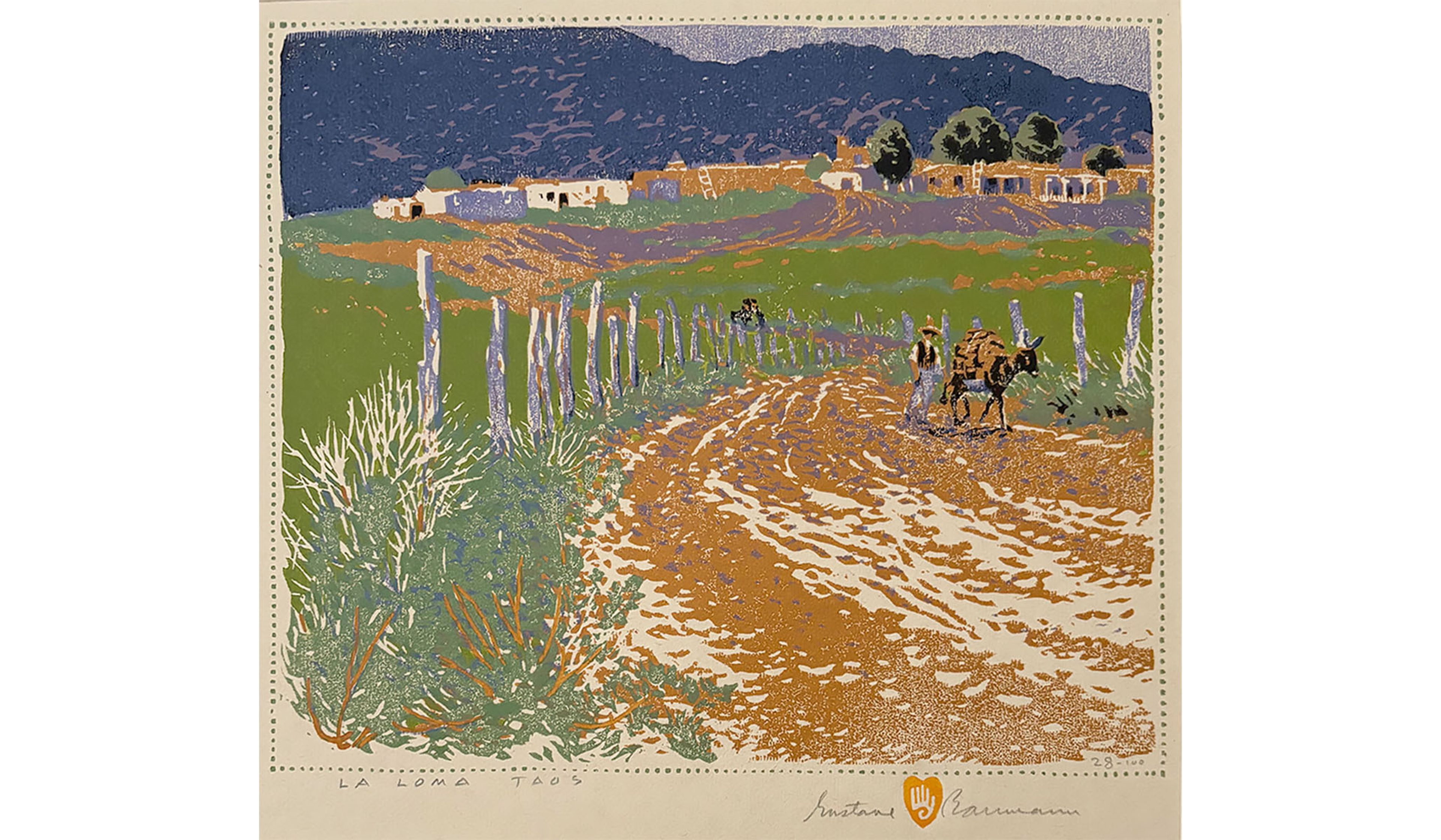
Bill focuses on prints after 1850, color woodcuts, and American, French, Dutch, and Belgian prints. He’s based in Durham, N.C. I loved flipping through his racks, finding work by Whistler, George Bellows, and Thomas Hart Benton, among other heavy hitters, but there were many underrated artists, too. Not that Gustave Baumann (1881–1971) is unknown, but his brilliant color woodcuts from the 1920s are mostly New Mexico scenes, so people think of him as regional. La Loma (Taos), a Taos view from 1919–1931, sparkles. It’s $14,000. Plus, and this is a something I’ve never seen, he’s selling John Taylor Arms’s Loop-the-Loop, a colored etching and aquatint from 1920 of a biplane doing a loop. Arms (1887–1953) is famous for his etchings of Gothic churches in Europe. It’s a fine, delightful little thing and, at $850, something that a poor little church mouse like me can afford.

About the Author
Brian T. Allen is National Review’s art critic.
Advertisement
Advertisement



Comments