Passover Helps Jews Navigate the Paradoxes of Our Age
Written by Tal Fortgang
It allows the Jewish people to transcend the vicissitudes of time and the temptations of victimhood.
Share this story
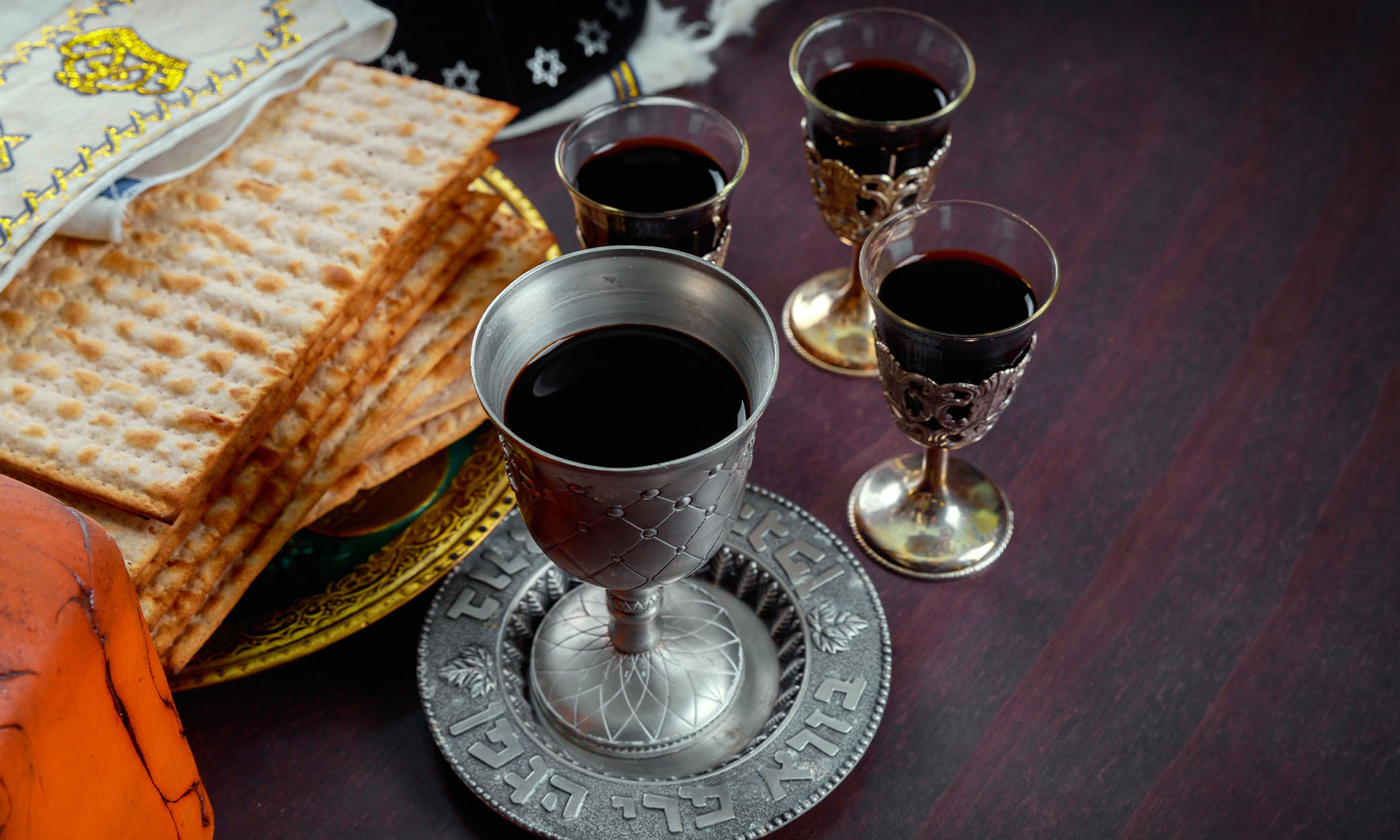
photovs/via Getty Images
A few paradoxes now attend to Jewish life in America. The most puzzling is that we are both loved and hated. Americans have “warmer” feelings for Jews than for any other religious group. Yet Jews are also the group most likely to be attacked because of our identity. Like the old joke about antisemites and philosemites believing all the same conspiracy theories and only disagreeing over whether it’s for the better or the worse, the only consistency to be observed is that our compatriots have strong feelings about us. But the paradox is only new for reasons that deserve celebration. Historically, those strong feelings toward Jews have been overwhelmingly negative. Only in America has Jewish survival been tested primarily by our bonds of affection with our fellow countrymen. I think I speak for my community when I say we are much happier fending off complete assimilation than annihilation.
Yet — and this raises another paradox — things seem to be trending in the wrong direction for American Jews, and indeed Jews worldwide. Violence against Jews has spiked since the October 7 attacks, after which one would’ve expected heightened sympathy for the Jewish people. Some young Americans, following the hard left and embracing some classic tenets of Marxist antisemitism, aren’t quite as keen on the Jews as they once were. For them, Jews are consummate exploiters, whether as capitalists here or imperialists in the Middle East. More concerning is the uptick in antisemitic conspiracy theories advanced by popular right-wing podcasters. They cry that no one is allowed to criticize Israel or the Jews — a violation of our sacred right to free speech — while advancing crackpot theories about Mossad plots and Jewish indifference to gentile welfare. All of this at a time when Jews seem less omnipotent than ever.
These apparent paradoxes form the backdrop for Passover, the holiday that centers on transmission of Jewish tradition and self-understanding. Eric Weinstein has called the Passover Seder, in which American Jews will partake when the holiday begins on Saturday night, “a survival manual.” To survive, especially as a distinct tradition within a nation that does not force you to maintain your difference, you need to know who you are and what you stand for.
This year, confounded by paradoxes, American Jews are struggling with their self-conception and posture toward a culture that suddenly feels chilly. Some cling to the idea that Jews should present themselves as a weak minority. Our national focus on antidiscrimination has spawned a massive DEI industry, and if we position ourselves as a downtrodden group defined by discrimination against us, we might gain sympathy, they claim. One need only look at the words of the recently fired head of DEI at the University of Michigan to see the folly of this approach. According to a New York Times paraphrase, she explained that Jewish students were “wealthy and privileged and not in need of her office’s diversity services.” Doubling down on weakness is not merely shameful — it’s bound to be ineffective as an appeal to those who believe a group cannot be both discriminated against and successful. It’s also a disgrace to the memory of those who have fought to make the American Jewish experience as safe and secure as it is.
Other Jews are turning inward, becoming more religious, more communal, and less concerned with their role in American public life. There is much to celebrate about this trend, which is the natural and historically consistent response to rising Jew-hatred. There is certainly nothing lamentable about Jews returning to their traditions and spending more time and money on their own communities. As long as it does not come at the expense of our obligations toward our fellow citizens, it is wonderful.
But that caveat points to the incompleteness of this approach in uncertain times. If weakness invites scorn, complete insularity will invite contempt. What some Jews have viewed as part of the secular liberal bargain — you leave us alone, and we will do the same for you — is increasingly understood as shirking our responsibility as citizens. Perhaps owing to the Christian paradigm of showing one’s love for one’s fellow man by sharing the good news of Christianity, Jews’ unwillingness to proselytize can be misunderstood as apathy. With a few notable exceptions of Jewish leaders who aim to share Judaism’s beauty even with those not obligated in its commandments — I am thinking of Rabbis Meir Soloveichik and Ari Lamm, but tragically few others — Jews have clung to a kind of cultural separation between synagogue and state.
That is neither what is required of us by the Torah nor what best advances our welfare as a “creative minority,” to borrow a phrase from the late Rabbi Jonathan Sacks. We are called upon to show the world that our God is the one true God and His Torah the one true law. Not by proselytizing or offering easy conversions, of course — we do not believe that being Jewish is the only way into heaven, or even the only way to be righteous here on Earth — but by demonstrating that observing the Torah’s sometimes onerous commandments is what allows the Jewish people to not just survive but thrive.
Passover within that paradigm takes on a new dimension. The Seder takes place in the core of the Jewish community: the home. The Torah commands that each Paschal sacrifice (now commemorated with the festive Seder meal) be eaten in its entirety by a family in its home. The home is not a big tent but a small one: a place where rules, norms, and expectations are cultivated by parents, or, as the traditional Hebrew term of respect has it, “parent-teachers.” On Passover, that small tent is especially demanding. Jews keep a sort of super-kosher for eight days, eating only those foods that are specifically deemed acceptable for Passover. It is a highly restrictive atmosphere, and even some of the positive commandments — eating matzah and maror, the bitter vegetable — can be unpleasant. Children, no matter how shy, must ask questions: Why is this night different from all other nights? Parents, no matter how reluctant to bring the weight of history to bear on a new generation, must answer: Because God redeemed us from Egypt, and we must never forget that exodus as the source of our freedom.
A small tent does not mean a closed tent, though. “All who are hungry, let them come and eat,” we recite before telling the Exodus story. That is true at a literal level. But figuratively, it is an invitation into a tradition and a way of life. Whoever is hungry for meaning, for purpose, for fulfillment, come and join us at this table, where we will share the secrets to thriving through the ages: the mitzvot, or commandments, which are in harmony with nature and allow the Jewish people to flourish.
The Seder is Jewish pride and Jewish strength put in its proper place: a small tent open on all sides. Its traditions allow the Jewish people to transcend the vicissitudes of time, the paradoxes of our existence, and the temptations of victimhood. Its lessons reverberate throughout the year in commandments tethered to our national origin story — Jews sanctify the Sabbath as “a testament to the exodus from Egypt.” Its rites remain relevant, indeed foundational — as we proclaim in one of the Seder’s central lines — “in each and every generation.”
About the Author
Tal Fortgang is a legal policy fellow at the Manhattan Institute.
Featured Tags
Advertisement
Advertisement

Comments