Putin's Cold Calculus
Written by David Satter
The West must persuade him that continuing the war is a threat to his regime
Share this story
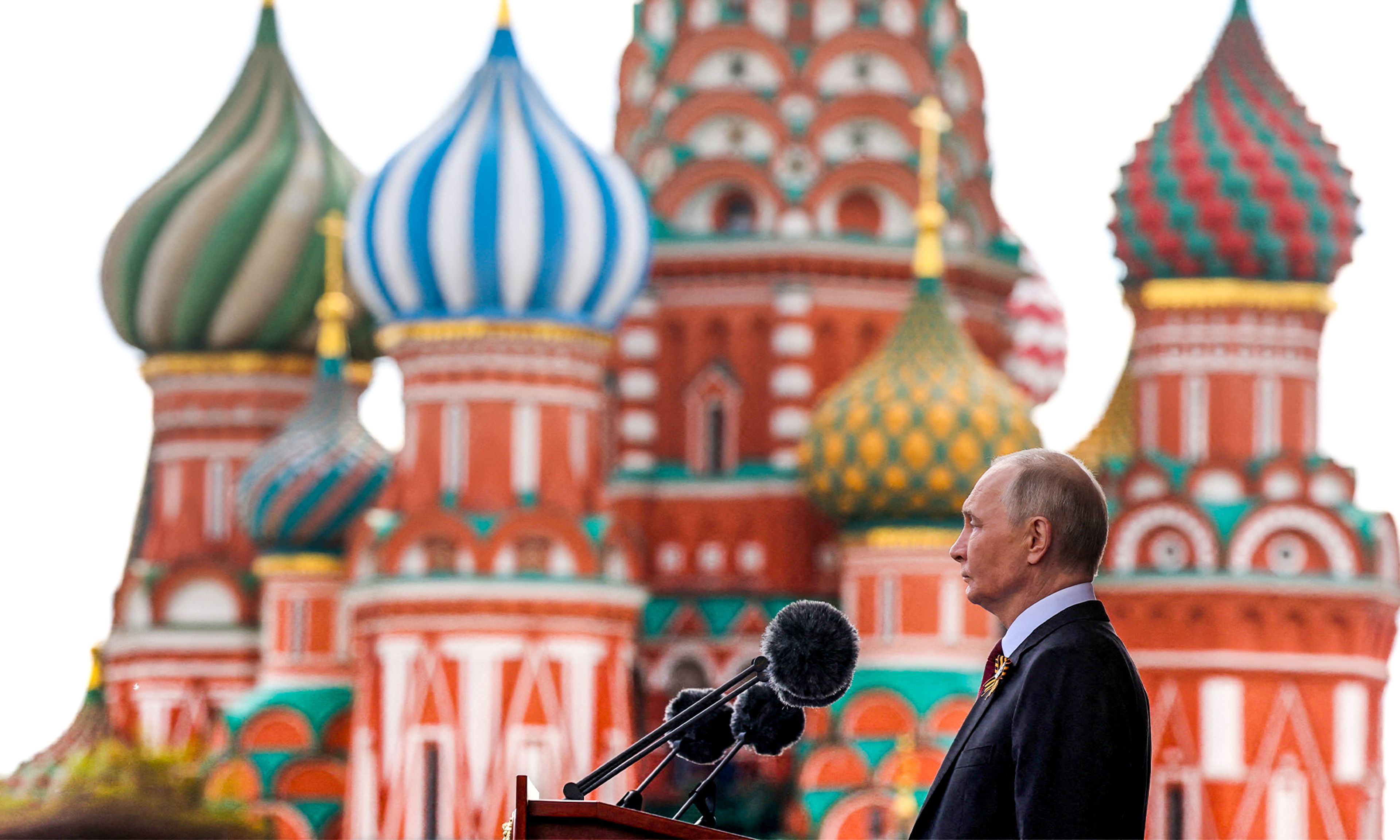
Russian President Vladimir Putin delivers a speech during a military parade on Victory Day, in Red Square in central Moscow, Russia, May 9, 2025.
It may seem incredible that any leader could send hundreds of thousands of soldiers to a needless death just to strengthen his hold on power and that of a small coterie of corrupt associates. But this is the reality of post-Soviet Russia.
Vladimir Putin became president after the bombings of Russian apartment buildings in 1999 that cost 300 lives. According to incontrovertible evidence, the bombings were carried out by the Federal Security Service (FSB) precisely to bring Putin to power. The failure of Bill Clinton’s secretary of state, Madeleine Albright, to raise the issue, even though trusted Russian sources had warned the U.S. Embassy in Moscow of FSB involvement, set the clock ticking for an eventual full-scale war.
President Trump’s attempt to end the war between Russia and Ukraine was doomed by its manipulative and transactional character. In his Oval Office confrontation with Ukrainian President Volodymyr Zelensky, Trump treated the negotiations like a card game. But neither Zelensky nor Russian President Vladimir Putin can afford to play cards. The stakes for Zelensky are his nation; for Putin, his regime.
Trump’s statements and actions, from his recycling of Russian disinformation to his naming of his real estate partner Steve Witkoff as a special envoy, demonstrate that he does not understand the seriousness of what is taking place. This is not a border dispute but a conflict between Western values and criminal nihilism that threatens not only Ukraine and Europe but also the U.S.
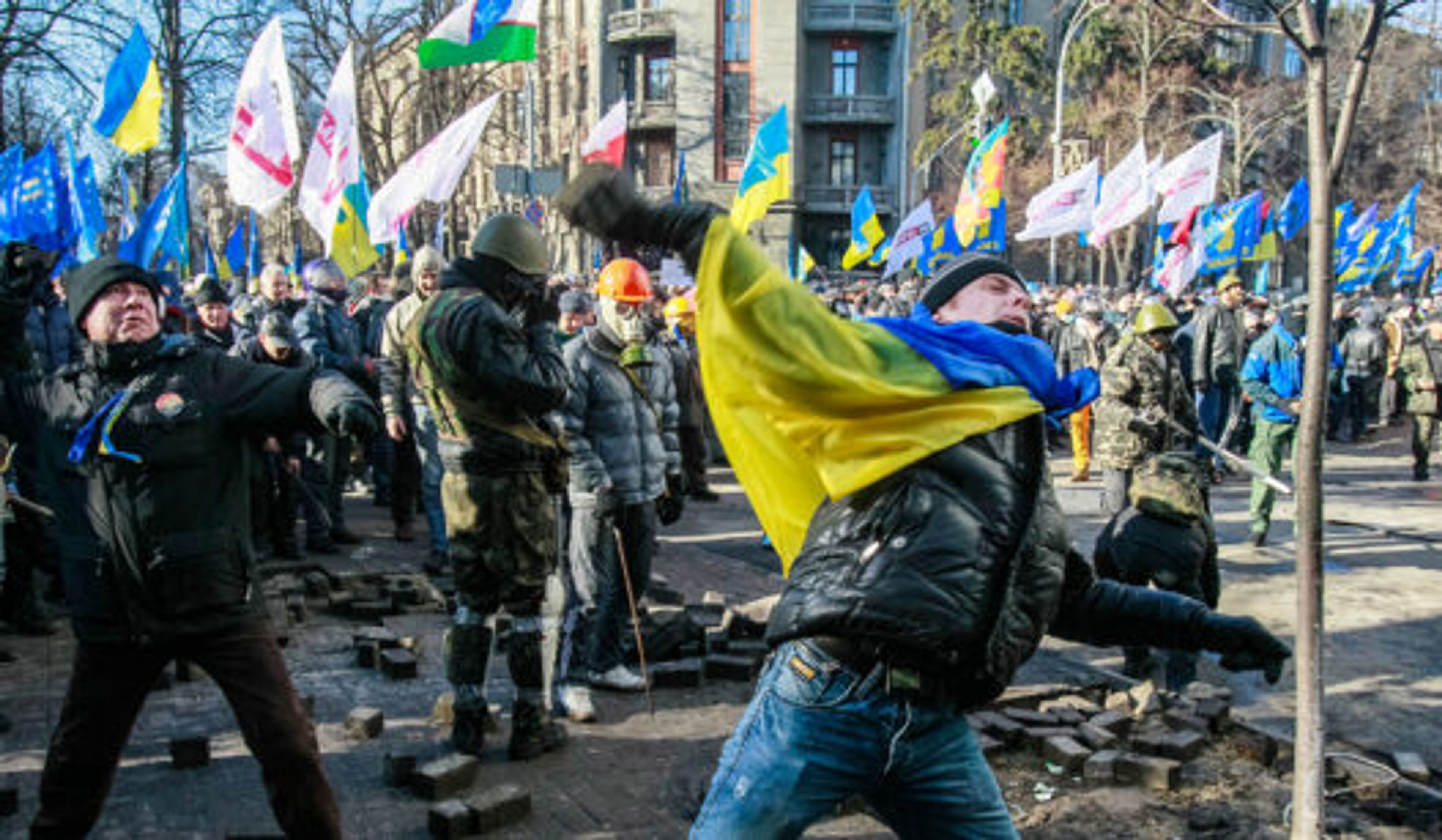
It’s important to note that post-Soviet Russians did not have negative attitudes toward Ukraine until the propaganda attack that began in 2014, when the Maidan revolt in Kyiv led to the overthrow of Viktor Yanukovych, the pro-Russian Ukrainian president who dropped plans to sign an association agreement with the European Union. The fate of Yanukovych demonstrated to Putin the risks of even relative liberalism for a corrupt regime. The attacks on Ukrainians as “Nazis” were followed by the annexation of Crimea and the invasion of the Donbas region in eastern Ukraine in an effort to distract the Russian population from the example that the Ukrainian events set for those seeking greater liberty. The undisguised aggression gave rise to a model of Russia’s relations with the outside world. That model remains in place today.
Russia’s opening to the West, which began with Gorbachev and came to a decisive end with the full-scale Russian invasion of Ukraine, was actually an interregnum, during which Russians experienced a degree of pluralism and freedom that was contrary to Russia’s historical traditions. According to those traditions, the regime was less a government than a religious crusade crystallized in the institutions of a state. The regime did not guarantee the welfare of its citizens, because it did not aspire to. It existed for a “higher purpose,” in light of which the lives of individual citizens had no significance. If Russians were aware of their lack of liberty, they compensated for their helplessness by taking pride in the state’s power and ability to intimidate, giving their wholehearted support to the regime.
After the fall of the Soviet Union, there was a chance to break with the past. Reformers carried out the transition from socialism to capitalism under conditions of total lawlessness. As a result, the country’s underlying totalitarian psychology was left intact, waiting to be exploited by a ruler who sensed a threat to his power.
The overriding goal of the Putin regime is to strengthen its hold on power. It invaded Ukraine not because, 23 years after the fact, it was concerned about NATO expansion or had finally had enough after eight years of “genocide against Russian speakers in the Donbas.” Its real reason was that its grip on power had become insecure, and war was the obvious remedy.
The example of the Maidan revolt, although it took place in a neighboring country, was potentially destabilizing for Putin’s rule. He and Yanukovych ruled in the same corrupt manner, and Putin was just as vulnerable to a mass demonstration as Yanukovych had been. The annexation of Crimea, however, changed everything. Putin’s corruption was now forgotten as Russians celebrated their country’s “return to greatness.” His approval rating among the Russian population rose to an unprecedented 87 percent. Those who wanted him to stay on as president after 2024 rose from 33 percent in 2013 to 58 percent in 2014, and then to 67 percent in 2017.
Euphoria over the seizure of Crimea could not last forever. Corruption, increased state ownership, and the politically motivated seizure of property led to economic stagnation and falling disposable income. On YouTube, Alexei Navalny’s reports exposing the regime’s corruption were gaining hundreds of millions of views. Putin’s approval rating remained at about 60 percent, but the number of respondents who wanted him to stay on after 2024 fell to 47 percent, a disturbing sign for an authoritarian system in which the media were almost entirely state-controlled.
To add to these problems, in August 2020, in every major city in Belarus, mass protests broke out over the falsification of the results of the presidential election. Exit polls showed that Sviatlana Tsikhanouskaya, a part-time English teacher who had campaigned on freeing political prisoners and on new, fair elections, had decisively defeated Alexander Lukashenko, Belarus’s five-term president and Putin’s close ally. The authorities announced that Lukashenko was the winner with 81.04 percent of the vote.
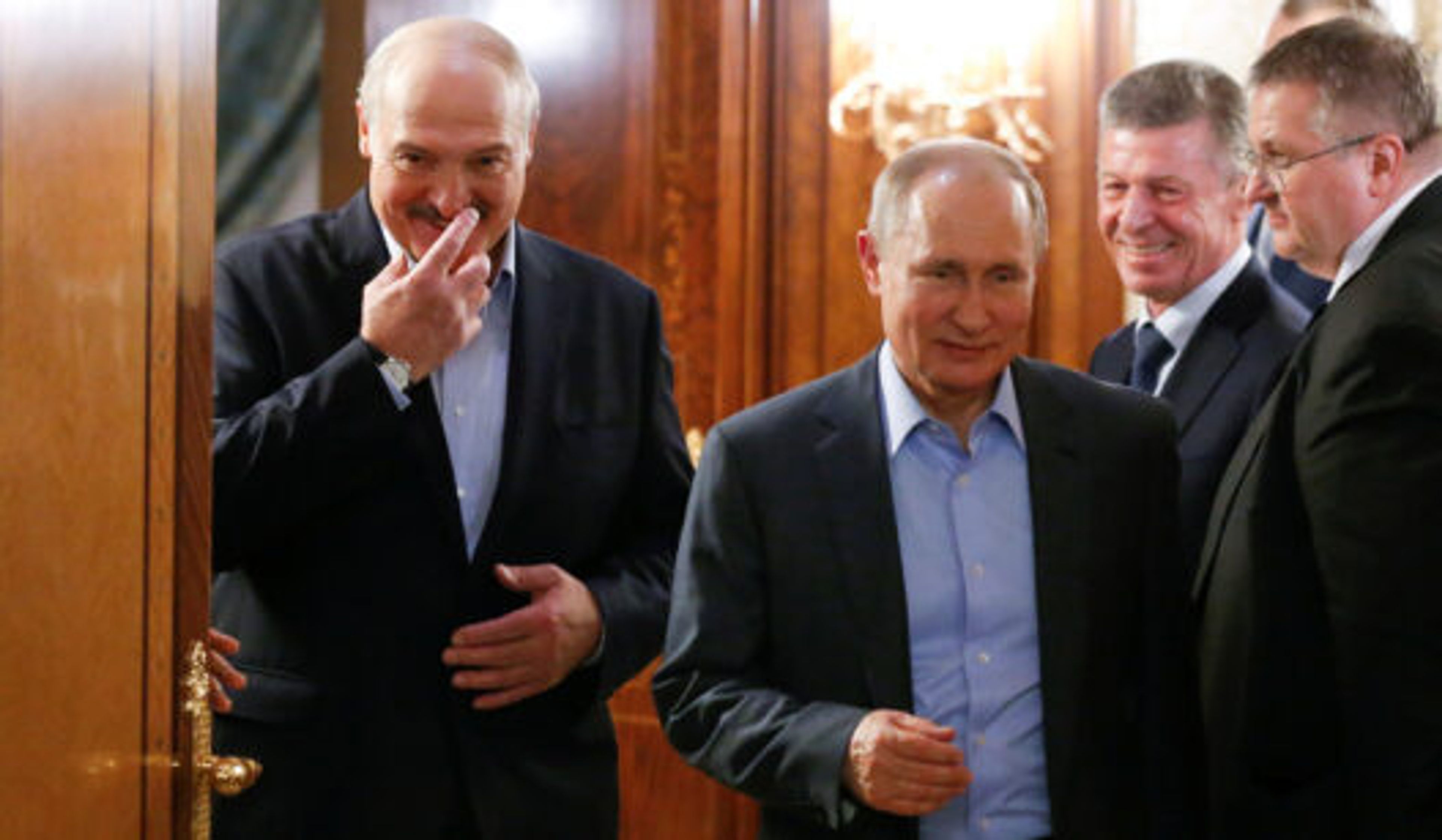
On August 27, Putin threatened to send troops to Belarus if Lukashenko could not keep order. In the end, with the help of beatings and 25,000 arrests, the protests were suppressed. Still, the protests against a Russian client were reminiscent of what had happened six years earlier in Ukraine, and they inspired Putin to take steps that eventually led to war.
Eleven days after the Belarusian election, Navalny, who had been followed by an FSB team since January 2017, was poisoned. He survived after being rushed to Germany for treatment. (He later returned to Russia and was arrested and sentenced to a penal colony, where he was eventually killed.)
In late September, Russia held the Kavkaz military exercises that involved maneuvers consistent with an attempt to encircle the Ukrainian forces in Donbas. Those were followed in spring 2021 by an exercise, in occupied Crimea, that prepared for the potential seizure of Ukraine’s Black Sea coast. Russian talk shows and radio programs conveyed the impression that Russia was on the brink of war.
For the next year, Russia moved matériel into position, suppressed potential resistance inside the country, and demanded what it said were urgently needed security guarantees from the West. When the U.S. warned about the Russian military buildup, Russian television said that the West was preparing for war. In February 2022, Russians were told that Moscow would have no choice but to respond if the West pushed Kyiv to commit a “provocation.”
On February 24, 2022, Russia launched a full-scale invasion of Ukraine. More than 700,000 people fled Russia, but those who stayed reacted with overwhelming support for the regime. Putin’s approval rating rose again, reaching 83 percent. When Russians were asked whether they supported continued rule by Putin after the end of his fourth term in 2024, 72 percent said yes. In December, despite mobilization, the effects of sanctions, and an estimated 300,000 battlefield deaths, the figure had risen to 78 percent.
Russian nationalism made it possible to lie Russians into a needless war. The problem facing the West is that, over the past three years, Russia has become a system defined by the requirements of the ongoing slaughter. Putin has used the war to impose an emergency regime. Independent news outlets are banned, and those who in public or on social media praise Ukraine, criticize Putin, or comment using the word “war” can be prosecuted. The number of persons labeled “foreign agents” has greatly increased, forcing war critics to leave the country.
The political atmosphere in Russia is defined by propaganda. There are two basic messages. The first is that NATO and the “collective West” are using Ukraine as a “clenched fist” to destabilize Russia. The other message, chilling in its implications, is to the effect that the only way for a young Russian to give meaning to his life is to die for the state.
At a recent meeting with mothers of soldiers killed in battle, Putin compared the death of one woman’s son with the fate of a young man who died a civilian. The woman’s son, unlike the other Russian who died, probably from vodka, had really lived, Putin said: “Your son’s goal was achieved. . . . He didn’t give his life in vain.”
The main sources of propaganda in Russia are televised “talk shows” -- in reality, theatricalized indoctrination sessions. They are shown after each major news program, and it is hard to disconnect them from the day’s events. Even a person who doesn’t watch them at home will be confronted with them on the large-screen televisions that are now ubiquitous in canteens, agencies, hospitals, and waiting rooms.
In the schools, children are assigned to make camouflage nets for soldiers at the front. Pupils as young as five take part in war games and participate in the celebration of military holidays, particularly May 9, which is described as “holy,” the anniversary of the victory in World War II. Veterans visit schools to discuss their experiences and give lectures on patriotism. One hundred ninety schools have been renamed for the Ukraine war’s veterans.
The average salary of a Russian soldier is now close to $2,000 a month, twice the national average and four times the average in the impoverished regions that have contributed the most troops. Almost a million Russian soldiers have been killed or wounded in the war, and the government has provided up to $95,000 to the family of each casualty or death. In August 2024, activists in North Ossetia, a region in the south of Russia, asked Putin to stop recruiting the native population because their cemeteries were overfilled and the Ossetian population was disappearing. Such incidents, however, appear to be exceptions.
[slideshow slideshow="1835399" /]
In general, the practice of providing cash rewards to those willing to bet their lives has succeeded in filling the army’s ranks and does not evoke any moral protest in Russian society. In fact, Russian women are marrying men deployed to Ukraine in the hope of collecting death benefits. This practice is officially condemned but also indirectly encouraged. In a video on Russian television, the parents of a soldier killed in Ukraine were shown admiring the new car they bought with their son’s death benefits. They explained that they would use it to drive to the cemetery.
Fueled by massive military spending, the performance of the Russian economy has consistently exceeded expectations. In 2023, the economy grew by 3.6 percent, compared with an International Monetary Fund prediction of 0.3 percent, and in 2024 it grew by 4.1 percent after Western experts had predicted just 1.3 percent. The rate of income growth steadily accelerated and reached 8.1 percent in the first half of 2024.
The war has created opportunities for career advancement for civilian specialists willing to spend at least some time working in the “new territories.” This has led to de facto enlistment of Russians in the war effort and made the government bureaucracy more political.
The militarization of Russian society has also been reflected in an increase in Russian actions against the West. On July 28, NATO officials confirmed that U.S. intelligence had foiled a Russian plot to kill Armin Papperger, the head of Germany’s Rheinmetall, which produces artillery shells for Ukraine. According to the officials, the plot was one of several to assassinate European industry executives supporting Ukraine.
In July, packages containing massage pillows exploded in DHL cargo facilities in Britain, Germany, and Poland. The explosions took place shortly before the packages were to be loaded onto planes headed for North America and were, according to U.S. intelligence officials, part of an operation carried out by the Main Intelligence Directorate (GRU), Russia’s defense intelligence agency. If past Russian practice is any gauge, they were intended to test the Western reaction.
In January 2025, Polish Prime Minister Donald Tusk warned that Russia was preparing terrorist acts against airlines all over the world. When at his Oval Office meeting Zelensky raised the danger this posed to the U.S., Trump responded by berating him.
Besides planning terrorist acts, Russia is seeking to free FSB agents arrested in the West for terrorist acts already committed. Vadim Krasikov, who had been sentenced to life imprisonment in Germany in 2021 for the murder of a Chechen opposition figure in Berlin, was freed in August 2024 as part of a trade in which the West received Russian opposition activists and Western citizens, including Wall Street Journal reporter Evan Gershkovich. The deal was concluded for humanitarian purposes, but it stands as an invitation to Moscow to continue carrying out assassinations on Western soil.
The Trump administration is anxious to put an end to the “ridiculous” Russia-Ukraine war, but the system put in place by Putin will be very difficult to reform.
Crimea and the Donetsk, Luhansk, Kherson, and Zaporizhzhia Oblasts have been declared parts of Russia in the Russian constitution. These regions, only one of which, Crimea, is fully occupied by Russia, are identified as part of Russia on Russian maps. Schoolchildren are taught that the regions are Russian. The incessant propaganda about the military threat from Ukraine and NATO will make it hard for Russia to accept a settlement in which Russia’s claim to the five regions is not recognized and Ukraine is fully armed and supported by Western troops on its soil.
Russia’s economy is not organized for a peaceful future. With the outbreak of war, military factories recruited 600,000 skilled employees at high wages. That fueled economic growth that can collapse if an end to war leads to restructuring. Russia will also face a danger if hundreds of thousands of highly paid soldiers return to civilian life and can find only jobs that pay a fraction of their previous salaries. By 2024, there were already 240 murders committed by returning soldiers, and that number could increase significantly.
In a social media post, former President Dmitry Medvedev said that Russia should do everything to ensure that Ukraine’s path to NATO ended with “either the disappearance of Ukraine or the disappearance of NATO.” After such statements and constant nuclear threats, a peace that guaranteed Ukraine’s security would be seen by many in Russia as a demonstration of the country’s impotence, with implications for the stability of the regime.
Trump has now explained that his promise to end the Russia-Ukraine war in one day was a joke. But Trump’s policy of sabotaging Ukraine, a vital ally, while seeking to mollify Putin could endanger the whole world. If the West is not ready to continue to support Ukraine with money, Putin will not believe that the U.S. is ready to defend Estonia at the cost of American lives. If NATO failed to defend the strategically vulnerable Baltic republics, it would mean the end of NATO as a credible alliance.
Putin rules a nation with the mentality of a movement that he has animated with calculated lies. The West can thwart his designs, but it will require actions based on principle. The U.S. and NATO must guarantee Ukraine’s security, accepting the risk, which, in this case, is absolutely minimal. It must also impose secondary sanctions on Russia despite the economic cost.
In 1996, Boris Yeltsin accepted defeat in the First Chechen War and withdrew his troops from Chechnya ahead of schedule because he saw that continuing the war would be the end of his political career. Putin will withdraw his troops from Ukraine when he decides that continuing the war is more dangerous to his power than ending it. It’s the task of the U.S. to help him reach that realization.
About the Author
David Satter is the author of The Less You Know, the Better You Sleep: Russia’s Road to Terror and Dictatorship Under Yeltsin and Putin and vice chairman of the Remembrance Society, which commemorates the victims of totalitarianism.
Featured Tags
Advertisement
Advertisement
Comments