Remembering David Keene
Written by Grover Norquist
Wherever the conservative movement was being built, David Keene was there.
Share this story
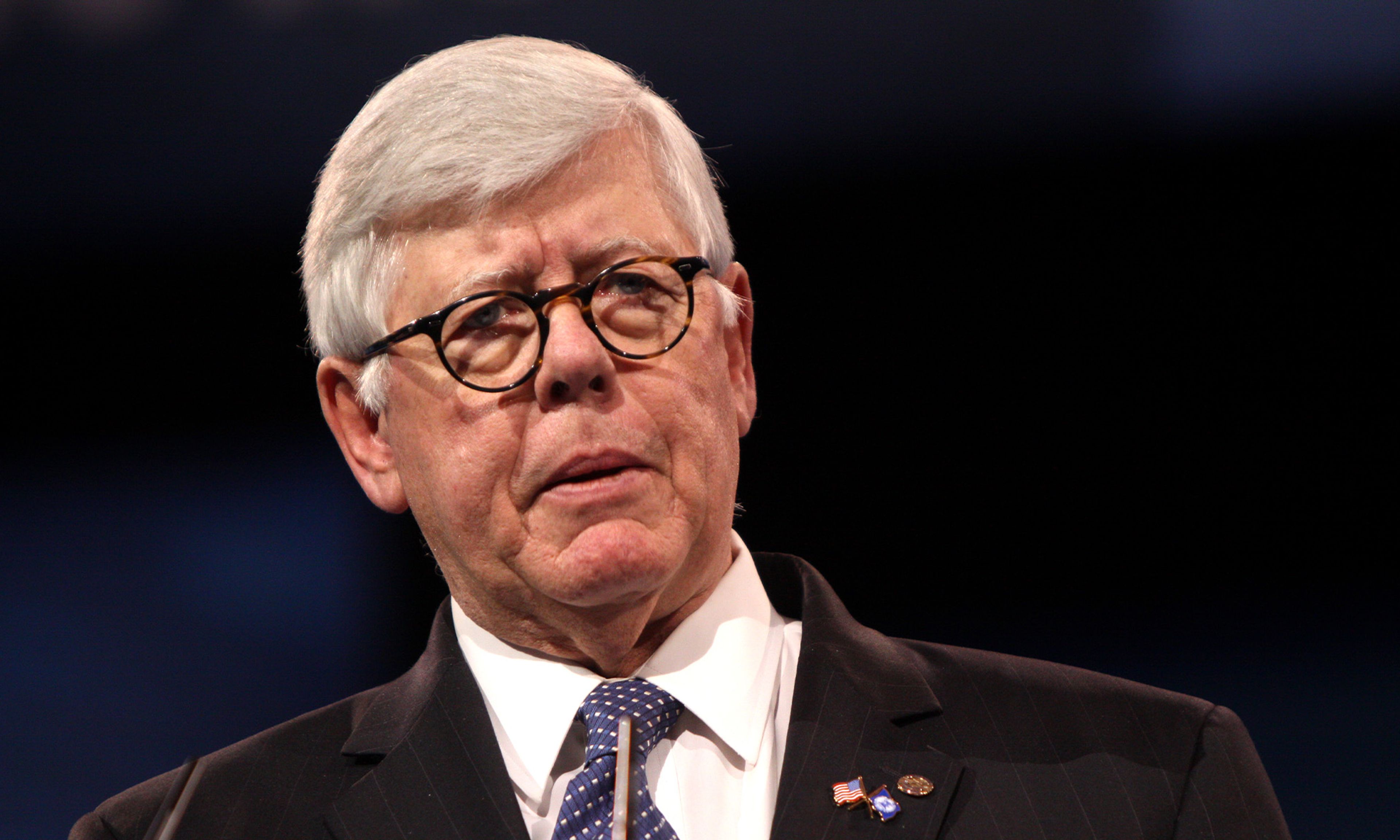
David Keene speaking at the 2013 Conservative Political Action Conference (CPAC) in National Harbor, Md., March 16, 2013.
David Arthur Keene was a friend of mine. A political ally. The guy who taught me how to annoy geese, ducks, and doves by shooting in their general direction during the proper season. Soon after I left Massachusetts to go work in politics, David Keene was on my short list of people I knew I wanted to meet, work with, and hopefully gain their respect one day. He always had mine.
For the last 60 years — up until he passed earlier this week at the age of 80 — David Keene was a key leader in the movement that changed the course of our nation’s history.
He had been a university chapter leader and then national chairman of the student movement Young Americans for Freedom. A longtime chairman of the coalition-building American Conservative Union, which hosted the annual Conservative Political Action Conference (CPAC). A board member and later president of the National Rifle Association. A part of the Goldwater reconstitution of the Republican Party. A veteran of the Nixon White House and the 1976 Reagan challenge to sitting president Ford for the Republican nomination. Someone who published every week, editing the Washington Times editorial page.
Writer. Editor. Compelling speaker. Candidate. Student organizer. Coalition builder. Political campaign staffer. White House staff. Political orator.
Where the Barry Goldwater–William F. Buckley–Ronald Reagan conservative movement was created and grew, David Keene was there building and leading. He decided where Vice President Agnew campaigned, and then he served as executive assistant to Senator Jim Buckley, the New York conservative upstart. David had a dash of “Mr. Smith Goes to Washington” — the consummate Midwest nice guy. But he was really like a cross between Forrest Gump and George MacDonald Frazier’s “Flashman” — characters finding themselves in the midst of all the key points of history. David was a character also, but very real.
This year is the 250th anniversary of the Declaration of Independence — the creation of the United States of America. We know the names and life stories of the men who imagined, created, and defended the nation in its infancy. We know instinctively that without those individual lives the world would be a very different place today. Not just America — the world.
But the obituary pages remind us that there are men and women in every subsequent generation who defend and build on that work. Men without whom our country would have traveled a different path. Goldwater, Buckley, Reagan — yes. But David Keene was also one such American. He became old enough to vote just as America was taking a second major lurch away from our founding principles and the Constitution. The “Great Society” was created to cement the power of the federal government. Welfare would buy votes. Federal funds would flow directly to big-city political machines, to nail down the commanding heights that were not already seized by the New Deal, and to replace the limits of the Constitution with the progressive vision of Woodrow Wilson.
When America was accelerating down Hayek’s “Road to Serfdom,” David Keene was a leader in the movement to not just “stand athwart history and yell stop,” as Bill Buckley wrote in the first issue of National Review as part of its mission statement, but to build and organize to make possible a U-turn on the Road to Serfdom.
In the 1960s, when the establishment press assured us that the universities were filled with red diaper babies, David Keene worked to build out the Young Americans for Freedom created by William F. Buckley, M. Stanton Evans, and others at the Buckley estate in Sharon, Connecticut. Barry Goldwater lost the presidential campaign of 1964, but conservatives came to lead the Republican Party nevertheless. The Soviet Union ended up on the trash heap of history. Whittaker Chambers, the communist who changed teams to work with Bill Buckley and Richard Nixon to expose Alger Hiss and other Soviet agents working inside the United States government, said he believed himself to be joining the losing side of history. David knew better.
David Keene was one of those activists, one of those leaders who changed the trajectory of American politics. He was a prolific writer: He penned a weekly column in The Hill where he was a powerful, if lonely, voice for conservative thought, and then for the Washington Times, recruiting conservative voices for their editorial page, which hosted and empowered many conservative writers. Similarly, at CPAC, he made it a point not to be on stage, so hundreds of other conservatives would get their starts in the spotlight.
David ran for the Wisconsin State Senate in 1969, losing by less than one percent of the vote. One wonders if Keene had won that State Senate seat and advanced in elected office, could he have matched his contribution to liberty that flowed from building and leading the National Rifle Association, the American Conservative Union, and his writing, speaking and editing over the years? Keene’s life and successes remind us that we need not be politicians to make political change.
David Keene led the National Rifle Association when the number of voters who were hunters declined, but the number of Americans with concealed-carry permits rose to more than 20 million. And now, in 27 states, no permit is required to carry a concealed weapon. That change protects the Second Amendment. That is as permanent a victory as anything in politics. When the Obama gun control laws were sure to pass, NRA President Keene stood in their way.
David Keene was unique in his ability to work with organizations and individuals on the left — when there was a true alliance. He worked with the American Civil Liberties Union in defense of civil liberties from Buckley v. Valeo 50 years ago to gun rights in 2020. The old bipartisan coalitions tended to pretend that both parties wanted the same goals but through different approaches. David Keene knew that was nonsense. Keene had the wisdom to see a few, very important areas where the serious right and left could agree to stand together against the encroachment of state power: against the free-speech stifling “campaign finance reform,” for civil liberties against government censorship, and in support of some criminal justice reforms.
Keene hunted, fished, and played cards with Republicans and Democrats, men and women of the left and right alike. He was pleasant, good company. The political struggle was real and important. But so were friends. Because David Keene lived, conservatives will win faster, but they’ll do so with less meaningless shouting. The conservative movement — and America — needs more David Keenes.

About the Author
Grover Norquist is the president of Americans for Tax Reform.
Featured Tags
Advertisement
Advertisement
Comments