Spring Splendor in Indianapolis
Written by Brian T. Allen
A gratifying visit to Newfields, the garden and museum campus, for flower sculptures, Rembrandt, Van Gogh, and more
Share this story
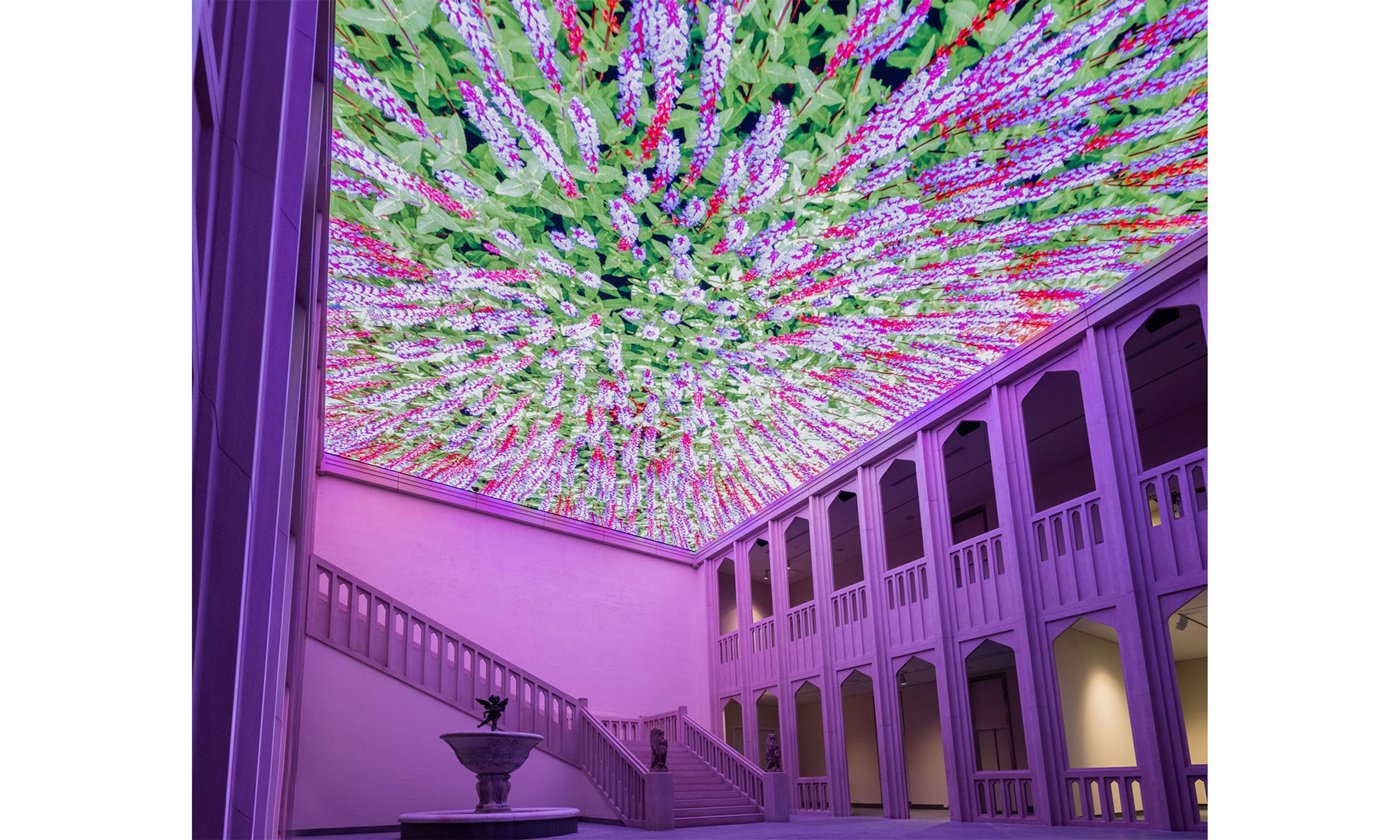
Flower power, courtesy of the Indianapolis Museum of Art’s video-art program.
If it’s Saturday, it must be Indy. Indianapolis, that is, and I was indeed there two Saturdays ago for a gratifying visit to Newfields, the home of stately formal gardens and greenhouses and the Indianapolis Museum of Art (IMA). I haven’t been there since 2021 when racism charges, the Black Lives Matter mass hysteria, and incompetent trusteeship battered the state’s premier art museum. After a faction of the trustees demanded that black leaders run the place and then got a revolving door of unsatisfactory administrators, Newfields now seems settled and more than functional. I enjoyed nearly a full day at the museum. There was so much to see and do that I could have had a second day. The place looks great.
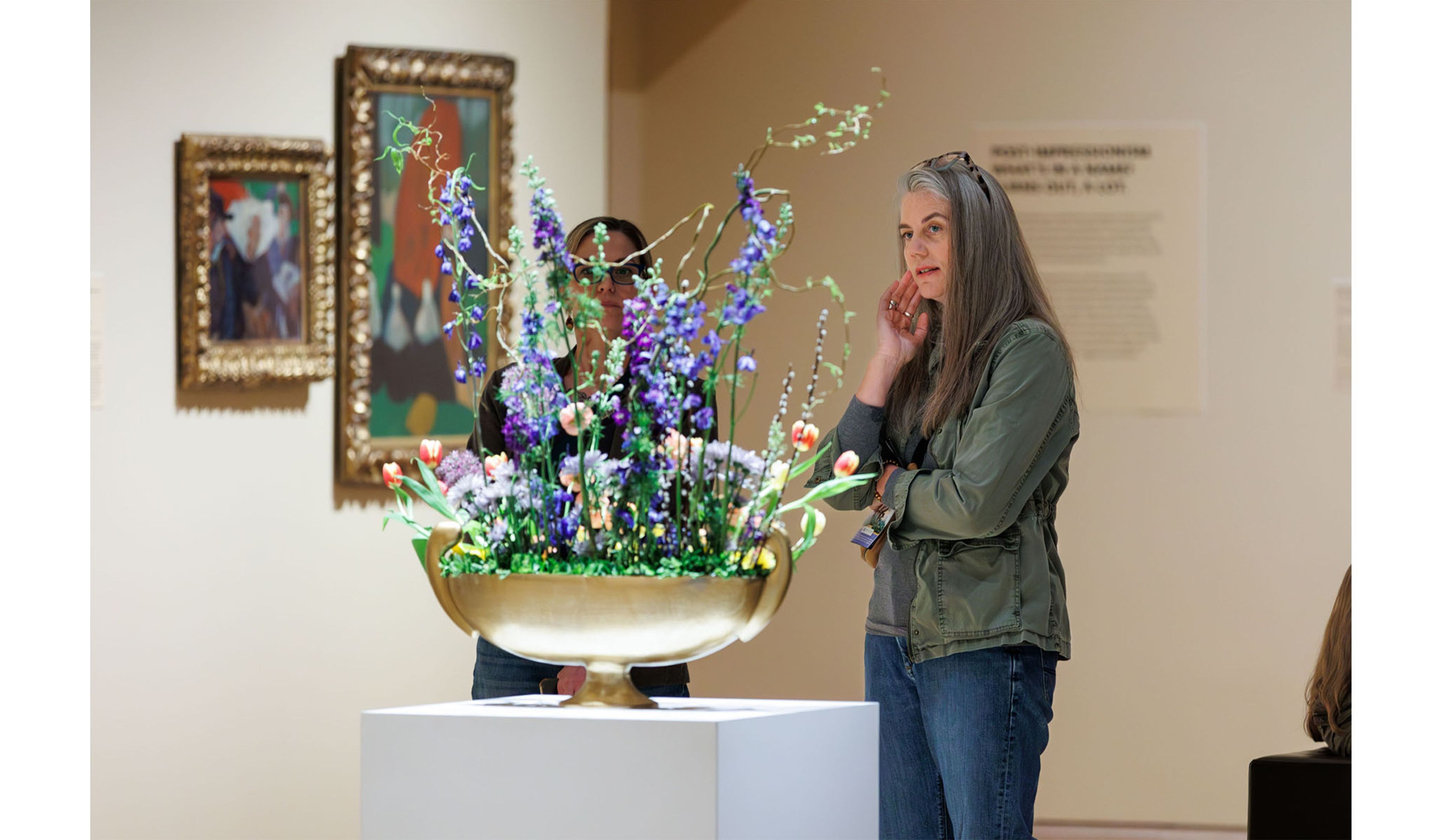
Excitement was in the air for the opening of the IMA’s annual Art in Bloom extravaganza for which local and regional florists and flower designers, most professional, some hobbyists, make floral sculptures complementing works in the museum’s collection. The arrangements are art, too, and often the pairings are splendid. Talk about flower power. Of course, crowds come, with lots of people new to the museum and lots of families. It’s fun to be part of it. Art in Bloom is a national phenomenon -- art museums either embrace it or reject it as middle-class crap and repellent. I did it once and thought it was great, though I initially feared the snake-pit politics of garden clubs.
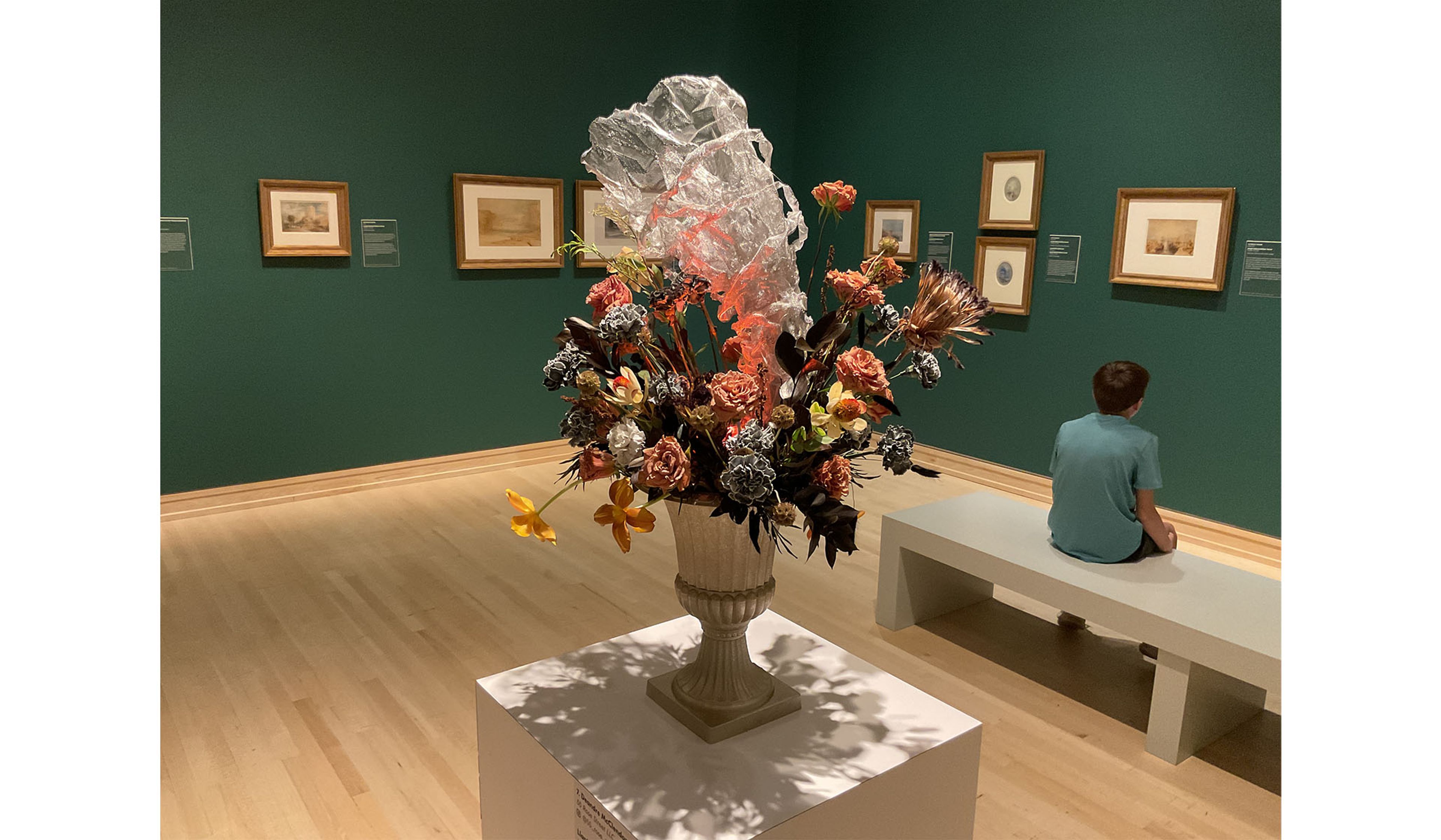
At IMA, 50 floral installations inspired and impressed. Some took their cues from Gauguin’s palette, some from the geometrics in Cubist painting, some from abstract notions such as ascent, riffing off a staircase. Some were small arrangements that resembled dollhouses in the American colonial and Federal furniture galleries. Some were as big as a Rose Bowl float and not at all successful. The IMA has a fantastic collection of works by J. M. W. Turner, nearly a hundred paintings, watercolors, and drawings, and dozens of works by his contemporaries. An Indianapolis lawyer, Kurt Pantzer, was the world’s most active Turner collector in the 1950s and ’60s. He started with mainstream mid-career Turners and then turned to peripheral ones such as the 14-year-old artist’s 1790 watercolor of Lambeth Palace, and his Swiss waterfall and lake scenes from 50 years later. A Turner watercolor of a windswept Welsh mountain range inspired a flower piece in the gallery, with flowers and pinkish white mesh playing the part of the cloud. Deandre McClendon is the artist.
It’s too bad Art in Bloom lasts only a few days, but decay is the way of all flowers. I enjoyed the creativity, the juxtapositions, and, most of all, the buzz.
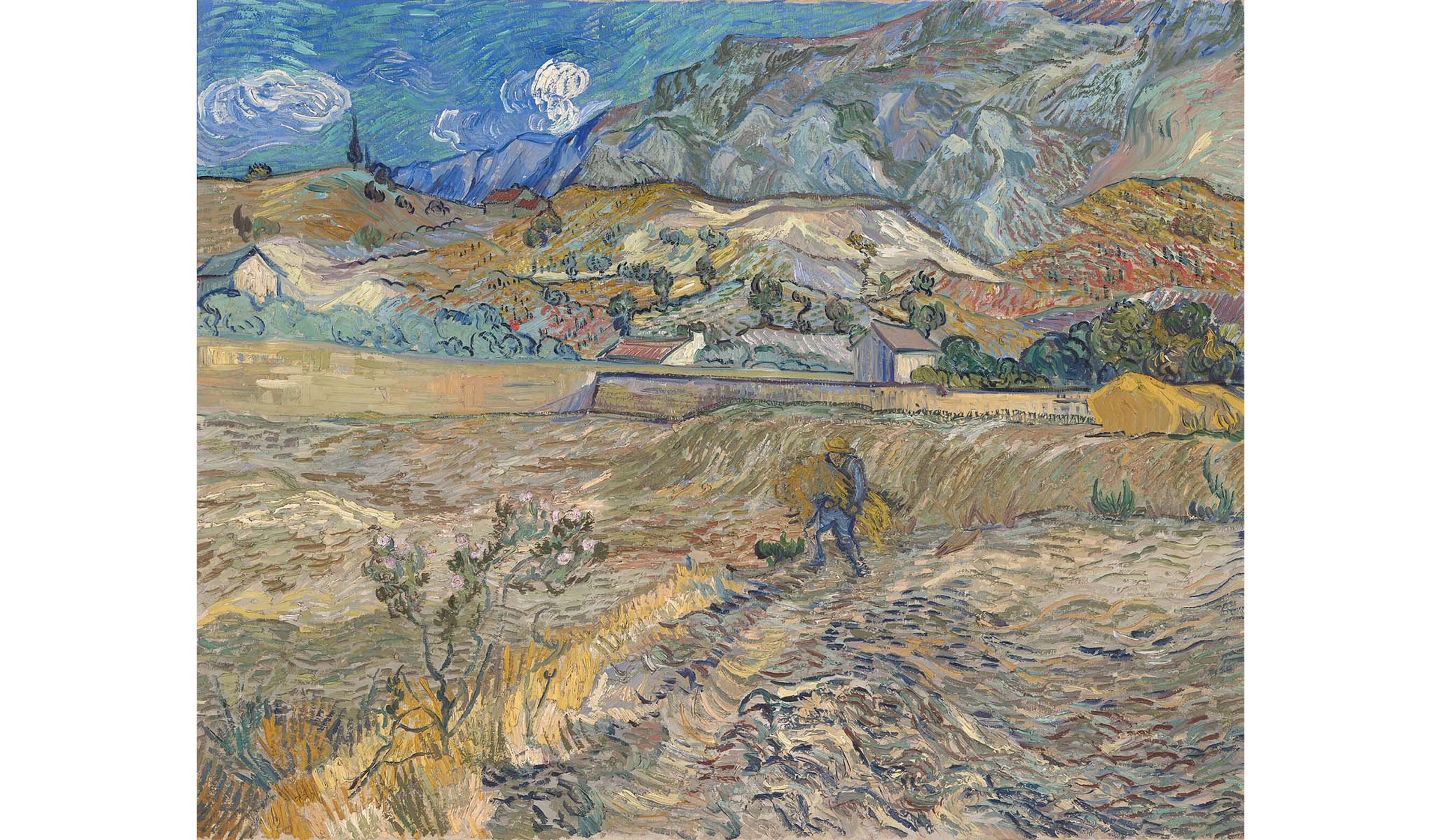
The IMA’s collection is great and has something for everyone. It’s got depth driven by the tastes and acquisitive ferocity of locals such as Pantzer and the Lilly Foundation, which bought wonderful Pont-Aven School art for the museum, and George Clowes, the doctor and entrepreneur who made chemotherapy a truly useful cancer treatment. Clowes’s early Rembrandt self-portrait, from 1629, came to the IMA along with a bevy of Old Masters and a museum addition to show them. His family is still active in supporting the IMA. Van Gogh’s Enclosed Field with Peasant, from 1889, is a to-die-for picture and also a gift. IMA’s Asian, African, fashion, and decorative arts collections are superb, too.
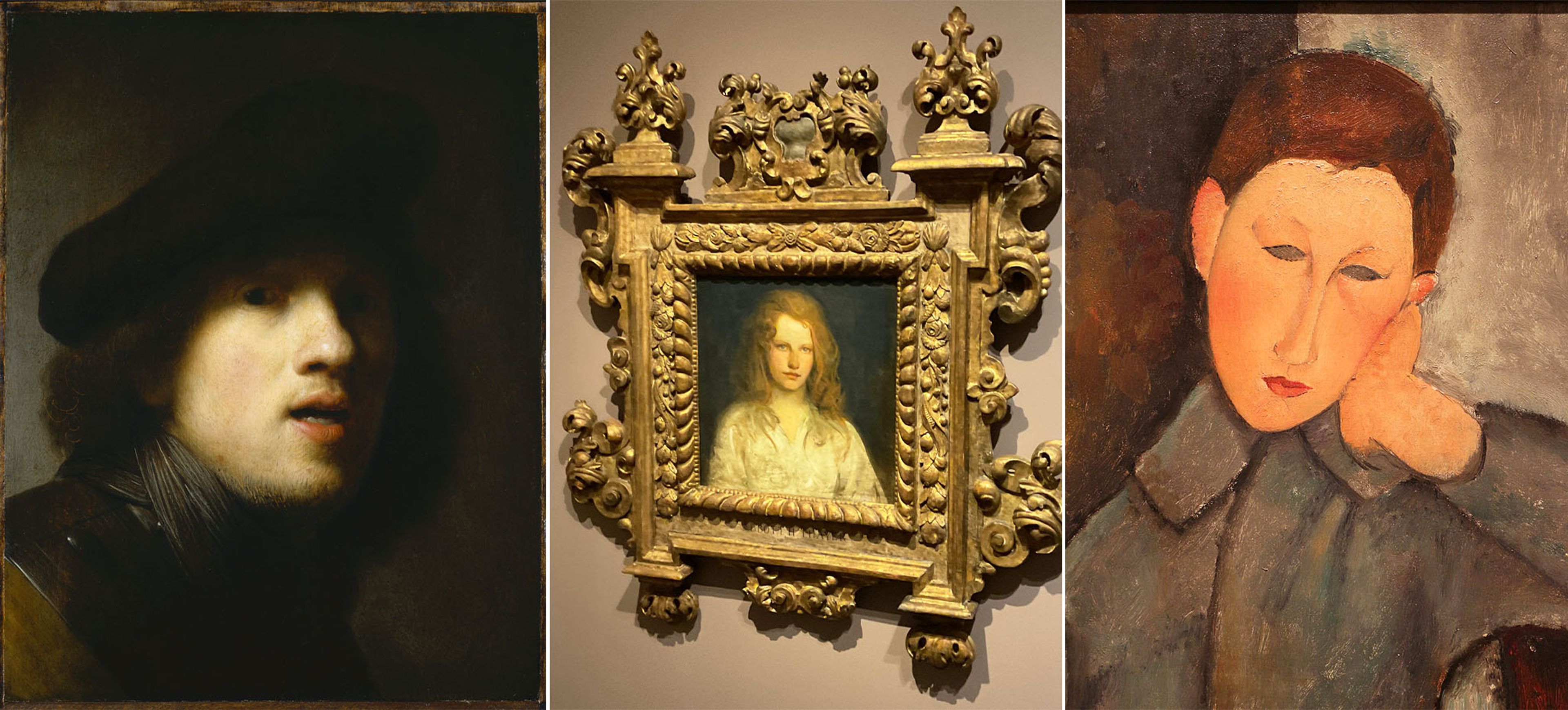
I love the variousness of, for instance, the IMA’s portraits. Wander a bit and you’ll see the Rembrandt. He’s in his early twenties. He shades his eyes with his cap to be enigmatic. He’s so young. He wants to be dramatic. Modigliani’s The Boy is cryptic, too, but cool and calm. Modigliani’s subject was a young worker from Nice, where Modigliani was living at the time. Chiaroscuro is unnatural for them. It’s from 1919, at the end of the artist’s career. There’s nothing ambiguous about Abbott Thayer’s Margaret McKittrick, from around 1903. Thayer famously painted angels and was central in the invention of military camouflage, but you’d have to work overtime to camouflage that gold frame. Around every corner at the IMA there are surprises like these portraits, a very fun Rococo Revival fashion and decorative arts show, and a one-gallery show called The Queens of Art that displays the work of local black women artists focused on portraiture, family, and self-determination. The IMA’s roots are in the local artist community. It hasn’t lost track of this.
The IMA’s modern-design galleries are immense and impressive for their tour of decades of design of items we use in everyday life but also for their how-to-do-this component. Immersion is the philosophy governing the arrangement of art throughout the museum. Sometimes I liked it, sometimes I hated it. Art in Bloom is immersive in that these arrangements don’t cling to the walls the way paintings do. They’re in our space and, let’s face it, flowers are more likely to be part of our everyday lives than a Van Gogh or a Rembrandt. Of course, the gardens enfold us and give us a multisensory experience. A snazzy ceiling video in the Clowes pavilion -- the Old Masters wing -- has an abstract flower theme. Cutting-edge chaises allow visitors to lie down and get the full effect. The curators and designers have a good collective eye for inviting spaces with a touch of sass. I love it.
There’s a fabulous moment of immersion in the museum’s celebration of the 50th anniversary of Robert Indiana’s LOVE sculpture. Indiana’s last name was really Clark, but he was born and raised in Indiana, and the sculpture has been at the museum since 1975. A large version is outdoors -- it’s a huge crowd-pleaser -- with a smaller version inside for now.
We’re Experimenting in These Galleries, the title of a swathe of spaces, might be a friendly cue from the curators, but I tend to hear the stroke of midnight at its blackest and bleakest, Burkean that I am and a believer that, overall, there’s no such thing as a good new idea. But I’m open-minded, I know nothing’s forever, and I don’t live in Indianapolis, so whatever experiment they’re doing won’t be a fixture in my life. The IMA is mixing art from different eras by theme rather than era or national school. It’s also placing fewer objects in the galleries in response to public pleas that too much art is overwhelming. Interpretation also embraces pop topics such as race. “Tell Us What You Think,” the curators request.
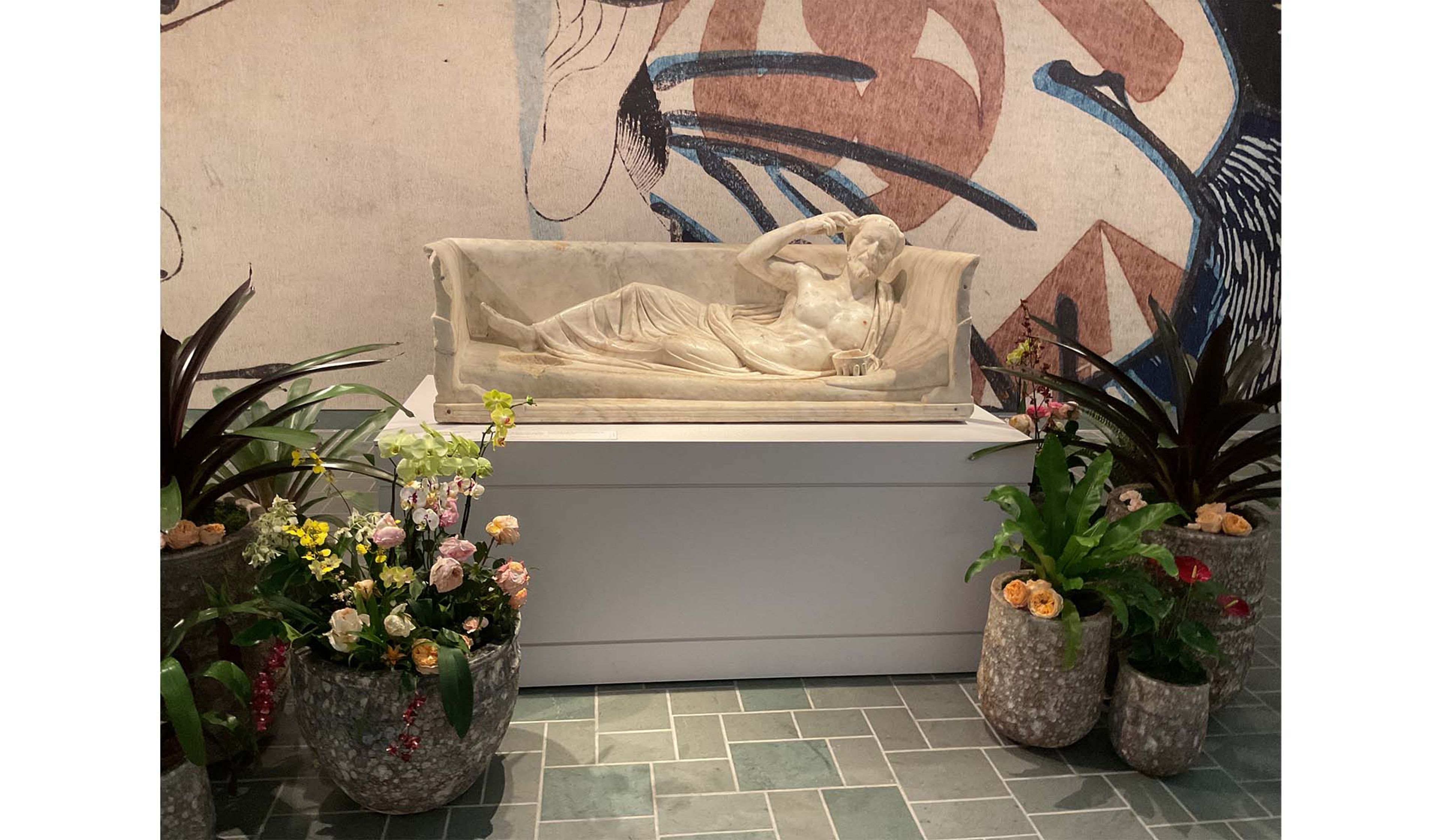
It’s not awful. A gallery of Old Masters portraits in a wood-paneled library space looks good -- the Rembrandt self-portrait and portraits by Gauguin, Corneille, and Vigée Le Brun play well with a Bill Viola video. In another gallery, Romare Bearden’s He Is Arisen, from 1945, Cubist and bold, is perfectly aligned with religious art by the painter known as Master of the Legend of Saint Ursula, Cranach, and others, spanning centuries. The themes are timeless. Goodness knows we need more religion in our lives. A gallery devoted to one object -- a life-size Roman marble funerary monument to Flavius Agricola from the late second century a.d. -- is a draw. Flavius never looked so good. Flowers flank his monument, set against a wall papered with a design based on a Japanese woodcut. Yes, it’s curator-as-decorator stuff but it serves the space and visitor well.
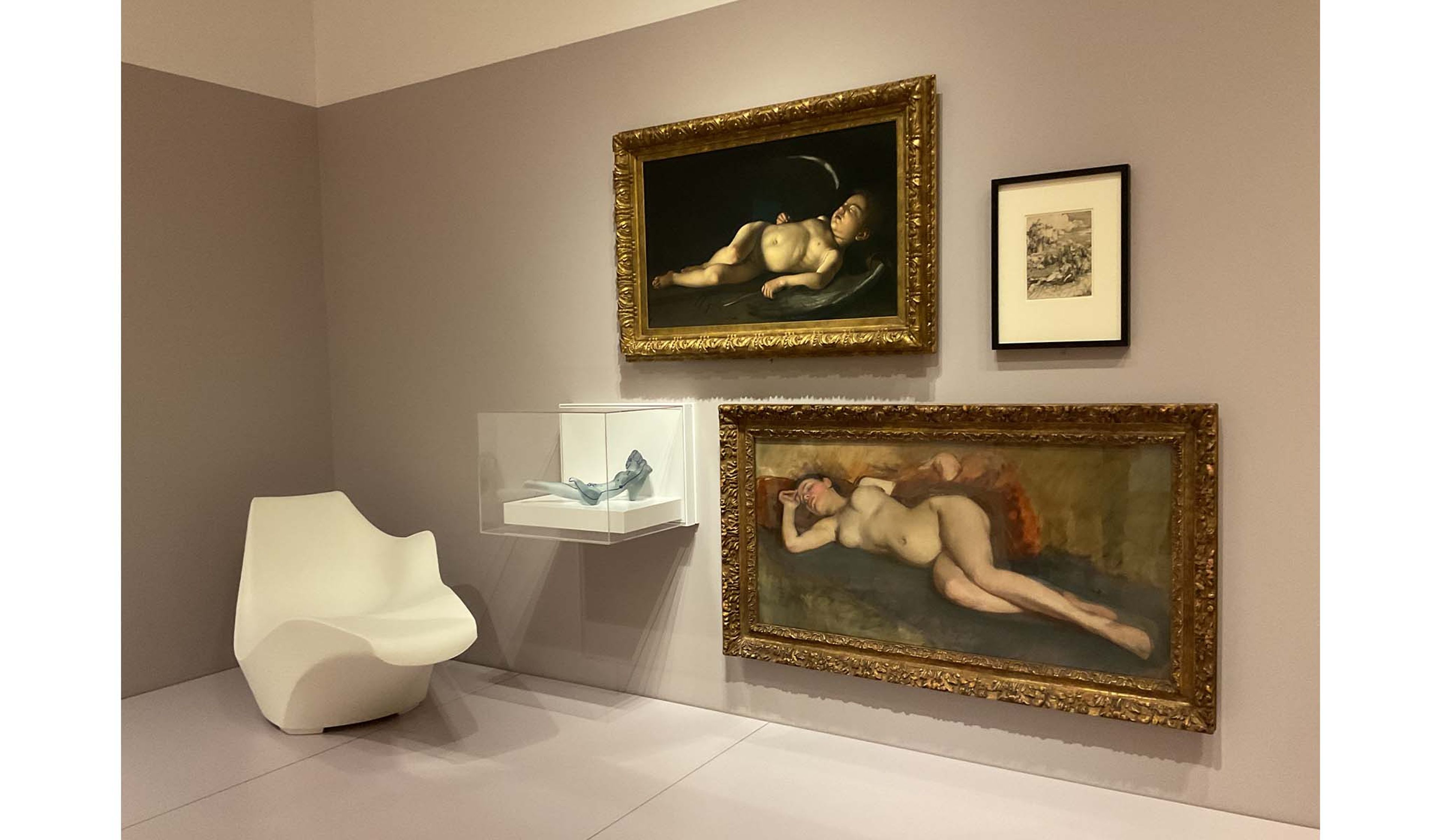
A wall of nudes includes Frank Duveneck’s randy reclining nude, from 1892; a sleeping Cupid, from about 1610, by a Caravaggio follower; and a Dürer from about 1497, The Men’s Bath, displayed with a languid, abstract Modernist glass sculpture and a Modernist white Japanese polyurethane dormeuse (daybed) that suggests a nude. It works but only on two levels. First, the human body is a model for lots of things that aren’t human bodies. Second, the curator is a good decorator. I don’t think we can go much further.
Then there’s interpretation gone off the rails. An entire wall panel peddles the half-truths surrounding the Benin Bronzes, one of which is on display. Describing these royal goods, dating from the 16th century onward, as “stolen” isn’t quite right. It’s wishful thinking on the part of the anti-colonialists at the IMA. British troops sacked the Benin royal palace, historic hub of the slave trade -- by the by, only after the oma’s, or king’s, soldiers had murdered British diplomats and missionaries. British troops kept what they pillaged in lieu of decent pay, a near universal financial model. It might be technically stolen but counter facts and just desserts figure as well. A side-by-side comparison of portraits by Andy Warhol from 1984 and Paolo Uccello from the 1430s are profiles, a lame revelation if ever there was one. If you’re reducing objects and displaying them by theme, you’ve got to be willing to go deep and go meaty.
They did ask what I thought. I like seeing museums do things differently. That shows the curators have a pulse. They know their audience, and the galleries look good, but some intellectual hygiene’s needed.
Bold: New Voices in Contemporary Art is bold indeed, with the galleries painted in swirling passages of pink, green, red, and blue, and artworks that are mostly diversity purchases -- big, colorful, and not exactly fascinating. It seems that the IMA wants impact rather than depth and nuance. It’s likely true that works by black artists were few and far between until the early 2020s, so the museum is catching up. I suggest focusing on young black American artists who’ll benefit most from having their work in a prestigious collection. Their prices won’t break the bank, and it’s a good test of a curator’s eye. What will last and what won’t? Over time, the IMA will build a first-rate, singular collection.
The IMA’s prewar American art is very good but nearly felled by trustee braggadocio and riddled with woke feeling. To atone for one race scandal after another in the early 2020s, the trustees, administrators, and curators launched a reimagining of the benighted American collection led by the museum educators -- bad idea -- and five locals called the Looking Glass Alliance who wanted “to turn upside down the white, heteronormative interpretations of art and the American mythos” ruling the museum world. They’re artists, mostly Millennial they/thems, proponents of earth-bound spirituality, and activist-scholars militating against colonialism, racism, and misogyny. In 2023, the trustees turned the galleries over to them, with some inside help. The art stands up fine. That said, they’re not curators and not art historians, alas, so there are some awkward moments.
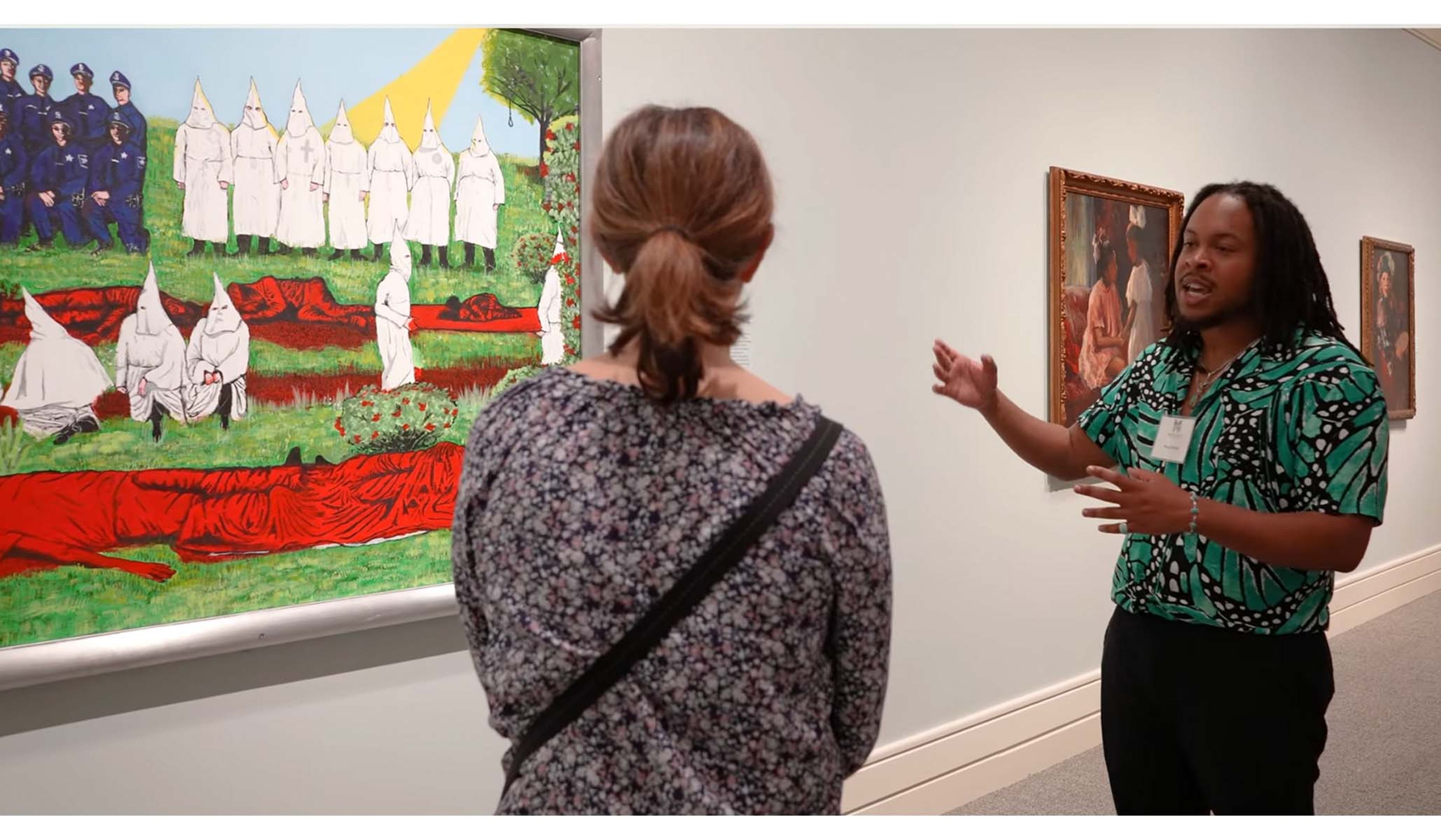
The museum, for instance, is displaying -- as a loan -- Kyng Rhodes’s Big White System, from 2022. He’s part of the Looking Glass Alliance. It’s another in-your-face, statement picture with two rows of Klansmen and one row of white cops with open graves for five black corpses, likely lynched. It’s a schlock picture, over-the-top, shock-jock stuff, one-dimensional, and a billboard, though it’s nicely painted. Evidently a big chunk of white Indiana men belonged to the KKK in the 1920s, an outrage, yes, but masses of people do profoundly idiotic things all the time, and it was a hundred years ago. I also think it’s manipulative in the worst way since it agitates for guilt and shame among young people who can’t change the past. I’ll take Rhodes more seriously when he paints an unpretty picture about the 290 black Hoosiers murdered in black-on-black shootings, mostly gang- and drug-related, in 2023, the last year for which I’ve found statistics.
A kiosk in the middle of the American galleries tells us that “what has been considered ‘American art’ is not a full, definitive picture of America.” They aim to fix it, but it’s the wrong goal. Good art is not solely illustration, though illustration can be good art. Good art isn’t all narrative, either. No museum can present a “full, definitive picture” of a place with 350 million people and coming up on 250 years as a country. And so much of the acquisition business is based on chance -- what comes on the market and when the museum has extra cash -- and the tastes and generosity of local collectors.
The kiosk presents untold stories and asks which ones visitors would like to see. There’s the story of a Chinese-American woman operating a laundry. There’s a Native woman forced as a child to attend an American school in South Dakota. There’s a black schoolteacher. There’s a Syrian-American man in Indianapolis who sells Oriental carpets. Their stories and others like them aren’t told. Hence, they’re erased. Here’s the big screwup: Art lives in its own autonomous world and not in the world of sociology, economics, politics, or current events. People look at art for enigma, poetry, solace, romance, wonder, beauty, and lots of other things that make us human. I don’t want to look at art and think about my shirts at the cleaners.
The Looking Glass Alliance’s take on the American collection would be fine -- an eye-roller, but fine -- as a temporary exhibition with a three-month run. Something different, no one will die, and move on to something else. After a three-year run, though, it needs to go away.
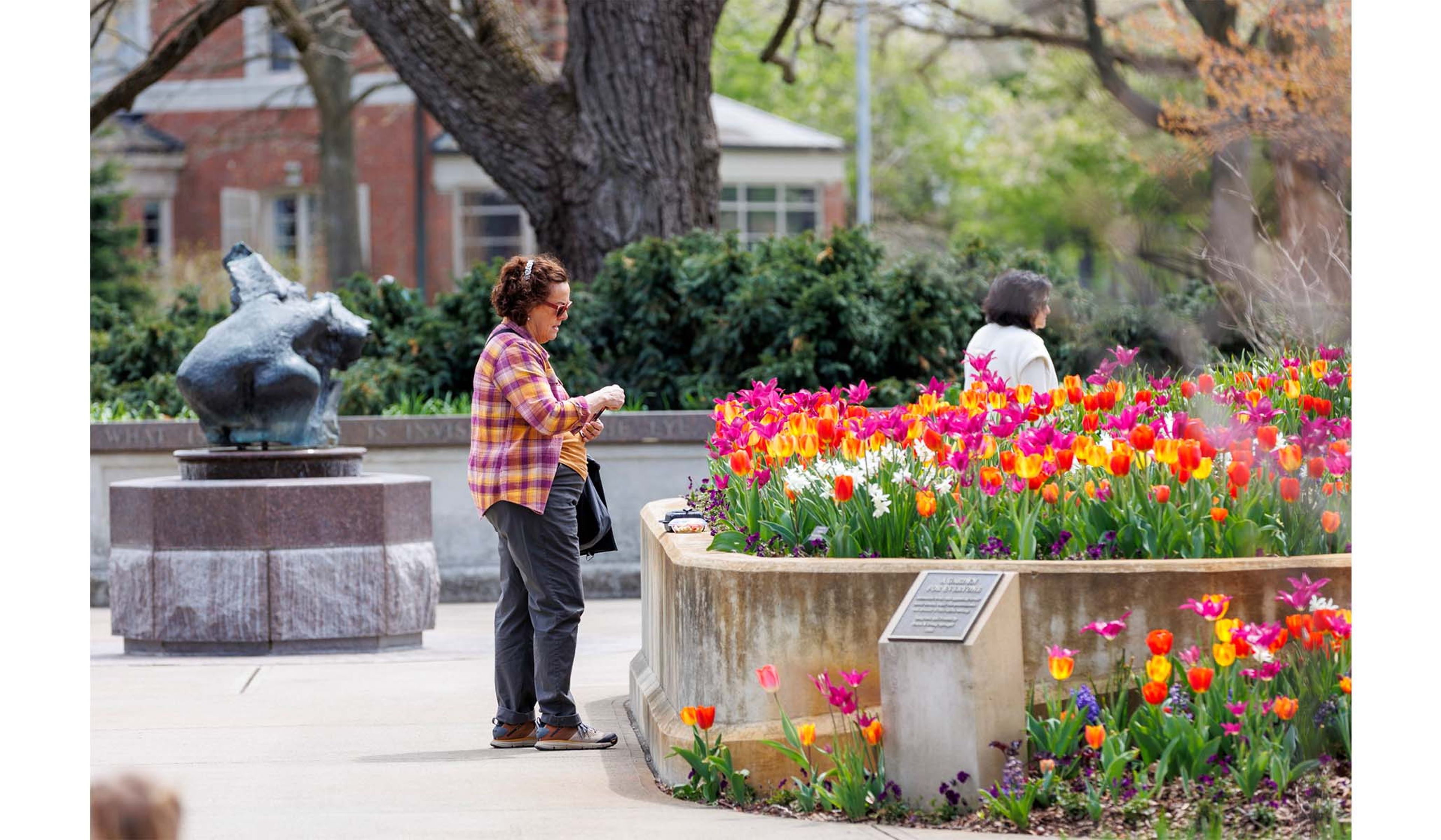
Around 15 years ago, the IMA expanded its mission to include formal gardens, a botanical garden, a sculpture park, water features, greenhouses, a beer garden, and new programs, such as a miniature golf course aimed at families. The place was pelted with garbage by museum purists claiming that Newfields, the new name for the campus, was now a theme park. But I thought it was the trustees’ prerogative to refine the mission, they knew their public best, and there’s no reason for the art gallery to reign alone and supreme. The gardens are a three-season affair, a huge draw for new visitors, and a big moneymaker. The IMA had the land to do it -- 150 acres -- and the Lilly House, called Oldfields and once the home and estate of the scion of the pharmaceutical family. It’s restored now as an example of the American Country House movement, with Olmsted-pedigree gardens. I walked around the gardens as spring stirred, so I didn’t see much but thought it was lovely, and, unlike in Vermont, it wasn’t snowing.
Next on view is the 94th juried exhibition of the Indiana Artists Club. Body/Beyond: Fashion That Transforms draws from the IMA’s costume collection. Prepare for hourglass figures, assertive, aggrandizing shoulders, and stiletto spikes. Then there’s an exhibition of generations of Pissarro painters starting with Camille, Impressionism’s old man whose two sons painted well into the 20th century. This is a smart, balanced roster. I’m delighted to see the museum doing so well.

About the Author
Brian T. Allen is National Review’s art critic.
Advertisement
Advertisement

Comments