Share this story
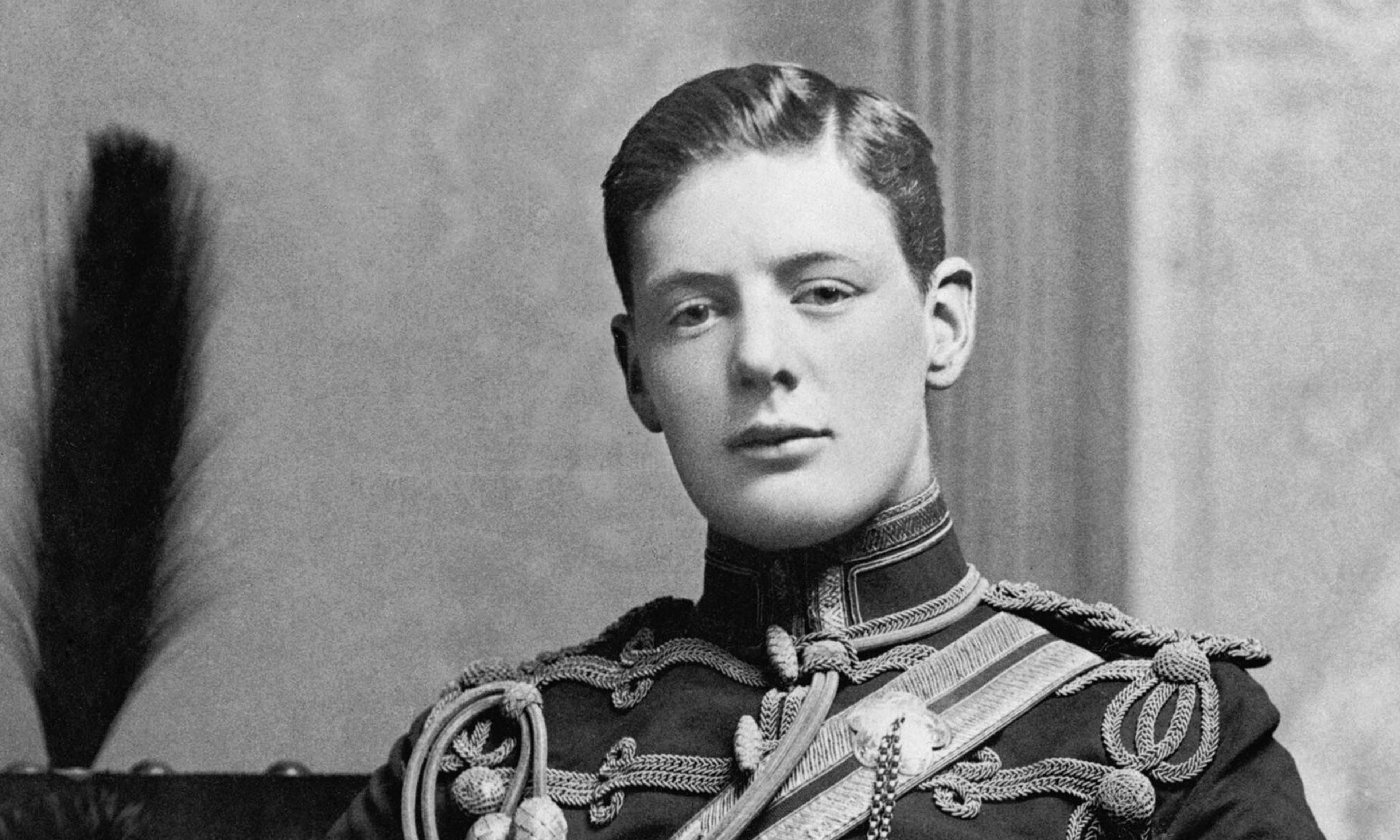
A young Winston Churchill
At age 19, Lawrence Perelman, the child of Jewish immigrants from the Soviet Union and an aspiring pianist newly arrived in Manhattan, wrote to William F. Buckley Jr. to express his appreciation for Buckley’s defense of freedom against communism. Perelman offered to play for him by way of thanks. The story is recounted in Perelman’s moving new tribute, American Impresario: William F. Buckley, Jr., and the Elements of American Character (Bombardier Books, 240 pp., $18.99). Buckley, then in his sixties, replied and accepted the offer, inviting the younger man to his home on East 73rd Street. From this improbable meeting sprang a friendship, rooted in a shared love of great music, that lasted until the end of Buckley’s life: Perelman was staying in Buckley’s Stamford home, preparing to give a private recital to friends, on the day Buckley died. Perelman reflects on their relationship with palpable gratitude and astonishment at his patron’s generosity -- the way Buckley admitted him to his circle, opened doors, bestowed gifts, and offered encouragement and trust. American Impresario is a testament, too, to Buckley’s lifelong evangelism for music, expressed on Firing Line, in his columns, and in the gatherings he organized for friends and colleagues. “Politics,” Perelman recalls Buckley saying, “is my vocation, not my avocation.”
In Lawless: The Miseducation of America’s Elites (Broadside Books, 272 pp., $29.99), Ilya Shapiro details how he became an unwilling case study illustrating the academy’s institutional rot. Shapiro, now a senior fellow at the Manhattan Institute, in early 2022 was about to begin a new job leading Georgetown Law School’s Center for the Constitution when he found himself instead facing down a mob -- of students, professors, and online critics -- bent on canceling him. His offense was an inartfully worded tweet expressing the view that President Biden was wrong to rule out anyone but a black woman as his nominee for the Supreme Court. Shapiro apologized for his phrasing but didn’t recant. After a monthslong “investigation” by Georgetown administrators, his inquisitors cleared him on a technicality, and he then resigned, having realized that his position at the university was untenable. Shapiro notes that his ordeal is hardly an outlier; conservatives in academia throughout the land have been put on trial and sanctioned by DEI bureaucrats for what amount to thought crimes. What’s more, if elite law schools continue to be bastions of illiberalism, the effects for the rest of society are likely to be dire. Shapiro offers some ideas for fighting back, “lest today’s radicalized student mob becomes tomorrow’s Justice Department.”
In the 1930 preface to the first edition of his memoir My Early Life: A Roving Commission, Winston Churchill, then in his fifties and out of government, wrote that it drew a picture of “a vanished age,” one in which Great Britain had rested “sedately under the convictions of power and security,” in marked contrast with “these anxious and dubious times.” He dedicated the book to “a new generation,” in hopes of influencing it. For the benefit of another young generation in an anxious age, St. Augustine’s Press has just published a new edition (608 pp., $50), with an engaging introduction by Churchill scholar James W. Muller and copious editorial notes. The volume covers Churchill’s childhood, adolescence, and the military campaigns of his youth that propelled him to a seat in Parliament by age 26. This new edition appends as an epilogue “The Dream,” a posthumously published short story that Churchill wrote in the late 1940s, featuring his late father appearing to converse about all that had occurred in the 50-odd years since his untimely death. In life, Lord Randolph Churchill hadn’t seen much promise in young Winston, who mourned in his memoir that they “did not live long enough in company to know each other.” Toward the end of their imagined meeting, the elder man tells his son, “When I hear you talk I really wonder you didn’t go into politics.”

About the Author
Katherine Howell is the literary editor of National Review.
Featured Tags
Advertisement
Advertisement

Comments