Share this story
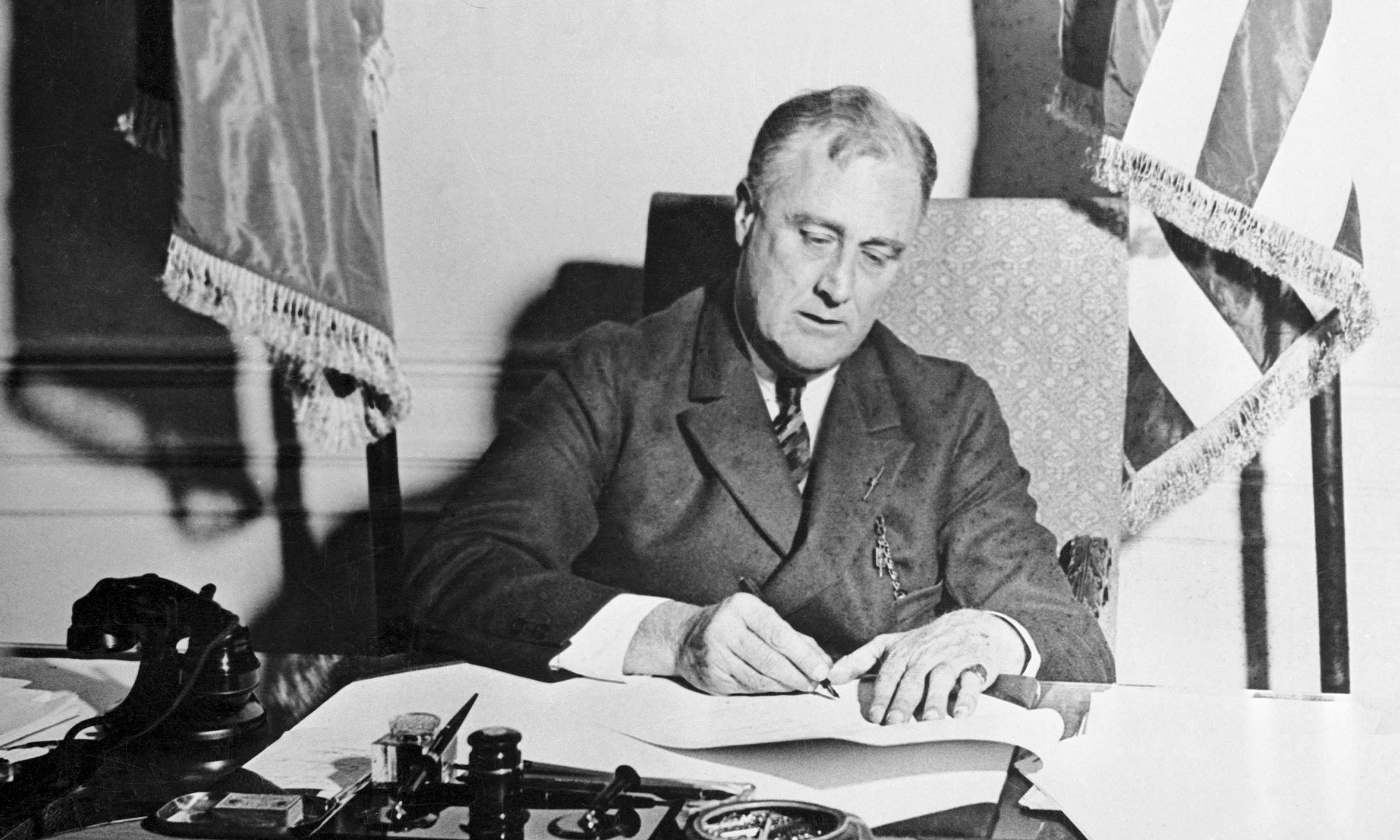
President Franklin Roosevelt signs the Emergency Banking Act, in Washington, D.C., March 9, 1933.
What occupies the mind of 78-year-old, Booker Prize– and Golden PEN Award– and fatwa-winning author Salman Rushdie these days is the unfinished story. The incomplete work, the unwritten line, the unlived life. His first work of fiction since he was stabbed 15 times by an Islamist in Chautauqua, N.Y., in 2022, deals with the unavoidable interruption. “The slow failing of the soft machine.”
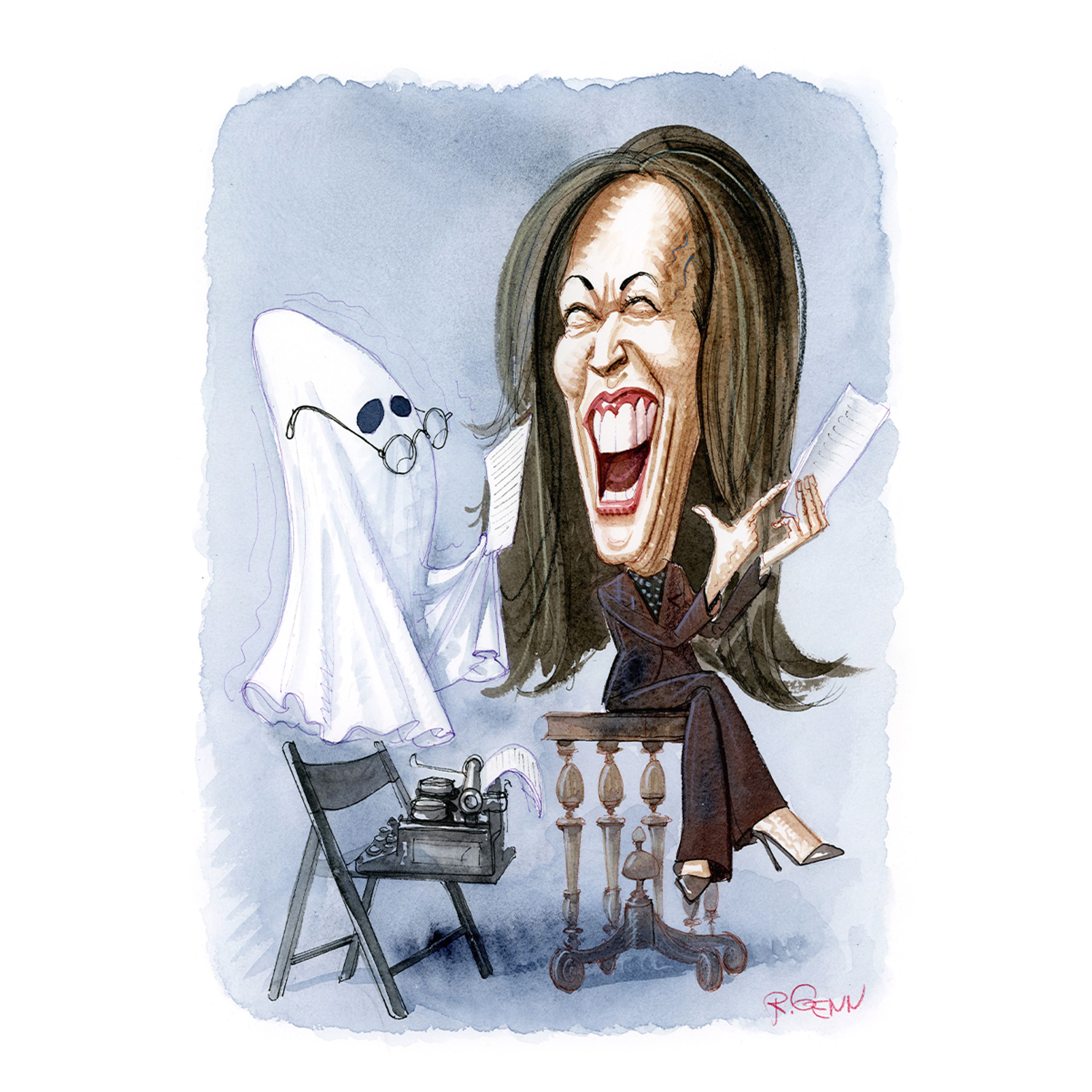
The Eleventh Hour: A Quintet of Stories (Random House, 272 pp., $29) is bookended by two previously published shorts. Three new ones give it its central heft, its substance. “The Musician of Kahani” -- she’s a supernatural talent born, of course, at midnight -- is classic if weakened Rushdie. Then comes a ghost story: “When the Honorary Fellow S. M. Arthur woke up in his darkened College bedroom he was dead,” and he has plenty of work to do. Now we’re getting somewhere.
The focal flower of the anthology is the metafictional “Oklahoma.” For storytelling beings, we’re quite bad at finishing our own stories. When Kafka abandoned his first novel, Amerika, he stranded the protagonist in eternal suspension, on a train en route to Oklahoma. In medias res: like the story of the country itself. “In its incompleteness its meaning was complete,” says Rushdie about Kafka’s novel, about America, and maybe about his own life and corpus.
“I wish I didn’t have to denounce my alma mater,” Franziska Sittig writes of Columbia University, but she must. Since October 2023, the school has been a noisy, obscene fount of antisemitism. Take it as a token of remorse that the university press is now distributing Sittig’s book, Intellectual Self-Destruction: How the West Gambles Away Its Future (Ibidem Press, 314 pp., $29), which the German journalist co-wrote with Noam Petri, then the vice president of the Jewish Students’ Union of Germany.
Student radicalism is a banality. But it’s noxious when it provides moral cover to anti-Western Islamism in the West, explains Reihan Salam, the president of the Manhattan Institute and a contributing editor of National Review, in the book’s foreword. Sittig and Petri trace the transatlantic roots of this new red–green alliance. How and why are young Westerners so obsessed with academically endorsed self-flagellation? Many college programs might have become rackets, but ideas -- and the colleges that beget them -- continue to matter a great deal.
Detailing something called the “Newport sex scandal” is a splendid way of starting a biography. Especially one whose subject has already been treated by very many skilled historians, such as Jean Edward Smith, and too often rather too favorably. David T. Beito, professor emeritus at the University of Alabama, has written about Franklin Delano Roosevelt before. In The New Deal’s War on the Bill of Rights: The Untold Story of FDR’s Concentration Camps, Censorship, and Mass Surveillance (2023), he paid due attention to FDR’s loose relationship with civil liberties. Now, he offers a full portrait of the man.
In FDR: A New Political Life (Carus Books, 400 pp., $29.95), Beito makes the case that America prospered in the second half of the 20th century not thanks to but in spite of Roosevelt’s overlong tenure. His presidency mightn’t have been as pernicious had Roosevelt not been such an excellent executive: eager and able to cut through -- per the Fascist Italian press -- “the purposeless chatter of legislative assemblies.” If only the 22nd Amendment had come as soon as the 21st.
About the Author
Vahaken Mouradian is the literary editor of National Review.
Featured Tags
Advertisement
Advertisement


Comments