Share this story
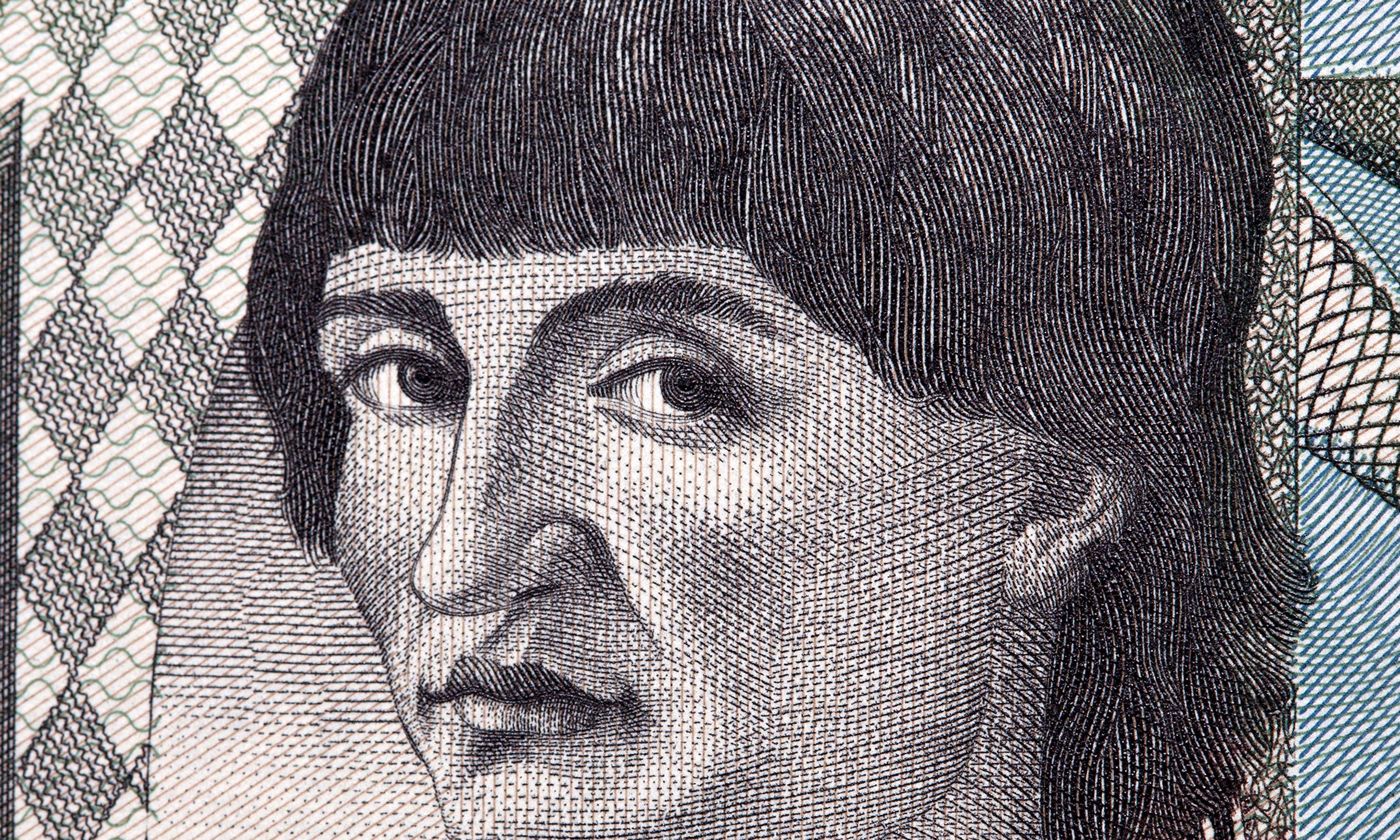
Niccolò Machiavelli, depicted on Italian currency
The best way to understand modern political theory is to read the primary sources. The second-best way is to read Harvey C. Mansfield’s The Rise and Fall of Rational Control (Belknap Press, 336 pp., $35). The book is based on an introductory class that Mansfield taught at Harvard every other year for more than half a century.
What’s “modern”? According to the professor, the modern idea is that man is not a political animal by nature (as the premoderns, such as Aristotle, argued). Man becomes political by necessity and by choice, using his reason to escape the tyranny of nature. This idea originated with Niccolò Machiavelli in the 15th century and, Mansfield argues, has been the basis, foil, mirror, or target of political philosophers ever since. It is in this escape from nature that Thomas Hobbes and John Locke seek a measure of liberty. “Man is born free, and everywhere he is in chains,” is how Jean-Jacques Rousseau inverts things in 1762, in the first line of The Social Contract: our manacles -- our necessities -- are in fact man-made and yet unshakeable. Friedrich Nietzsche then shook them. We’re now stranded with a postmodernism that cannot part with the “modern” and is incapable of defining itself.
“A new leader should be careful not to dismantle the traditions and symbols of the past, especially when following a popular predecessor,” writes Chrysostomos Loizos “Max” Nikias, president emeritus and life trustee of the University of Southern California. Good advice. As it happens, it’s also offered in other words by Machiavelli, early in The Prince. In the autobiographical American Trojan: Leadership, Resilience, and the Renewal of Higher Education (Encounter, 552 pp., $39.99), it is obvious that Nikias, an accomplished STEM stud, is superbly read in the classics. And Machiavelli would have admired the prudence with which the author omits crediting him.
Nikias’s story is archetypically and remarkably American. He went from a village of fewer than a thousand residents in Cyprus (by way of the Athens Polytechnic, the Queen Mary University of London, SUNY Buffalo, and UConn) to the faculty lounge of the USC School of Engineering in 1991: the year before the first Cypriot university admitted its first students. Has anything closer to forward time travel been achieved? The story of Nikias’s Promethean feats -- he is the greatest fundraiser in USC history -- supply as many reasons to avoid academia as lessons on how to negotiate it. American campuses are not too different from Renaissance-era Mediterranean principalities.
Machiavelli’s critique of generosity finds new voice, if not grammar, in a candid chat between Alonso, a Honduran gangbanger, and Nico, a 27-year-old layabout who lives in his mother’s basement. Alonso says, “You know something about peoples? You give free-everything, we think: is only right I get free-everything.” How did these two get to talking?
A Better Life (Harper, 304 pp., $30), by novelist Lionel Shriver -- who wrote the cover story for the July 10, 2023, issue of this magazine -- imagines what might have happened if the Empire City had gone through with the idea, floated by Mayor Eric Adams in 2023, to offer New Yorkers financial assistance to house migrants. Shriver’s story of a mother and son who are brought to the verge of seeking asylum away from their own house in Brooklyn is fictional; nearly everything else is not. Demographic decline, protracted pubescence, upper-middle-class virtue-signaling, humanitarians who are unable to grasp that the recipients of their magnanimity are human. As Nico is forced to acknowledge, “Only people willing to make the sacrifice of bearing and raising children have a right to inherit the earth.”
About the Author
Vahaken Mouradian is the literary editor of National Review.
Featured Tags
Advertisement
Advertisement
Comments