Share this story
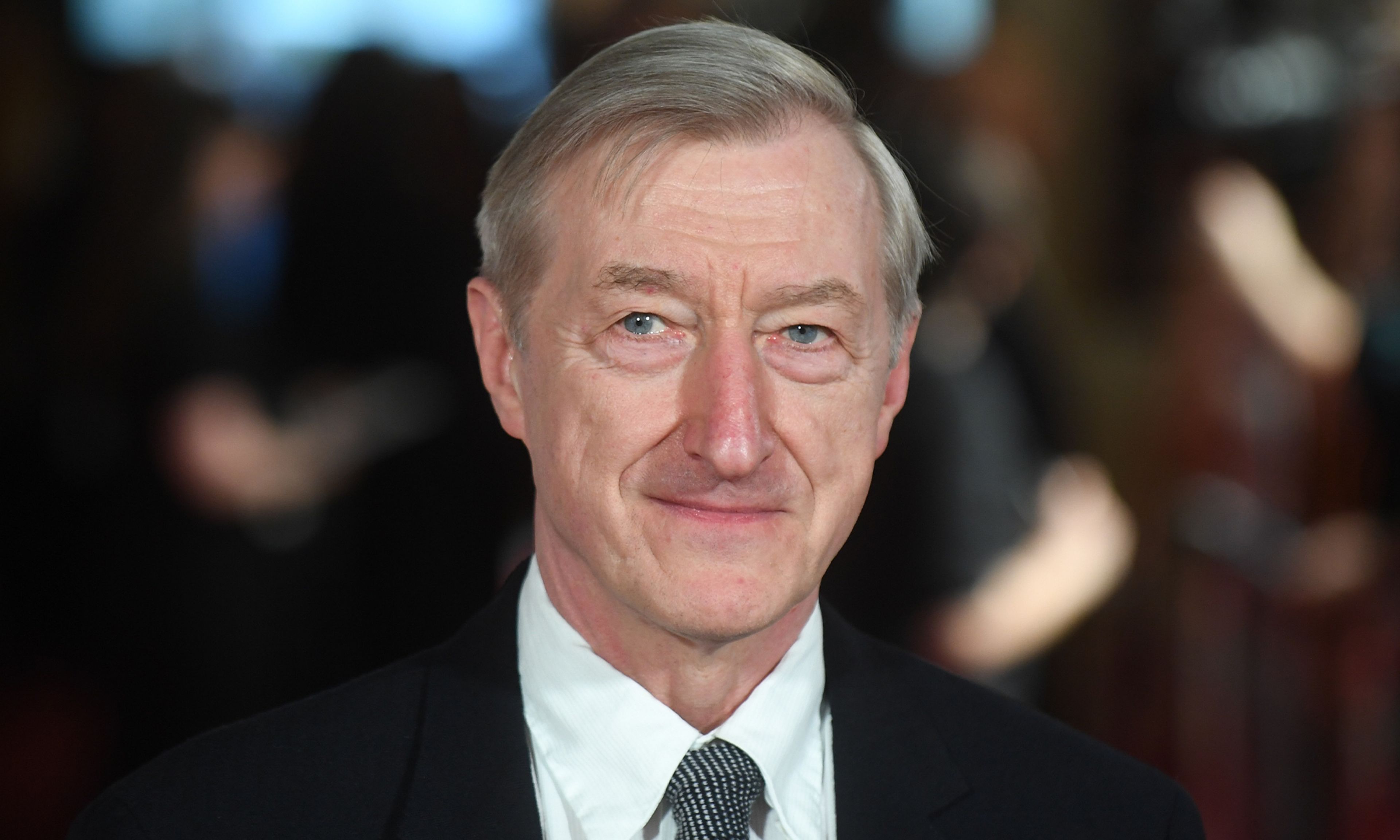
Julian Barnes attends the Gala screening of <i>The Sense of an Ending</i> at Picturehouse Central, in London, England, April 6, 2017.
Julian Barnes has written his final book.
Departure(s) (Knopf, 176 pp., $27) is supposed to be a novel. There’s a story with a beginning and an end -- two beginnings and two ends, really -- but not much besides. Jules is the reason Stephen and Jean meet as students at Oxford, and he’s the excuse for their remeeting 40 years later. The in-between is a matter of memory. What we choose to remember and how, yes, but also what Mnemosyne decides to inflict on us and when.
The love story is fragmented. Braided with diaristic notes on the author’s incurable blood disorder; twisted with digressions about 19th-century French poets, about neuroscience, about consciousness. (Mentions of Donald Trump are cursory and mercifully brief: contempt can be eloquent, bitterness cannot.) It’s fiction and memoir and philosophy of mind. A touching goodbye by a member of a British literary species that, since the death of Barnes’s friend Martin Amis in 2023, is critically endangered. He is, as we speak, tidying the stray papers on his desk, returning books to their shelves, drawing the shades. It’s a relief to read -- following the end of the novel and past the acknowledgments -- that “Julian Barnes,” according to the last line of the biographical page, “lives in London.” (Emphasis mine, but it’s really his.)
Donald P. Hodel resolved at a young age to become president of the United States. He made it to Ronald Reagan’s White House -- just as grand an achievement -- as secretary of energy and later of the interior. Since memories can be capricious, he has been recording his for the past 20 years.
Called to Serve: My Path to President Reagan’s Cabinet and Beyond (Peak Press, 444 pp., $24.95) is a tender autobiography. An attempt to answer, as the author explains in the preface, the questions his grandsons will one day ask. The rest of us, too, can appreciate hearing from someone who led the departments Hodel did during the nuclear arms race. “The name, Department of Energy, is really a misnomer,” he clarifies. Among the office’s most important functions is to produce our world-ending weapons. What it may not do is control energy production or make business decisions on behalf of natural gas firms, as the Algerian energy minister once requested of Hodel.
Fittingly, Hodel was the designated survivor during the presidential inauguration of 1989. He kept company with the “nuclear football” in his home in Arlington, Va., while he and his wife packed for their move to Colorado and President George H. W. Bush took the oath of office. That’s probably as close to the presidency as Hodel would have liked to get.
Energy policy is synonymous with national defense. Nicolas Niarchos understands this. In Elements of Power: A Story of War, Technology, and the Dirtiest Supply Chain on Earth (Penguin Press, 480 pp., $32), the considerable attention he pays to the history of electric vehicles and clean energy feels misspent, especially as he expertly demonstrates that they aren’t all that clean. This doesn’t reduce the book’s journalistic value and scholarly heft.
Several of Niarchos’s chapters -- on Congolese and Zairian history, the invention of the rechargeable lithium-ion battery by chemist Stanley Whittingham under Exxon’s employ, Sony’s prescient development of the lithium cobalt oxide battery, the rise of China’s BYD conglomerate, and “artisanal miners” who gamble their lives underground in southern Congo could stand alone as superb pieces of reportage. Environmentally responsible mining is important, but so is the new arms race. The Qing Dynasty signed a trade treaty with King Leopold’s Congo Free State in 1898. Judging from the relative size of the United States’ cobalt stockpile, we have some catching up to do.

About the Author
Vahaken Mouradian is the literary editor of National Review.
Featured Tags
Advertisement
Advertisement

Comments