Share this story
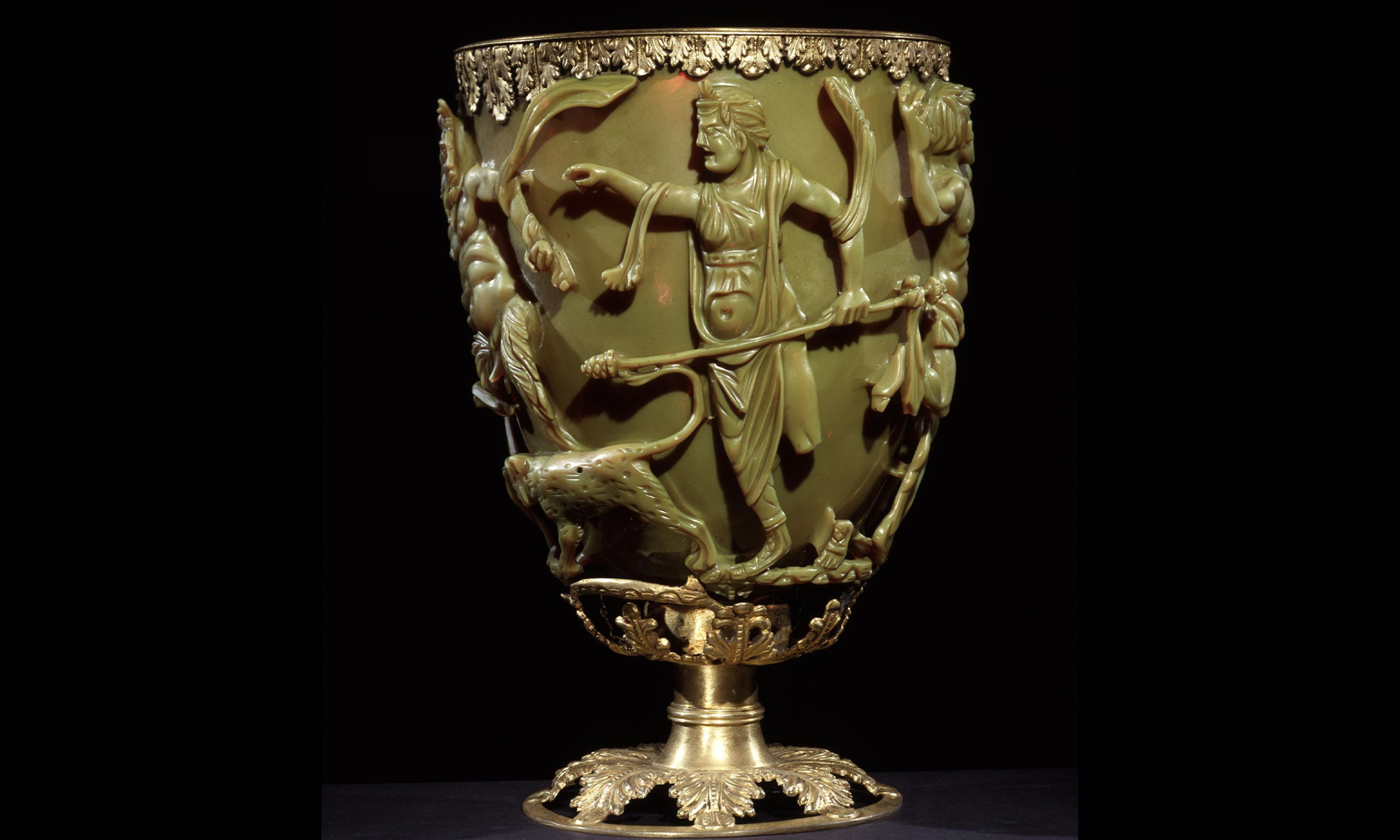
Drinking cup with scenes representing the death of King Lycurgus
Jean Jaurès, a socialist moderate, is supposed to have told the French parliament around the turn of the 20th century that he and his comrades were “the true inheritors of the hearth of our ancestors.” They have “maintained the fire” of the nation’s past, he said, whereas his opponents, the nationalists, “have preserved only the ashes.” Sometimes the wrong people can have the right line.
Tradition is kept alive by rediscovery. It’s arduous work. And each generation must do it, guided by the ones that preceded it. Timothy Sandefur, the vice president for litigation of the Goldwater Institute, has done his part. First, with The Conscience of the Constitution (2013). Now, with Proclaiming Liberty: John Adams, Thomas Jefferson, and the Declaration of Independence (Cato Institute, 512 pp., $24.95). Sandefur also helps preserve an intellectual tradition: that of historians such as John Phillip Reid and Jack P. Greene. They studied the American marvel in the context of, perhaps partly in response to, the various radicalisms of the second half of the 20th century. Sandefur responds to ours, such as the seedy and cynical 1619 Project. Those who are determined to find only sins in history are doomed to misread it.
One thing you cannot do to history is ignore it. So Robert Cording, the master poet of Massachusetts, looks at it straight on. What’s Possible: New & Selected Poems (Slant, 240 pp., $39) follows his tenth book, In the Unwalled City, in and through which Cording grieved the loss of his son to an accidental drug overdose. His new collection features pieces from several earlier volumes; the absence of any from In the Unwalled City is visible.
At times, Cording’s confessional tone is redolent of W. D. Snodgrass (see the latter’s “Heart’s Needle,” for example): profound without contrivance, honest without affectation. Cording writes, “The Book asks if I am aware / that wherever I go I bring grief with me.” And later, “Love what cannot last, the Book of Unknowing / instructs and each day say a chorus of hosannas / for all that was my life and still is.” The poem that closes Part I of the collection, “The Last Day, Again,” is an inevitable, eternal return: “My son and I are sitting on his back porch, / early October, the gold locust leaves above his barn / giving the morning light something to shine on . . .”
To whom does a piece of history belong? A late Roman dichroic glass cup — it depicts Psyche holding a torch to Amor’s face — was donated to Fordham University’s museum in 2007. Now the Italian government has sued the museum, claiming that the object had been looted from an archaeological site. What does this have to do with Lena Connolly, who once worked on an excavation near Aosta while she was in college? She does trusts and estates, but her law firm has been hired to represent Fordham, and she has been assigned to the case.
Artifacts (Simon & Schuster, 352 pp., $29) is Natalie Lemle’s debut novel. She has studied classics and has worked at the Museum of Fine Arts in Boston. It shows, in the most unforced and unpretentious of ways. There’s a bit too much exposition in the last 50 pages, a few too many incomplete plotlines. And the subjection of grammar to fad — “Si,” the author writes, referring to a character who once went by Simone, “fixes their attention on me” — is ugly (and entirely needless). But this illicit-antiquities and Calabrian-mafia affair is far more promising than the novelized-classics genre popularized by Madeline Miller or anything Dan Brown has conceived.

About the Author
Vahaken Mouradian is the literary editor of National Review.
Advertisement
Advertisement

Comments