The Free-Market Case for Data Centers
Written by Andrew Follett
Making the AI revolution possible demands that we build the electrical infrastructure it needs.
Share this story
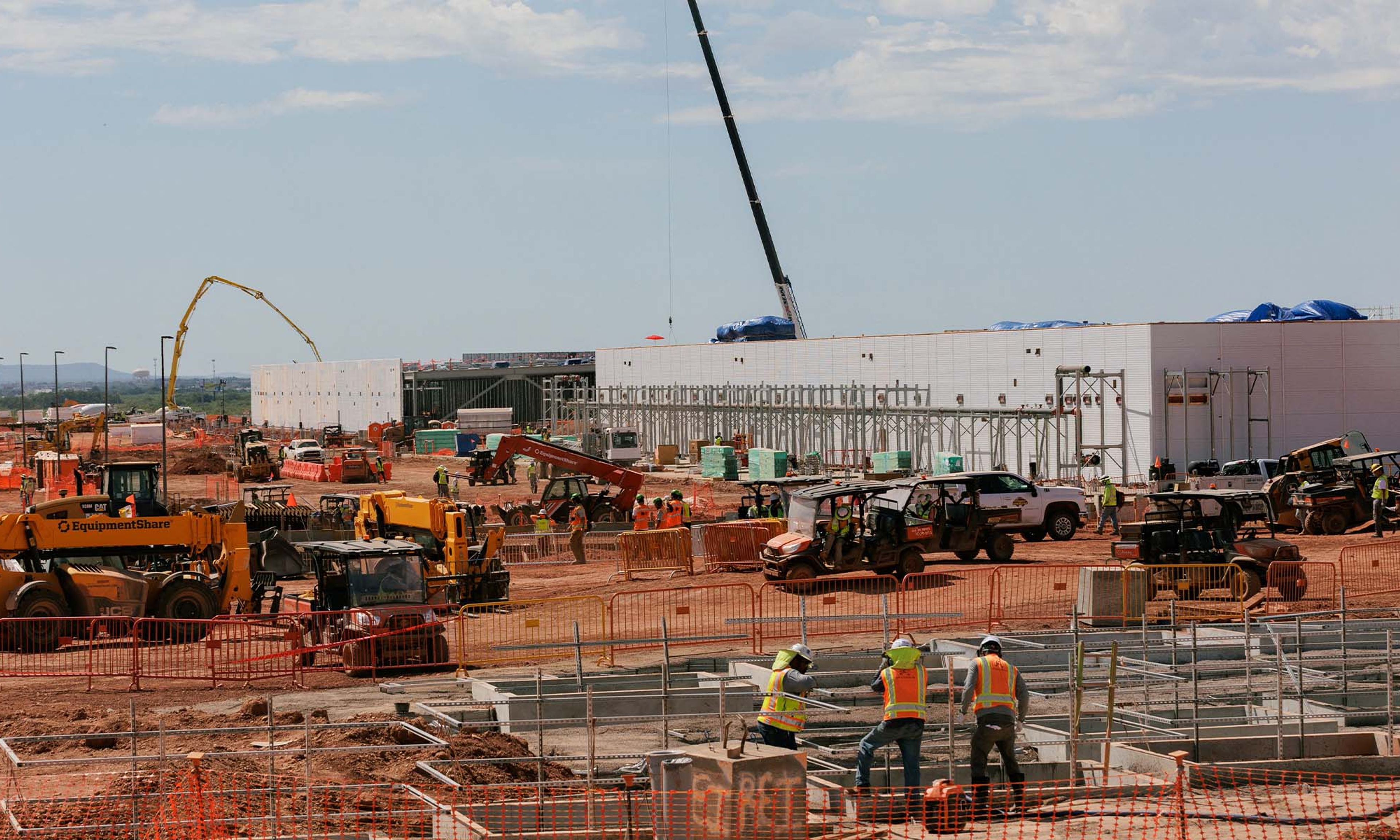
Data center buildings under construction in Abilene, Texas, September 23, 2025.
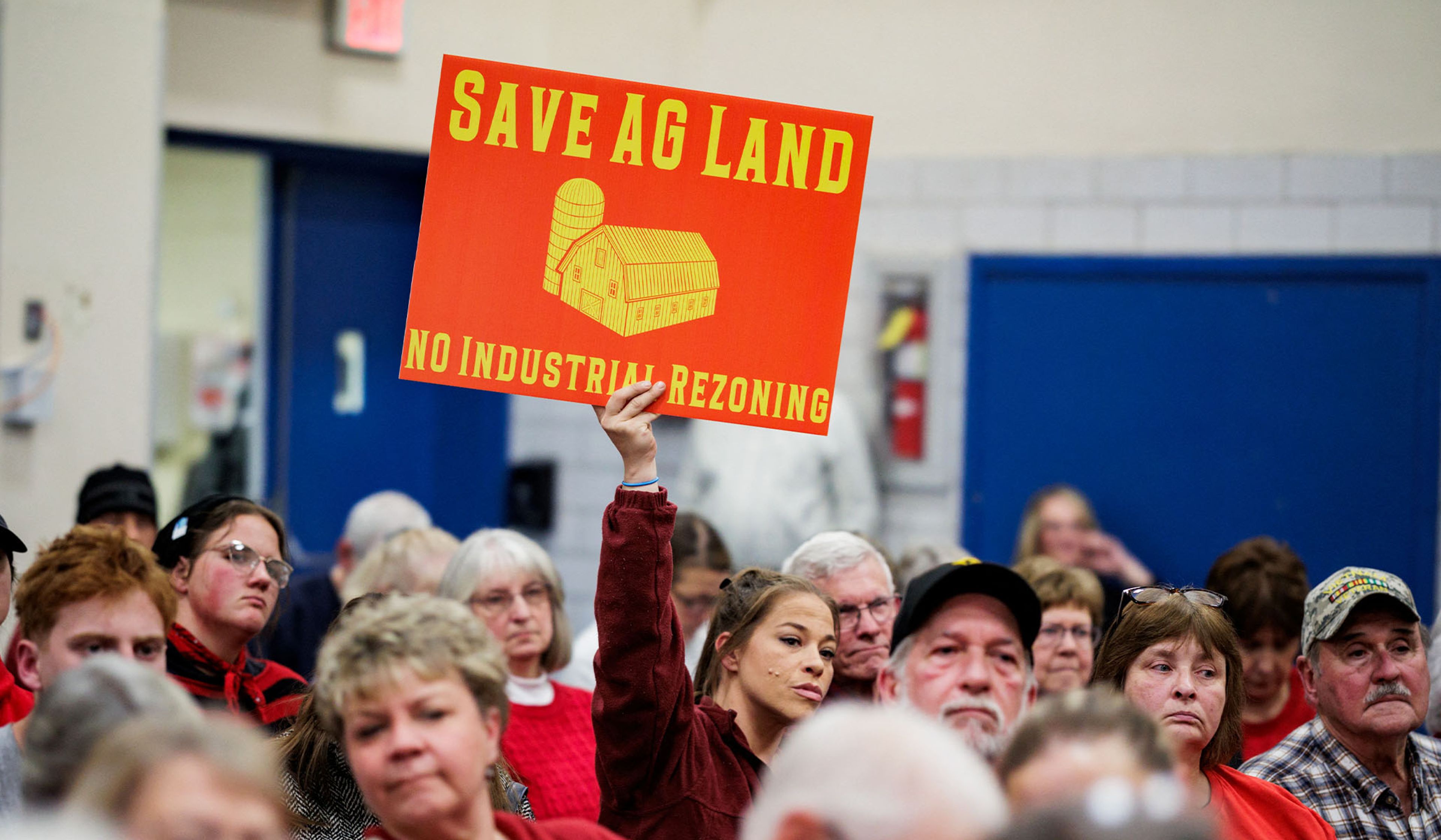
Building a new data center “kills jobs, equality, connection, democracy and maybe the human race. Congress must act,” Democratic Senator Bernie Sanders recently wrote in the Wall Street Journal. Sanders and his progressive House colleague Alexandria Ocasio-Cortez recently proposed a federal ban on their construction. “Congress has a moral obligation to . . . stop the expansion of these data centers until we have a framework to adequately address the existential harm AI poses to our society,” Ocasio-Cortez said. “We must choose humanity over profit.” The modern-day Luddites at the state level aren’t waiting for a federal ban either, as Maine’s Democratic-controlled House of Representatives already voted for a moratorium on new data-center construction.
Despite what these progressives say and do, building the electrical infrastructure necessary to support the AI revolution will ultimately benefit American families and businesses — and it’s something Republicans in red states should get behind.
“We didn’t get poorer when machines started doing manual labor instead of us,” Travis Fisher, director of energy and environment at the libertarian Cato Institute, told National Review. "When computers do some white collar work for us, it doesn’t take anything away from us. It frees us up to produce more. The original Luddites — Bernie does it, too — cannot imagine a world without the labor theory of value.”
The message is clear: Blue states will force data centers to grapple with heavy regulation, high costs, “Not in My Backyard” opposition, and even outright bans. Additionally, the unreliable solar and wind power that blue states increasingly build simply aren't good for data centers’ needs.
“The more you say ‘no’ in any given state, the more it opens up opportunities in the states that say ‘yes,’” Fisher said. “The layer of policy uncertainty is preventing growth; there’s a chilling effect. It raises the risk premium and makes everything cost more. This is a global growth opportunity; it’s not just the states that say ‘yes’ that are going to get the growth, it’s the countries that say ‘yes.’”
Red states can offer free-market solutions to this strategic problem, due to structural advantages which make them naturally attractive. Their pro-business policies, abundant land, low taxes, right-to-work labor environments, and energy abundance could be a perfect fit for the digital revolution.
The construction of new data centers has been greatly hindered by America’s aging and “sclerotic” power generation infrastructure, according to Fisher’s recent testimony before the U.S. Senate Committee on Energy and Natural Resources. Electricity demand surges while supply falls due to the planned retirements of much of America’s conventional baseload power systems — the type of power data centers need.
“If the goal is a reliable grid at least cost to consumers, repeal the net-zero mandates, repeal the Renewable Portfolio Standards, repeal all the things holding back the supply we so desperately need,” Fisher said. “New York State has been holding onto this net-zero future and keeps moving the goal back. If you’re getting that from even New York, people have come to their senses about this kind of thing.”
Unlike most nonsensical objections to data-center construction, such as allegedly high water usage or Senator Sanders’s concerns, the lack of reliable baseload power is a real problem for data center construction. As the testimony stated, pressures have driven up power capacity prices in the East Coast PJM electric utility up nearly by a factor of ten in just one year, and it takes years for a new data center to get a physical power hook-up and legal permissions.
“Power prices are going through the roof, so it makes sense that folks are trying to ease the supply constraints. You have to wait in line for multiple years to get hooked up to the grid,” Fisher said. “If you want to connect to the grid, it’s going to take forever — upwards of five years sometimes. If you’re a new customer like a data center, that’s an unacceptable timeframe. The new large customers are going to where they can get power quickly; that’s red states. With the rejection of the data center, you’re also rejecting the growth in the energy sector that comes with it.”
One great idea for improving the investment environment is Consumer Regulated Electricity (CRE) — privately financed, physically “off-grid” utilities serving new large customers, such as data centers, under voluntary contracts. These systems would impose zero costs, reliability risks, or stranded-asset burdens on the existing regulated power grid. CRE reform shields companies from laws which shouldn’t apply to them and saves ratepayers money. Embracing free enterprise will drive the burgeoning tech industry out of blue states to red America, where power prices are already lower.
“CRE just means if you’re not connected to the grid, you wouldn’t be regulated by a state commission or the federal government in terms of the economics. You’d still be subject to environmental regs, but it frees you up from the bureaucratic gatekeepers,” Fisher said. “Laws were designed for public utilities, not private ones. CRE is a private grid. That grid connection is the rate limiter on economic growth.”
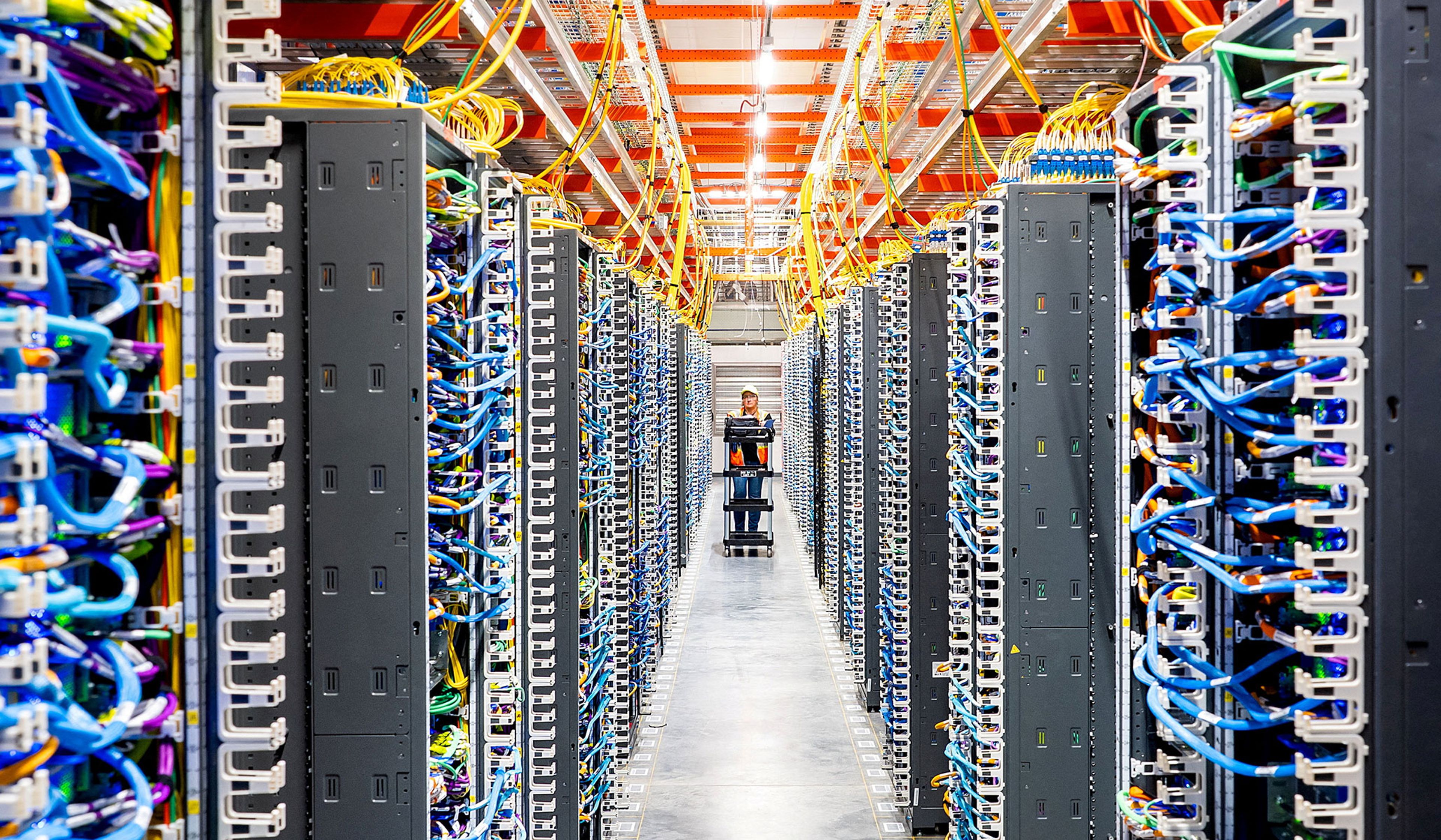
The AI revolution has the potential to be as economically transformative as the internet, or even electricity itself. Training and running frontier AI models require enormous, concentrated computing power housed in giant “hyperscale” data centers that can consume hundreds of megawatts to gigawatts each, equivalent to powering entire cities.
“The anti-data-center crowd often has QR codes on their flyers; they’re using it even if they don’t know it,” Fisher continued. “When you say ‘yes,’ to the new data-center development, what you are doing is bringing on a lot. With the new development comes things like improvements in schools, roads, reducing taxes for everyone else.”
Right now, the U.S. faces a conundrum of figuring out the “software side” of AI before China but being unable to scale the energy side rapidly enough to make gains due to slow energy development. China is already massively expanding its electrical generation capacity for exactly the kind of power data centers need.
Without abundant on-demand and baseload power, U.S. companies cannot scale AI fast enough to capture the productivity gains, new industries, and high-wage jobs that will define the 21st century. Delaying data-center development means delaying trillions in potential GDP growth, lost tax revenue, and missed opportunities in advanced manufacturing, cloud computing, and AI-enabled services that multiply across every sector.
“The investment is going to go somewhere; it goes where you can get affordable, reliable electricity. Unfortunately, China is really good at building more of that and we are not,” Fisher continued. “There is an American answer to this, and it’s free enterprise. We will win if we free up these markets and stop throwing up bureaucratic bottlenecks. We need to build a lot by removing barriers.”
If America’s grid remains sclerotic, U.S. firms will face chronic power shortages while Chinese competitors train larger models faster and cheaper. The result would be lost technological leadership, weakened national security (AI has been heavily used in the ongoing Iran war), and erosion of the economic edge that funds American military superiority and global influence.
Data centers are not a luxury or a niche issue; they are the indispensable infrastructure for the AI-driven economy. Prioritizing their rapid build-out, paired with bold expansion and reform of the bulk power system, is essential for long-term U.S. competitiveness against China and sustained American prosperity. The U.S. does not need central planning; it needs the regulatory barriers removed so free enterprise can meet the AI moment.

About the Author
Andrew Follett conducts research analysis for a nonprofit in the Washington, D.C., area. He previously worked as a space and science reporter for the Daily Caller News Foundation.
Featured Tags
Advertisement
Advertisement





Comments