The Leaked <i>Dobbs</i> Opinion Would Be a Credit to the Supreme Court and to the Country
Written by Steven F. Hayward & John Yoo
The Court appears to have taken the first step toward restraining itself and repairing both the legal and political defects of its privacy jurisprudence.
Share this story
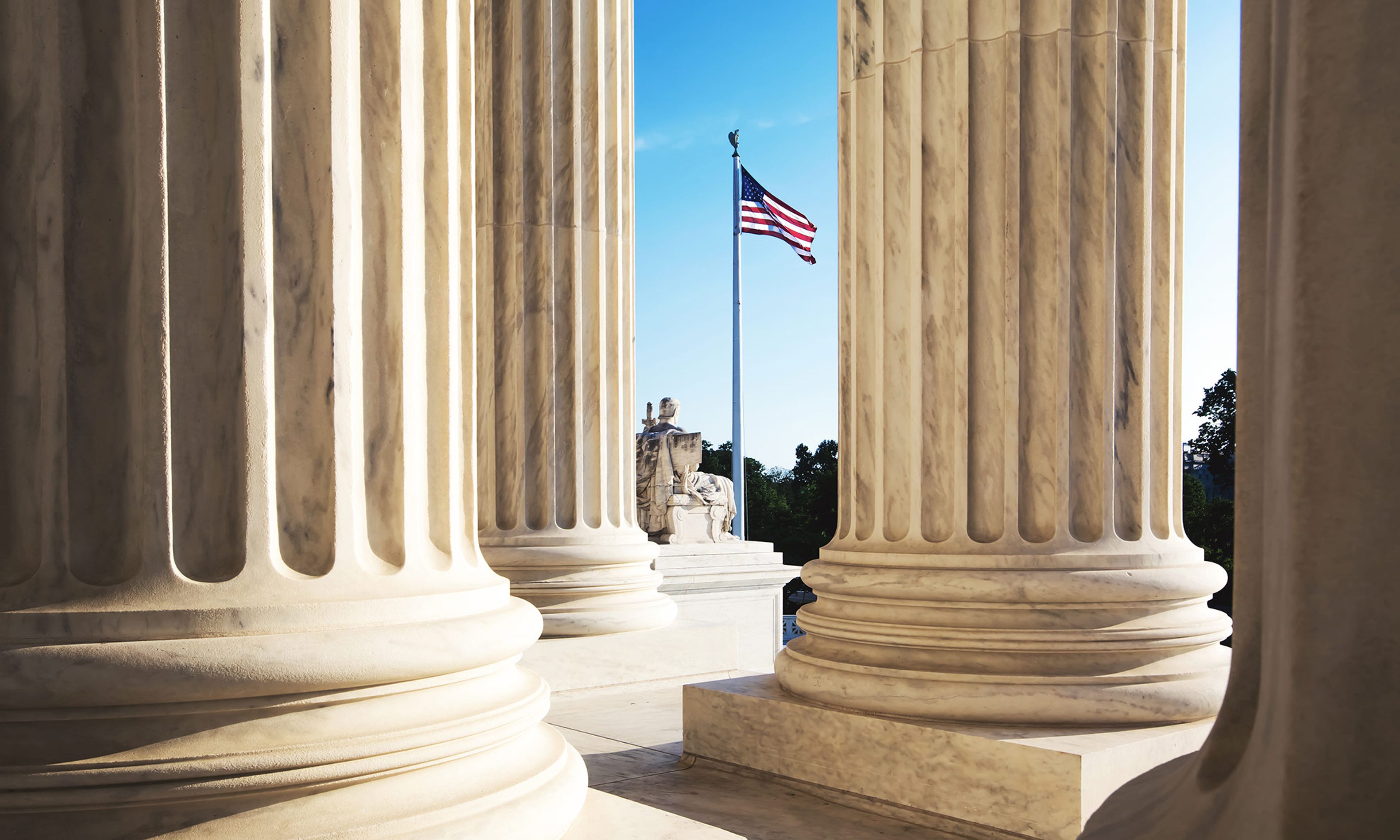
The U.S. Supreme Court building in Washington, D.C.
Last week’s unprecedented leak of the draft opinion in Dobbs v. Jackson Women’s Health Organization unintentionally shows why the Supreme Court should overturn Roe v. Wade (1973). By seizing abortion from the states and Congress and transforming it into a constitutional right, Roe embroiled the Court in partisan politics. As night follows day, the methods of electoral politics migrated from legislatures to the courts. If the Court ultimately overturns Roe in the next few weeks, it not only can repair the constitutional law of rights but cure itself as well.
The question in Dobbs, which the Court heard in December, was whether Mississippi could ban all abortions after 15 weeks of pregnancy. Under Roe, as reaffirmed in Casey v. Planned Parenthood (1992), the Court generally allows states to regulate abortions, so long as they do not place an “undue burden” on a woman’s right to choose (though the Court failed to clearly define “undue burden”). But before viability, which occurs at about 22–23 weeks of pregnancy, the Court has held that the Constitution’s due-process clause protects a virtually unrestricted right to an abortion. Last week, someone leaked a draft opinion (dated February 10, 2022), authored by Justice Samuel Alito and reportedly joined by Justices Brett Kavanaugh, Clarence Thomas, Neil Gorsuch, and Amy Coney Barrett, overturning Roe and returning abortion policy wholly back to the states.
The leak of the Dobbs opinion represents just the latest escalation in the use of political tactics against the Court. The Court has never had a draft opinion leak to the press; indeed, it is difficult to recall any leak of a draft opinion’s text occurring at any federal court, ever. But leaking, even of the most sensitive, classified information, is all too common at the White House, in cabinet departments, and in Congress. American officials, for example, recently leaked that the U.S. government had provided Ukrainian forces with the intelligence enabling them to sink the Moskva, the flagship of the Russian Black Sea fleet, and to target Russian generals in mobile headquarters.
The Dobbs leak itself prompted more political pressure tactics. This week, liberal groups conducted protests at the homes of Chief Justice John Roberts and Justices Alito and Kavanaugh and published the home addresses of Thomas, Alito, Gorsuch, and Barrett. Some of the justices have had to cancel public appearances. All of this followed the political circus that has become the confirmation process — a circus whose founder was none other than the sitting president, Joe Biden. Before Kavanaugh opponents tried to block his confirmation with accusations of high-school sexual assault, they had interrupted his hearings repeatedly with their screams to defend abortion, spent hundreds of thousands of dollars on television ads warning of Roe v. Wade’s death knell, and even sent over a thousand hangers, symbols of self-administered abortions, to Senator Susan Collins (R., Maine), one of the critical confirmation votes.
The Left is resorting to these methods because they understand that the fate of Roe v. Wade rests in the hands of the new justices rather than in the political process. Justice Anthony M. Kennedy, whom Kavanaugh replaced, supplied the fifth vote on the Supreme Court to keep abortion rights on life support. Liberal justices Stephen Breyer, Elena Kagan, and Sonia Sotomayor have voted in lockstep to strike down virtually any effort by the states to regulate abortion. But only Kennedy could give them the majority. Kennedy’s strained efforts to conjure a right to abortion from a spare constitutional text had resulted in confused, even mystical definitions of privacy. “At the heart of liberty is the right to define one’s own concept of existence, of meaning, of the universe, and of the mystery of human life,” Kennedy notoriously wrote in Casey. Kennedy created a jurisprudence of subjectivity, wherein the Court would find rights wherever it so chose if some favored group felt its “own concept of existence” was threatened.
Dobbs is important not just for ending this constitutional mysticism. With the three Trump-appointed justices, the Roberts Court can review the misguided adventure into the world of non-textual, judicially created rights. For the past half century, progressives have turned to the Supreme Court to win what politics denied them. The Court injected the sexual revolution into the Constitution and “found” new progressive rights to privacy and dignity, as well as protections against anti-gay animus.
While many on the left loved Roe’s result, some of its more serious thinkers worried about the Court’s reasoning and its embrace of a political role. Future justice Ruth Bader Ginsburg, for example, criticized the Roe Court, arguing that the right to abortion should be grounded in equal protection, not privacy, and that abortion would be better protected in the long term by state-by-state adoption, rather than the Court’s imposing its will from on high. (Ginsburg also incautiously revealed the less than worthy motives of some abortion supporters at the time of Roe with her 2009 comment, “Frankly, I had thought that at the time Roe was decided, there was concern about population growth and particularly growth in populations we don’t want to have too many of.”) The great liberal legal scholar John Hart Ely called Roe “a very bad decision,” but not because he disagreed with it on policy grounds. Rather, he viewed Roe as “bad because it is bad constitutional law, or rather because it is not constitutional law and gives almost no sense of an obligation to try to be.”
Legal conservatives have sought to overturn Roe not because they are obsessed with abortion, but because it politicized the Supreme Court, abused the Constitution, and short-circuited democracy. The theory of Roe — that the due-process clause, which speaks only to processes owed by the government before it affects life, liberty, or property — led inevitably to Obergefell v. Hodges, which overrode all state laws regulating gay marriage. According to Justice Kennedy, such “substantive” due process produced a constitutional right to marry someone of the same sex over the will of approximately two-thirds of the states. Justice Kennedy’s vacuous reasoning did not disappoint: “The Constitution promises liberty to all within its reach, a liberty that includes certain specific rights that allow persons, within a lawful realm, to define and express their identity.”
Under the Roe approach, the Court replaces our elected representatives in making policy on every claim of individual right. The Court has aggrandized its power first by constitutionalizing abortion and then by creating a vague test that drives all important cases up to its docket. But if the Court follows through in Dobbs, it will leave these decisions to the states. States could define an unborn child as a person, and bring him within the protections of the criminal laws that protect life. Likewise, the Court could allow states to criminalize abortions that kill an unborn child. Some states will follow this path, and some will not. But by overturning Roe, Dobbs will recognize the authority of the states to articulate and defend their interests in abortion or in fetal life.
Alexis de Tocqueville wrote presciently in the 1830s, “There is hardly any political question in the United States that sooner or later does not turn into a judicial question.” That’s become a major problem in recent decades as more and more political questions have sought resolution in the courts instead of the democratic branches of government. Dobbs could mark a turning point that will improve our constitutional and political system well beyond the narrow issue of abortion. Under the Warren Court approach to constitutional interpretation, which still reverberates in Kennedy’s mysticism, the Supreme Court has steadily added more and more important social issues to its docket. Every time it claims constitutional power over another social issue, it deprives the people’s elected representatives in our statehouses or in Congress of the ability to determine the policies that govern the citizenry. As it assumes the power of a legislature, the Court has steadily become more political. The American people can change national policy about abortion, gay marriage, race, religion, or speech only by influencing the appointment of justices to the Supreme Court, rather than by building coalitions, persuading neighbors, and winning elections. Voters will view the decisions of the justices on these issues as political rather than legal in nature. It was only a matter of time before the political tactics of campaigns, lobbying, and legislation jumped from the Capitol across First Street to the Court.
One immediate benefit of Dobbs might be that the confirmation of federal judicial appointments will become normal again. But beyond the issue of abortion, Dobbs could represent the single greatest revival of true federalism in decades. It calls a halt to the relentless centralization of all issues and policies at the national level. Other matters of bitter contention might follow in health care, K–12 education, welfare (partly but not completely de-federalized in 1996), housing, and perhaps even immigration.
Restoring these issues to the political process will result in a diversity of policies. Our federal system already allows such difference on matters of life and death, such as the death penalty or euthanasia. The states, and the people, will become more responsible, leading to a more robust democracy rather than the increasingly fragile one we have today. In Dobbs, the Court appears to have taken the first step toward restraining itself and repairing both the legal and political defects of its privacy jurisprudence. The best way for the Court to stay out of politics is for the Court to stay out of politics.
Steven F. Hayward is senior resident scholar at the Institute of Governmental Studies and a lecturer in both the law school and the political science department at the University of California at Berkeley.
John Yoo is the Emanuel S. Heller Professor of Law at the University of California at Berkeley, a nonresident senior fellow at the American Enterprise Institute, and a visiting fellow at the Hoover Institution at Stanford University.
About the Author
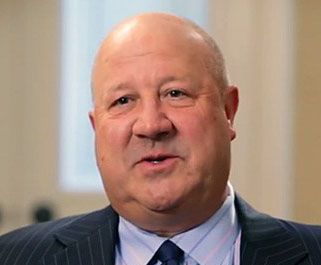
Steven F. Hayward is the Edward Gaylord Distinguished Visiting Professor at Pepperdine University School of Public Policy.
About the Author
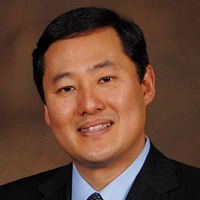
John Yoo is Heller Professor of Law at the University of California, Berkeley; distinguished visiting scholar at the School of Civic Leadership and a senior research fellow at the Civitas Institute at the University of Texas at Austin; and a nonresident senior fellow at the American Enterprise Institute.
Featured Tags
Advertisement
Advertisement

Comments