The Revolutionary Figure Chiseled from Vermont Granite
Written by Jack Crowe
Ethan Allen became the symbol of the stubborn Yankee
Share this story
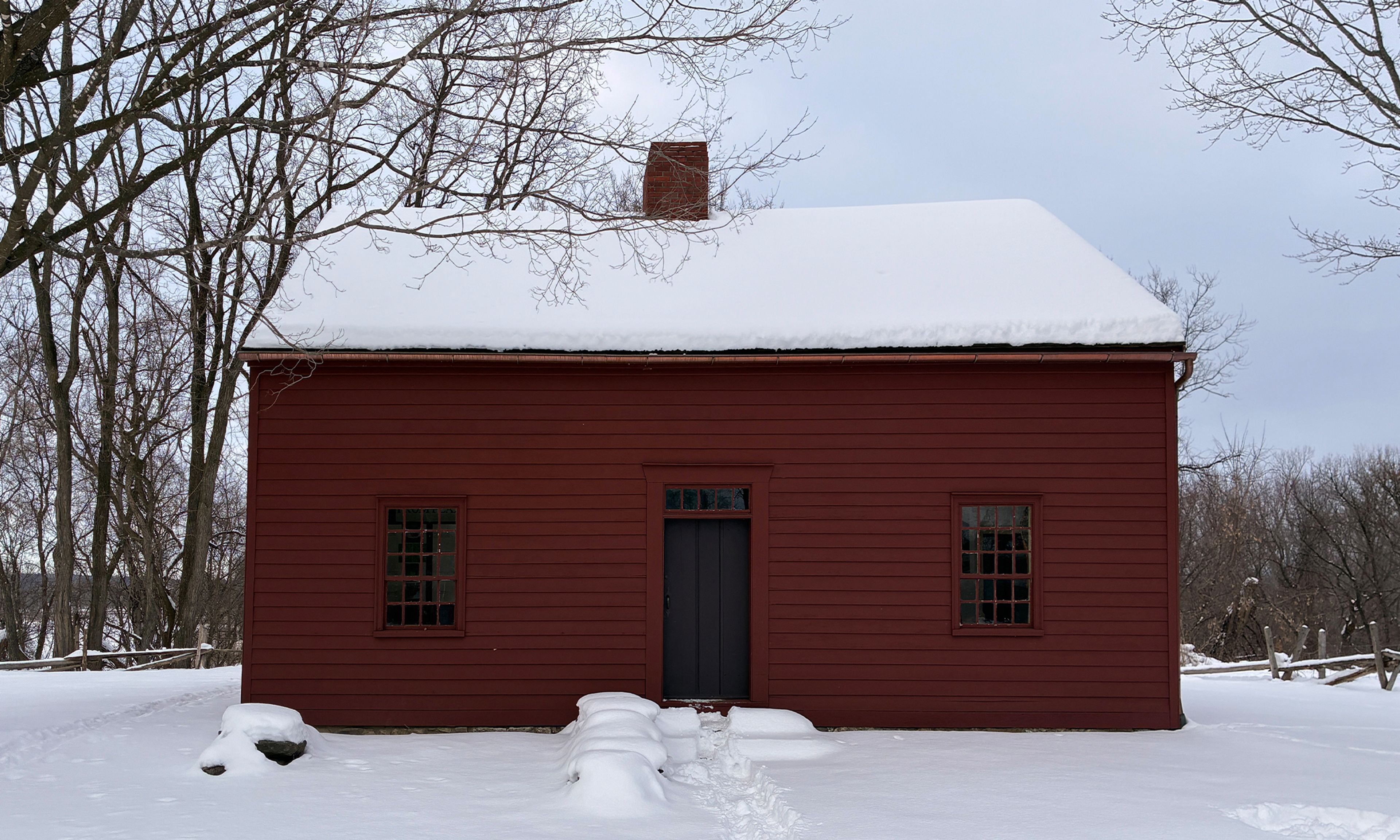
Photo courtesy of the author
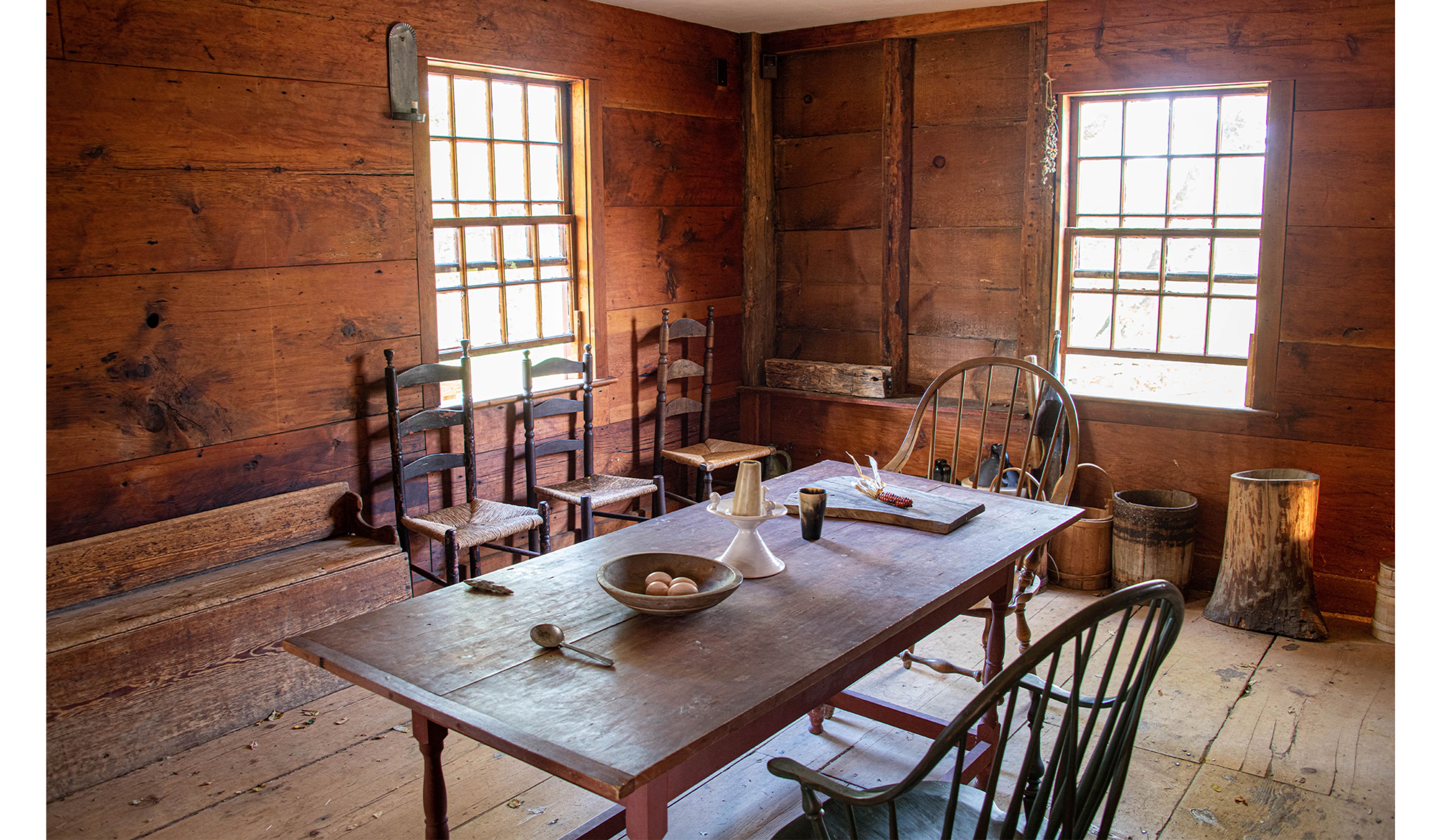
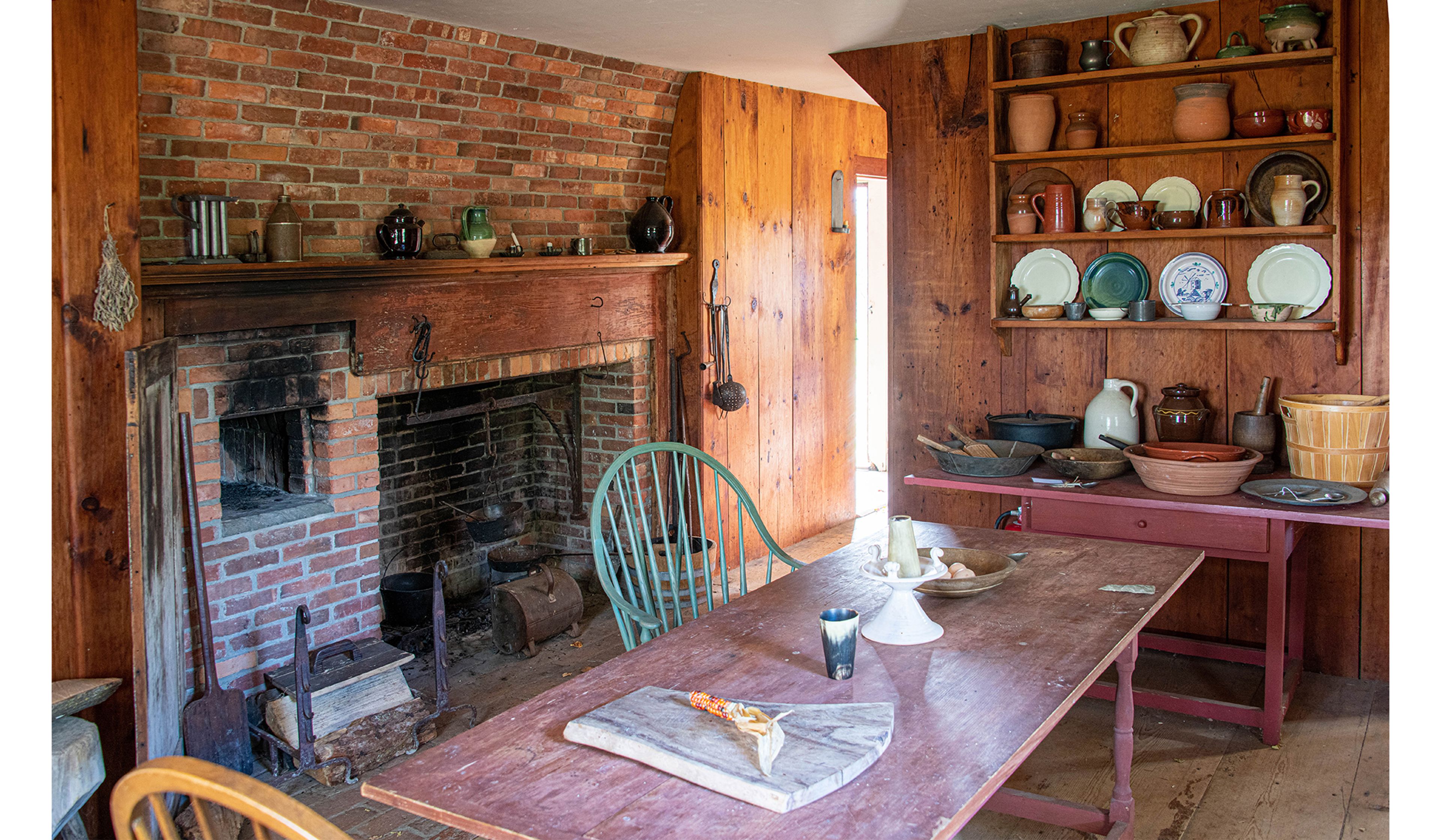
Burlington, Vt. — Standing in the room where Ethan Allen did his writing, I’m shuffling back and forth and rubbing my gloved hands together, doing my best to take in the home of Vermont’s founding father. It’s 17 degrees outside and not much warmer inside the old Allen homestead, which has been preserved to look and feel exactly as it did more than two centuries ago. Outside, the wind is howling across the snow-covered fields that Allen once worked. What was it about this unforgiving landscape that led Allen to leave civilization behind and devote his entire adult life to fighting for its independence -- and what brought him back here after years of war and captivity? Allen’s pathological stubbornness was shaped by the climes of northern New England, and, thanks to the fame he won for his role in the American Revolution, he has since come to shape our national understanding of the flinty, frowning Yankee.
Cold climates mold their inhabitants in a very particular way. A hard edge tends to develop when one is faced, for nearly half the year, with the prospect of stinging pain on exposed skin anytime one leaves the house. Social science bears out what is obvious to anyone from the Northeast who’s ever visited Southern California. A study published in the journal Nature in 2017 found that people who grow up in mild climates, where the temperature hovers around 72 degrees, tend to display higher levels of extraversion, emotional stability, and agreeableness. Those who live in inclement climates congregate less frequently and therefore tend to be more introverted and less agreeable. An earlier study of regional differences identified significant variations in personality types. New Englanders, the researchers found, tend to be irritable, impulsive, and quarrelsome. The researchers classified the people who represent these traits as “Temperamental and Uninhibited.”
A more fitting description of Ethan Allen would be difficult to devise.
If modern Vermonters are shaped by their harsh climate, the people of Allen’s time would have been all the more so. They dressed in all-natural clothes of wool and linen, and their livelihoods required them to brave the outdoors -- not for the fun of skiing or hiking but to scrape a living out of the hard, mountainous terrain.
Vermont in the mid-18th century was the frontier. Before Jim Bridger and Kit Carson and the Wild West, there was Allen, his cousin Seth Warner, and hundreds of other hard men who were lured to what was then called the New Hampshire Land Grants by the promise of cheap, albeit contested, land.
At age 31, after a stint in the British military during the French and Indian War, Allen left his Connecticut farm, rejecting the conformity of his Puritan upbringing for the freedom of the mountains. He had, by that point, established a reputation as a deviant for promoting deism, often while well lubricated, and was even run out of two different towns, one in Connecticut and another in Massachusetts, by the local clergy.
The traits that alienated Allen’s neighbors in the more civilized confines of the established colonies distinguished him as a leader among the men who moved north to hunt, trap, and build rudimentary shelters with the goal of one day establishing farms productive enough to support wives and children. They purchased plots of land between Lake Champlain to the west and the Connecticut River to the east from New Hampshire Governor Benning Wentworth. This was rugged, mountainous country, running from the Canadian border, roughly 50 miles north of Burlington, to the Massachusetts border just south of Bennington.
The authorities in New York believed that the land Wentworth sold belonged rightfully to them and declared that Allen and the other men who had been tilling the rocky soil had to pay New Yorkers for the privilege -- or face eviction. This, unsurprisingly, did not go over well with the Temperamental and Uninhibited. Allen rallied a militia to defend the property rights of Vermonters.
They called themselves the Green Mountain Boys, and their tactics were brutal. Whenever New York sent land agents and sheriff’s posses into the New Hampshire Grants to inform a farmer that he didn’t actually own the land he was farming, Allen and his band would ride to the landowner’s defense and inflict every sort of punishment short of murder on the agents. They tarred and feathered them, ran them up flagpoles, beat them senseless, and generally made their lives so miserable that the authorities in New York would have a hard time finding anyone willing to do the job.
Yes, the Green Mountain Boys were defending their property, but they were also likely motivated by less practical concerns. New Englanders, or Yankees, and New Yorkers, or Yorkers, were not, as a rule, fond of each other.
Chris S. Wren, in his excellent work Those Turbulent Sons of Freedom, puts it this way:
Yorkers disparaged Yankees as vulgar and insolent, and thought their penchant for thrashing out differences in public verged on anarchy. Yankees were contemptuous of Yorkers as subservient and intolerant and feared having their farms swallowed up by New York’s feudal system of baronial manors. Ethan Allen would turn their resentments to his advantage.
The Yankee aversion to subjugation ran deep.
Not yet a state in July 1777, Vermont became the first territory in the U.S. to explicitly outlaw slavery as part of its constitution, declaring all adult men and women free and independent. Ethan Allen’s cousin, Ebenezer Allen, was conducting raids on British troops who were retreating back to Canada after the victory at Ticonderoga when his regiment captured 40 soldiers who were traveling with a slave named Di‑nah and her two-month-old baby. Firm in his conviction that it was “not right in the sight of God to keep slaves,” Allen signed a document declaring Dinah and her baby free.
“The flinty and profane Ebenezer Allen may have promulgated America’s first emancipation proclamation,” Wren writes.
While the years have undoubtedly diluted the regional differences Wren describes, they persist as reflections of unchanged topography and climate. The Green Mountains of Vermont that made Allen into the kind of man who openly taunted his British captors -- and even challenged them to duel while he was in shackles -- stand ready to mold successive Temperamental and Uninhibited generations.
Amid those mountains, Allen and his men developed a distinctive guerrilla style used to repel incursions from New York sheriff’s posses. Allen was able to raise an effective fighting force from freewheeling frontiersmen who, like him, drank heavily and swore openly, insisted on electing their own leaders, and exercised their right to return to their farms when the calendar demanded. Those traits horrified the more disciplined, professional soldiers alongside whom the Green Mountain Boys would fight during the Revolution -- but these traits were also integral to the frontiersmen’s success. The Green Mountain Boys could strike a blow against the enemy -- first New Yorkers, later the British -- and melt back into the densely wooded hills whence they came.
In 1770, the New York Supreme Court ruled that the New Hampshire Land Grants were invalid. The judges, who were financially interested in the outcome of the case, ordered Allen and his compatriots to honor the claims of the New York plaintiffs. Allen responded that “the gods of the valleys are not the gods of the hills!” When the plaintiffs’ attorney asked what Allen could possibly mean by the remark, he answered: “If you will come to Bennington the meaning shall be made clear to you.” Allen and his men made it crystal clear.
After the New York authorities placed a bounty on Allen’s head, he made a point of riding the 40 miles to Albany, entering a crowded tavern, and draining a bowl of punch in full view of the patrons before getting back on his horse and returning to Bennington, untouched, just to show that he could.
When the colonists took up arms against the British in Massachusetts, Allen immediately spotted an opportunity. If the Vermonters threw their lot in with the Continental Congress and against the British, maybe they’d end up with a state of their own when the smoke cleared.
What he did next cemented his reputation throughout the colonies, transforming him from a vigilante into a military leader -- and it explains why his homestead is now a museum.
Officials in Connecticut delivered $300 from the treasury to Allen and deputized him to seize Fort Ticonderoga, a strategically vital position that would grant its occupants control over Lake Champlain and the northern waterways linking it to Montreal.
Benedict Arnold had received a commission from Massachusetts to take Ticonderoga, but when he showed up in Bennington, he found a group of militiamen who insisted they’d participate only if they could be led by their own homegrown leader, Ethan Allen.
After capturing Ticonderoga, Allen went on to lead an ill-advised, undermanned assault on Montreal, which was easily repelled and led to his capture by the British. Allen recounted, “I was apprehensive that no quarter would be ‑given to me, and therefore had determined to sell my life as dear as I could.”
He then described how he fired his final errant shot as a British soldier closed in on him, at which point Allen “saluted him” with his tongue. If Allen was going to be captured, he wanted the man doing it to know that he had not been cowed.
He would spend the next three years in British custody and was even brought on a ship to England to answer a treason charge. The British were dissuaded from executing him by American threats of reprisal, issued personally by none other than George Washington, and he was eventually returned to New York City.
Released in 1778 as part of a prisoner exchange, Allen would return home to take up the cause of American independence and, equally, Vermont’s independence. His reputation suffered after it was revealed that he took part in discussions with the British about possibly turning on his comrades in exchange for a promise that Vermont would be given independence from neighboring colonies after the British put down the rebellion. Most historians, however, agree that Allen was never serious about pursuing this course, and the scorn that drips from his account of his time in British captivity makes it difficult to imagine his ever considering joining the Loyalist cause.
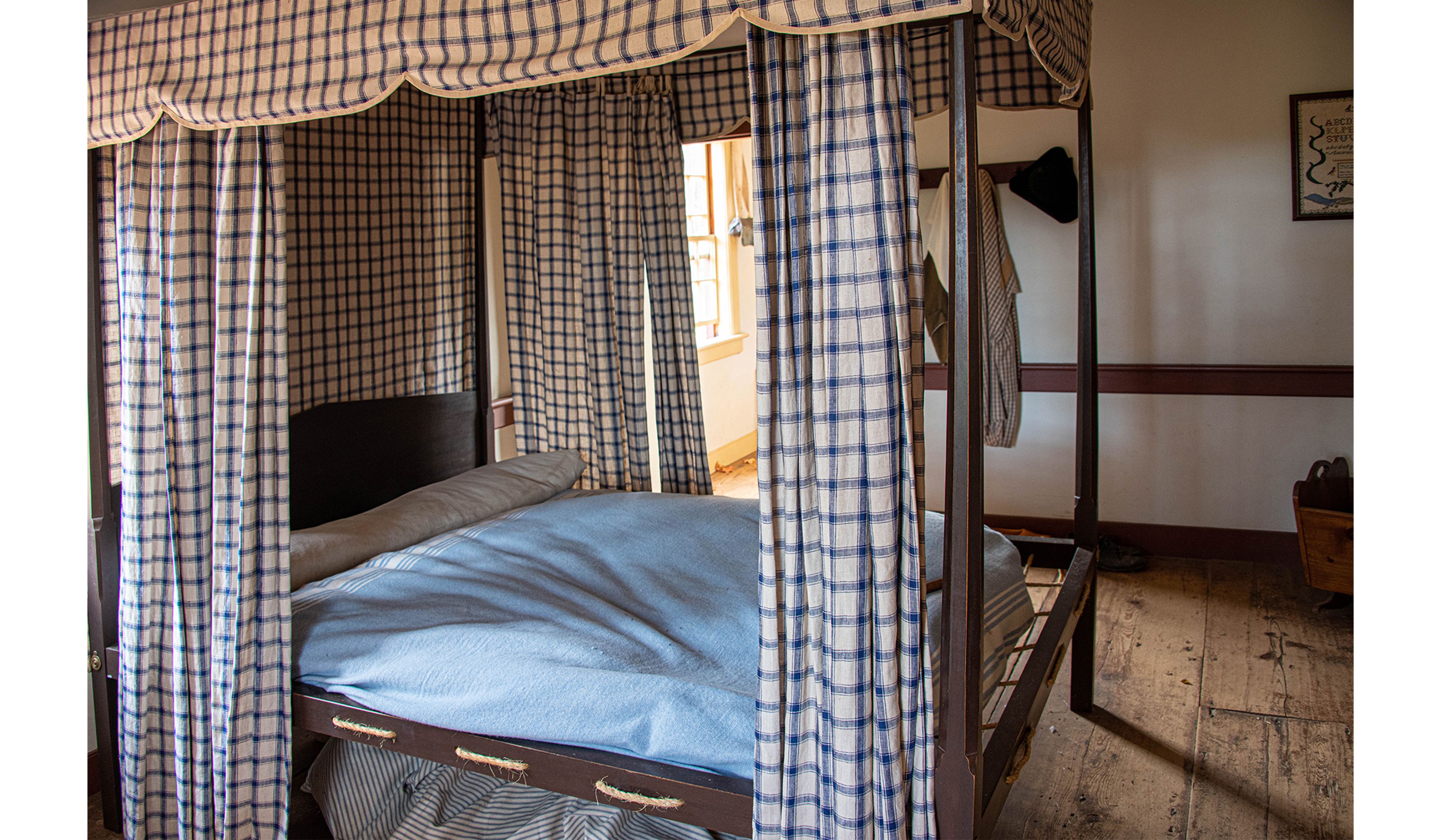
In the final chapter of his life, Allen had a house built on his Burlington land, where he moved with his second wife and their children. There he sat, overseeing his farm and scribbling on philosophy and religion in his study for just two years before dying of a stroke. The room where he sat writing is small, spare, and cold -- but if he turned to the right and looked out the window at the staggering beauty outside, he might have been reminded of the reason he had given so much of himself. His personality -- Temperamental and Uninhibited, argumentative, and irascible -- prevented his ever attaining a high military rank, and, while he died with considerable land holdings, he never became rich. He was a man of and for a particular time and place, and when his neighbors -- and later his countrymen -- needed him, he answered the call.
As Washington observed, “There is an original something about him that commands attention.”
The same can be said of the state he helped create.

About the Author
Jack Crowe is the senior news editor of National Review Online.
Featured Tags
Advertisement
Advertisement




Comments