The UAE–Binance–Trump Affair: A Comprehensive Timeline
Written by Andrew C. McCarthy
How did Trump’s net worth skyrocket during his second term? The final installment in this series pieces together key events.
Share this story
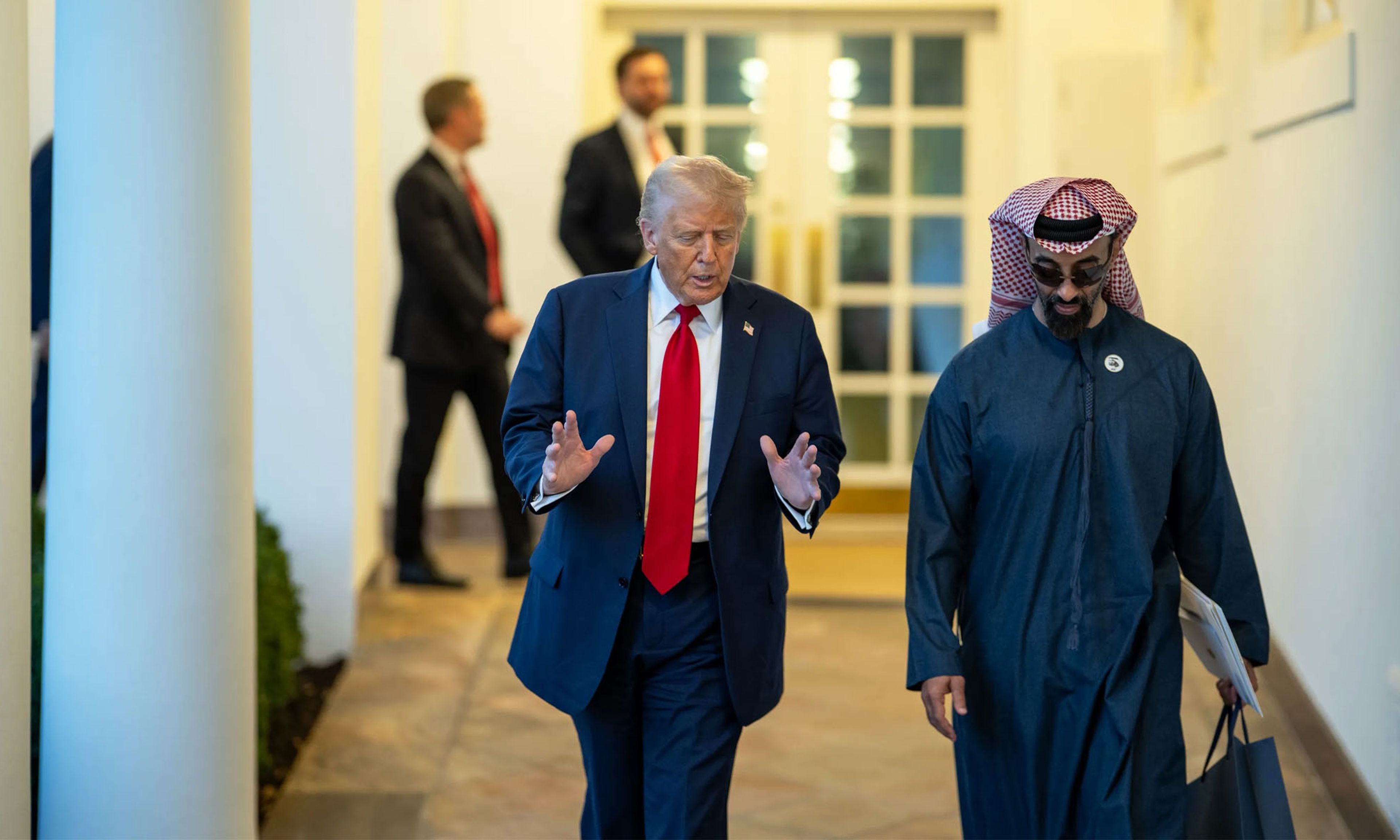
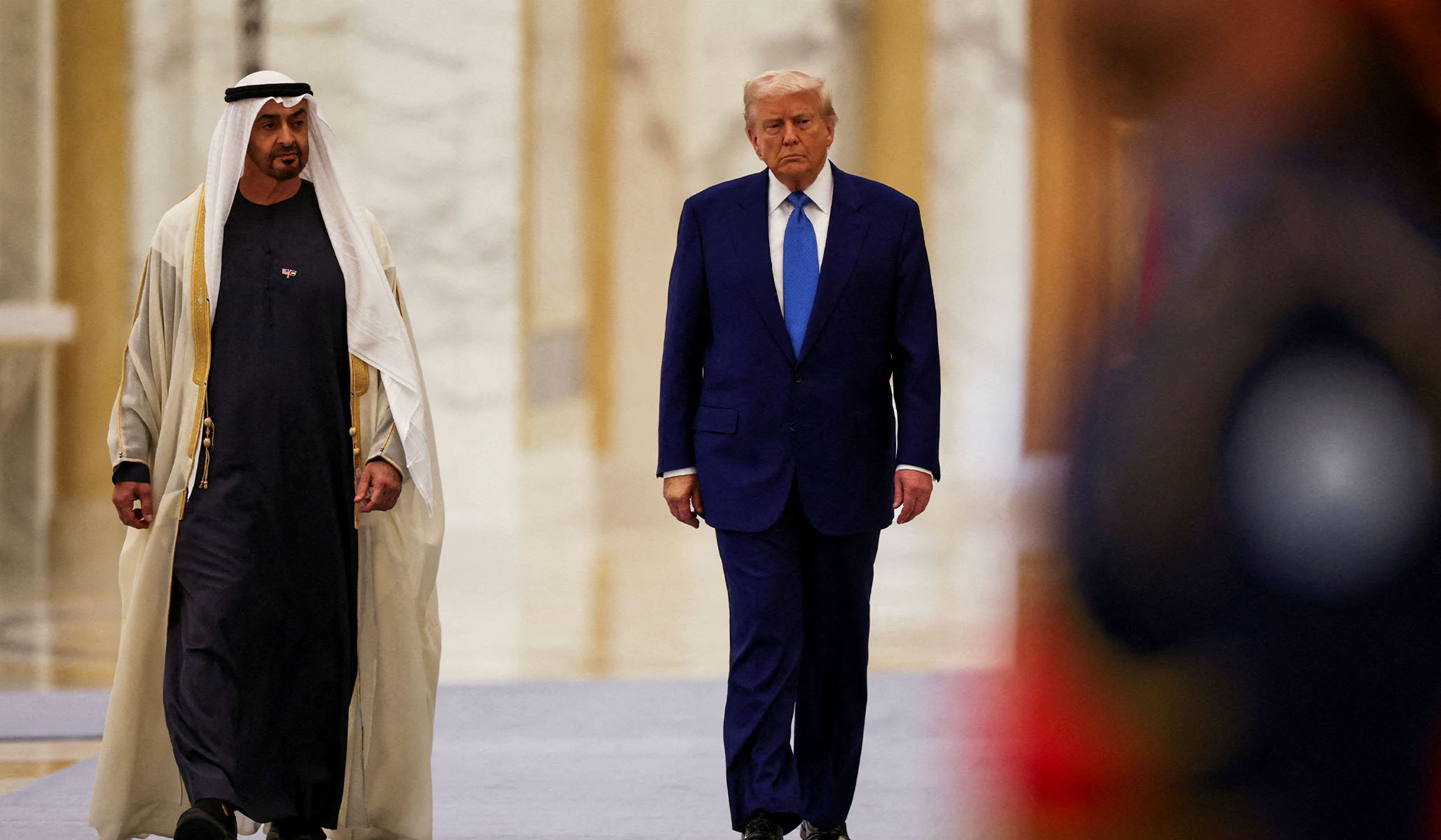
President Donald Trump walks with Sheikh Tahnoon bin Zayed Al Nahyan at the White House, March 18, 2025.
Author’s note: This is the last in a series of five posts on the financial ties that have publicly emerged between President Trump and the regime of the United Arab Emirates. See part 1, part 2, part 3, and part 4.
The first four posts in this series have detailed reporting about lucrative personal financial ties between President Donald Trump and the ruling regime of the United Arab Emirates. Here’s what we’ve covered so far.
Summary
The tiny Gulf nation’s point man in cultivating Trump has been Sheikh Tahnoon bin Zayed al Nahyan, the brother of the monarch (Sheikh Mohamed) and the UAE’s top intelligence operative. Tahnoon has vast personal wealth and controls a financial empire, including government funds, estimated to be worth $1.3 trillion.
To recap, new Wall Street Journal reporting reveals that through one of his many corporate entities, Tahnoon secretly infused $500 million into World Liberty Financial four days before Trump’s inauguration last year, acquiring a 49 percent share and placing two of his subordinates on WLF’s five-person board of directors -- meaning they sit alongside President Trump’s son Eric; Zach Witkoff, the son of Trump’s Middle East envoy, Steve Witkoff; and Zak Folkman (a Trump-Witkoff associate). To make the deal with WLF, Tahnoon used an entity called Aryam Investment 1, an investment arm of his UAE-based technology conglomerate, Group 42 (G42). Tahnoon and G42 (and G42’s CEO, Peng Xiao, who now also sits on the board WLF) were cited to the Biden administration in 2024 by the Republican-led House Committee on the Chinese Communist Party due to their web of relations with Xi Jinping’s regime in Beijing.
Prior to the establishment of WLF by Donald Trump and Steve Witkoff, Tahnoon was already a heavily invested business partner of Trump’s son-in-law, Jared Kushner -- the president’s former and oft-time current Middle East emissary.
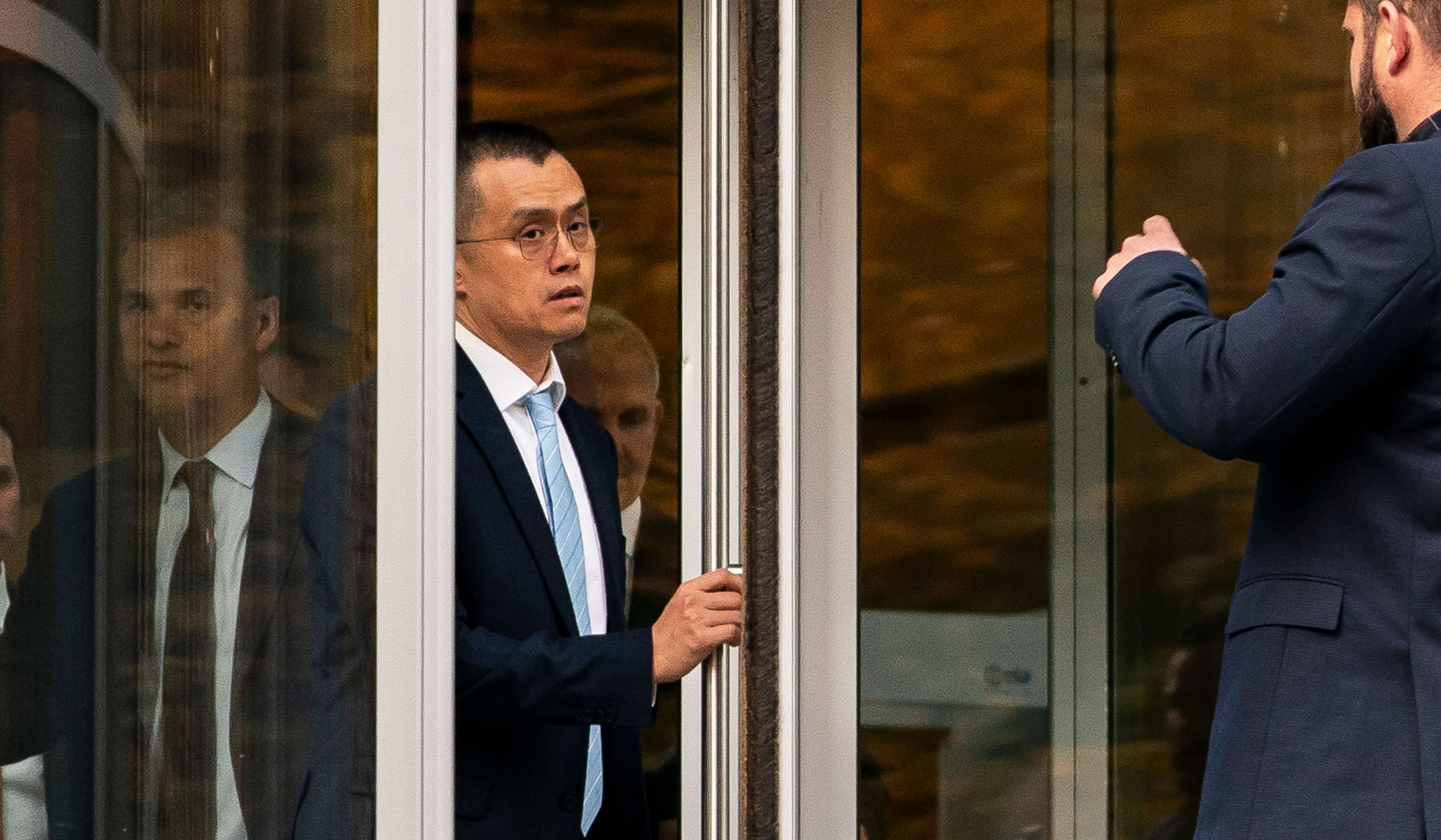
Tahnoon is a close associate of Changpeng Zhao, who was convicted of felony money-laundering charges in the United States arising out of his stewardship of Binance, the world’s largest cryptocurrency exchange. In 2023, Zhao and Binance admitted guilt to the charges that stemmed, as the Justice Department alleged, from Zhao’s turning Binance into a covert funding channel for terrorists, cybercriminals, and child abusers. While Zhao and his allies (including the UAE) lobbied for a pardon of Zhao, Binance and the UAE contributed technical know-how to help WLF develop a stablecoin, USD1, which it first introduced in March 2025.
Just weeks later, on May 1, WLF announced that another Tahnoon entity, MGX, had purchased $2 billion worth of the new, unproven USD1 stablecoin, which he would invest on Zhao’s Binance exchange. While the Trump-Witkoff-controlled WLF portrayed this eye-popping purchase as a global market vote of confidence in its stablecoin, neither WLF nor the UAE revealed that Tahnoon had secretly purchased 49 percent of WLF for $500 million just four months earlier, right as President Trump was entering office. Nor was it revealed that two board members of Tahnoon’s MGX (who were also executives of Tahnoon’s G42 entity) were also WLF board members.
Shockingly, President Trump pardoned Zhao in October 2025.
The Timeline
In this final post in the series, we will develop a timeline of key events, noting important connections between the players.
February 2017: Just after the start of President Trump’s first administration, the Trump International Golf Club Dubai is launched. Obviously, the deal preceded the Trump presidency. From the Trump Organization side, it is a licensing agreement -- the club is branded with the Trump name but was developed by DAMAC, a real estate company founded by billionaire Hussain Sajwani, who has close ties to the UAE’s royal family. With Trump in office, the Trump Organization was being run by his adult sons Don Jr. and Eric, who attended the opening.
2017-2020: The UAE regime forges close ties with the Trump administration. In his first term, the president made his son-in-law, real estate developer Jared Kushner, a high-ranking adviser on the White House staff and oft-time envoy to the Middle East, where Kushner made extensive contacts, including with Sheikh Tahnoon and other UAE officials.
August 13, 2020: The UAE becomes the first Middle Eastern nation to join the Abraham Accords, normalizing relations and increasing commerce with Israel. The Accords are the signature foreign policy achievement of Trump’s first term. Kushner plays a central role. While a meaningful advancement of American interests, the Accords are joined by only four countries: the UAE, Bahrain, Morocco, and Sudan, an unstable country whose implementation is incomplete. This is surely due to the Democratic Biden administration’s chilly (occasionally hostile) posture toward Israel, which reduces incentives for Islamic countries to join.
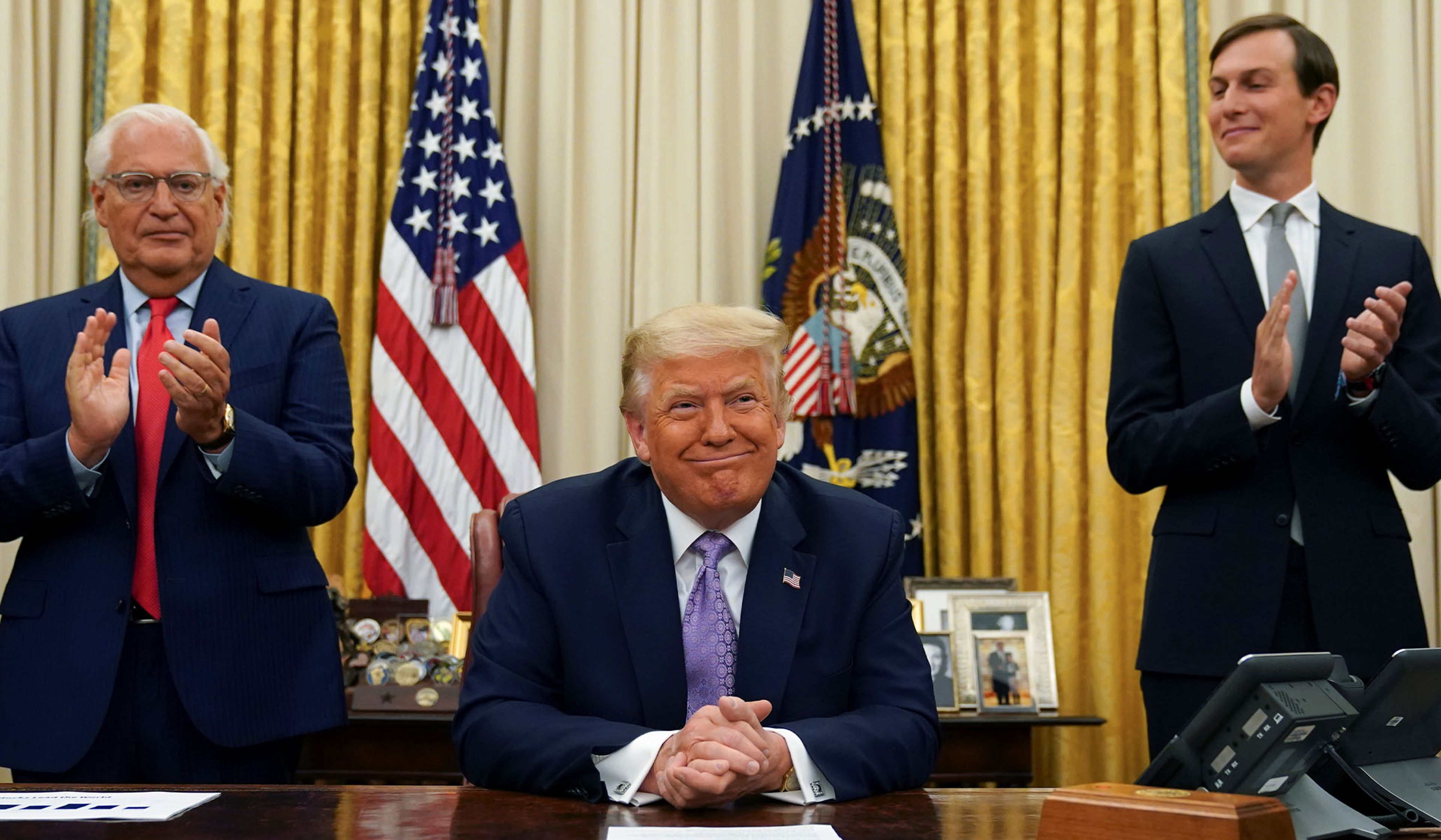
December 23, 2020: In the turbulent final weeks of his first term, President Trump pardons Kushner’s father, real estate developer Charles Kushner, who’d been convicted in 2005 on felony charges of tax evasion, witness tampering, and illegal campaign contributions. Kushner had headed up his father’s business while he was incarcerated.
January 2021: After the Trump administration ends, Kushner founds a private equity firm, Affinity Partners. It immediately draws $2 billion in investments from Saudi Arabia, which had warm relations with the Trump administration. The UAE and Qatar are also early investors -- but more modestly at first.
Autumn 2021: While under criminal investigation by the Justice Department, Changpeng Zhao relocates to Dubai in the UAE. The Chinese-born Canadian billionaire had been living in Singapore (among other places).
November 21, 2023: Zhao and Binance plead guilty to money laundering charges and agree to pay $4.3 billion to settle felony violations. Binance announces that, while Zhao will remain "Binance’s majority shareholder and a resource available for consultation on historical areas of our business,” Richard Teng will take over as CEO. Teng, who had already been a major Binance executive for a couple of years, was formerly CEO of the Financial Services Regulatory Authority for the Abu Dhabi Global Market (ADGM). ADGM is heavily influenced by the UAE royal family and Sheikh Tahnoon’s financial activities.
January 9, 2024: The House Select Committee on the Chinese Communist Party, led by (now-former) Chairman Mike Gallagher (R., Wis.), issues a letter to Biden Commerce Secretary Gina Raimondo raising concerns about Tahnoon’s G42 entity and its CEO, Peng Xiao. The committee provides extensive detail that G42 is “affiliated with an expansive network of UAE and PRC-based companies that develop dual-use technologies and materially support PRC military-civil fusion and human rights abuses.”
April 2024: Zhao is sentenced to four months’ imprisonment and a $50 million fine. He serves the incarceration sentence in a federal detention facility in California.
April 24, 2024: Congress’s TikTok law (codified in Title 15, U.S. Code, §§ 9901 et seq.) is enacted with strong bipartisan support. Though signed by Biden, it reflects the policy of Trump’s first term and of congressional Republicans: Recognizing that TikTok is a huge Chinese intelligence data-gathering operation, the law requires divestiture of China’s stake (held by China-controlled ByteDance). The Supreme Court upholds the law on January 17, 2025, three days before Trump takes office, in TikTok v. Garland.
Mid- to late 2024: As it becomes increasingly likely that then-former President Trump, the Republican nominee, will be elected president in November, Kushner’s assets under management surge to $4.8 billion, a 60 percent increase from 2023. This is largely the result of a $1.5 billion infusion by Lunate, part of the UAE investment empire managed by Sheikh Tahnoon, and another $1.5 billion from Qatar’s sovereign wealth fund. (After Trump is elected, Qatar provides him with a $400 million luxury jet, known as the “palace in the sky.”)
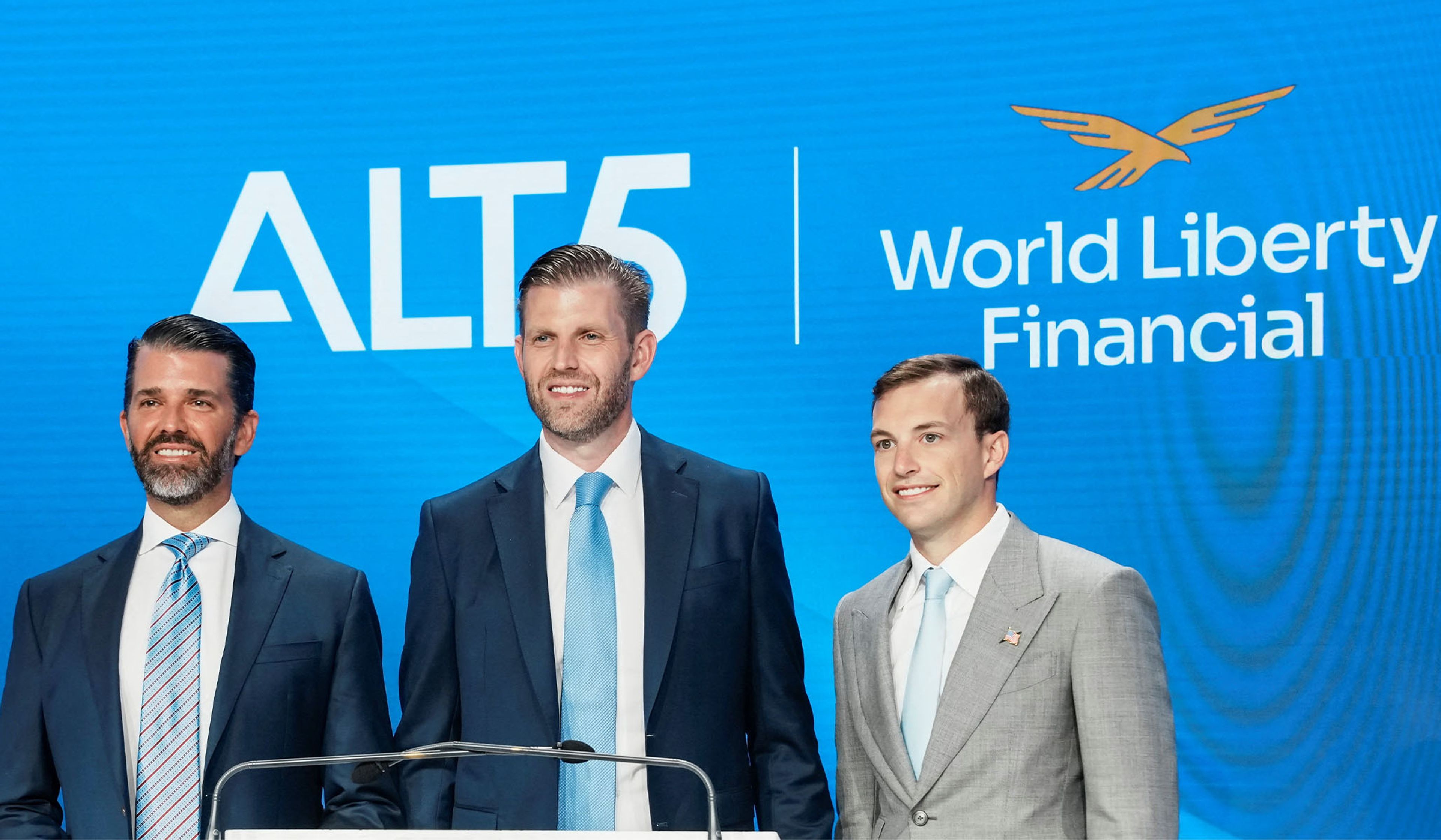
September 2024: As it becomes increasingly likely that Trump will be elected president in November, Trump and Witkoff establish World Liberty Financial. WLF’s corporate team includes Trump’s and Witkoff’s sons, with Eric Trump and Zach Witkoff appearing to take the most public roles and sitting on the board. Other founders include Chase Herro and Zak Folkman (the latter sitting on the WLF board in a mainly observatory capacity).
Autumn 2024: As the U.S. presidential election nears, Zhao’s representatives reportedly begin discussions with associates of Trump, explaining that they seek a solution to legal problems arising out of Zhao’s and Binance’s convictions, and that they can help with the Trump-Witkoff family crypto business.
November 5, 2024: Trump wins the presidential election. He subsequently names his friend and WLF cofounder Steve Witkoff to be his Middle East envoy.
November 2024: After Trump wins, Zhao’s Binance forms a task force to aid WLF. In the run-up to the March 2025 launch of WLF’s stablecoin, USD1, Binance deploys a team of over a dozen engineers to build the necessary technology. A WLF official later tells the New York Times that, when WLF was developing USD1, “Binance provided some of the underlying technology for the stablecoin.” Although associates of both Zhao and Trump had discussed Zhao’s and Binance’s legal problems, the WLF official insists that Binance’s provision of stablecoin know-how to WLF was “not in exchange for anything.”
December 9-10, 2024: During the transition of U.S. administrations, Steve Witkoff, as President-elect Trump’s emissary, stops in the UAE on a trip to the Middle East. Witkoff speaks at the Bitcoin MENA (Middle East and North Africa) conference in Abu Dhabi, where Eric Trump delivers the keynote address and Zhao is a featured speaker. While in the UAE, Witkoff also meets with Tahnoon.
December 2024: A week after Witkoff returned to the U.S., two Tahnoon entities, both called Aryam Investment 1 (Aryam), are registered, two days apart, in Delaware and Abu Dhabi.
January 16, 2025: Through Aryam, an investment arm of Tahnoon’s G42, Tahnoon directs a $500 million investment in the WLF. The UAE side obtains a 49 precent share of the Trump-Witkoff crypto company. Both G42’s CEO Peng Xiao (a Chinese-born, American-educated engineer who renounced U.S. citizenship in favor of UAE citizenship) and its general counsel Martin Edelman (an old lawyer friend of Steve Witkoff’s from New York real estate circles) will sit on the WLF board with Eric Trump, Zach Witkoff, and Zak Folkman. The first of two scheduled $250 million payments is made. Approximately $187 million goes to Trump family members (through entities called DT Marks Defi LLC and DT Marks SC LLC); in addition, $31 million goes to Witkoff family members, and another $31 million to an account controlled by Folkman and Herro.
January 2025: Fiacc Larkin, who is simultaneously the head of crypto and blockchain at Tahnoon’s G42 and an adviser of the Abu Dhabi Department of Economic Development (a UAE government agency), joins WLF as its chief strategic adviser.
January 21, 2025: A day after being inaugurated president, Trump announces that the UAE will figure prominently in Stargate, the administration’s massive AI infrastructure project.
January 23, 2025: On his third full day in office, President Trump signs an executive order to promote the cryptocurrency industry. The order rescinds a Biden directive stressing regulation by government enforcement agencies and a potential centralized, government digital currency. Among Trump’s stated objectives is “to promote the development and growth of lawful and legitimate dollar-backed stablecoins worldwide[.]”
March 2025: WLF launches the USD1 stablecoin.
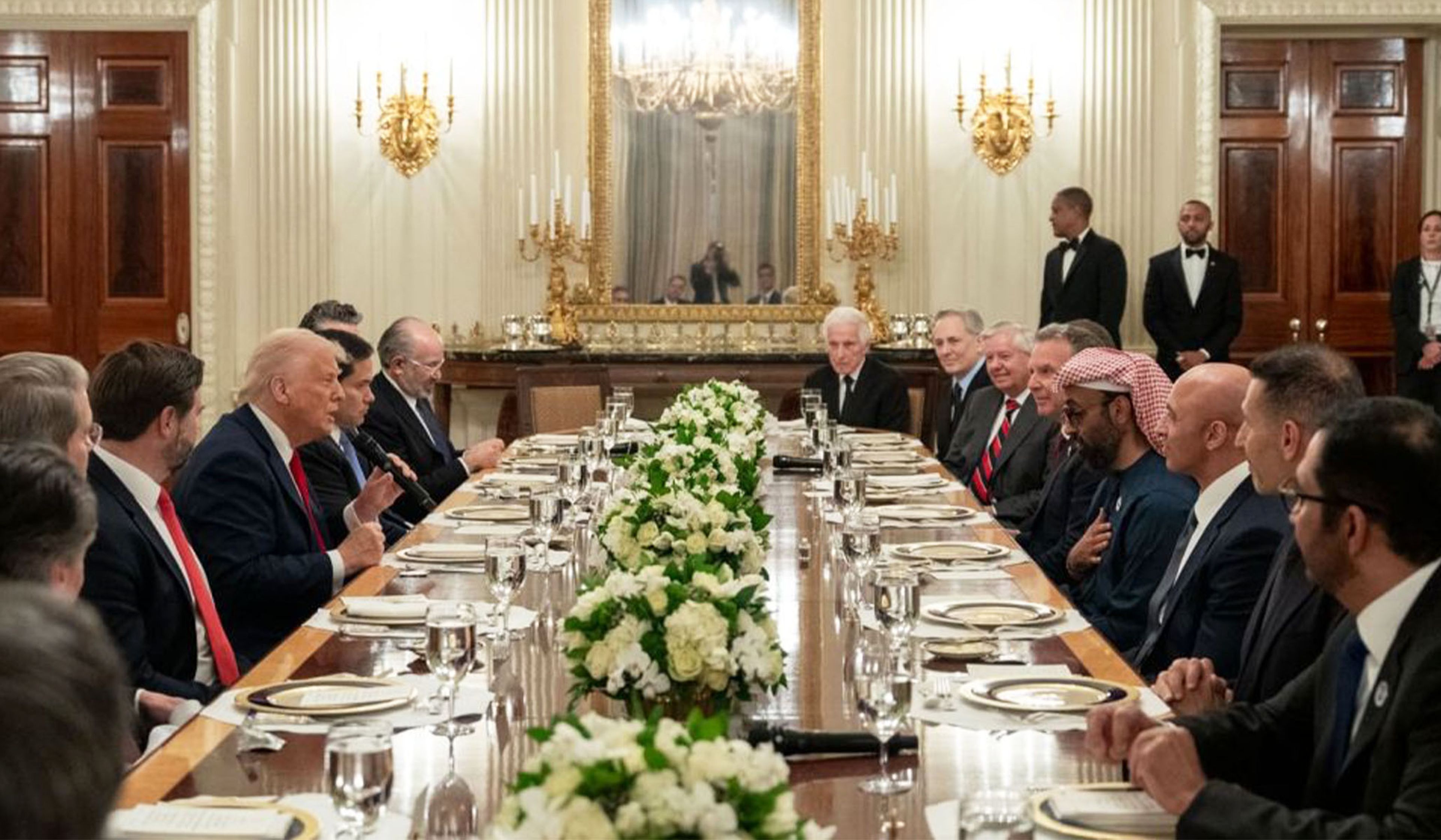
March 18, 2025: Tahnoon leads a UAE delegation to Washington for an Oval Office meeting with Trump, who also honors the sheikh with a White House dinner. Tahnoon lobbies for advanced microchip access and pledges that the UAE will invest an eye-popping $1.4 trillion in the United States over the next decade. The details of what this investment will entail are hazy.
April 30, 2025: Eric Trump announces the launch of the Trump International Hotel & Tower, Dubai, a $1 billion, 80-story skyscraper featuring the world’s highest outdoor pool. Apartments are reportedly selling for $20 million each.
May 1, 2025: At a crypto conference in Abu Dhabi, Zach Witkoff announces that Tahnoon’s MGX will purchase $2 billion in WLF’s USD1 stablecoin and invest it on Zhao’s Binance platform. The deal is portrayed as an illustration of market confidence in the Trump-Witkoff stablecoin. There is no disclosure that Peng Xiao and Martin Edelman and are members of the WLF board while concurrently sitting (along with MGX chairman Tahnoon) on the board of MGX (much less any mention that they are top executives of Tahnoon’s G42 and used G42’s Aryam investment arm to pour $500 million in WLF back in January). Nor was it disclosed that Larkin -- a G42 official and UAE government adviser -- oversaw the USD1 project as a key WLF adviser. Peng and Edelman “would play key roles in UAE’s chip lobbying efforts with the Trump administration,” according to the WSJ.
May 8, 2025: The Trump Treasury Department announces the launch of a pilot program to fast-track approval of foreign direct investments in the United States. This is an initiative for which Tahnoon had lobbied while promising mega-UAE investment in the U.S.
May 15-16, 2025: President Trump visits Abu Dhabi with Witkoff in tow and meets with Tahnoon, along with his brother, Sheikh Mohamed (UAE’s ruler). Trump announces a stunning agreement for the UAE to buy hundreds of thousands of the most advanced U.S.-made microchips, with 20 percent going to Tahnoon’s G42. The announcement, a sea change from the Republican stance set out in the House CCP Committee’s above-described January 2024 letter, renews an internal administration battle, as national security officials reassert standing objections that chip technology shared with the UAE and G42 could benefit China.
Spring-summer 2025: Agents of the UAE’s royal family urge that President Trump pardon Zhao, who lives in Dubai. Tahnoon’s $2 billion USD1 investment in Binance gives him a stake in a pardon for Zhao, which could pave the way for Binance to be permitted reentry into the U.S. crypto market (from which it was suspended over the felony convictions). A Zhao pardon, the Journal adds, “would also open the door for UAE authorities to grant Binance a full regulatory license,” which would facilitate the platform’s plan to make Abu Dhabi its home base. And in fact, as we’ll see, after Zhao is pardoned, Binance will be fully licensed by the UAE.
July 15, 2025: The second $250 million payment is due from Tahnoon’s January 16 deal to purchase 49 percent of WLF (through his Aryam entity). The WSJ reports that the payment “may have been distributed,” but that is not confirmed.
July 18, 2025: President Trump signs into law the “GENIUS Act” (the Guiding and Establishing National Innovation for U.S. Stablecoins Act). The legislation makes groundbreaking stablecoin policy, creating the first comprehensive federal regulatory framework for cryptocurrencies. The Trump-supported GENIUS Act is a marked departure from the Biden approach: The legislation undertakes to legitimize and promote private, decentralized stablecoin commerce. It explicitly pronounces that "stablecoins are not securities or commodities" and thus not subject to enforcement actions by, respectively, the Securities and Exchange Commission and the Commodities Futures Trading Commission (as under Biden). The GENIUS Act also facilitates decentralized stablecoin commerce rather than a potential U.S. central bank digital currency (which Biden officials had been contemplating). Crypto-linked stocks soared as the bill passed in the Senate and headed to the House for passage, which was quickly followed by the president’s signature.
September 2025: Trump announces that Tahnoon’s MGX will be among a small group of wealthy investors that will become part owners of TikTok, which Trump was bent on saving in defiance of the above-described 2024 statute. TikTok is estimated to be worth $14 billion. When the deal is finalized in January 2026, MGX gets a 15 percent share.
October 22, 2025: Witkoff and Kushner meet Tahnoon in Abu Dhabi.
October 23, 2025: The White House acknowledges that President Trump has pardoned Zhao.
November 19, 2025: The Trump administration finalizes deal to sell the UAE Nvidia’s GB300 microchips, the most advanced currently available, with extraordinary compute capability -- designed for AI reasoning, tasks, and training at massive scale. In a sop to national security officials concerned about the UAE’s China ties, the sale is limited to 35,000 chips. It remains a major coup for Tahnoon and the UAE’s ambitions -- a pathway to more and greater sales in the future.
December 3, 2025: Binance announces that Yi He has been appointed its co-CEO (with above-discussed Richard Teng). Yi He, a native and citizen of China, had cofounded Binance with Zhao in 2017. They have been romantically involved since 2014 and have three children, including at least one (a son) born in the United States.
December 7, 2025: Binance announces that it is the first crypto exchange to secure a global license under the Abu Dhabi Global Market framework. As noted above, (a) Binance co-CEO Richard Teng previously ran ADGM’s Financial Services Regulatory Authority, and (b) UAE officials had calculated that Tahnoon’s investment in WLF could help convince Trump to pardon Zhao, which would shore up the case for Binance to be fully licensed in the UAE.
December 11, 2025: WLF announces that Binance is eliminating fees for converting other firms’ stablecoin into USD1, making it easier for customers to buy the stablecoin issued by the Trump-Witkoff company. Binance says it will also use USD1 as collateral to back another crypto token. Of this and other imminent Binance promotions of the Trump-Witkoff company’s stablecoin, WLF says it gives Binance a promotional budget and does not direct its actions -- a standard industry practice, it claims.
December 23, 2025: Binance announces its “USD1 Booster Program,” offering customers the chance to earn interest of up to 20 percent on their holdings of the Trump-Witkoff company’s stablecoin.
January 22, 2026: Binance announces rewards to customers holding USD1 stablecoin, drawing from a “grand prize pool” of $40 million. Following the announcements of the benefits that Binance is offering for purchases and holdings of USD1, the New York Times reports, “The amount of USD1 traded worldwide shot up by nearly $2 billion.”
January 28, 2026: WLF announces that it has reached a milestone of $5 billion worth of stablecoin in circulation. Of this amount, 85 percent is held on the Binance exchange, which is banned in the United States due to the company’s criminal conviction. The New York Times reports that investments by WLF of the $5 billion in reserves could generate $200 million in annual revenue for the Trumps, the Witkoffs, and their partners. (That’s consistent with prior reporting that reserves from the $2 billion in USD1 stablecoin purchased by Tahnoon could generate $80 million annually.)
January 31, 2026: The Wall Street Journal publishes its report (“‘Spy Sheikh’ Bought Secret Stake in Trump Company”) about the investment by UAE official Tahnoon in WLF a few months before Trump gave the UAE access to “tightly guarded American AI chips.” The report is obviously long in the making and also recaps Tahnoon’s $2 billion purchase of WLF’s stablecoin.
January 31, 2026: On the same day as the WSJ’s report about Tahnoon’s investments in the Trump-Witkoff crypto enterprise, it is announced that the UAE’s ruler, Sheikh Mohamed al Nahyan, had transferred the direction of ADQ, one of the UAE’s two major sovereign wealth funds, from his brother, Tahnoon, to Mohamed’s son and likely heir, Sheikh Khaled. ADQ (a branding title that doesn’t appear to stand for anything) is the estimated $263 billion fund focused on domestic investment. The move could be spun to suggest that Tahnoon has a diminished role in UAE governmental affairs (the flip side of President Trump and envoy Witkoff claiming non-involvement in WLF). In reality, Tahnoon retains control of the Abu Dhabi Investment Authority (ADIA), an estimated $1.1 trillion fund focused on foreign investment, as well as his other financial portfolios. He also remains the regime’s national security adviser.
A Concluding Note
Forbes reports that Donald Trump’s net worth increased by $3 billion in the first year of his second term, with most of the increase attributable to cryptocurrency ventures. His wealth was estimated at $7.3 billion in September 2025 — and that was before it was publicly known that Tahnoon had invested a half-billion dollars in WLF, close to $400 million of which would have been distributed to the Trump family.
As of February 9, 2026, Forbes estimates the president’s net worth at $6.4 billion, concluding that he “has presided over the most lucrative presidency in American history, adding billions to his net worth, largely by cashing in on crypto.”
Author’s note: This post has been updated to reflect that President Trump’s net worth was estimated to have increased by $3 billion during the first year of his second term, and to stand at $7.3 billion in September 2025. The original version, erroneously based in part on reporting from October 2024, inaccurately said Trump's net worth had increased by $3.7 billion and stood at $8 billion in October 2025.
About the Author
Andrew C. McCarthy is a senior fellow at National Review Institute, an NR contributing editor, and author of Ball of Collusion: The Plot to Rig an Election and Destroy a Presidency.
Featured Tags
Advertisement
Advertisement
Comments